
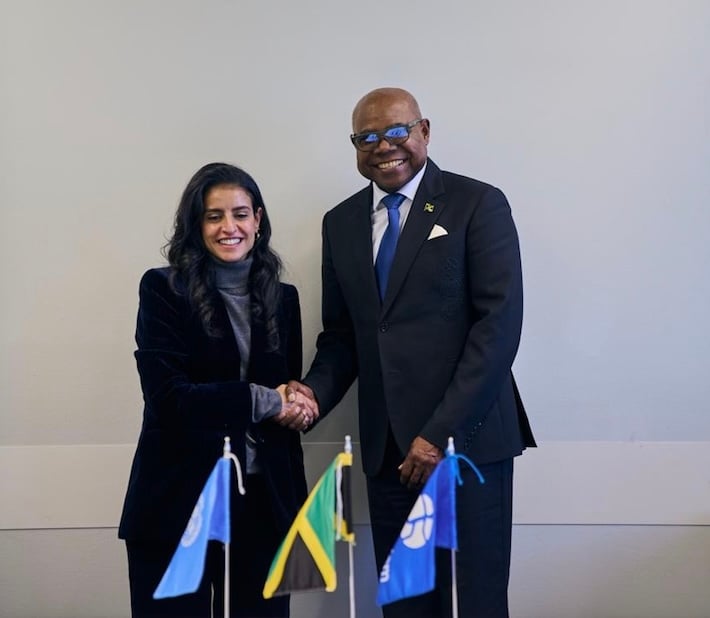
When Shaikha Al Nuaimi assumed office on 1 January 2026 as the seventh Secretary-General of UN Tourism, she inherited an organization in transition. The agency formerly known as the UN World Tourism Organization completed its institutional rebranding to “UN Tourism” in 2024, seeking to project a broader and more operational role within the multilateral system. The new administration now faces a formidable agenda: climate adaptation, tourism resilience, digital transition, sustainable investment, artificial intelligence, workforce transformation, and the continued expansion of the organization’s regional office network.
Yet among these priorities lies a structural question that has never been fully addressed within global tourism governance: where, institutionally, do the world’s small island states and territories belong?
For three decades, international debate has approached the issue primarily through the framework of Small Island Developing States — the SIDS category recognised by the United Nations. The concerns are familiar and legitimate: vulnerability to climate change, economic exposure, geographic isolation, narrow resource bases, dependence on imports, and high reliance on tourism. But the conversation has also remained incomplete. The reality of insularity extends far beyond the SIDS list itself.
The broader family of small island states and territories spans every ocean basin and every development category. It includes sovereign states such as Malta, Iceland, Cyprus, Mauritius, and Seychelles, but also autonomous and affiliated territories such as Madeira, Azores, French Polynesia, New Caledonia, Faroe Islands, Åland, Réunion, Bermuda, and dozens more represented through UN Tourism’s Associate and Affiliate membership structures.
Some are wealthy. Others remain highly aid-dependent. Some are fully sovereign states, others enjoy varying degrees of autonomy under metropolitan powers. Yet all share one defining structural condition that no continental economy experiences in comparable form: insularity.
Insularity as an Economic Condition
Tourism is the clearest illustration of that shared condition.
Few economic categories in the world display such consistent concentration around a single sector. In the Maldives and Seychelles, tourism accounts for close to half of GDP. In Malta, Madeira and Mauritius, it constitutes a major pillar of national income and employment. In Cyprus, tourism remains one of the dominant export sectors. In French Polynesia, tourism and air connectivity are existential economic drivers. Even Iceland — often perceived through the lens of advanced Nordic prosperity — has become heavily exposed to international tourism flows over the past decade.

This dependence cuts across the developed–developing divide. A luxury resort economy in the Indian Ocean and a high-income European island state remain vulnerable to many of the same external shocks: airline route reductions, fuel-price volatility, cruise market disruptions, climate-related infrastructure damage, labor shortages, supply-chain inflation, and overtourism pressures.
The COVID-19 pandemic exposed this reality with exceptional clarity. Small island economies experienced some of the sharpest tourism collapses worldwide because mobility restrictions immediately translated into national economic contraction. Recovery was equally uneven and heavily tied to airlift restoration and maritime connectivity — structural dependencies unique in their intensity.
Despite this, no dedicated institutional mechanism exists within UN Tourism to address insular economies as a coherent global category.
A Blind Spot in Global Tourism Governance
UN Tourism’s operational geography remains organized according to continental logic. The organization maintains six Regional Commissions covering Africa, the Americas, East Asia and the Pacific, Europe, the Middle East, and South Asia. In parallel, it has progressively expanded its operational office network:
- The Regional Support Office for Asia and the Pacific in Nara since 1995;
- the Regional Office for the Middle East in Riyadh since 2021;
- a forthcoming Regional Office for the Americas in Rio de Janeiro;
- Ongoing negotiations for a Regional Office for Africa in Marrakesh.
Every geography of the world possesses an institutional anchor within the UN Tourism system — except the islands.
The problem is structural. Small island states and territories are dispersed across all regional commissions. Caribbean islands fall under the Americas; Indian Ocean islands under Africa; Mediterranean islands under Europe; Pacific islands under East Asia and the Pacific. As a result, the issues specific to insularity become fragmented across bureaucratic structures designed primarily around continental priorities.
The consequence is not merely symbolic. It affects program design, investment facilitation, data collection, resilience planning, crisis response, connectivity policy, workforce development, and representation within global tourism debates.
Today, no dedicated desk, thematic office, or permanent coordination mechanism exists within UN Tourism for small island tourism economies as a collective category.
The Limits of the SIDS Framework
The absence of such a structure is particularly striking because small islands have occupied a central place in UN sustainable development debates for decades.
The trajectory is well established:
- the 1994 Barbados Programme of Action;
- the 2005 Mauritius Strategy;
- the 2014 SAMOA Pathway;
- and most recently, the 2024 Antigua and Barbuda Agenda for SIDS (ABAS).
Tourism has been a recurring pillar throughout all of these frameworks. Yet the institutional architecture built around them remains narrowly tied to the SIDS classification.
That distinction matters.
The SIDS category was created primarily within the context of development policy. It focuses on vulnerability linked to development constraints. But many island territories and states that experience the structural realities of insularity are not classified as developing. Malta and Iceland are not SIDS. Neither are the Faroe Islands, Åland, Bermuda or Madeira. Yet their tourism sectors confront many of the same geographic and operational limitations.
As a result, the present framework leaves two parallel gaps:
- SIDS still lack a permanent operational mechanism for tourism within UN Tourism itself.
- Non-SIDS island economies remain outside any dedicated multilateral tourism architecture altogether.
This creates a paradox. The world’s most tourism-dependent economies share structural conditions yet remain institutionally fragmented because administrative categories do not align with tourism realities.
Islands as Laboratories of Global Tourism
Small islands are not marginal actors in world tourism. In many respects, they have historically functioned as laboratories for tourism innovation.
Island destinations pioneered:
- integrated resort models;
- destination branding strategies;
- cruise tourism development;
- marine conservation tourism;
- climate adaptation policies for tourism;
- sustainable hospitality certification;
- resilience-oriented tourism planning.
Island leaders have also played outsized roles in international tourism diplomacy.
Alain St Ange became one of the most internationally recognized tourism diplomats of the Indian Ocean and Africa and was a major candidate in the 2017 UNWTO Secretary-General election.
Edmund Bartlett established the Global Tourism Resilience and Crisis Management Center in 2018 at the University of the West Indies, helping place resilience at the center of global tourism governance. The initiative ultimately contributed to the United Nations recognizing 17 February as Global Tourism Resilience Day in 2023.
Across the Pacific, Caribbean, Mediterranean, and Indian Ocean regions, island experts lead hospitality schools, resilience institutes, destination management organizations, and climate-tourism research programs.
The expertise exists. The legitimacy exists. The political momentum exists.
What does not yet exist is the institutional instrument capable of connecting these dispersed efforts into a permanent global platform.
Shared Structural Vulnerabilities
The argument for a unified island framework is not cultural or geographic; it is structural.
Climate Vulnerability
No category of tourism economies is more exposed to climate disruption than small islands.
Sea-level rise threatens low-lying atolls in the Maldives and Kiribati. Coral bleaching undermines marine tourism ecosystems from the Caribbean to the Pacific. Extreme storms increasingly damage infrastructure across island destinations. Water scarcity affects Mediterranean and Atlantic islands alike. Glacier retreat reshapes Icelandic tourism landscapes.
Different geographies experience different manifestations of climate change, but all confront amplified vulnerability because of their limited territorial scale and economic concentration.
Connectivity Dependence
Continental economies can often absorb reductions in transport routes through alternative corridors. Islands cannot.
A single cancelled air route can affect national tourism revenue, labour mobility, supply chains and investment flows simultaneously. Maritime freight costs disproportionately affect islands because nearly every tourism input — food, construction material, fuel, technology — depends on imported logistics.
This creates systemic fragility unmatched in continental tourism economies.
Human Capital Drain
Small labor markets struggle to retain skilled workers. Tourism professionals frequently migrate to larger economies that offer higher wages and broader career paths.
The challenge spans both developing and developed islands. Caribbean states face hospitality brain drain toward North America. European islands confront demographic ageing and workforce shortages. Pacific islands lose trained tourism workers to Australia and New Zealand.
Carrying Capacity and Overtourism
Islands possess finite geographic limits. Tourism pressure, therefore, concentrates more intensely than in most continental destinations.
The tensions visible in Santorini, Capri, Bali, Malta or Mauritius are variations of the same structural equation: limited land, concentrated visitor flows, environmental stress and infrastructure saturation.
Investment Constraints
International investors often view island economies as fragmented and administratively complex markets. Small scale, limited domestic financing ecosystems and exposure to climate risks complicate long-term investment structuring.
A dedicated UN Tourism mechanism could help standardize investment pipelines, improve policy coordination, and provide institutional credibility for sustainable tourism financing initiatives.
The Silk Road Precedent
Importantly, UN Tourism already possesses the legal and institutional template needed to address this gap.
At the 119th session of the Executive Council in Samarkand in 2023, the Government of Uzbekistan advanced the creation of a Thematic Office for Silk Road Tourism. The initiative demonstrated that UN Tourism can establish cross-regional thematic structures operating beyond the traditional continental commission model.
This precedent matters enormously.
The Silk Road is not a single geographic region; it is a thematic and transregional concept linking multiple countries and commissions. Small islands represent an even more coherent thematic category because they share structural economic realities rather than historical branding narratives alone.
The legal basis already exists under UN Tourism’s Category I entity framework adopted by the General Assembly. The operational model also exists:
- host-country support,
- defined thematic mandate,
- International Program Coordination,
- partnership facilitation,
- and dedicated funding commitments.
The mechanism, therefore, requires no institutional reinvention — only political activation.
Why a Thematic Office Matters
A UN Tourism Thematic Office for Small Island States and Territories would not duplicate regional commissions. Rather, it would provide a transversal coordination mechanism across them.
Its mandate could include:
Implementation of ABAS Tourism Commitments
The office could serve as the operational implementation platform for tourism-related commitments under the Antigua and Barbuda Agenda for SIDS.
Cross-Island Policy Coordination
Caribbean, Pacific, Atlantic, Mediterranean, and Indian Ocean islands currently exchange best practices only intermittently. A thematic office could institutionalize cooperation on resilience, sustainability, destination management, and climate adaptation.
Tailored Tourism Statistics
Traditional tourism metrics often fail to capture island realities:
- cruise-to-land ratios,
- seasonality volatility,
- tourism density,
- carrying-capacity thresholds,
- dependence on a handful of source markets,
- vulnerability to airlift concentration.
Island-specific tourism indicators would allow for more accurate policymaking.
Crisis and Resilience Coordination
Small islands are disproportionately affected by hurricanes, volcanic eruptions, tsunamis, pandemics and transport disruptions. A dedicated office could strengthen preparedness and crisis response coordination.
Sustainable Investment Facilitation
The office could function as a recognized international counterpart for investors seeking sustainable tourism projects in island economies.
Leadership Development
Small island states remain underrepresented in many international tourism decision-making spaces. A thematic office could help cultivate a new generation of island tourism leaders and negotiators.
A Unique Political Window
The timing for such an initiative may never be more favorable.






Leave a Comment