

If playback is interrupted, you can restart it.
Thirty-six years after German reunification, October 3 is a celebration of freedom, travel, and the transformation of Berlin and eastern Germany. But recent elections, the rise of the AfD and a generation with no personal memory of the Berlin Wall are giving German Unity Day a new urgency.
BERLIN, Germany — October 3, 2026, Midnight 00:00:Germany marks 36 years of reunification today, celebrating a peaceful revolution that restored freedom of movement to millions of East Germans and helped transform both German and global tourism. After the Berlin Wall fell, millions who had been largely prevented from traveling freely to the West suddenly discovered Mallorca, Spain, and eventually the world, while Berlin and the former East Germany opened to international visitors. Today, Germans are among the world’s most important traveling populations, and Berlin has become one of Europe’s great international cities. Yet German Unity Day 2026 also raises a more difficult question:
As a new generation with no personal memory of World War II, divided Germany or the Berlin Wall reshapes German politics, does it understand how difficult these freedoms were to achieve — and what it takes to preserve them?

October 3 was also about the freedom to go somewhere
At midnight on October 3, 1990, Germany became one country again. The five re-established eastern states joined the Federal Republic, the Basic Law extended across the reunited country, and Berlin became its capital.
It marked the formal end of an extraordinary sequence of events that began with citizens of the German Democratic Republic challenging an authoritarian state, demanding political rights and freedom of movement, demonstrating peacefully, and eventually helping to bring down a political system and the Wall that had divided Berlin since 1961.
International diplomacy was also essential. Reunification required agreement not only between East and West Germany but among the four victorious Allied powers of World War II. What emerged was something that had appeared almost impossible only a few years earlier: one sovereign and democratic Germany, reunited peacefully.
Tourism might sound insignificant when placed alongside constitutions, superpowers, military alliances and Cold War diplomacy, but for ordinary people, travel was one of the most immediate ways to understand what freedom actually meant.
West Germans had become accustomed to passports, Mediterranean vacations, package tours, charter flights and driving across European borders. Citizens of the GDR did not have comparable freedom to travel to Western countries.
Then the Wall fell, and suddenly the world opened.
Mallorca became an unlikely symbol of German freedom
One of the most fascinating chapters in the tourism history of reunification took place even before Germany formally became one country. On April 3, 1990, the first East German package tourists flew to Mallorca, an event considered sufficiently extraordinary at the time to attract enormous media attention.
Today, a flight from Germany to Palma de Mallorca is about as ordinary as European tourism gets. In 1990, for East Germans who had spent much of their lives behind the Iron Curtain, it represented something much larger than sunshine and a hotel room.
It meant being able to leave, see another country and return home without requiring the political approval of the state.
Tourism had become an expression of liberty.
Reunification consequently created millions of new potential international travelers almost overnight. Spain, Italy, Greece, Turkey, Austria and France were suddenly within reach, followed by the Canary Islands, the Caribbean, the United States, Asia and destinations that had previously seemed impossibly distant.
Mallorca already occupied a special place in West German holiday culture. Cheap charter flights and package holidays had democratized Mediterranean travel to such an extent that the Spanish island was once rather condescendingly nicknamed the “Putzfraueninsel” — the cleaning ladies’ island— because a holiday there was no longer reserved for Germany’s wealthy.
That description was classist, but the phenomenon behind it mattered: international tourism had become affordable for ordinary workers.
After 1989, eastern Germans joined this traveling society. Globalization was no longer something discussed in economic textbooks. It came with a passport and boarding pass.
Travel became almost a German human right
There is, of course, no constitutional right to Mallorca. Culturally, however, Germans sometimes behave as though there should be.
Germany developed one of the world’s strongest vacation cultures. The statutory minimum is four weeks of paid annual leave, or 20 working days for an employee working five days a week, while five or six weeks of annual leave is common under collective agreements.
That contrasts sharply with the United States, where there is no federal statutory entitlement to paid annual vacation.
In Germany, Urlaub became more than an occasional luxury. It became part of the social contract and, for many families, one of the most important expenditures of the year.
The German Travel Association reported that Germans spent a record €83.4 billion on travel booked before departure in 2024, up 5.6 percent from the previous year. Some 56.4 million people took at least one holiday trip of five days or longer, while about 80 percent of the population traveled.
There is even an interesting German social-policy dimension. Unemployed benefit recipients can, subject to rules and prior approval, be permitted to be away from their registered place of residence for up to 21 calendar days per year. That should not be misrepresented as the German government “paying people on welfare to go on vacation,” because availability and approval requirements apply. Nevertheless, it illustrates how deeply the idea of time away is embedded in German society.
Rest, recreation and the opportunity to travel are not regarded exclusively as privileges for wealthy people.
Germany became an economic powerhouse for world tourism
That German passion for travel has enormous economic consequences outside the country.
German vacationers fill hotels in Spain, Greece and Turkey, restaurants in Italy, ski resorts in Austria, cruise ships in the Mediterranean and Caribbean, safari lodges in Africa and resorts from Thailand to the Maldives. Airlines, travel agencies, tour operators, guides, restaurants, attractions and thousands of small tourism businesses around the world depend partly on German purchasing power.
When German consumers spent €83.4 billion on travel booked before departure in 2024, the number represented far more than vacations. It represented one of the world’s major tourism economies.
The freedom acquired by millions of East Germans in 1989 and 1990 ultimately became part of that global tourism marketplace.
But reunification did not only send Germans out into the world. It brought the world into a newly accessible Germany.
Reunification opened another Germany to the world
Dresden, Leipzig, Weimar, Potsdam, Mecklenburg, Saxony and Thuringia could be marketed internationally as parts of one accessible destination rather than places located behind the Iron Curtain.
Above all, there was Berlin.
The Berlin Wall went from being an instrument designed to prevent people from crossing a border into one of the world’s most recognizable historical tourism sites. Checkpoint Charlie changed from an actual military checkpoint into a visitor attraction, while the Brandenburg Gate was transformed from a symbol of division into perhaps Germany’s most internationally recognizable image of reunification.
Berlin itself became something larger: a demonstration of what can happen when a closed city becomes an open one.
The economic consequences are visible today. Berlin recorded 29.4 million overnight stays from approximately 12.4 million visitors in 2025, with international travelers accounting for 41 percent of overnight stays. Berlin’s tourism economy generates an estimated €15.1 billion in annual visitor consumption and supports around 224,800 jobs in hotels, restaurants, culture and related sectors.
Germany as a whole recorded approximately 497.5 million overnight stays in 2025, another record for the country’s accommodation industry.
Those numbers are part of the economic legacy of an open Germany.
Berlin became the city the Wall was supposed to prevent
Perhaps nowhere is the transformation more dramatic than Berlin.
The former frontline of the Cold War became a magnet for artists, entrepreneurs, students, immigrants, LGBTQ+ travelers, technology companies, musicians, political activists and young people wanting to reinvent themselves.
The divided city became an international city. Today’s Berlin is not perfect, nor is its multicultural transformation without political and social tensions. But few places demonstrate as dramatically how much a city can change in one generation.
The Berlin that once required checkpoints to move between east and west became famous precisely for ignoring many of the social boundaries that other cities maintained. Different nationalities, languages, lifestyles, sexual identities, cuisines, religions and subcultures became part of Berlin’s identity.
People came because Berlin represented something. For decades it represented confrontation. At its best today, Berlin represents openness and the freedom to be different.
That makes what happened in Berlin’s election less than two weeks before this German Unity Day particularly interesting.
The September 2026 Berlin election changes the conversation
Berliners elected a new House of Representatives on September 20, 2026, just 13 days before German Unity Day. The preliminary result produced a remarkable political map.
Die Linke finished first with 25.7 percentof the second vote, up 13.4 percentage points from the previous election. The CDU fell to 18.8 percent, while the AfD increased its share to 16.3 percent, a gain of 7.2 percentage points. The Greens received 14.3 percent and the SPD 12.1 percent. Turnout reached 74.2 percent. The final official result is scheduled for October 12.
Those results complicate any simplistic claim that Germany’s younger generation is simply moving toward the AfD. Berlin moved strongly in more than one political direction, with Die Linke becoming the city’s largest party while the AfD also recorded a substantial increase.
Elsewhere in eastern Germany, however, the AfD’s recent electoral strength has been considerably greater. In Mecklenburg-Western Pomerania, the party received 38.2 percentin the September 2026 state election, according to the official final result reported this week.
The point is not to tell Germans how they should vote. The numbers instead raise a question especially appropriate for October 3: What happens to historical memory when the generation making political decisions increasingly consists of people who never experienced the world that German reunification ended?
A generation that never knew the Wall
Someone born on German Unity Day in 1990 turns 36 today. A German turning 18 this year was born in 2008.
- For this generation, the Berlin Wall is history.
- The GDR is history.
- The Soviet Union is history.
- For younger Germans, even September 11, 2001 happened before they were born.
World War II and the Holocaust are several generations removed.
That distance does not mean younger Germans are indifferent to history, nor does it establish that people voting for the AfD, Die Linke, or any other party do so because they do not understand Germany’s past. Political choices have many causes, including immigration, economic insecurity, housing, dissatisfaction with established parties, regional identity, foreign policy, and perceptions of government performance.
But historical distance creates a challenge every democracy eventually confronts: How do you teach people the value of freedoms whose absence they have never experienced?
TikTok cannot become the history teacher of a generation
That question becomes more complicated in an era when political information increasingly arrives through TikTok, Instagram, YouTube and other algorithm-driven platforms.
Previous generations might have encountered political arguments through newspapers, public broadcasters, books, classrooms and lengthy television debates. Today those sources compete with political videos measured in seconds, selected by algorithms optimized to keep users watching.
The issue is not that TikTok automatically creates AfD voters, nor would available evidence justify such a claim. People choose media partly because of views they already hold, while political preferences arise from many influences.
The larger problem is what happens when complicated history is reduced to content designed for instantaneous consumption.
How does the Holocaust compete with a 30-second political video? How does the GDR’s complicated history compete with a meme? How does a teacher explain what the Berlin Wall actually meant to someone who experiences it primarily as a backdrop for selfies?
And how does Germany explain that something as mundane today as boarding an aircraft for Mallorca was once an impossible dream for millions of Germans living only a few kilometers away from West Berlin?
That may be one of the most important questions surrounding German Unity Day 2026.
Freedom cannot become scenery
Visitors to Berlin photograph pieces of the Berlin Wall every day before continuing to restaurants, museums, hotels and nightclubs, often without thinking for very long about what that concrete actually represented.
There is nothing necessarily wrong with that. Indeed, perhaps the greatest victory of reunification is that young Berliners no longer wake up every morning thinking about border guards, checkpoints and walls.
Life moved on. But moving forward and forgetting are not the same thing.
A democratic society needs enough historical memory to recognize that freedoms eventually considered ordinary were once extraordinary: the freedom to vote, criticize a government, publish an unpopular opinion, protest, worship or not worship, love whom one chooses and cross a border.
Travel belongs on that list.
Tourism may be one of freedom’s most underestimated teachers
Travel cannot eliminate extremism, antisemitism, racism or political polarization, but it can make isolation more difficult.
A German visiting Poland encounters European history from another perspective. A young Berliner traveling through Israel, the United States, South Africa or Japan can see Germany through another society’s eyes. A traveler from Saxony sharing a breakfast table, train compartment or airplane row with someone from Spain, Turkey, Nigeria, Brazil or the United States encounters a world much larger than a political algorithm.
Tourism at its best is an exchange of people rather than simply an exchange of money.
That was part of what made the opening of the Berlin Wall so powerful. People did not merely want different economic statistics. They wanted to go somewhere.
They wanted to see what was on the other side.
OPINION:
Perhaps the Greatest Irony of German Unity Day
Perhaps the greatest irony on this German Unity Day is how dramatically the world surrounding Germany has changed. The United States, one of the four Allied powers that occupied Germany after the defeat of Nazi Germany and a country that became a powerful symbol of Western freedom for generations of West Germans — and for many East Germans looking across the Wall — now has a vice president, JD Vance, who has publicly challenged Germany’s political “firewall” against the AfD and met its leader Alice Weidel shortly before the 2025 federal election, moves widely interpreted in Germany as support for a party generally described as far-right and whose branches have faced official scrutiny for right-wing extremism.
At the same time, Russia, successor to the Soviet Union — another of the powers whose victory over Nazi Germany shaped the country that emerged after 1945 — is today viewed by Germany’s government as a major security threat following its invasion of Ukraine, while tensions between Russia and NATO have again raised fears of military escalation in Europe.
There could hardly be a stronger reminder of why history matters. Germans who never experienced Nazi dictatorship, the authoritarian German Democratic Republic, Soviet domination in Eastern Europe or today’s authoritarian Russia should study that history carefully before making their own political choices, whether attracted by movements on the radical right or radical left. Germany’s democracy ultimately belongs to its voters, but October 3 carries a simple hope worth preserving across political generations: keep Germany free, democratic and united.
October 3 should remain a joyful German holiday
Germany has plenty of problems in 2026. Economic anxiety, migration, integration, the war in Ukraine, relations with Russia, demographic change and political polarization are generating serious debates, while differences between eastern and western Germany did not disappear simply because the border did.
German unity remains unfinished business.
But October 3 should not become merely another day when government offices and supermarkets are closed. There is something extraordinary to celebrate.
Thirty-six years ago, people who had lived under two radically different political systems became citizens of one democratic country. Families could visit one another without checkpoints, trains crossed a border that ceased to exist, airports suddenly led everywhere, East Germans could fly to Mallorca and foreign travelers could freely discover Dresden, Leipzig, Weimar and eastern Berlin.
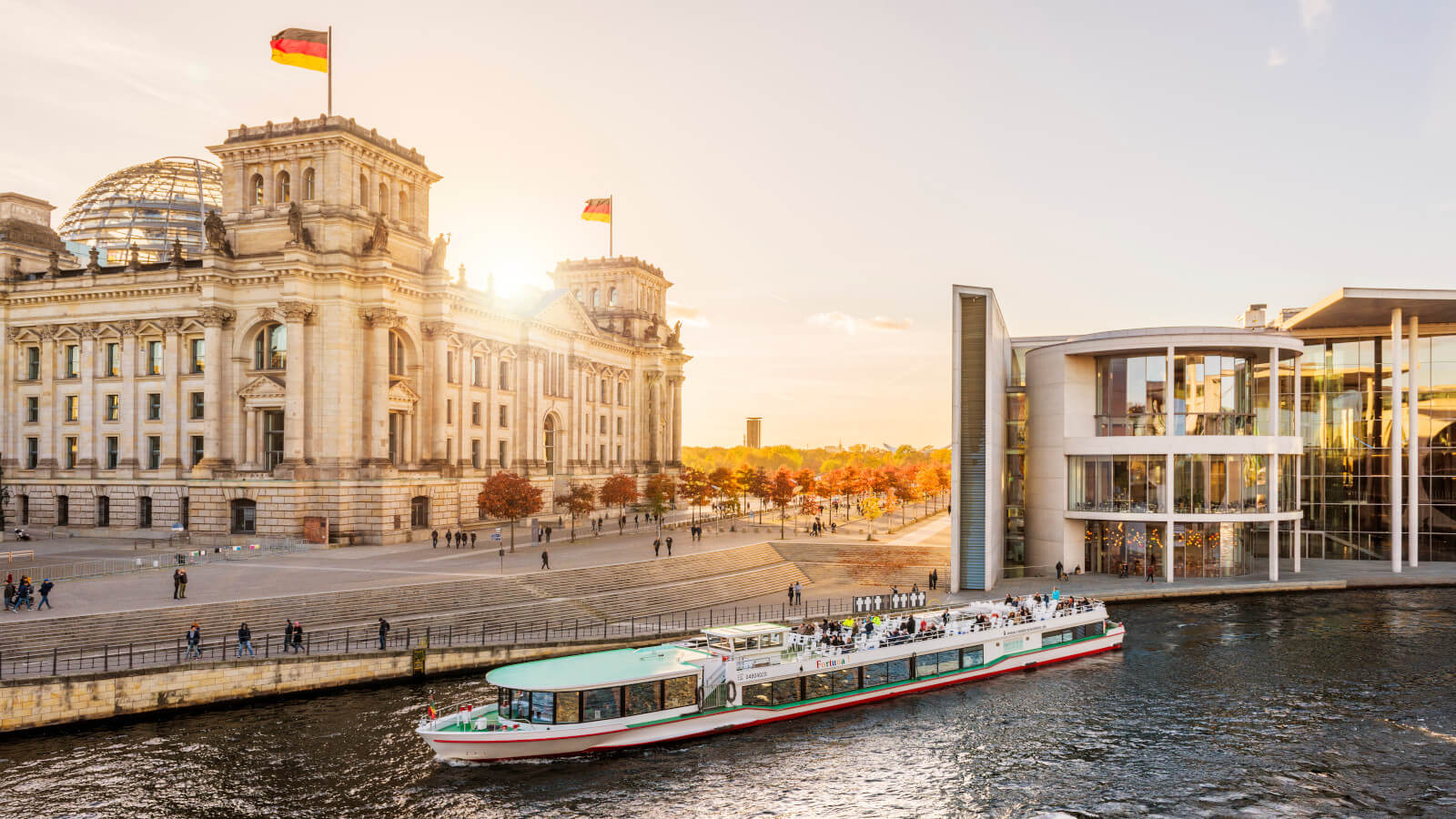
Berlin could begin transforming itself from the world’s most famous divided city into one of its most international capitals.
That is not a small achievement.
Mallorca may be an unlikely monument to freedom
There are grand monuments to German reunification, but perhaps there is also an unofficial one several hours away by air in the Mediterranean.
Mallorca. It sounds almost ridiculous until one remembers what tourism actually represented in 1990.
The ability of an ordinary German — from Hamburg or Dresden, wealthy or working class, young or old — to put some clothes into a suitcase, buy a ticket and discover another part of the world is something previous generations of Germans could not universally take for granted.




Leave a Comment