
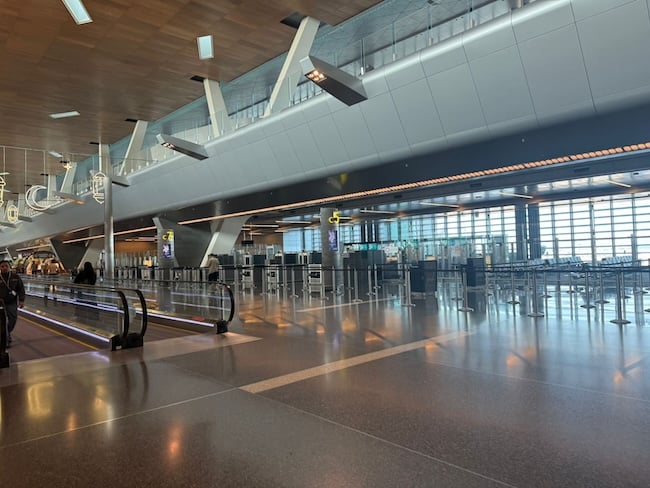
Berlin, Germany –A rapidly escalating conflict involving Iran has triggered massive global travel disruptions, stranding tens of thousands of passengers across the Gulf region and grounding airlines that serve as vital connectors between Europe, Asia, Africa, and Australia in addition to closed destinations such as Tel Aviv, Beirut, Amman, Bahrhain or Kuwait.
The ripple effects are now being felt worldwide—from major international hubs in the Middle East to global events such as ITB Berlin, the world’s largest travel trade show.
At the normally bustling exhibition halls in Berlin, the stands of the United Arab Emirates, Qatar, and Saudi Arabia—traditionally among the busiest and most influential—are noticeably quiet. Many tourism officials, airline executives, and travel industry leaders who normally attend the event simply never made it to Germany.
The reason lies thousands of kilometers away in the Middle East.
Airlines Grounded, Global Connections Broken
Airspace closures across parts of the Gulf have forced airlines including Emirates, Etihad Airways, and Qatar Airways to suspend or drastically scale back operations. These carriers are among the world’s most important long-haul connectors, linking Europe with Asia, Africa, and Australia through hubs such as Dubai, Abu Dhabi, and Doha.
With flights cancelled and aircraft rerouted, thousands of travelers have been left stranded mid-journey, while countless others are facing cancelled or postponed trips.
According to international reports, thousands of flights have been disrupted since the crisis escalated, affecting travelers across multiple continents. Major transit hubs in the Gulf—normally some of the busiest airports in the world—have been thrown into operational chaos.
Tens of Thousands Stranded in the Gulf
The most urgent challenge now is assisting travelers trapped in the region.
Many passengers had been connecting through Gulf airports when the crisis began. Others are tourists or business travelers who suddenly found themselves unable to leave due to suspended flights and restricted airspace.
Authorities in the United Arab Emirates have begun limited rescue and repatriation operations, with emergency flights departing from Dubai to move stranded passengers out of the country.
So far, however, similar large-scale evacuation operations have not yet begun from Doha, leaving many travelers waiting for solutions as airlines and governments assess security conditions and flight routes.

Travel Industry Shifts from Promotion to Crisis Mode
The global tourism industry is now shifting its priorities.
Events like ITB Berlin are normally focused on marketing destinations, negotiating tourism partnerships, and announcing new routes or travel initiatives. Instead, many industry leaders are now focused on crisis management and traveler assistance.
Tourism boards and airlines that did manage to send representatives to Berlin are spending much of their time addressing questions about safety, cancellations, and how stranded passengers will be helped.
A Crisis with Global Consequences
The Gulf aviation hubs are critical to international travel. Disruptions in Dubai, Abu Dhabi, or Doha quickly cascade across airline networks worldwide.
Berlin is only one visible example of the broader impact.
Travelers planning holidays, business trips, and conferences across Europe, Asia, and Africa are now confronting cancelled flights, uncertain itineraries, and rapidly changing travel advisories.
For now, the priority across the industry is clear: assisting stranded travelers and restoring safe flight routes.
Until stability returns to the region’s airspace, the global travel system—and events like ITB Berlin—will continue to feel the consequences.







Leave a Comment