
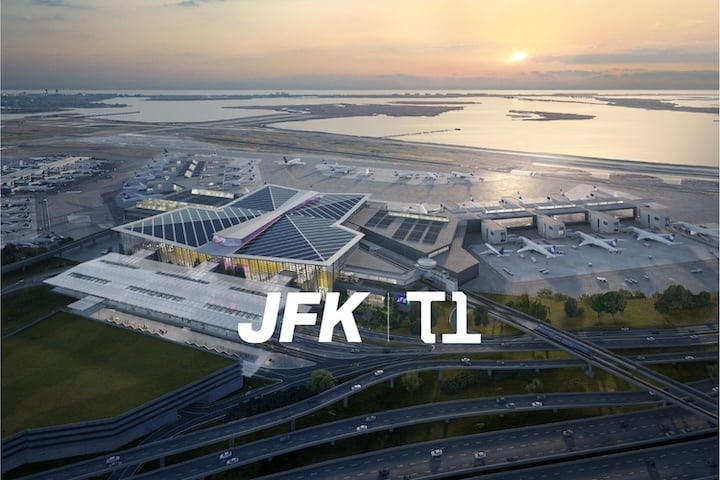
New York’s John F. Kennedy International Airport is rebuilding its global front door, and The New Terminal One (NTO)is the centerpiece on the airport’s south side — a $9.5 billionterminal project scheduled to open in phases starting in 2026and reach full buildout around 2030.
This week, the project added a very 2026 twist: a partnership with U.S. Customs and Border Protection (CBP)to roll out Enhanced Passenger Processing (EPP)— a biometric, “touchless” process aimed at speeding up U.S. citizensthrough international arrivals, powered by biometric provider iProov.
What travelers can expect — and what critics worry about — depends on which promise you believe more: faster, more seamless arrivals , or more surveillance baked into travel .
The promise: a “world-class” international gateway (and a lot more space)
According to the Port Authority’s redevelopment brief, the New Terminal One will replace today’s Terminal 1 and occupy the former Terminal 2 and 3 sites, creating what’s billed as the largest standalone international terminal in the U.S.at 2.6 million square feetwith 23 gatesand 300,000+ square feetof dining, retail, and lounges.
Supporters point to several “quality of life” upgrades that address long-running JFK complaints:
- Capacity and comfort:bigger halls, modern layouts, and far more concessions should reduce the “bottleneck” feel many international travelers associate with legacy terminals.
- Energy and sustainability:the project cites 13,000 solar panelsas part of its sustainability story.
- Jobs and contracting:NTO highlights ~10,000 jobsincluding 6,000 union construction jobs, and the broader JFK redevelopment has emphasized MWBE participation.
In short: bigger, brighter, newer — and designed to feel like a modern global hub rather than a patchwork of add-ons.
The new “wow” feature: biometric arrivals for U.S. citizens (EPP)
The PRNewswire announcement frames EPP as the next step in turning arrivals into something closer to a frictionless “walk-through” process:
- No advance enrollment and no fee(for eligible travelers)
- Real-time identity confirmationusing facial biometrics
- Opt-out availablefor travelers who prefer the traditional process
CBP describes EPP as an “airport modernization”approach that moves part of the assessment earlier in the process and lets officers spend more attention on higher-risk cases.
Travel industry watchers have heard versions of this pitch before — but what makes JFK’s NTO announcement notable is the intent to make this part of the signature international-arrivals experience at America’s busiest gateway.
Positive feedback and expectations: “Finally, JFK is acting like New York”
Across aviation and airport-industry coverage, the optimistic view clusters around three themes:
- Competitiveness:JFK has long been criticized for looking dated compared with newer Asian, Middle Eastern, and even many European hubs. NTO is meant to help New York compete for premium long-haul traffic and airline growth.
- A better “first hour” after landing:arrivals halls, baggage, and border processing are where international gateways win or lose reputations. EPP is being sold as a way to reduce queues and make the post-flight experience less punishing.
- A sense of place:NTO messaging leans hard into “New York identity” — the idea that the terminal should feel like a cultural arrival, not just an efficient one.
Negative feedback and concerns: disruption now, privacy questions later
Even people who want a better JFK raise real worries — and they fall into two buckets.
1) Construction pain (and passenger patience)
Massive phased construction at a live airport almost always means years of inconvenience. Official and media travel advisories have repeatedly warned of roadway detours and delaysduring JFK’s broader transformation — and travelers feel it most at curbside and pickup/drop-off.
2) Biometrics: convenience vs. surveillanceEPP is voluntary with opt-out, but critics argue that “voluntary” can become murky in a fast-moving arrivals hall if signage and staffing aren’t crystal clear. Civil-liberties groups have long warned that airport facial recognition expands surveillance infrastructure and can create risks around consent, misuse, and function creep.
There’s also the broader question travelers increasingly ask: Where does the data go, and how long does it live?Recent reporting on DHS/CBP facial-recognition ecosystems has fueled skepticism about accuracy, oversight, and retention practices — even when programs promise deletion for certain categories of travelers.
The comparison: what each announcement is really saying
Port Authority (project page):“We’re rebuilding JFK’s international capacity and experience — bigger terminal, more gates, more concessions, jobs, and a New York identity — opening in phases from 2026, complete by 2030.”
PRNewswire (EPP release):“Arrivals won’t just be nicer — they’ll be faster for U.S. citizens, using biometric processing with no pre-enrollment and opt-out available.”
Put together, the story is clear: NTO isn’t selling architecture alone. It’s selling time.The real KPI is not how pretty the terminal is, but whether travelers spend less of their life standing still.
What travelers should do in 2026–2030
- Assume disruption is part of the ticket:phased openings mean wayfinding changes, temporary routes, and occasional confusion. Build buffer time for curbside and connections.
- If you’re a U.S. citizen arriving internationally:expect EPP to be offered as a default “faster lane” concept — but look for clear opt-out instructions if you prefer standard processing.
- Watch for airline moves:NTO is positioning as a major home for international carriers; airline terminal assignments can shift as phases open.






Leave a Comment