

If playback is interrupted, you can restart it.
When Sightseeing Becomes a Luxury: Are Expensive Attractions Good Business for Cities?A city break can look affordable until the sightseeing starts. Flights and hotels are usually compared before departure, but admission charges arrive one by one: €20 for a museum, €30 for another landmark, perhaps €40 or €50 for an observation deck. For a couple or family trying to see several headline attractions, the cultural part of a weekend can unexpectedly become one of the largest items in the travel budget.
A new DERTOUR Sightseeing Indexillustrates just how wide the gap has become even within Germany. DERTOUR examined the ten most popular paid attractions in each of Germany’s 20 largest cities, identified with the help of Tripadvisor rankings, and compared admission prices for adults, minors and concessionary visitors.
Germany
For adults, Hamburg is Germany’s most expensive sightseeing city, with an average admission price of €20.09 per attraction. Berlin follows at €16.91 and Hannover at €15.68. At the opposite end, Bonn is the cheapest at €8.90, followed by Essen at €9.74 and Nuremberg at €10.20.
The family picture is different. Düsseldorf has the highest average charge for minors, at €10.43, followed by Bochum at €10.15 and Hamburg at €9.89. Munich, despite its reputation as an expensive destination, is the cheapest of the 20 for children and teenagers in DERTOUR’s comparison, at an average €2.40, with Dresden only slightly higher at €2.60.
That demonstrates an important point: the general cost of a city and the cost of experiencing its culture are not necessarily the same thing.
The global sightseeing shock
The same phenomenon becomes more visible internationally. Mercer’s widely used cost-of-living study places Hong Kong, Singapore, Zurich, Geneva, New York and London among the world’s most expensive cities for international employees. Its methodology is not a tourist-price index, but it identifies destinations where visitors are already primed for high accommodation, food and transport costs. Attraction prices can then provide an additional surprise.
New York
New Yorkis perhaps the clearest example. General admission to the Metropolitan Museum of Art is currently $30 for an adult, as is the Museum of Modern Art. Children aged 16 and under enter MoMA free, while children 12 and under are free at the Met. But adding one of Manhattan’s famous views changes the calculation quickly: the Empire State Building’s 86th-floor observatory starts at $44, with a $5 booking charge per transaction, while access to both the 86th and 102nd floors starts at $79.
For one adult, therefore, a Met visit followed by even the basic Empire State Building experience means at least $74 in headline admission prices, before food, transport or other attractions. Choosing the upper observation deck instead pushes the two-attraction bill to $109.
Zurich
Zurich, currently at the very top of Numbeo’s mid-2026 cost-of-living ranking, provides another example. The Kunsthaus Zürich charges CHF24 for its collection and smaller exhibitions, while an “All in One” ticket covering the collection and all exhibitions costs CHF36. Yet there is an important accessibility counterweight: admission to the collection is free for everyone on Wednesdays.
Singaporealso combines premium tourism with deliberately differentiated prices. At the National Gallery Singapore, citizens and permanent residents receive free general admission, while visitors of other nationalities pay S$20; an all-access ticket is S$15 for locals but S$30 for international visitors.
At Gardens by the Bay, a non-resident adult currently pays S$46for the Flower Dome and Cloud Forest combination featuring Jurassic World: The Experience
, compared with S$34 for a Singapore resident.
Then there is London, where the contradiction is particularly interesting. It is one of Mercer’s ten most expensive cities, yet many of its most important national museums offer free access to their permanent collections.
The British policy of free permanent admission to sponsored national museums means that “expensive city” does not automatically translate into “expensive museum city”. At the same time, heritage attractions can be costly: a standard adult ticket to the Tower of London is currently £37, before extras such as an audio guide.
Paris
Paris has become the most revealing experiment. Paris is currently conducting what may become one of the most significant experiments in cultural-attraction pricing.
Since 14 January 2026, the Louvre has charged €22 to visitors who are citizens or residents of the European Economic Area but €32 to visitors from outside the EEA.
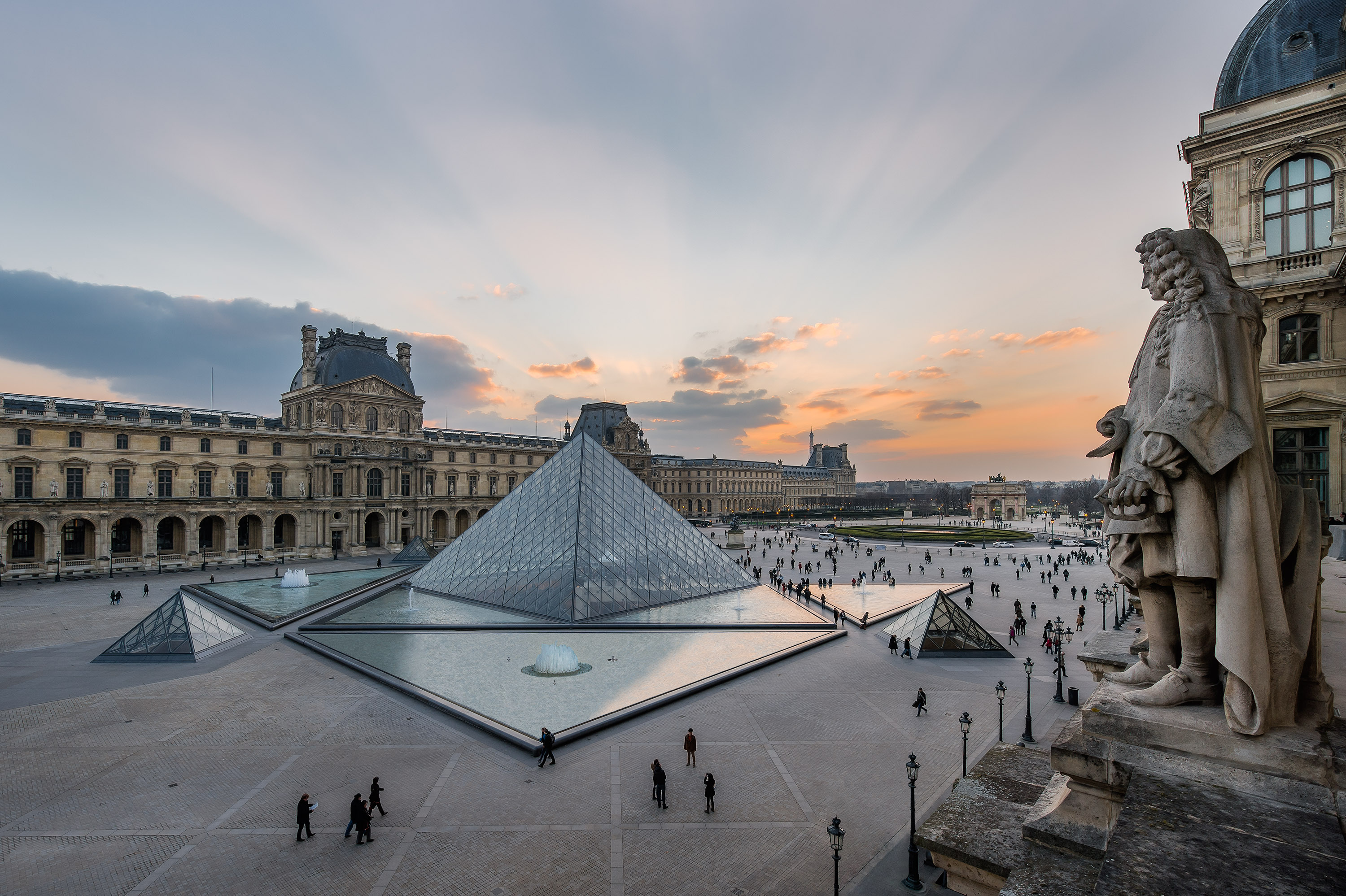
A US, British, Canadian, Chinese or Australian visitor therefore pays €10 more for exactly the same museum admission. The increase amounts to roughly 45 percent for affected visitors.
The museum expects the differentiated price to provide approximately €15–20 million in additional annual revenue, with funds needed for renovation, modernization and security improvements.
From the visitor’s perspective, it is an unusually visible form of price discrimination. From the institution’s perspective, the economic reasoning is straightforward: international tourists do not contribute to France’s cultural institutions through the same domestic tax system, many have already committed thousands of euros to reaching Paris, and a visit to the Louvre is frequently considered an essential rather than optional part of the trip.
Do Higher Museum ticket prices deter visitors?
The crucial question was whether the higher price would deter them.
The first evidence is striking. By July 2026, reporting from France indicated that differentiated pricing had not produced a noticeable decline in foreign visitors at institutions including the Louvre and Versailles. Chambord, another French heritage attraction using higher non-European prices, had already generated approximately €300,000 in additional revenue during the first half of the year. The Louvre continues to anticipate around €20 million in additional annual income.
It is too early to call this a permanent success. Visitor numbers are affected by aviation capacity, weather, economic conditions, exchange rates and geopolitical events as well as admission prices. But the French experiment provides real-world evidence for a conclusion cultural economists have reached before: visitors to unique, world-famous attractions can be surprisingly insensitive to moderate price increases.
Why higher prices can work
Research into museum demand has often found relatively low price elasticity, meaning that a percentage increase in admission prices produces a smaller percentage fall in attendance. Cultural tourists who have traveled specifically for an attraction can be particularly difficult to deter: after paying for flights and hotels and investing limited vacation time, an additional €5 or €10 may not be enough to make them abandon the Louver, Tower of London or a famous observation deck.
High prices can therefore provide venues with money for conservation, security, new exhibitions, staff and improved visitor infrastructure without necessarily destroying demand. They can also help manage congestion.
At extremely popular attractions, maximizing visitor numbers is not always desirable; overcrowding itself can reduce the quality of the experience. Research using movement data inside the Louvre, for example, has documented the problems created by hyper-congestion around a limited number of famous spaces and objects.
There is also an economic argument extending far beyond the ticket office. Museums and major attractions generate demand for hotels, restaurants, retail, taxis and public transport.
The American Alliance of Museums estimates that US museums contribute more than $50 billion annually to the economy and support more than 726,000 jobs, although these frequently cited figures are based on an earlier sector-wide economic-impact study and should therefore be treated as an indication of scale rather than a current annual audit.
The “Bilbao effect” provides the classic destination example. Research and UNESCO assessments have linked the Guggenheim Bilbao not merely to museum attendance but to tourism growth and the international cultural branding of the city itself. In other words, a successful cultural institution can become part of the commercial identity of a destination.
A very recent German example points in the same direction. Research published in 2026 into the Sensoria experience museum in Holzminden estimated that its first year was associated with approximately 4,691 additional overnight stays and around €560,000 in additional gross turnoveracross hospitality, retail and services.
The long-term effect is not yet known, but it illustrates why destinations may have more to gain from cultural attractions than the admission revenue alone.
But there is a price at which “premium” becomes “unwelcome”
Higher revenue does not mean that price is irrelevant.
A German study of barriers to museum attendance found entrance charges to be the only statistically significant subjective barrieramong 23 potential motives and obstacles examined, with income playing an important role in how strongly visitors perceived that barrier.
This is where museums face a different commercial calculation from amusement parks or observation decks. They are generally expected to serve educational and public-cultural purposes as well as tourists. A pricing strategy that successfully extracts more money from affluent international visitors may simultaneously discourage young people, lower-income families and repeat local visitors.
Britain demonstrates the opposite model. Fifteen national museums sponsored by the Department for Culture, Media and Sport continue to provide free entry to their permanent collections.
Together, DCMS-sponsored museums and galleries recorded about 42 million visits in 2024/25. Earlier government analysis after the introduction of free national-museum admission reported around 18 million annual visits to museums and galleries that had previously charged, helping make free museums some of Britain’s most visited attractions.
Free admission does not mean zero commercial return. More visitors can mean greater expenditure in cafés and shops and, much more importantly for a destination, more spending outside the institution. Free cultural access can itself become part of a city’s reputation: London’s ability to offer the British Museum, National Gallery and other major collections without a compulsory permanent-collection ticket is a meaningful counterweight to the city’s expensive hotels, restaurants and commercial attractions.
Reputation depends less on price than on perceived value
For destinations, the danger is therefore not simply “high prices”. It is poor value, unpleasant surprises and a sense that tourists are being exploited.
A €30 museum that delivers several exceptional hours of art, architecture and interpretation can produce greater visitor satisfaction than a mediocre €15 attraction. Likewise, transparent resident discounts may be accepted as legitimate when visitors understand that local taxpayers subsidize the institution. Singapore uses this principle openly, while the Louvre is now testing it on a much larger and more politically sensitive scale.
Visitor experience matters commercially because satisfaction is closely connected with destination image and intention to return. Tourism research published in 2026 again found tourist satisfaction to play a significant mediating role between destination image and revisit intention.
The lesson for attractions is consequently not “charge as much as possible”. It is to determine the price at which additional revenue still strengthens the experience.
For superstar attractions with severe congestion and international visitors who regard them as once-in-a-lifetime experiences, there may be considerable room to raise prices. The Louvre’s early 2026 results suggest that carefully targeted increases can produce substantial revenue without immediately frightening international tourists away.
For smaller museums competing with many alternative activities, or institutions whose mission depends on frequent local visits, the calculation is different. A high admission fee can reduce spontaneous visits, make family outings expensive and weaken the idea of the museum as an accessible civic institution.
The real measure is what happens outside the ticket office
DERTOUR’s German ranking therefore raises a bigger question than whether Hamburg at €20.09 is “too expensive” and Bonn at €8.90 is “cheap”.





Leave a Comment