
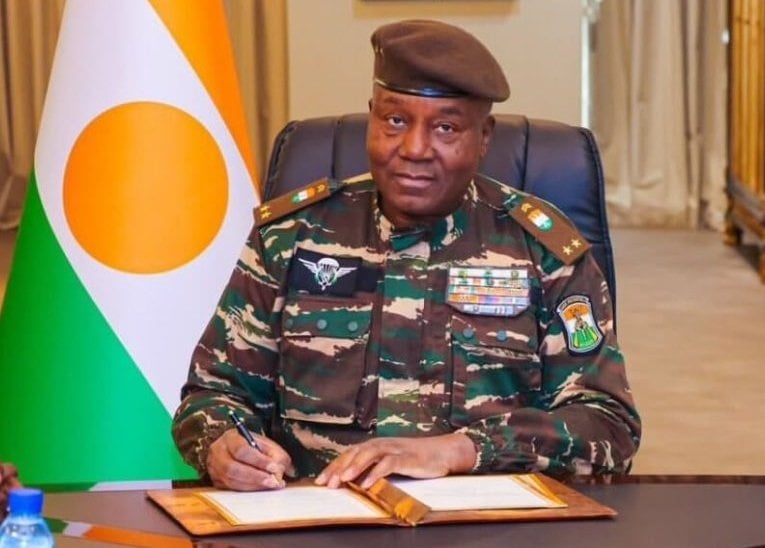
Niger, formally known as the Republic of the Niger, is a landlocked nation situated in West Africa. This unitary state shares its borders with Libya to the northeast, Chad to the east, Nigeria to the south, and Benin and Burkina Faso to the southwest, while Mali lies to the west and Algeria to the northwest.
The country has a predominantly Muslim population of approximately 25 million, primarily residing in communities in the southern and western regions. The capital city, Niamey, is positioned in the southwestern part of Niger, adjacent to the Niger River, which shares its name.
There are 11 national languages in Niger, with French serving as the country’s official language. The number of indigenous languages in Niger varies between 8 and 20, depending on the criteria used for counting, and these languages belong to the Afroasiatic, Nilo-Saharan, and Niger-Congo language families.
This week, Niger’s transitional administration has downgraded the status of French and designated Hausa as the national language of the country. This decision is outlined in a recently ratified charter by the West African nation, which classifies French as a ‘working language.’
While Hausa is the predominant language spoken in Niger, French has held official status since the nation gained independence from France in 1960. The new government in Niamey, which assumed power after the military coup that ousted civilian President Mohamed Bazoum in July 2023, aims to sever connections with Paris.
At the end of last month, the Sahel nation approved the Charter of Refoundation, which the government asserts will be implemented as state law. The Constitution of the country, established in November 2010, was put on hold following the coup on July 26.
According to Article 12 of the charter, published in Niger’s official journal, “The national language is Hausa… and the working languages are English and French.”
The document states that nine additional languages, such as Zarma-Songhay, Fulfulde (Peul), Kanuri, Gourmantche, and Arabic, have been classified as ‘spoken languages’ in Niger.
Furthermore, the transition charter, which was introduced during a national conference in February, has also prolonged the tenure of Niger’s interim president, Abdourahamane Tchiani, by five years.
In March, Niger, along with its allies Burkina Faso and Mali, withdrew from the International Organization of Francophone Nations (OIF), a global French-speaking entity. The three nations, which are founding members of the Alliance of Sahel States (AES), accused the OIF of straying from its original purpose of fostering cultural and technical collaboration, instead becoming a tool for political bias.

The AES further condemned the Paris-based organization for undermining the sovereignty of its member states through the selective enforcement of sanctions. The OIF had suspended Mali, Burkina Faso, and Niger following military coups in these three former French colonies, which were among the inaugural members of the OIF when it was established in Niamey on March 20, 1970.
Following the military takeovers, relations between Bamako, Niamey, and Ouagadougou with Paris have significantly worsened. The military governments of these countries have all ended defense cooperation with France, citing interference and the inability of French forces to effectively combat a lethal jihadist insurgency in the Sahel region.






Leave a Comment