
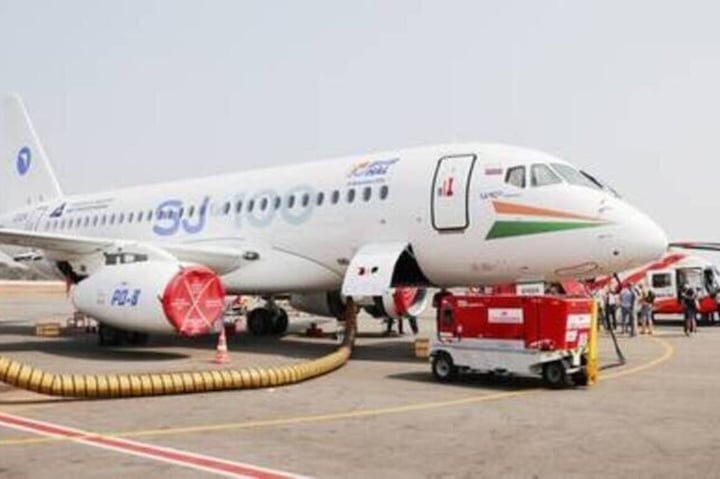
Hyderabad (India) — A historic new chapter in civil aerospace cooperation between Russia and Indiais unfolding as the two nations work to place their jointly developed regional aircraft on the global aviation map. What once was dominated by Western manufacturers could soon see new competition from a Russia–India partnership built on indigenous production and strategic industrial collaboration.
The breakthrough came at the Wings India 2026 airshow in Hyderabad, where United Aircraft Corporation (UAC) of Russia and Hindustan Aeronautics Limited (HAL) of India reaffirmed their commitment to a long-term civil aviation partnership. The centerpiece of the initiative is the regional jet **SJ-100 — developed by Russia and now slated for licensed assembly in India — marking a major milestone for New Delhi’s ambitions to establish itself as a hub of commercial aircraft production.
Joint Production and Market Potential
Under the agreement, HAL will gain the rights and technical support to assemble and eventually sell the SJ-100 domestically and abroad, supported by UAC expertise in design, certification, and manufacturing processes. According to industry estimates, India’s domestic market may require over 200 regional jets over the next decade, with additional demand across the Indian Ocean region.
At Wings India 2026 , both Russia and India also highlighted the Ilyushin IL-114-300turboprop aircraft — another platform that could play a role in opening up regional connectivity and manufacturing cooperation
Strategic Shift from Military to Civil Sectors
The civil aviation cooperation represents a significant shiftfrom the traditionally military-focused relations between the two countries. While India has long partnered with Russia on defense platforms, this new initiative signals a strategic push into commercial aviation — an industry dominated by giants like Boeing and Airbus.
According to senior project officials, working together on the SJ-100 offers India a fast track to building domestic aerospace capabilities, reducing reliance on Western supply chains and technology bottlenecks. For Russia, the partnership provides access to one of the world’s fastest-growing civil aviation markets and a larger production ecosystem amid Western sanctions that have constrained cooperation with European and American firms.
Opening the Global Map
Industry analysts believe this Russia–India collaboration could eventually reshape regional aviation dynamicsby offering airlines a competitive alternative to established global suppliers — particularly for short-haul and regional routes less well served by larger jets. If successful, the joint fleet could extend far beyond domestic markets, offering new options in Africa, Southeast Asia, and beyond.
While challenges remain — including certification, supply chain development, and establishing a global service network — the partnership exemplifies a broader trend toward industrial diversificationand new geopolitical economic tiesin aerospace. For India, entering the civil aircraft manufacturing arena at this scale could be transformative — positioning the country not just as a major aviation market, but as a producer on the world stage.







Leave a Comment