
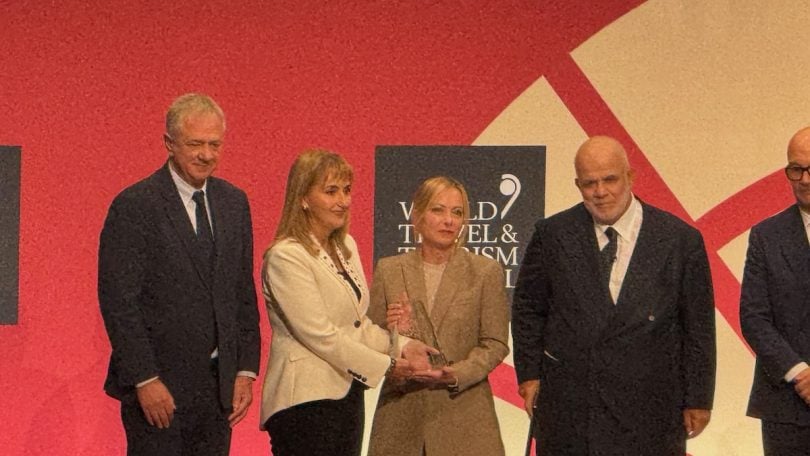

The World Travel & Tourism Council (WTTC) does not relocate its headquarters often. When it does, it is never just about real estate.
The planned move to Madrid marks a moment of reckoning for an organization that, in recent years, many in the global travel industry quietly felt had lost focus, momentum, and—most critically—its sense of who it ultimately serves.
WTTC is not a government body.It is not a personality-driven institution.
It is a member organization—and when it works, it works because its members, not its executives, set the direction.
That balance matters.And for a while, it was off.
Madrid Is Not the Story. Power Is.
Publicly, the relocation to Madrid is framed as a strategic alignment with Europe and international institutions. That is true—but incomplete.
Behind the scenes, the move has forced long-delayed conversations about governance, transparency, accountability, and leadership culture. Relocations have a way of doing that. They expose who is essential, what is working, and where authority truly lies.
Over time, internal processes increasingly lacked transparency. Accountability weakened. Strategic clarity faded. Activity began to replace outcomes.
WTTC became more CEO-centric than member-driven.
Travel by WTTC CEO Julia Simpson was frequent, but many members questioned its strategic purpose. Engagement often focused on low-profile, leisure-oriented destinations rather than the markets, policy priorities, and regions members had explicitly asked leadership to prioritize.
Member requests were delayed or sidelined. Outcomes were unclear. What mattered most to members did not always appear to matter at headquarters.
WTTC was not collapsing.But it was drifting.
And drift is dangerous for an organization built on influence.
Rome: When the Drift Became Visible
The uncertainty surrounding the 2025 Global Summit made that drift impossible to ignore.
With no confirmed host and growing internal hesitation, WTTC risked entering the year without a flagship event—an extraordinary situation for an organization that defines itself by global convening power.
Incoming Chairman Manfredi Lefebvre, together with former Chairman Greg O’Hara and other board members, intervened decisively to secure Rome as host. That intervention proved critical.
At the same time, internal divisions surfaced. Simpson took stress leave weeks before the Rome summit. eTurboNews was told she preferred an Asia location and was unhappy with Rome.
Leadership continuity broke down just as summit preparations entered their most sensitive phase, leaving the organization without an active CEO at a critical moment. Media requests—including from eTurboNews—went unanswered.
The WTTC board acted
Recognizing the urgency, the WTTC board asked Gloria Guevara—who had previously led WTTC through the COVID-19 crisis—to return as Interim CEO to stabilize the organization and deliver the summit.
The contrast was immediate.
Under Lefebvre and Guevara’s interim leadership, with the help of WTTC members in Italy and the board, the Rome summit did not merely proceed—it became one of the most successful summits in WTTC’s history. Energy returned. Discipline improved. Members re-engaged.
Malta was quickly confirmed as host for 2026, with more than a dozen destinations expressing interest in hosting future summits—something that would have seemed unlikely just months earlier.
Several WTTC members told eTurboNews that since Rome, decision-making has been faster, internal dynamics quieter, and priorities far more transparent.
That alone tells you something fundamental has changed.
When Leadership Forgets Who the Boss Is
WTTC’s structure is simple in theory—and often complicated in practice:
- The members are the stakeholders
- The board represents them
- Management executes
When that chain blurs, trust erodes.
In recent years, many members felt sidelined as leadership attention shifted toward visibility, optics, and constant travel—often without clearly defined goals, deliverables, or direct relevance to member priorities.
What members wanted was advocacy, policy impact, access, and credibility.What they experienced was activity without clarity.
Engagement declined. Participation softened. Relevance—once assumed—became a legitimate question.
The current WTTC transition feels different.
Members who had stepped back are returning. Senior executives who once watched cautiously from the sidelines are re-engaging. There is a visible sense of awakening—an energy that had been missing from WTTC for some time.
The message from within is consistent and unmistakable:
WTTC works best when it remembers who it belongs to.
The U.S. Factor: A Silent Majority with a Loud Stake
Roughly one-third of WTTC’s members are U.S.-based companies—including global giants such as Marriott, Hyatt, Hilton, American Express, and major aviation and travel service groups. Their interests are not peripheral; they are central to WTTC’s relevance and credibility.
Yet the United States today presents a contradiction that the industry can no longer ignore.
Under the current Trump administration, the U.S. has lost significant international appeal. Inbound arrivals have dropped to some of their lowest levels in years, driven by visa friction, border perception issues, political rhetoric, and a broader erosion of Brand USA.
At the same time, Americans are traveling abroad in record numbers, creating a form of balance for airlines—but leaving hotel occupancy rates in many U.S. destinations under pressure, particularly outside peak urban and resort markets.
What is striking is not only the trend, but the silence.
Major U.S. travel organizations such as the U.S. Travel Association, USTOA, and Destinations International,which represent many of the same companies and US destinations sitting at the WTTC table, have avoided publicly challenging policies that are clearly harming inbound tourism to the United States.
This creates a leadership vacuum.





Leave a Comment