

From trillion-dollar investment figures and new government alliances to an expanding membership and a gathering of more than 200 global tourism leaders in Malta, August and early September have given the World Travel & Tourism Council a remarkably active run. But beneath the announcements, another message is becoming increasingly clear: growth alone is no longer enough.
For the World Travel & Tourism Council, August 2026 was a month of numbers, partnerships and positioning.
In little more than four weeks, WTTC released major economic research, expanded its membership with companies and destinations from Europe, Mexico, Egypt and China-linked ClubMed Lifestyle Group, forged a new partnership with the World Governments Summit, and accelerated preparations for its 26th Global Summit in Malta.
The activity points to an organisation attempting to do more than document tourism’s recovery. WTTC increasingly appears to be positioning itself at the intersection of capital, government policy and private-sector leadership—while simultaneously confronting a more uncomfortable question for tourism: how can continued growth translate into genuine benefits for destinations and the people who live in them?
The trillion-dollar signal
WTTC opened August with arguably its strongest economic headline.
On 5 August, its latest Economic Impact Research Global Trends Report revealed that global Travel & Tourism investment exceeded US$1 trillion in 2025, an 8.5% increase year-on-year and the first return above that symbolic threshold since 2019. Travel & Tourism as a whole contributed a record US$11.6 trillion to global GDP.
Perhaps more revealing was where the capital was concentrated.
The United States, China, India and Saudi Arabia together accounted for almost US$500 billion—roughly half of global Travel & Tourism investment. On LinkedIn, WTTC highlighted the United States’ 22.8% share, China’s 16.3%, India’s rapidly expanding investment pipeline and Saudi Arabia’s Vision 2030 tourism program.
The discussion beneath that post showed that the industry’s attention is already moving beyond the headline number.
Commenters argued that destinations need more than hotels and physical infrastructure. They raised the importance of cultural heritage, communities, skills, local SMEs, policy certainty and what one contributor described as tourism’s “soft infrastructure”. Others noted that Africa’s challenge is not simply attracting capital but creating sufficiently coordinated and investable projects.
That is significant because it reflects a tension increasingly visible across the tourism debate: a trillion dollars of investment may demonstrate confidence, but the quality and distribution of that investment will determine whether communities share in its benefits.
Growth—with warning lights flashing
WTTC followed its global investment story with a considerably more sobering regional assessment.
On 6 August, it forecast that Travel & Tourism GDP in the Middle East would contract by 14.5% in 2026, falling from US$386 billion in 2025 to around US$330 billion as geopolitical conflict disrupts airspace and travel flows. The region handles approximately one in seven international passengers, making disruption there a global rather than purely regional issue.
Yet WTTC’s longer-term message remained bullish. The organisation sees the Middle East returning to powerful growth over the coming decade as Saudi Arabia, the UAE, Qatar, Oman and others continue large-scale investment in tourism, aviation and destination development.
Then came Europe.
On 17 August, WTTC reported that Europe captured US$2 trillion of the US$6.15 trillion spent globally on leisure travel in 2025—effectively one dollar in every three. France, Spain, Italy and Türkiye remain at the centre of that demand, while European leisure spending is forecast to grow by another 3.7% in 2026.
It is an impressive performance. It is also where WTTC’s message becomes more nuanced.
Record demand is putting pressure on housing, infrastructure, water, energy and local communities in some of tourism’s most successful destinations.
WTTC President & CEO Gloria Guevara addressed precisely that issue in an August interview with Spanish broadcaster RTVE. Her central argument was simple: tourism that does not benefit residents ultimately undermines the visitor experience as well.
She also stressed that tourists and residents share the same resources and that destinations therefore need much stronger planning.
That may be one of WTTC’s most important messages of the period.
For an organisation historically associated with demonstrating tourism’s economic value, the conversation is shifting from “How much can tourism grow?” to “How should tourism grow?”
Building a bigger coalition
WTTC also spent August visibly expanding its network.
Piñero joined as a Global Member on 10 August, bringing a tourism group spanning hospitality, real estate, tour operating and mobility. Piñero CEO Encarna Piñero described WTTC membership as a strategic milestone and emphasised sustainable, inclusive development and the wellbeing of destination communities.
Three days later, the Egyptian Tourism Authority joined as a Destination Partner, strengthening a relationship with a country that has recently posted rapid tourism growth and is increasingly seeking investment alongside visitor arrivals.
Mexico’s Grupo Brisas became a Regional Member on 17 August. The hotel group operates 14 properties and more than 3,300 rooms and is expanding through projects in Cancún, Los Cabos and Mexico City.
On 26 August, the Malta Tourism Authority joined as a Destination Partner—a particularly strategic addition given Valletta’s role as host of October’s Global Summit.
And two days later, ClubMed Lifestyle Group joined as a Global Member. Its 69-resort footprint spans six continents and more than 40 countries and regions. ClubMed Lifestyle Group Chairman Xiaoliang Xu said the company sees WTTC as a platform for discussion with global tourism leaders and for identifying new collaboration opportunities.
Taken together, these additions are more meaningful than a membership tally. They illustrate WTTC’s effort to assemble a network that crosses the traditional boundaries between hotel companies, destination authorities, investors, mobility companies and governments.
From industry association to policy platform
Perhaps the most strategically significant announcement came on 13 August.
WTTC signed a Memorandum of Understanding with the World Governments Summit Organization, an initiative of the UAE Prime Minister’s Office.
The partnership is designed to connect WTTC’s private-sector network with a major governmental convening platform, creating cooperation around technology, sustainability, workforce issues, investment, resilience and destination development.
On LinkedIn, WTTC framed the agreement in direct terms: public-private collaboration will shape the next era of Travel & Tourism.The MoU was formalized by Guevara and World Governments Summit Managing Director Mohamed Al Sharhan.
This partnership arguably captures WTTC’s broader direction better than any single economic report.
The Council is attempting to convert its access to CEOs into greater influence on the policies that determine tourism outcomes—from investment and border facilitation to digitalisation, infrastructure and crisis resilience.
Malta becomes the focal point
By early September, virtually all roads in WTTC’s communications strategy were beginning to lead towards Malta.
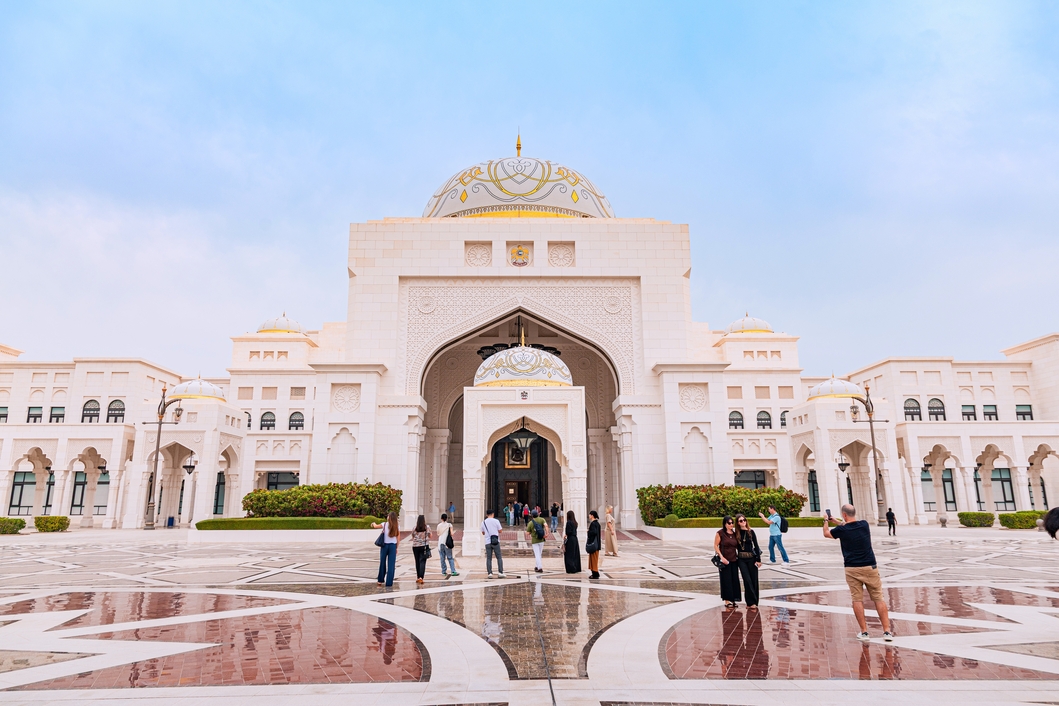
On 3 September, WTTC announced that more than 200 CEOs and senior Travel & Tourism executivesare expected in Valletta for the 26th WTTC Global Summit from 7–9 October 2026.
The confirmed leadership roster is formidable: Hilton President & CEO Christopher Nassetta, IHG Global CEO Elie Maalouf, Four Seasons President & CEO Alejandro Reynal, Capital A’s Tony Fernandes, Trip.com Group CEO Jane Sun and MSC Group Cruise Division Executive Chairman Pierfrancesco Vago are among those expected. Executives from Marriott, Expedia, Google, Microsoft, Visa, Amadeus, JPMorganChase/Chase Travel, VFS Global, Accor, Iberostar and numerous tourism boards are also listed.
Media coverage responded accordingly. eTurboNews described the attendee list as resembling a directory of global tourism influence rather than a conventional conference lineup.
WTTC has called the Summit theme “FUTU[RE]SET: Shaping the Future of Travel & Tourism.”
The title is well chosen.
Artificial intelligence, shifting consumer expectations, geopolitical instability, climate pressures, investment competition and community resistance are all simultaneously reshaping tourism. WTTC says the Malta discussions will concentrate on how public- and private-sector leaders can navigate that disruption while strengthening resilience, competitiveness and sustainable growth.
Even WTTC’s X activity reflects the intensity of the build-up. Recent posts have promoted individual speakers, highlighted Malta’s new Destination Partner status and—unusually—announced limited Executive Access Passes for senior executives whose organisations are not yet WTTC members, opening part of the traditionally membership-oriented gathering to a wider leadership audience.
The bigger story
The most interesting conclusion from WTTC’s activity since the beginning of August is therefore not any one announcement.
It is the convergence of several.
Capital is returning. Membership is expanding. Governments are being pulled closer to private-sector conversations. Destinations want access to global investors and CEOs. And WTTC is placing itself in the middle of those relationships.
But its public messaging also suggests an important evolution.
Economic growth remains fundamental, yet phrases such as community benefit, resilience, sustainable investment, destination management and public-private collaboration are becoming increasingly central to the Council’s language.
Social-media responses to WTTC’s trillion-dollar investment announcement reinforce that pressure from within the tourism community itself. Capital matters, commenters argued—but so do heritage, culture, SMEs, skilled people, communities and credible governance.
That makes October’s Malta Summit more than the next event on WTTC’s calendar.
It will be a test of whether a tourism industry celebrating record economic scale can turn the language of responsible growth into practical action.
The sector no longer needs convincing that Travel & Tourism is economically powerful. WTTC’s own figures have made that case emphatically.
The harder question now is what the industry chooses to do with that power.








Leave a Comment