BS in Biological Sciences
- Campus
Build a Future Exploring Life, Nature and Scientific Discovery
This bachelor’s in biological sciences program takes a multidisciplinary approach, integrating fields such as conservation biology, chemistry, ecology and genetics. As a student, you will be taught a comprehensive curriculum that merges instruction from experienced faculty with practical, hands-on learning opportunities. This blended approach is aimed at equipping graduates for early careers in the field.
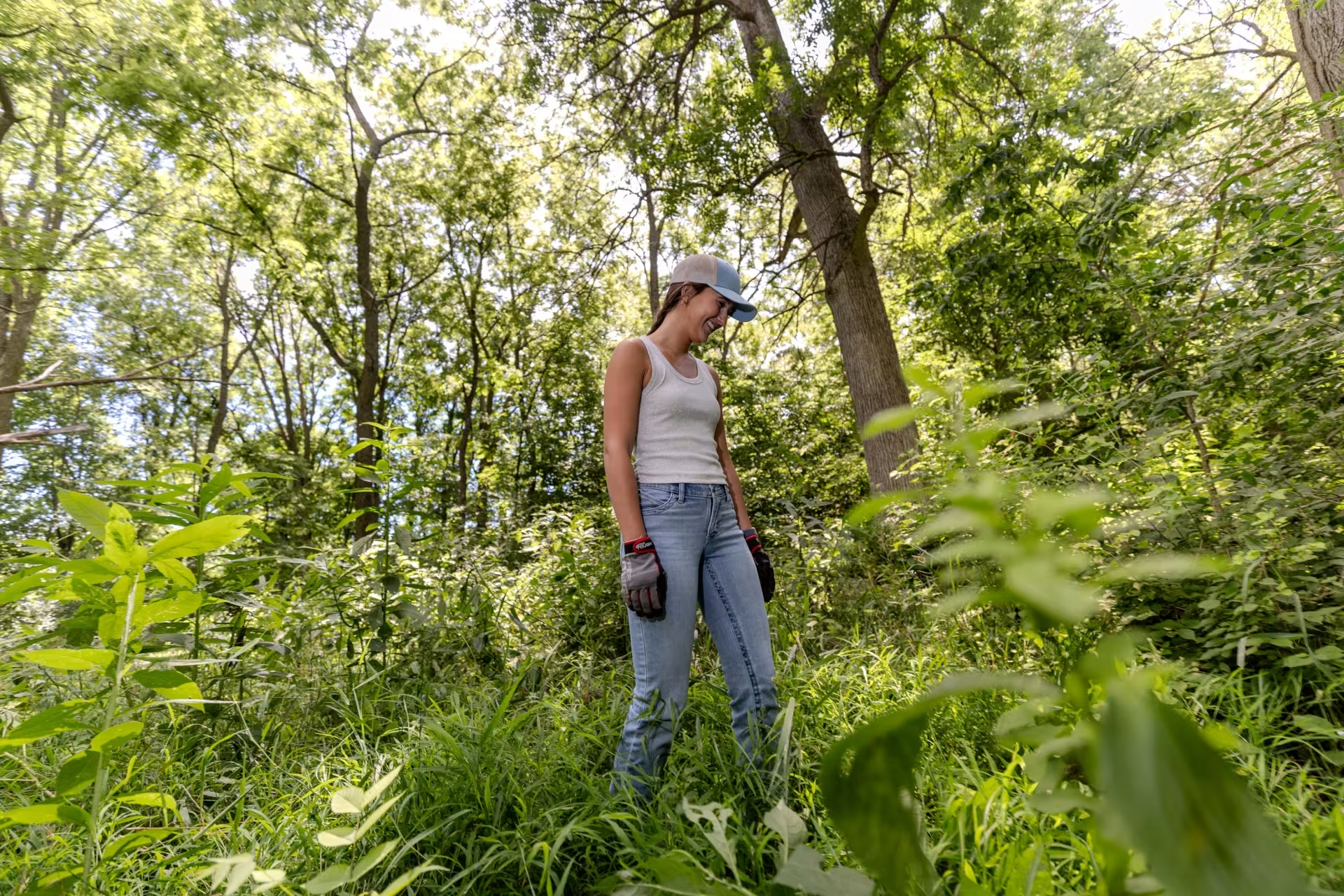
">The Bachelor of Science in Biological Sciences degree program at GCU offers a science track focused on animal and environmental conservation, designed to help you pursue a career in STEM . This program could be a good fit for those who are curious about the natural world and who aspire to protect the environment by applying biological principles.
This bachelor’s in biological sciences program takes a multidisciplinary approach, integrating fields such as conservation biology, chemistry, ecology and genetics. As a student, you will be taught a comprehensive curriculum that merges instruction from experienced faculty with practical, hands-on learning opportunities. This blended approach is aimed at equipping graduates for early careers in the field.
Campus: $8,250per semester [ More Info ]
Up to 90 credits, only 84 can be lower division
Credits:Fill out the Lopes Eval to find out what will transfer
Admission Requirements (Bachelor's)
- 16+ years old
- High School Graduate
- 3.0+ Unweighted GPA
OR 2.5+ Unweighted GPA and
- ACT: 19
- SAT: 1000*
*Math and reading only on a 1600 point scale (test date after 3/1/2016). SAT score of 1380 required for 2400 point scale (test date before 3/1/2016).">
Admission requirements
may differ based on degree level, program and modality, or transfer status. Some programs of study may require a higher GPA and/or other qualifying criteria for admission. Please review full admission and program requirements in the University Policy Handbook
.
*Math and reading only on a 1600 point scale (test date after 3/1/2016). SAT score of 1380 required for 2400 point scale (test date before 3/1/2016).
Become a Responsible Steward of Natural Resources
GCU’s mission is to prepare our students to make a positive impact on the world by encouraging them to become ethical servant leaders and responsible stewards of our planet. Offered by the College of Natural Sciences, this biological sciences degree helps you explore how to bridge theory and application for the purpose of promoting environmental welfare and the conservation of natural resources. You will have opportunities to develop both technical skills in the field, as well as soft skills like critical thinking and effective communication — all of which you may find helpful as you work toward promoting positive transformation of the world around you.
As a private Christian university, GCU strives to deepen our students’ understanding of God and the universe, fostering inquiry at the intersection of faith and science. Here, you will take faith-integrated courses that are rooted in a Christian worldview. Your faith may guide the way you approach complex thoughts, ideas and practices through scientific exploration and discovery. You will have the chance to engage in discussions about ethics and values related to biological and natural science, as well as advanced topics that connect faith and science.
The GCU campus provides STEM-focused learning facilities that include fully equipped labs. From the start of your program, you will have access to lab equipment and tools that support experiential learning. You can benefit from face-to-face learning interactions and enjoy all that our vibrant campus culture has to offer — from events and club activities to popular dining options to help you refuel between classes.
Discover Genetic Principles, Animal Behavior and Ecosystem Science
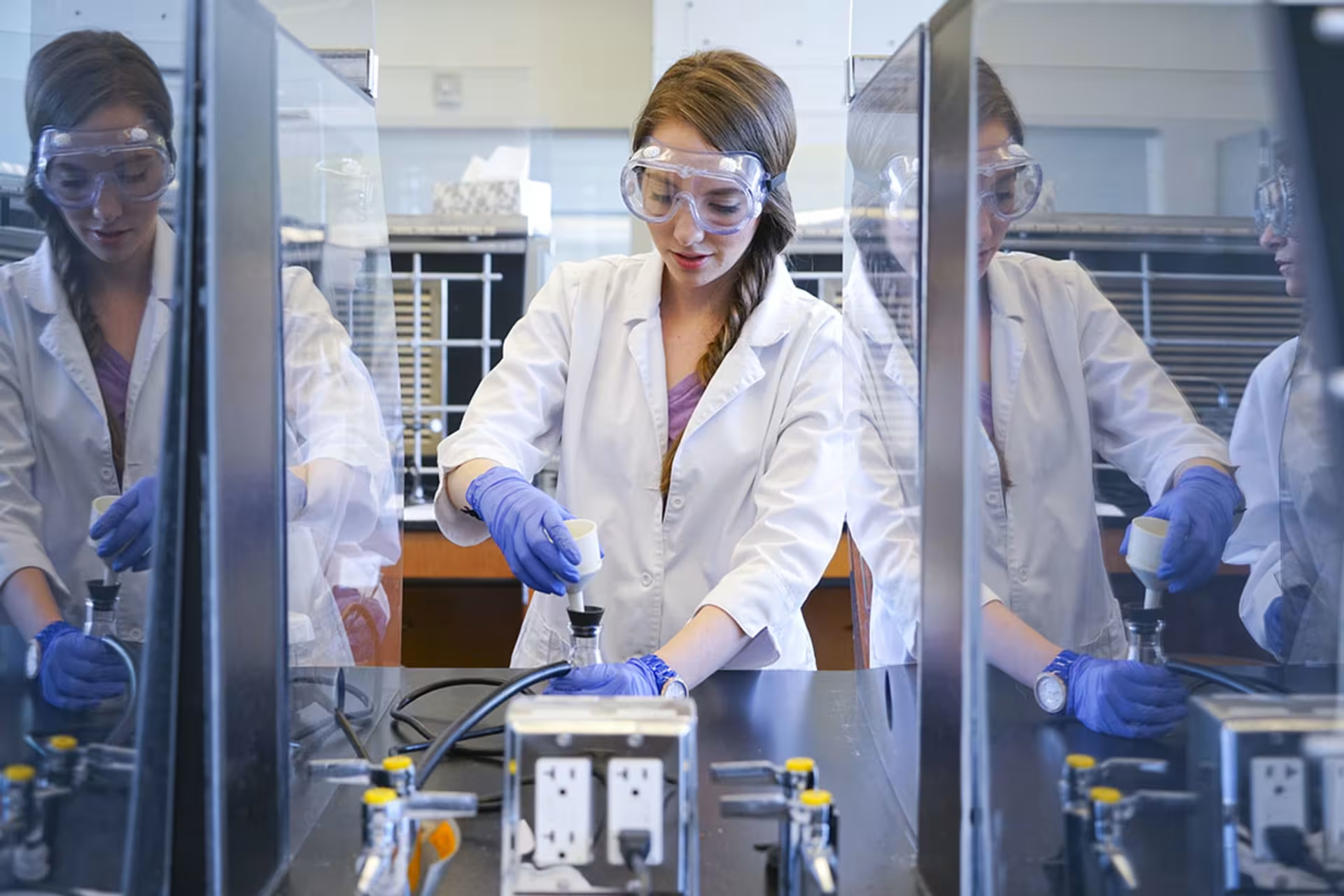
The BS in Biological Sciences curriculum introduces you to general biology, chemistry and fundamental physics principles, along with coursework focused specifically on ecology and conservation and the fauna that inhabit the natural world.
Many courses include both a lecture and a lab component, which can help you apply the theories and concepts taught in class to practical projects. Similarly, you will explore topics relevant to applied fieldwork, including data collection and analysis. The program concludes with a capstone course, allowing you to utilize what you have been taught in a hands-on project, with the opportunity to work with external agencies, focused on a specific area of interest within the biological sciences.
As you progress through the program, you will explore topics such as:
Genetics principles
Biodiversity and animal diversity
Cross-disciplinary applications of biology
Ecosystem science
Complexities of animal behavior
Conservation-focused biology
What Our Dean Has To Say

"In every discipline, GCU natural sciences students gain access to laboratories and specialized equipment to enhance their educational experience beyond the confines of the classroom."">" In every discipline, GCU natural sciences students gain access to laboratories and specialized equipment to enhance their educational experience beyond the confines of the classroom. "
"In every discipline, GCU natural sciences students gain access to laboratories and specialized equipment to enhance their educational experience beyond the confines of the classroom."">" In every discipline, GCU natural sciences students gain access to laboratories and specialized equipment to enhance their educational experience beyond the confines of the classroom. "