
Georgia Cottage Food Laws and Regulations: How to sell your homemade foods in Georgia
PickYourOwn.org - Find a pick-your-own farm near you! Then learn to can and freeze!
Looking for Georgia Cottage Food Laws and Regulations: How to sell your homemade foods in Georgia in 2026? Scroll down this page and follow the links. And if you bring home some fruit or vegetables and want to can, freeze, make jam, salsa or pickles, see this page for simple, reliable, illustrated canning, freezing or preserving directions . There are plenty of other related resources, click on the resources dropdown above. If you are having a hard time finding canning lids, I've used these, and they're a great price & ship in 2 days .
If you have questions or feedback, please let me know ! There are affiliate links on this page. Read our disclosure policy to learn more.
Georgia Cottage Food Laws and Regulations: How to sell your homemade foods in Georgia
Georgia Cottage Food Laws, Regulations and Facts
Date of the enactment of the Georgia cottage food law: September 2012. Georgia enacted significant changes to its cottage food law in 2025, effective July 1, 2025. HB 398 (Act 193) , signed May 13, 2025. Under the cottage food law, there are certain types of low risk food products that may be produced and sold out of your home kitchen with no inspection or licensing requirements. Cottage food sales are allowed under Georgia's Regulations Chapter 40-7-19. The Cottage Food License allows cottage food operators to produce non-potentially hazardous foods in home kitchens to sell to the end users. The Georgia Department of Agriculture does not have any limits on gross sales or the number of units that can be produced
Which foods are subject to the Georgia Cottage Food law?
Georgia allows the production and sale of non-potentially hazardous foods from a home kitchen. These are foods that do not require time and/or temperature control for safety because they do not support the rapid growth of harmful microorganisms or the growth and toxin production of Clostridium botulinum.
Georgia's Cottage Food Law, O.C.G.A. Article 19, Chapter 2, Title 26, was substantially amended by HB 398, effective July 1, 2025. The law includes the following types of cottage food products:
- Loaf Breads, Rolls, and Biscuits
- Cakes (except those whose fillings require refrigeration or have high moisture content)
- Pastries and Cookies
- Candies, Confections, and Fudge
- Fruit Pies
- Jams, Jellies, and Preserves (except fruit butters when commercial sterility may be affected by reduced sugar or pectin levels)
- Uncut Fruits and Vegetables
- Dried Fruits
- Dry Herbs, Seasonings and Mixtures
- Cereals, Trail Mixes, and Granola
- Coated or Uncoated Nuts
- Vinegar and Flavored Vinegar
- Dill Pickles
- Dry Soup Mixes
- Roasted Coffee Beans
- Dry Pasta
- Popcorn, Popcorn Balls, and Cotton Candy
The law also includes other non-potentially hazardous foods and nonalcoholic beverages that meet the statutory definition. Not every food that can be safely stored at room temperature automatically qualifies. Check with the Georgia Department of Agriculture if you are uncertain whether a particular product is permitted.
If your food product does not meet the definition of a Cottage Food:
Don't give up. You may still be able to make and sell it commercially, through a startup approach.
First, you may be able to rent space in a local licensed commercial kitchen .
Second, if that doesn't work, you may be able to get a co-packer to make the food for you .
Definitions:
- "Cottage food item" means a non-potentially hazardous food or nonalcoholic beverage intended for human consumption that is produced and, if packaged, packaged at the residential property of the producer. The definition does not include alcoholic beverages, foods containing cannabis, or raw milk.
- "Cottage food operator" means a person who produces cottage food items at a residential property for sale to consumers or sellers under Georgia's Cottage Food Law.
- "Home kitchen" means a kitchen primarily intended for use by the residents of a home.
- "Non-potentially hazardous foods" means cottage food items that do not require temperature control for safety because they are not capable of supporting the rapid growth of pathogenic or toxigenic microorganisms or the growth and toxin production of Clostridium botulinum.
- "Potentially hazardous foods" means foods requiring temperature control for safety because they are capable of supporting the rapid growth of pathogenic or toxigenic microorganisms or the growth and toxin production of Clostridium botulinum.
- Prohibited foods generally include potentially hazardous foods requiring refrigeration or other temperature control, including meat, poultry, dairy products, custard pies, cream pies, cheesecake, cooked vegetables, and garlic in oil. Acidified foods and low-acid canned foods are also subject to separate processing and licensing requirements and generally do not qualify under the Cottage Food Law.
- Eggs are a separate case. Raw eggs and certain egg products are subject to separate agricultural regulations.
- See Georgia's Cottage Food Law and definitions here .
Where may Cottage Food Production Operations sell the food products?
Georgia significantly expanded its Cottage Food Law through HB 398, effective July 1, 2025.
Cottage food operators may sell their products directly to consumers, including through online sales and mail orders, or to retail food sales establishments, including:
- Grocery stores
- Convenience stores
- Restaurants
- Other qualifying retail food sales establishments
Products sold to retail establishments must comply with Georgia's labeling and display requirements. Retail establishments selling cottage food products must display them in a separate section or display case, apart from other food products, and post a conspicuous sign indicating that the cottage food products are exempt from state inspection.
Wholesale distribution is still restricted. Cottage food operators cannot sell their products to wholesalers, brokers, or distributors who purchase and resell the products. Sales must be directly to consumers or to qualifying retail food sales establishments.
Georgia also allows sales through commercial delivery companies. Cottage food operators remain responsible for complying with applicable federal and state requirements when products are shipped or sold across state lines. Interstate sales may subject the operation to additional FDA requirements.
Local governments generally cannot prohibit or regulate cottage food operations under HB 398. However, a county or municipality may adopt an ordinance prohibiting cottage food operators from selling through third-party vendors within its jurisdiction. General local business requirements, zoning rules, and other applicable laws may still apply.
License and Registration
Georgia no longer requires a Cottage Food License from the Georgia Department of Agriculture. Effective July 1, 2025, under HB 398, cottage food operators no longer need to obtain a state cottage food license, pay a licensing fee, or undergo a pre-licensing inspection.
There is also no annual state cottage food license renewal fee.
Identification numbers: If you do not want your residential address displayed on your product labels, you may request an identification number from the Georgia Department of Agriculture. This number may be used instead of your residential address as permitted by O.C.G.A. § 26-2-473.
Previously licensed operators may be able to use their existing GDA license number as their identification number. New operators should contact the Department about obtaining an identification number.
Although a state cottage food license is no longer required, operators must still comply with applicable food safety, training, labeling, and other requirements.
Other Georgia agriculture-related licenses:
Get the ServSafe and CPFM Study Guide for Food Manager Certification in Paperback
And get the ServSafe Food Handler Guide
- Food Sales Establishments (Manufacturers)
- Food Sales Establishments (Retailers)
- Cottage Food Sales
- Egg Candlers
- Mobile Meat Sales Licenses (Retailers)
- Wholesale Fish Dealers Licenses (Manufacturers)
- Dairy Permits & Licenses (Pasteurized Milk)
- Raw Milk for Human Consumption
Food Safety or Food Handlers Training
Although Georgia eliminated the cottage food licensing requirement effective July 1, 2025, the Georgia Department of Agriculture continues to require cottage food operators to complete an American National Standards Institute (ANSI)-accredited food safety training program.
Food Handler training is acceptable for cottage food operators; a more advanced Certified Food Manager course is also available. The Department provides a directory of ANSI-accredited programs .
ServSafe is one organization offering accredited food safety training. Other providers include NRFSP and Prometric.
See the Georgia Department of Agriculture Cottage Food page for current training requirements.
Business filings
Georgia has a " How to start a business in Georgia " page.
Collecting sales taxes
See this page for general information about collecting, reporting and remitting sales taxes. Georgia has a base sales tax, various exemptions for certain categories, and additional taxes that vary by county.
Georgia Cottage Foods also has a Facebook page in which the discussed ( back in February 18, 2014, about collecting sales taxes ). This page also discusses collecting sales taxes in Georgia .
Labeling requirements 
Georgia's Cottage Food Law was significantly amended by HB 398, effective July 1, 2025. The new law establishes specific disclosures that must be provided to consumers. Other applicable food labeling requirements, including ingredient and allergen declarations, continue to apply.
Required cottage food disclosures under O.C.G.A. § 26-2-473:
- The BUSINESS NAME of the cottage food operation.
- The ADDRESS and TELEPHONE NUMBER of the cottage food operation; alternatively, the operator may request and use a Georgia Department of Agriculture identification number instead of providing the residential address.
- The following statement, in at least 10-point font:
"This product was produced at a residential property that is exempt from state inspection. This product may contain allergens."
The required information must be displayed as follows:
- Packaged products: On a label attached to the package.
- Bulk products: On a label attached to the container.
- Unpackaged products: On a placard displayed at the point of sale.
- Internet sales: On the webpage where the product is offered for sale.
- Telephone or custom orders: The seller may disclose the required residential-property and allergen statements verbally. The producer information must be readily available and provided upon request.
When products are sold through a third-party retail vendor, they must also be displayed in a separate section or display case from non-cottage-food products. The vendor must conspicuously label that section or display case as containing cottage food products exempt from state inspection.
Additional food labeling requirements: The Georgia Department of Agriculture continues to require the following information under its existing cottage food directives and applicable federal labeling standards:
- The COMMON NAME or description of the product.
- INGREDIENTS STATEMENT listed in descending order of predominance by weight, including ingredients within sub-ingredients.
- The NET WEIGHT or VOLUME of the product.
- ALLERGEN declarations following federal FDA requirements.
- NUTRITIONAL INFORMATION if nutritional claims are made, subject to applicable federal exemptions.
Important: The old statement, "MADE IN A COTTAGE FOOD OPERATION THAT IS NOT SUBJECT TO STATE FOOD SAFETY INSPECTIONS," is the wording from the former Georgia cottage food regulations. HB 398 establishes the new statutory statement shown above. Use the new statutory statement when preparing labels under the amended law.
See the Georgia Department of Agriculture's Cottage Food page for updated guidance and labeling information.
Allergen information:
Federal allergen labeling requirements recognize nine major food allergens. You must identify any of these allergens present in your ingredients or their sub-ingredients:
- Milk
- Eggs
- Fish
- Crustacean shellfish
- Tree nuts
- Peanuts
- Wheat
- Soybeans
- Sesame
Allergens may be identified in the ingredient statement or in a separate "Contains" statement immediately following the ingredient list, as permitted by federal labeling requirements.
For example, if you have an ingredient made with a wheat-based product, you have two options:
- Include the allergen in the ingredient list. For example, a white bread with the following ingredient list: whole wheat flour, water, salt and yeast:
"Ingredients: whole wheat flour, water, salt and yeast."
In this example, listing "whole wheat flour" as an ingredient meets the federal requirements for identifying wheat. - Include an allergen statement ("Contains:") after the ingredient list. For example, a white bread with the following ingredient list: whole wheat flour, water, sodium caseinate, salt and yeast.
"Ingredients: whole wheat flour, water, sodium caseinate, salt and yeast. Contains: Wheat and Milk."
The "Contains" statement must reflect all major allergens found in the product. In this example, the milk comes from the sodium caseinate.
To get started
To get started, visit the Georgia Department of Agriculture Cottage Food website and read its current guidance for starting a cottage food business. Although a state cottage food license is no longer required, operators must still comply with food safety, training, labeling, and other applicable requirements.
And here is a YouTube video produced by the state of Georgia: How to start a cottage food business in Georgia .
Recommendations:
Beyond the requirements, common sense, good practices and reducing liability suggest you should do the following.
Testing of pH
It's best to use a pH meter, properly calibrated on the day used. I use this one, which is reliable and inexpensive
. And this pH meter is really good, but isn't always available
.
Short-range paper pH test strips, commonly known as litmus paper
, may be used instead, if the product normally has a pH of 4.0 or lower and the paper's range includes a pH of 4.6.
Record-keeping is suggested
Keep a written record of every batch of product made for sale, including:
- Recipe, including procedures and ingredients
- Amount produced and sold
- Production date
- Sale dates and locations
- Gross sales receipts
- Results of any pH test
Sanitation
Although routine pre-licensing inspections are no longer required, the Georgia Department of Agriculture may inspect a cottage food operation in response to a consumer complaint, foodborne illness report, or other public health emergency. You should consider doing the following:
- Use clean equipment that has been effectively sanitized prior to use
- Clean work surfaces and then sanitize with an appropriate sanitizing solution before and after use
- Keep ingredients separate from other unprocessed foods
- Keep household pets out of the work area
- Keep walls and floors clean
- Have adequate lighting
- Keep window and door screens in good repair to keep insects out
- Wash hands frequently while working
- If using a private water system or well, have the water tested annually for Total Coliform and Fecal Coliform, as required by Georgia's current cottage food guidance.
Best Practices
- Allergens: Federal law recognizes nine major food allergens: milk, eggs, fish, crustacean shellfish, tree nuts, peanuts, wheat, soybeans, and sesame. Even where a separate allergen declaration is not required because the allergen is properly identified in the ingredient list, clear allergen information helps protect consumers.
- Cross-allergenicity: There are also ingredients available, even flours, that can cause cross-allergenicity. The American Academy of Allergy Asthma & Immunology explains cross-allergenicity as an allergic reaction when proteins in one substance are similar to proteins found in another substance. For example, consumption of lupine flour may trigger an allergic reaction to peanuts, and cricket flour may trigger an allergic reaction to shellfish. Providing such information might be a beneficial marketing tool and help keep potential consumers safe.
- The 2 Hour/4 Hour Rule: Anyone wishing to make and sell refrigerated bakery items should remember that potentially hazardous foods require temperature control for safety. The 2-hour/4-hour rule is a food safety guideline for certain foods temporarily held outside temperature control. However, potentially hazardous foods generally do not qualify for production and sale under Georgia's Cottage Food Law simply because a time-control method is used.
More resources:
- Georgia Cottage Food Program – Current Requirements
- HB 398 – Georgia Cottage Food Law, effective July 1, 2025
- Georgia Cottage Food Regulations, Chapter 40-7-19
- Georgia Cottage Food Update: HB 398 Frequently Asked Questions
- Georgia Cottage Food Frequently Asked Questions
- Georgia Cottage Food Identification Number Information
- Georgia Cottage Food Labeling and Food Safety Information
- Food Safety Checklist for Cottage Food Preparers
- State and local health department contact information .
- Starting a Home Food Business in Georgia
Questions? Contact Information:
Georgia Cottage Food Program
For additional questions and support, contact the Food Safety Division headquarters office at 404-656-3627.
Georgia Department of Agriculture – Cottage Food Program
FAQs
Below is a list of commonly asked questions. See the complete list of FAQs here .
- What about BBQ sauce, salsa, hot sauce, apple butter, pickles, etc.?
See this page - Will I need to meet local zoning or other laws?
Georgia law generally prohibits counties and municipalities from regulating cottage food operations. However, general business requirements, zoning rules, and other applicable local laws may still apply. Local governments may also prohibit cottage food sales through third-party vendors within their jurisdiction by adopting an ordinance under O.C.G.A. § 26-2-478. Check with your local government regarding applicable requirements. - Can I utilize commercial-type equipment such as large rotary mixers in my cottage food operation?
The cottage food operation must comply with applicable food safety requirements. The use of equipment must not create unsanitary conditions or prevent proper cleaning and sanitizing. - Can I produce and sell cooked vegetable products, like salsas, tomato sauces, spaghetti sauces, or focaccia bread with roasted vegetables?
Generally, no. Products containing cooked vegetables or other ingredients that require temperature control for safety do not qualify under the Cottage Food Law. Manufacturers of these products may need to meet separate federal and state processing, training, and licensing requirements. - Can I make and sell apple butter, pumpkin butter or other fruit butters?
Generally, no. Fruit butters have significantly less sugar than traditional jams or jellies. The combination of acid, sugar, pectin and heat helps assure the safety of jams and jellies. Fruit butters may have insufficient acidity or other characteristics to assure commercial sterility. Georgia's cottage food definition specifically excludes fruit butters when commercial sterility may be affected by reduced sugar or pectin levels. - Can I make and sell hard candies or lollipops under the Cottage Food Regulations?
Yes. Hard candies, lollipops and peppermint candies are allowed, provided they meet applicable food safety and labeling requirements. - Can I make and sell sweet breads, muffins or other baked goods made with fresh fruits and vegetables like zucchini, pumpkin, and strawberries?
Yes, as long as the fruits or vegetables are incorporated into the batter and properly baked, labeled and packaged. The baked goods may not be decorated or garnished with fresh fruits or vegetables. - Can I use homegrown fruits and vegetables in baked goods?
Yes. Thoroughly wash the homegrown produce. The fruits or vegetables must be incorporated into the batter and properly baked, labeled and packaged. The baked goods may not be decorated or garnished with fresh or raw fruits or vegetables. - Can homegrown produce be canned and used for making baked goods, like sweet breads, at a later date?
Home-canned products generally are not approved for production under the Cottage Food Regulations, with the exception of qualifying jams, jellies and preserves. Commercially canned products, such as canned pumpkin and cherry pie filling, may be used in qualifying baked goods. - Can I freeze homegrown produce and use it for making baked goods, like sweet breads, at a later date?
Yes, as long as the frozen fruits or vegetables are incorporated into the batter and properly baked, labeled and packaged. The baked goods may not be decorated or garnished with fresh or frozen fruits or vegetables. - Can I make and sell dry bread or 'instant' bread mixes under the Cottage Food Regulations?
Yes. Dry bread mixes are an acceptable product to produce and sell, provided all applicable Cottage Food requirements are met. - Does my chocolate fountain business qualify as a Cottage Food Operation? I deliver and set up the fountain, and provide chocolate dipping sauce and items to dip (cut-up fruit, pretzels, etc.) that I have prepared in my home kitchen.
No. This type of business is a catering service or food service business, subject to applicable county health department regulations and permitting. - Can I sell my Cottage Foods over the Internet?
Yes. Georgia law permits cottage food operators to sell directly to consumers, including through online sales and mail orders. Products may also be sold to qualifying retail food sales establishments. Cottage food operators must comply with applicable federal and state laws when selling or shipping products across state lines. Interstate commerce may subject the operation to additional FDA requirements. - Can I sell my Cottage Food products to a grocery store or restaurant?
Yes. HB 398, effective July 1, 2025, allows cottage food operators to sell their products to qualifying retail food sales establishments, including grocery stores and restaurants. Retailers must display cottage food products separately from other food products and post the required signage identifying them as cottage foods exempt from state inspection. Local governments may prohibit third-party vendor sales through an ordinance under O.C.G.A. § 26-2-478. - Can I sell my Cottage Food products through a wholesaler, broker or distributor?
No. Cottage food operators may sell directly to consumers or to qualifying retail food sales establishments. They cannot sell to wholesalers, brokers, or distributors who purchase and resell the products.

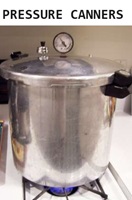

Looking for canning equipment and supplies?

Pressure canners for gas, electric and induction stoves : Presto 23Qt or T-fal 22Qt
 Canning scoop
(this one is PERFECT)
 Ball Blue book
(most recent version)
Jars: 8oz canning jars for jams

Water Bath
Canners:
You can make jams, jellies, can fruit, applesauce, salsa and pickles with water bath canners, like this
Stainless Steel 24 QT Water Bath Canner
with Rack, Lid, and Home Canning Supplies Starter Kit w/ Tools & Accessories
or this 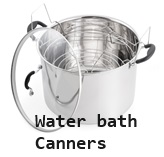 McSunley 21QT
version below
(similar, but without the kit)
Want to start your own Podcast, Blog, Vlog, etc? This GoPro kit has EVERYTHING you need
:
all accessories
Find Other types of farms:
Farm markets and roadside stands
Road trips and camping resources
Local Honey , apiaries, beekeepers
Consumer fraud and scams information
Home canning supplies at the best prices on the internet!
Maple Syrup Farms , sugarworks, maple syrup festivals
Environmental information and resources
Farms For Your Event for birthday parties, weddings, receptions, business meetings, retreats, etc.
Festivals - local fruit and vegetable festivals
Get themost recent version of
the Ball Blue Book
Canning and preserving, making jams, salsa, sauces, pickles, etc is SO easy with our step by step directions ! Just about all you need is a canner and canning jars!
Canning accessories kit:
funnel, jar tongs, lid lifter, etc

Water Bath
Canners:
You can make jams, jellies, can fruit, applesauce, salsa and pickles with water bath canners, like this
Stainless Steel 24 QT Water Bath Canner
with Rack and Lid, Home Canning Supplies Starter Kit w/ Tools & Accessories
or this McSunley 21QT
version below
(similar,
but without the kit)
