
Oregon Cottage Food Laws and Regulations: How to sell your homemade foods in Oregon
PickYourOwn.org - Find a pick-your-own farm near you! Then learn to can and freeze!

Looking for Oregon Cottage Food Laws and Regulations: How to sell your homemade foods in Oregon in 2026? Scroll down this page and follow the links. And if you bring home some fruit or vegetables and want to can, freeze, make jam, salsa or pickles, see this page for simple, reliable, illustrated canning, freezing or preserving directions . There are plenty of other related resources, click on the resources dropdown above. If you are having a hard time finding canning lids, I've used these, and they're a great price & ship in 2 days .
If you have questions or feedback, please let me know ! There are affiliate links on this page. Read our disclosure policy to learn more.
Oregon Cottage Food Laws and Regulations: How to sell your homemade foods in Oregon
Oregon Cottage Food Laws, Regulations and Facts
Oregon is one of the more complicated states to understand what is allowable and what you must do. Before you start, please discuss what you want to do with the Food Safety Program office (503-986-4720)
Oregon has 2 standards...
- Domestic food processing license - to sell food that is made in your home kitchen, you must meet special requirements and must obtain a domestic kitchen license. This process is more rigorous.
- Domestic bakery license (a.k.a, the home baker exemption) - to sell certain bakery products that are made in your home kitchen, you must must meet special requirements and must obtain a domestic kitchen license. But the requirements are a bit reduced from the full domestic kitchen license.
Domestic Kitchens
In Oregon, domestic kitchen processor laws. Date of the enactment of the Oregon domestic kitchen law: January 1, 2016.
Anyone who would like to sell food that is made in his or her home kitchen must meet special requirements and must obtain a domestic kitchen license.
Residential Kitchens Home Bakers Exemption
However, there is also a Home Baking Bill that exempts residential kitchens for certain baked goods & confectionary items . The Home Bakery Exemption allows people to produce certain baked goods and confectionary items in their home kitchens and sell them directly to consumers without having to obtain a food establishment license or undergo an inspection from the Oregon Department of Agriculture (ODA). Exempt home kitchens must be built and maintained in a clean, healthful, and sanitary manner.
Residential Kitchens may be exempt if producing baked goods or confectionery items that are not potentially hazardous and that are sold only to the end user. Sales must not exceed $20,000 annually.
Anyone who would like to sell food that is made in his or her home kitchen that does not meet the Home Bakery Exemptions must obtain and meet all special requirements for a domestic kitchen bakery and/or food processing license. These licenses start at $152 per year and $189 per year respectively: https://www.oregon.gov/ODA/shared/Documents/Publications/FoodSafety/DomesticKitchensLicensingReq.pdf
Which foods are subject to these Oregon food laws?
Home bakers may make and sell Baked goods and confectionary items that are not "potentially hazardous" "Baked goods" includes
- bread,
- rolls,
- cakes,
- pies,
- doughnuts,
- pastries,
- cookies,
- biscuits,
- crackers and
- all similar goods made for human consumption.
"Confectionary items" means candy or sweets, including, but not limited to:
- salted caramels,
- marshmallow bars,
- chocolate covered marshmallows, and
- hard candy.
If you get the full domnestic kitchen license; you can also make
Prohibited (these do not qualify for the home bakers exemption)
"Potentially hazardous" baked goods require temperature control (e.g., refrigeration) to prevent the rapid growth of infectious or toxic microorganisms. Examples include:
- Baked goods that require refrigeration after production, such as pies, cakes or pastries containing cream, custard, meringue, or cream cheese icings or fillings;
- Focaccia-style breads containing vegetables or cheese;
- Candied fresh fruit products including caramel and candy apples;
- Baked goods containing fresh, frozen, or dried meat, or fish or shellfish products (e.g., potpies or pastries with those ingredients).
Also prohibited from any domestic kitchen license are
- Low-acid food canning
- Dairy processing (such as homemade ice cream)
- Meat cutting or processing
- Dried meats
All activities listed in the second list above may be done in an approved facility that is licensed (not a home kitchen). r.
If your food product does not meet the definition of a Cottage Food:
So, if your food product is on the prohibited list and/or does not meet the definition of a Cottage Food, you may still be able to make and sell it commercially, through a startup approach using a licensed kitchen or a co-packe. Don't give up. You may still be able to make and sell it commercially, through a startup approach.
First, you may be able to rent space in a local licensed commercial kitchen .
Second, if that doesn't work, you may be able to get a co-packer to make the food for you .
Licensed Residential Kitchens / Domestic Kitchens
This is separate from the home bakers exemption. These are NON-exempt home kitchens that specific requirements. They are allow to (notice it says "sell", not "make")
- Sell the following, in
individual-sized portions for immediate consumption only (not
wholesale)
- Candy, candied apples, and non-potentially hazardous (not requiring temperature control for the safety of the food product) confections
- Commercially prepackaged ice cream and frozen desserts sold in individual servings
- Commercially pickled products
- Commercially processed jerky, nuts, nutmeats, and popcorn
- Prepackaged foods such as potato chips, pretzels, and crackers
- Unopened commercially bottled and canned non-potentially hazardous beverages, including alcoholic beverages
- Coffee and tea with non-potentially hazardous ingredients
- Non-potentially hazardous hot or cold beverages, prepared from individually packaged powdered mixes and commercially bottled water, excluding fresh squeezed juice
- Non-potentially hazardous foods or beverages provided by a non-food service business or organization at no charge
- Other food items as determined by the Oregon Health Authority or ODA
- Sell the following; obtained from
a licensed food service, or processing establishment, or
prepared onsite; for immediate consumption at an event
- Non-potentially hazardous baked goods
- Privately donated breads, rolls, pies, cakes, doughnuts, or other pastries not having potentially hazardous (time temperature control for safety) fillings, served by a benevolent organization. Additional examples include jam, candy or mixing and packaging bean soup mix to raise funds for a non-profit organization
- Public notice must be posted that states: "Notice: Food served at this location may not have been inspected by the regulatory authority."
- Personal chef who prepares food for an individual or private party
So what can you MAKE under the full domestic kitchen license (NOT the baker exemption)?
These are some of the things approved - but again, I'll make the point that you'd better call the state and discuss what you want to make with them before you even start the process::
- Condiments, like Honey, Ketchup, Mustards,
- Peanut butter, Oils, Pickles, Salsas, Sauces, Syrups, Vinegars
- Preserves, like Applesauce, Chutneys, apple butter, peach butter
Definitions:
- home kitchen - The domestic kitchen license was designed to allow someone to try his or her business venture without a large capital expenditure and therefore, it is for limited production only. The home kitchen must also be used for domestic activities; an empty house or apartment cannot be rented for the purpose of processing food in the kitchen.
Licensing
The home kitchen license approves only the home kitchen for food processing. If you plan to use a garage, basement, out building, or any other room in the house other than the kitchen as the processing area there are additional requirements under a regular food processing license. Please contact the Food Safety Program for more information. The county health departments do not license domestic kitchens for food service activities, so a domestic kitchen cannot be licensed for catering operations.
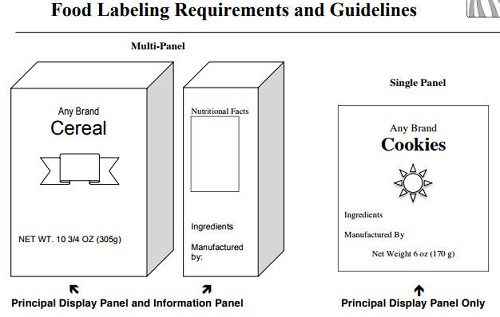 Labeling requirements
Cottage Food Production Operations must label all of their food products properly, which include the following information on the label of each unit of food product offered or distributed for sale:
- The name of the product,
- net weight,
- ingredient statement, and
- the name and address of the producer.
If the item is perishable, an expiration date is required.
It is a good idea to submit this label to the Food Safety Program for review before having a quantity printed. There is a handout available that further explains the labeling requirements (electronically available on the website).
See this page for much more inmformation about labels, sample labels and a template to use.
Allergen labeling
The federal Food Allergen Labeling and Consumer Protection Act of 2004 (FALCPA) requires that foods containing any of the eight major food allergens are clearly labeled on the principal display panel of the food. The eight major allergens are:
- Milk (any protein from milk, butter, cream, dry milk, whey, or casein)
- Eggs (e.g., whites, yolks, albumen, or powdered eggs)
- Soy (e.g., soy beans soy lecithin, soy protein, soy, or soy flour)
- Wheat (includes spelt, semolina, kamut, and triticale)
- Seafood (e.g., salmon, tuna, eel, bass, flounder, or cod)
- Crustacean shellfish (e.g., crab, lobster, or shrimp)
- Peanuts (e.g., peanut butter or peanut meal)
- Tree nuts (e.g., pecans, walnuts, hazelnuts, cashews, coconut, or pine nuts)
Where may Cottage Food Production Operations sell the food products?
Foods prepared under the Home Bakery Exemption may only be sold by the producer directly to the consumer at the producer's home, farmers' markets, farm stands, roadside stands and similar venues. You cannot sell goods produced under the Home Bakery Exemption to a commercial entity or an institution including, but not limited to, a restaurant, grocery store, caterer, school, day care center, hospital, nursing home, or correctional facility
Other requirements
If you are considering the operation of a domestic kitchen license, the following features will be required of your home according to OAR 603-025-0200:
- Doors - any domestic kitchen doors must be kept closed during operation of the domestic kitchen.
- People - No one other than the licensee and employees directly under his/her supervision are permitted to directly engage in the processing, preparing, packaging, or handling of commercial food and no other person than the licensee and employees are allowed in the domestic kitchen during operating hours.
- Children - No infants or children allowed in kitchen during domestic kitchen processing activity.
- Pets - No pets allowed - ever - in the same building that houses the domestic kitchen.
- Domestic Activity - All domestic activities must be completed before any commercial processing or baking takes place.
- Storage - Separate closed storage facilities are required for ingredients, finished products, cleaning materials, labels and packaging materials, as well as a separate refrigerated storage for perishable materials. Storage of medical supplies is not permitted in the domestic kitchen. A separate storage area must be provided for household cleaning materials and other chemicals or toxic substances.
- Domestic Kitchens shall be available for inspection between 8 am & 5 pm weekdays or other production times. A
Recommendations:
Get the Servsafe and CPFM Study Guide for Food Manager Certification in Paperback
And get the ServSafe Food Handler Guide
Beyond the requirements, common sense, good practices and reducing liability suggests you should do the following.
Training
Testing of pH
It's best to use a pH meter, properly calibrated on the day
used. I use this one, which is reliable and inexpensive
.
And this pH meter is really good, but isn't always available
.
Short-range paper
pH test strips, commonly known as litmus paper
, may be used
instead, if the product normally has a pH of 4.0 or lower and the
paper's range includes a pH of 4.6.
Record-keeping is suggested
Keep a written record of every batch of product made for sale, including:
- Recipe, including procedures and ingredients
- Amount canned and sold
- Canning date
- Sale dates and locations
- Gross sales receipts
- Results of any pH test
Sanitation
Although inspections are not required, you should consider doing the following:
- Use clean equipment that has been effectively sanitized prior to use
- Clean work surfaces and then sanitize with bleach water before and after use
- Keep ingredients separate from other unprocessed foods
- Keep household pets out of the work area
- Keep walls and floors clean
- Have adequate lighting
- Keep window and door screens in good repair to keep insects out
- Wash hands frequently while working
- Consider annual testing of water if using a private well
Best Practices
- Allergens:
Most state home baking
acts require an "ingredient statement" and/or an "allergen
listing" on the label of the bakery item for sale; but if your
state does not, you should anyway. The eight major food
allergens are
- milk,
- eggs,
- fish,
- crustacean shellfish,
- tree nuts,
- peanuts,
- wheat and
- soybean.
- Cross-allergenicity: There are also ingredients available, even flours, that can cause a cross-allergenicity. The American Academy of Allergy Asthma & Immunology explains cross-allergenicity as an allergic reaction when proteins in one substance are similar to the proteins found in another substance. For example, consumption of lupine flour may trigger an allergic reaction to peanuts, and cricket flour may trigger an allergic reaction to shellfish. Again, providing such information might be a beneficial marketing tool and help keep potential consumers safe.
- The 2 Hour/4 Hour Rule
- Anyone
wishing to make and sell refrigerated bakery items should
remember to follow the "2 Hour/4 Hour Rule." This is a system
that can be implemented when potentially hazardous foods are out
of temperature control (temperatures greater than 45 degrees
Fahrenheit) during preparation, serving or display for sale. The
rule guidelines are as follows:
- If a potentially hazardous food has been out of temperature control for 2 hours or less, then it may continue to be used or be placed back in the refrigerator.
- If a potentially hazardous food has been out of temperature control for more than 2 hours but less than 4 hours, it needs to be used quickly or discarded.
- If a potentially hazardous food has been out of temperature control for more than 4 hours, it must be discarded.
More resources:
- Oregon Domestic Kitchen License Information - English
- Oregon Domestic Kitchen License Information - Spanish
- Oregon Home (Domestic) Kitchen Bakery Law - ORS Chapter 625 Bakeries and Bakery Products
- Oregon Home (Domestic) Kitchen Bakery Regulation Oregon Administrative Rules 603-021
- Labeling Information - English Summary of labeling requirements for processed foods Oregon Labeling Information - English Summary Document
- Labeling Information - Spanish- Summary of labeling requirements for processed foods Oregon Labeling Information - Spanish- Summary Document
What Can I Do Without a License?
Residential Kitchens (discussed on the page above) may be exempt if producing baked goods or confectionery items that are not potentially hazardous and that are sold only to the end user. Sales must not exceed $20,000 annually.
The following are Oregon possible food license exemptions according to Oregon State Dept of Ag :
- Farm direct marketing bill exempts some agricultural producers selling raw commodities and value-added products directly to the final consumer.
- Community Supported Agriculture (CSA's) or farm shares are limited to items noted in the Farm Direct Rules. No cheese, fluid milk, fish, beef, etc.
- Food swap club is a private event that is exempt if people trade homemade, home grown, or foraged foods without food being sold or given away.
- Food buying clubs are exempt if they are private and limited to consumers who sign up for membership and products offered for sale are from an approved source.
- Poultry slaughtering and sales of not more than 1,000 birds may be exempt.
- Farmers' markets are not currently licensed as food establishments. All food vendors are required to have a food license unless you qualify for exemption.
- Fruit and vegetable stands located on a farmer's property are exempt if only selling produce grown by the farmer.
- Pet food that does not contain meat may be exempt.
- Retail honey extractors who own their hives can have an unlimited number of hives if they only sell to the consumer.
- Wholesale honey extractors who own 20 or fewer hives and extract only their own honey are considered to be hobbyists and are exempt.
- Egg producers who are selling and delivering their own eggs directly to an individual consumer (including farmers' market) are exempt from licensing, but labeling is required. Egg producers selling only ungraded eggs to a dealer are also exempt.
- Dairy law exempts from licensing, a person who owns no more than
Three dairy cows (no more than two producing) that have calved at least once
Nine sheep that have lactated at least once
Nine goats that have lactated at least once
The fluid milk from these animals may be sold for human or other consumption without a license only if the milk is sold directly to the consumer at the premises where produced. Licensing is required to produce and sell any processed dairy products (cheese, ice cream, butter, etc.)
By now should know to contact your local food inspector for details long before you begin anything!
Questions? Contact Information:
If you have questions or need more information, you may contact the Food Safety Program office in Salem at 503-986-4720.
Food Safety
635 Capitol St NESalem, OR 97301
Phone:
503-986-4720.

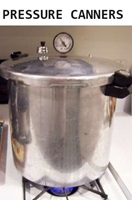

Looking for canning equipment and supplies?

Pressure canners for gas, electric and induction stoves : Presto 23Qt or T-fal 22Qt
 Canning scoop
(this one is PERFECT)
 Ball Blue book
(most recent version)
Jars: 8oz canning jars for jams

Water Bath
Canners:
You can make jams, jellies, can fruit, applesauce, salsa and pickles with water bath canners, like this
Stainless Steel 24 QT Water Bath Canner
with Rack, Lid, and Home Canning Supplies Starter Kit w/ Tools & Accessories
or this 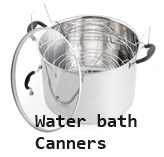 McSunley 21QT
version below
(similar, but without the kit)
Want to start your own Podcast, Blog, Vlog, etc? This GoPro kit has EVERYTHING you need
:
all accessories
Find Other types of farms:
Farm markets and roadside stands
Road trips and camping resources
Local Honey , apiaries, beekeepers
Consumer fraud and scams information
Home canning supplies at the best prices on the internet!
Maple Syrup Farms , sugarworks, maple syrup festivals
Environmental information and resources
Farms For Your Event for birthday parties, weddings, receptions, business meetings, retreats, etc.
Festivals - local fruit and vegetable festivals
Get themost recent version of
the Ball Blue Book
Canning and preserving, making jams, salsa, sauces, pickles, etc is SO easy with our step by step directions ! Just about all you need is a canner and canning jars!
Canning accessories kit:
funnel, jar tongs, lid lifter, etc

Water Bath
Canners:
You can make jams, jellies, can fruit, applesauce, salsa and pickles with water bath canners, like this
Stainless Steel 24 QT Water Bath Canner
with Rack and Lid, Home Canning Supplies Starter Kit w/ Tools & Accessories
or this McSunley 21QT
version below
(similar,
but without the kit)
