

28 gorgeous nebula photos that capture the beauty of the universe
When you buy through links on our articles, Future and its syndication partners may earn a commission.

Nebulas, which are both hubs of star birth and products of stars' demise, explode and transform with light and color as the stellar life cycle unfolds within them. These giant clouds of dust and gas fill the space between stars and long captivated skywatchers with their ethereal beauty, making their way into astronomical records from more than 1,000 years ago.
Here's a look at 28 of the most breathtaking nebulas in the universe, and what makes them special.
1. Flame Nebula

Lighting up the sky deep in the constellation Orion, the Flame Nebula raises some burning questions for astronomers. For example: Why do some stars fail to ignite ? The Flame Nebula is full of strange, Jupiter-size objects known as brown dwarfs — also called "failed stars". Straddling the line between very small stars and very large planets, these objects are hard to find because they emit only a fraction of the heat of regular stars. But thanks to the James Webb Space Telescope's powerful infrared cameras, scientists are now eagerly studying the dark, dim objects in nebulas like this one.
2. Crab Nebula

One of the most famous nebulas in the sky is named after one of the most famous crustaceans in the sea: the Crab Nebula . This well-studied object is the remnant of an infamous supernova that suddenly appeared in the night sky in A.D. 1054 after its distant parent star violently exploded. This "guest star", as it was called at the time, was recorded by ancient stargazers around the world. Today, you need a powerful telescope to spot the chaotic tangle of gas and dust that remains where the star once shone.
3. Southern Ring Nebula

There's something peculiar about the Southern Ring Nebula (located 2,000 light-years away in the constellation Vela) that scientists can't quite put their finger on. Seeing a ring-shaped nebula is no surprise; stars are spherical, after all, and many nebulas are the product of stellar explosions. But when scientists modelled the Southern Ring Nebula in 3D , they saw evidence of a second ring perpendicular to the first. It's possible, the team hypothesized, that there may be two or even three stars lurking at this brilliant cloud's center — but more research is needed to say for sure.
4. Helix Nebula
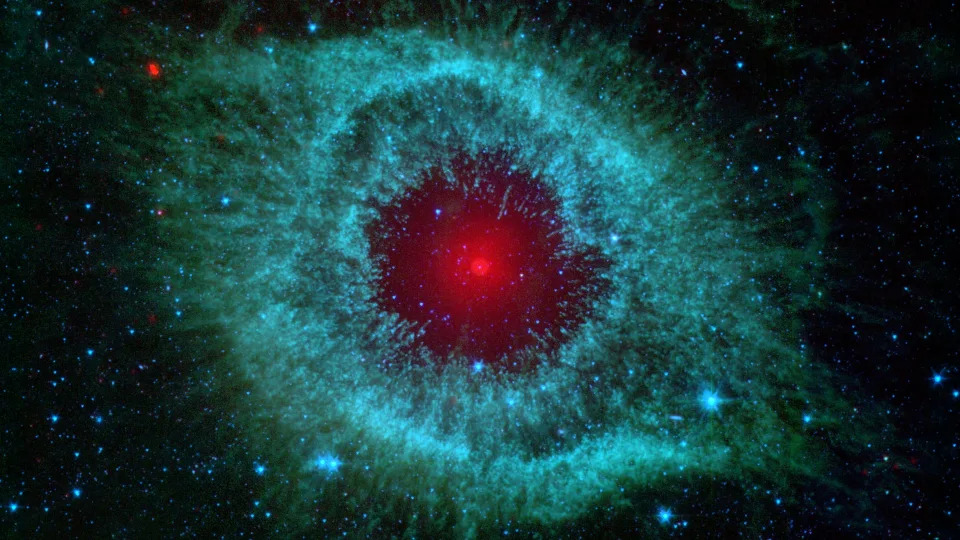
The Helix Nebula, located in the constellation Aquarius, is another favorite of amateur astronomers because of its bright colors. The nebula's strong resemblance to an eyeball has given it the nickname "God's Eye."
5. Horsehead Nebula
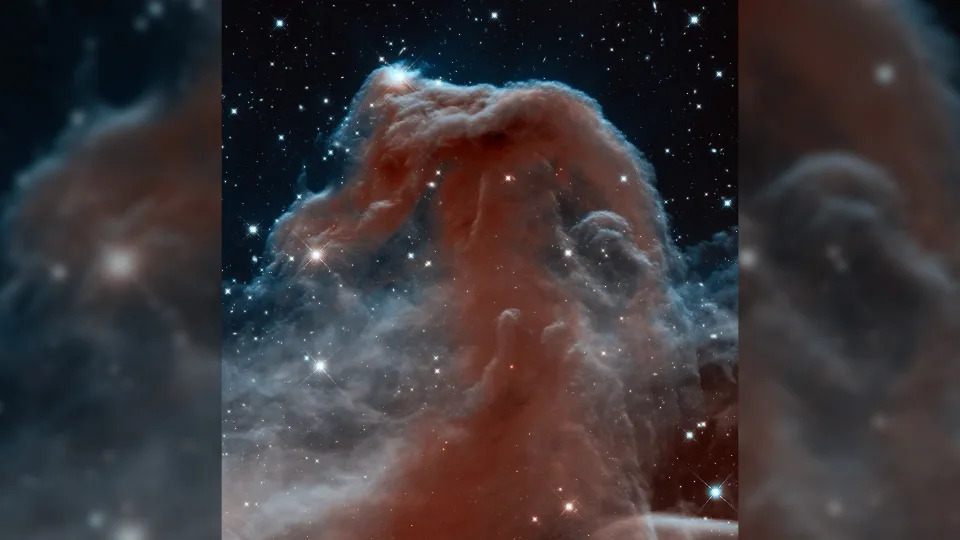
The Horsehead Nebula, located in the constellation Orion, is one of the most recognized and photographed nebulas in the sky, according to NASA . Like a majestic cosmic cloud, the nebula appears transparent here because the photo was taken with infrared imaging. In visual wavelengths, the nebula is dark and red.
6. Cat's Eye Nebula
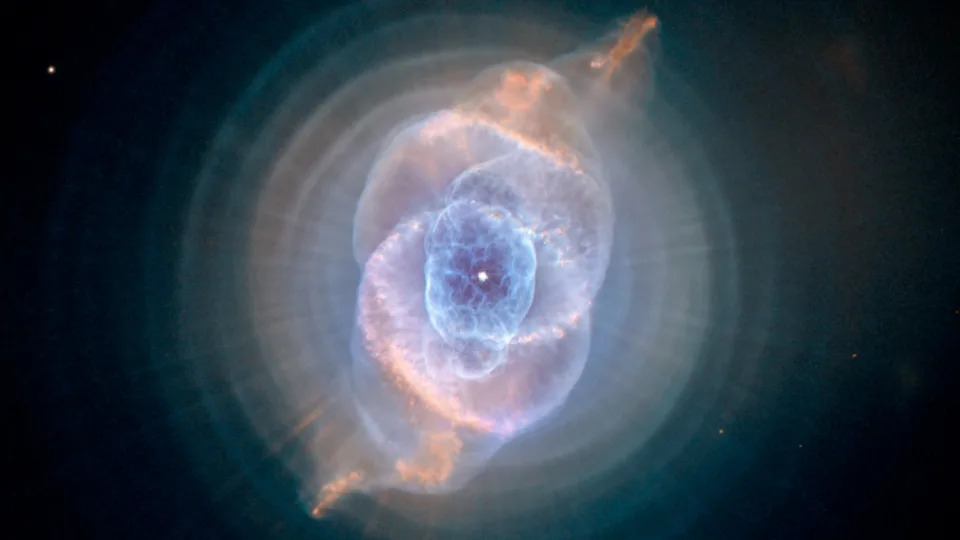
The Cat's Eye Nebula is made up of 11 rings of gas, giving it one of the most complex structures of any known nebula. It was one of the first planetary nebulas ever discovered.
7. Omega Nebula
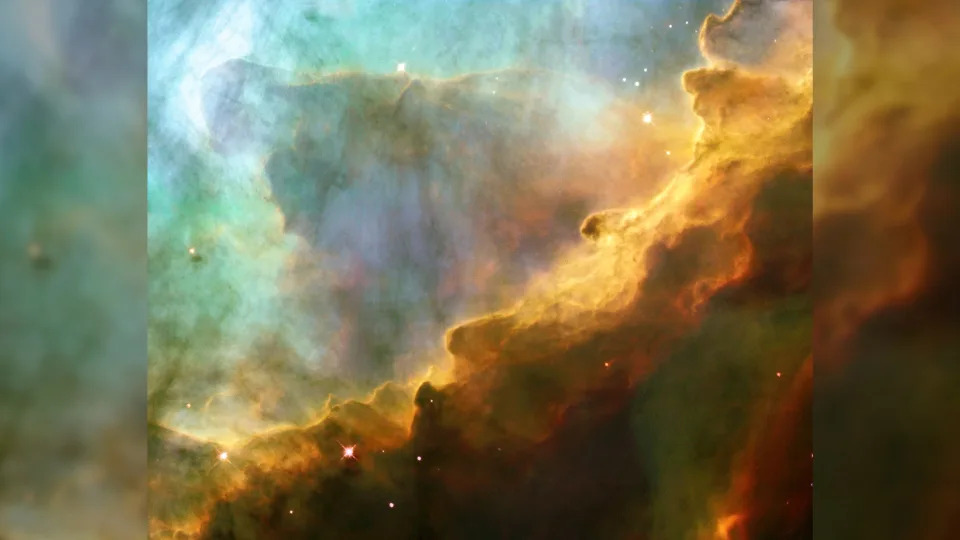
The Omega Nebula is also known as the Swan Nebula. It is a hotbed of newly born stars, according to NASA , and exists in the constellation Sagittarius, 5,500 light-years away.
8. Rosette Nebula
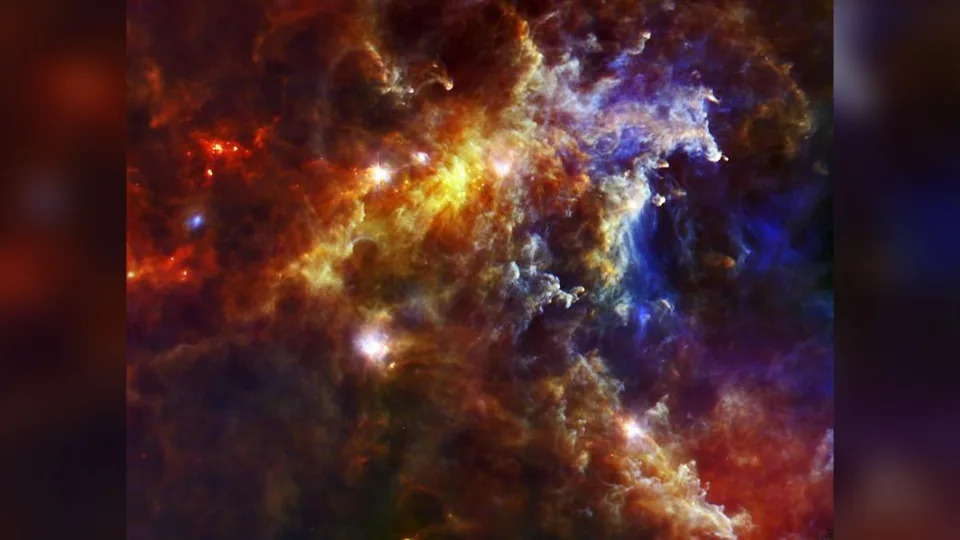
The Rosette Nebula is a stellar nursery — a region of concentrated star formation. It is located 5,000 light-years away, in the constellation Monoceros (the unicorn).
9. Eagle Nebula
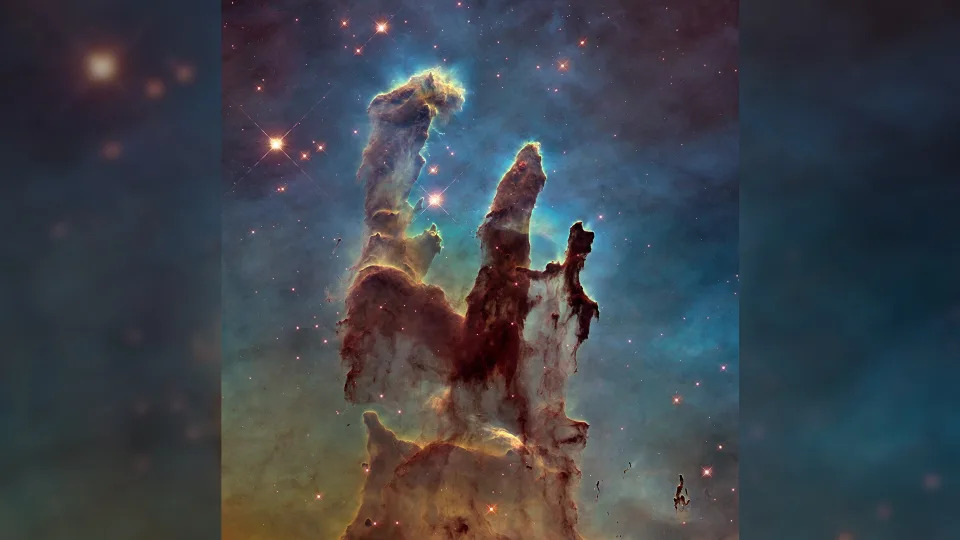
The Eagle Nebula was discovered in 1745. Its fingerlike extensions are known as the Pillars of Creation , but they make up only a small region of the roughly 70-light-year-wide nebula.
10. Ghost Head Nebula
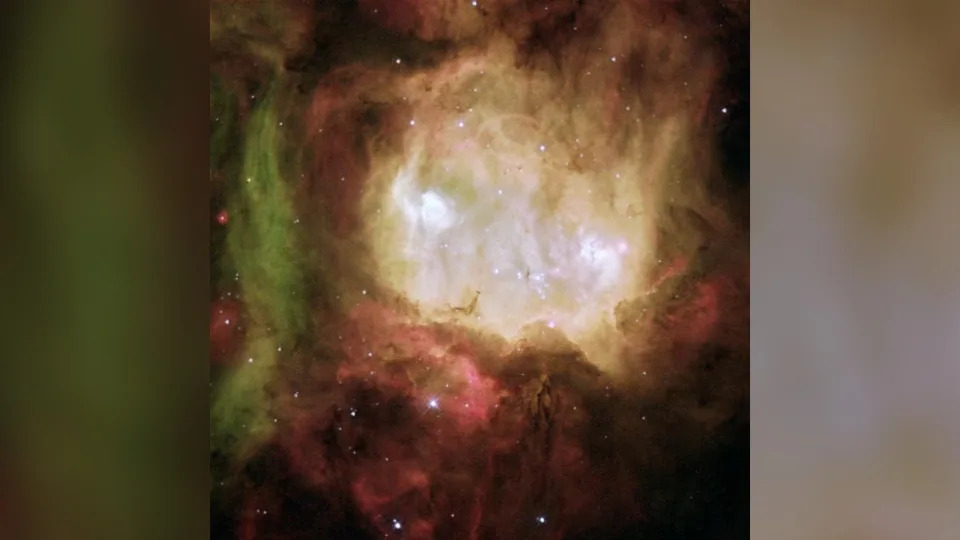
The Ghost Head Nebula is another star formation hub. Its red-and-green glow comes from light emitted by hydrogen and oxygen.
11. Lagoon Nebula

Intense radiation sculpted dust and gas into the robust Lagoon Nebula. The source of the radiation? Stars forming deep in the nebula's center. The Lagoon is an enormous star-birthing region, extending 100 light-years.
12. Soul Nebula

Located 6,500 light-years away, in the constellation Cassiopeia, is the Soul Nebula. The nebula's internal cavity and pillar-like columns are reminiscent of the landscape in the Badlands of South Dakota, NASA says .
13. Running Chicken Nebula
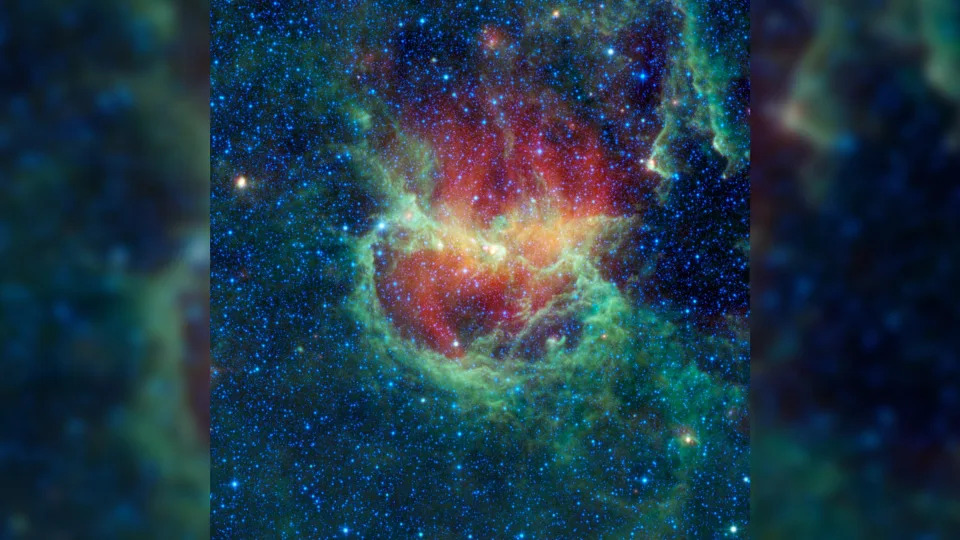
The Running Chicken Nebula is located in our own galaxy, the Milky Way. It got its name because — you guessed it — it looks a bit like a chicken darting across the sky.
14. Spider Nebula

Also a resident of the Milky Way, the Spider Nebula is a hub of star formation with green tendrils.
15. Trifid Nebula
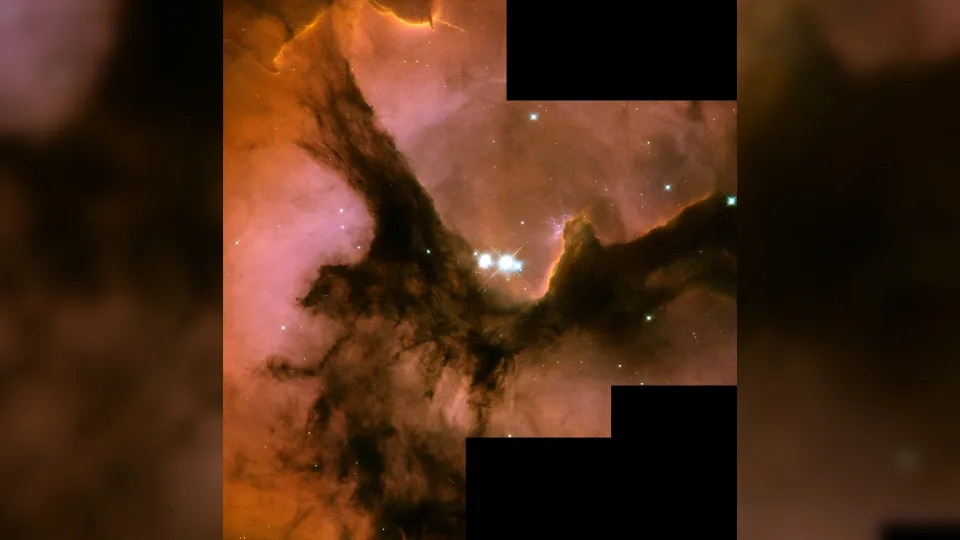
Discovered in 1764, this nebula is 7,000 light-years away and a hub of star formation. It even has dark cores known as stellar incubators, where star formation is especially prolific.
16. Tarantula Nebula

The Tarantula Nebula, also known as 30 Doradus, is the largest and brightest region of star formation in the Local Group of galaxies, which includes the Milky Way, Andromeda and 20 other smaller galaxies. It's often a focus of astronomers who are trying to understand star formation.
17. Cygnus Loop Nebula

The Cygnus Loop Nebula, located 1,500 light-years away, is a supernova remnant — the remains of a stellar explosion between 5,000 and 8,000 years ago.
18. Ant Nebula
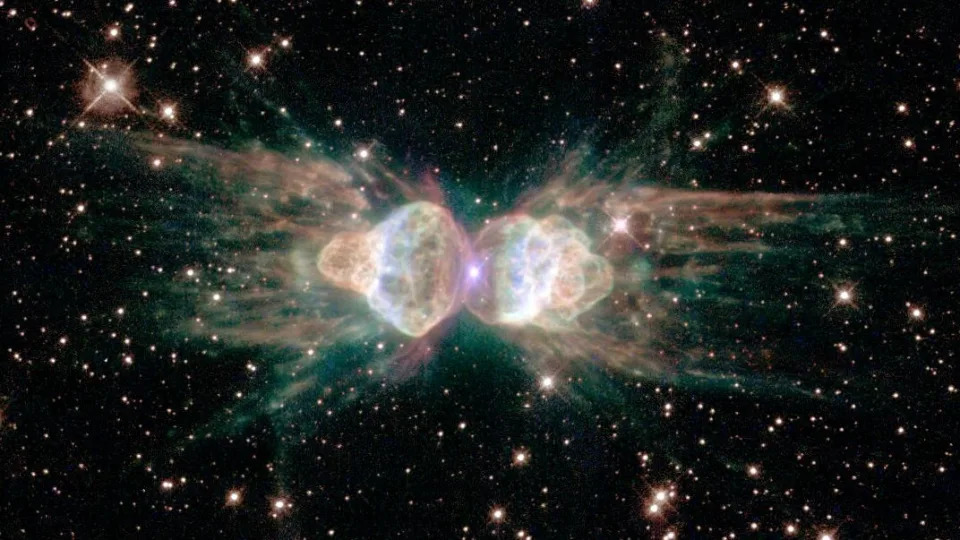
The Ant Nebula earned its name because it resembles the head and thorax of a garden variety ant. A dying sunlike star in the "thorax" of the nebula has shed light on the potential fate of the sun.
19. NGC 6153
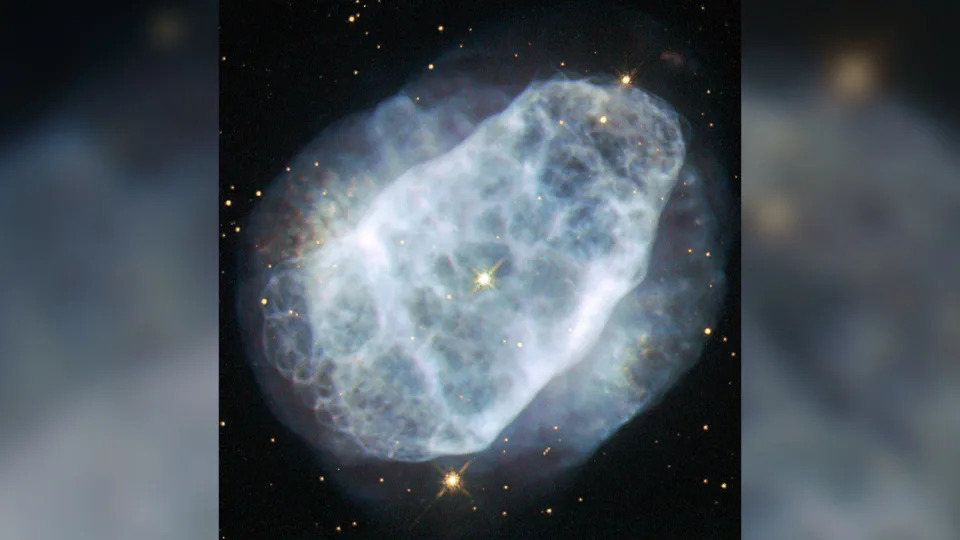
What's interesting about NGC 6153 is its gases. It contains up to three times more neon, argon, oxygen and carbon than the solar system does, and it holds five times more nitrogen than the sun.
20. Hourglass Nebula
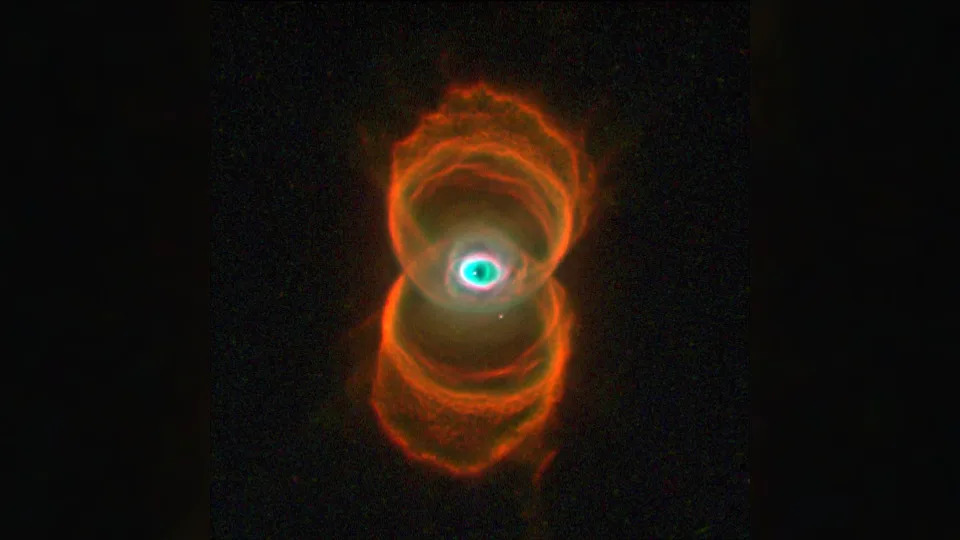
The Hourglass Nebula is another remnant of a dying star. As part of its slow death, the star has begun to shed its outer layers of gas in two directions.
21. Skull and Crossbones Nebula

Located about 4,400 light-years from Earth, the Skull and Crossbones Nebula is a hotbed of star formation that looks eerily like a sinister, spying face.
22. Orion Nebula

The Orion Nebula is a stellar nursery that, at 1,500 light-years away, is the closest star-forming region to Earth. Because of its proximity to Earth and location next to Orion's Belt, this nebula can be spotted with the naked eye. The best time to look for it is January.
23. Dumbbell Nebula

The Dumbbell Nebula was the first planetary nebula ever discovered. It contains several clumps, or extremely dense knots of dust and gas. Each one is more than three times Earth's mass.
24. Peony Nebula

This nebula, which resembles scattered pink blooms across the night sky, is home to the second-brightest known star, which shines with the intensity of 3.2 million suns and is second only to Eta Carinae.
25. Lion Nebula
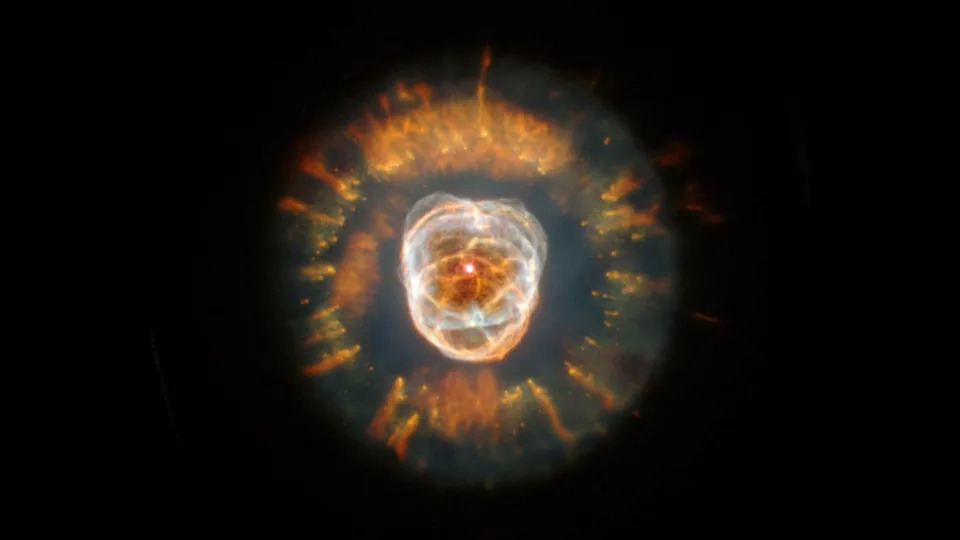
The Lion Nebula, also known as the Clown Face Nebula, appears as an iridescent face made of overlapping ellipticals encircled by a flaming orange mane. According to NASA , the outer ring is made of comet-shaped materials whose tails are streaming away from the central dying star.
26. Carina Nebula

The Carina Nebula is one of the largest star-birth regions NASA can see. It's home to 12 or more stars that are 50 to 100 times the mass of the sun, including the unstable supergiant Eta Carinae , one of the brightest known stars.
27. Ring Nebula
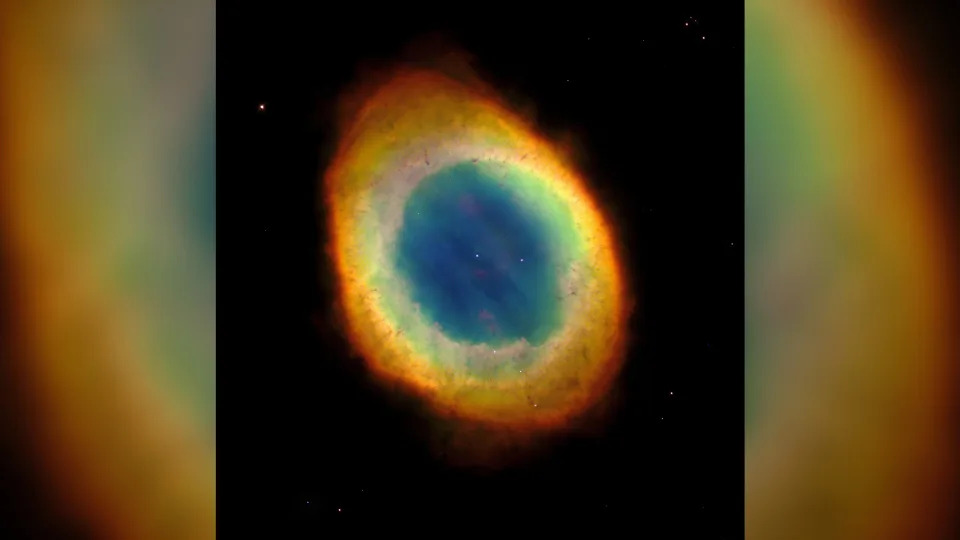
Known for its simple, graceful shape, the Ring Nebula is 2,000 light-years away in the constellation Lyra and stretches 1 light-year across. Its color fades with temperature; hot blue gas at the center fades to cooler green and yellow around the edges. It's a popular object of study for amateur astronomers.
28. Twin Jet Nebula

The Twin Jet Nebula is a binary planetary nebula. Rather than holding a single star at its center, this nebula has two stars orbiting in a binary system, giving the nebula its iridescent wings. It's also known as Minkowski's butterfly, after Hermann Minkowski, the scientist who discovered it.
Editor's note: This article was updated on June 10, 2025, to include additional nebula photos and captions.
