

The Berlin Festival of Lights 2026 returns from October 9 to 18, transforming Germany’s capital into a free open-air gallery of light art, projections and video mapping at around 40 locations.
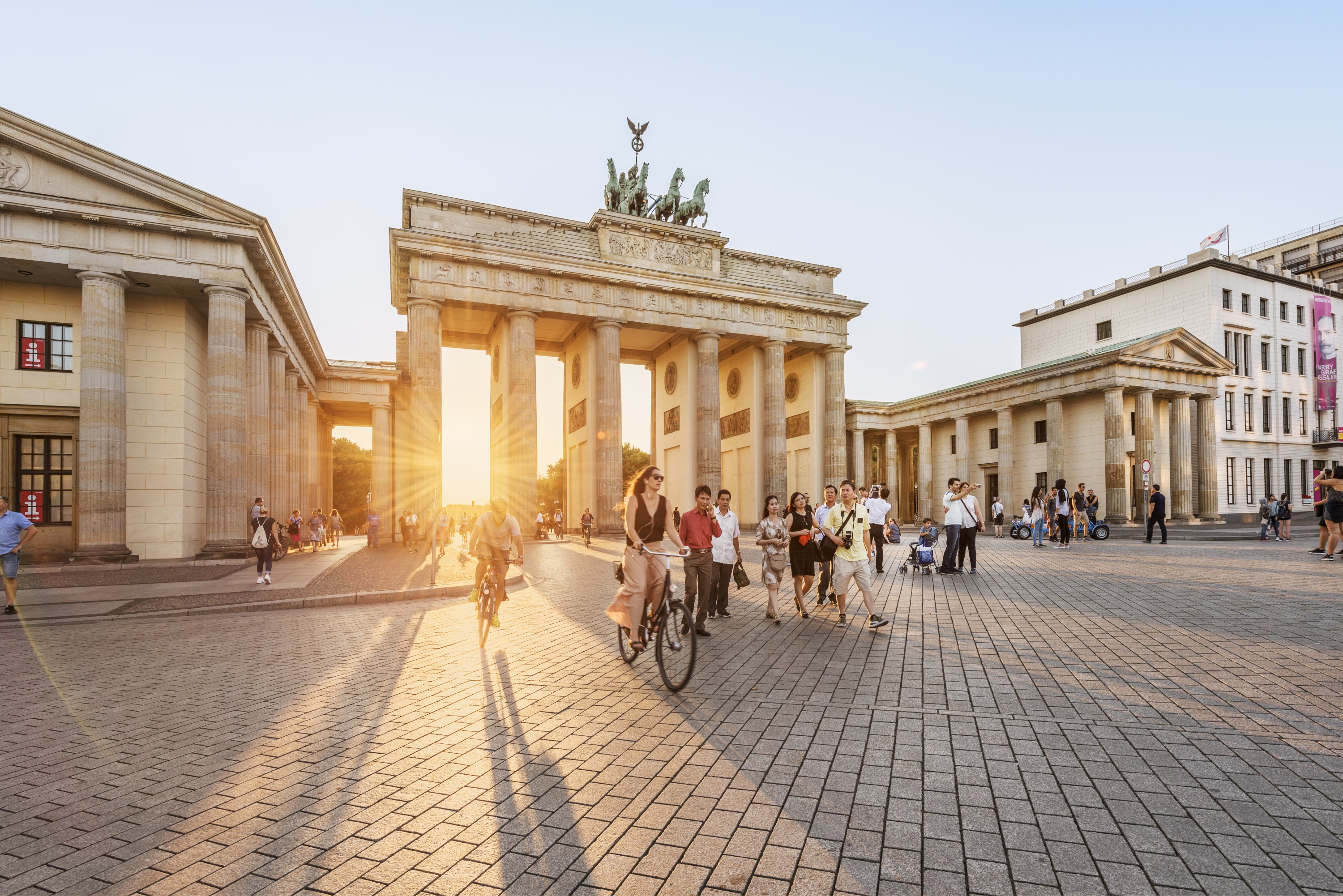
Under this year’s theme, “Colours of Love,” famous landmarks including the Brandenburg Gate, Berlin Cathedral, Victory Column, Berlin TV Tower, Museum Island, Gendarmenmarkt and Potsdamer Platz will be illuminated every evening from 7 p.m. to 11 p.m. More than three million people attended the festival in 2025, making it one of Berlin’s biggest autumn tourism attractions and another reason for international travelers to visit a city where something extraordinary always seems to be happening.
Berlin is not a city that needs much encouragement to put on a show. Germany’s capital is already home to the Berlin Marathon, ITB Berlin, one of Europe’s most visible LGBTQ+ communities, some of the continent’s most consequential political debates and a nightlife culture copied around the world. It is also the proud European home of eTurboNews.
For ten nights this October, however, even Berlin will look different.
Ten nights when Berlin becomes an open-air gallery
The 22nd Festival of Lights will turn some of Berlin’s best-known buildings, monuments, bridges and public squares into enormous canvases. Video mapping, projections and light installations will appear across the city under the 2026 theme “Colours of Love.”
The locations include the Brandenburg Gate, Victory Column, Berlin TV Tower and Radio Tower, Berlin Cathedral, Oberbaum Bridge, THF Tower, Potsdamer Platz, Gendarmenmarkt, Nikolaiviertel and Museum Island. The outdoor installations can be visited free of charge, allowing travelers to experience one of Berlin’s largest events simply by walking through the city after dark.
That accessibility is part of the festival’s appeal. More than three million visitors attended during eight evenings in 2025, according to visitBerlin, setting a new record.
The event also matters economically. Around 1.1 million guests visited Berlin in October 2025 and generated approximately 2.7 million hotel nights. In terms of overnight stays, October was second only to July during the year.
Travelers considering a last-minute visit in 2026 may want to look at the second half of the festival. Hotels are already reporting occupancy rates of up to 85 percent during the first half, while more capacity is currently available for the second festival weekend.
A festival that could hardly belong anywhere but Berlin
The Festival of Lights works particularly well here because Berlin has spent much of its modern history reinventing itself.
For decades, the Berlin Wall made the city an international symbol of division. Today, Berlin sells almost the opposite idea to the world. Freedom, individuality, diversity and the right to be different have become essential parts of its identity.
That does not mean Berlin is always pretty, orderly or easy to understand. It isn’t, and perhaps that is part of its attraction.
Berlin can be monumental and scruffy at the same time. Government ministries and embassies coexist with graffiti, alternative cultural spaces and legendary clubs. Diplomats, artists, tourists, politicians, musicians, startup entrepreneurs and people who appear to have been partying since Thursday can all find themselves sitting in the same café on Sunday morning.
It is a city where the serious and the unconventional constantly overlap.
The Berlin Marathon turns the streets into an international sporting arena. ITB Berlin brings the global travel industry to the German capital every March. Christopher Street Day fills central Berlin with LGBTQ+ pride and political messages, while decisions made in the Bundestag and Chancellor’s Office can have consequences far beyond Germany.
Then there is Berlin after dark, which remains a tourism attraction in its own right.
The Festival of Lights manages to bring many of those different Berlins together.
In Berlin, the festival doesn’t necessarily end at 11 p.m.
There is an especially appropriate addition in 2026. For the first time, Festival of Lights Club Nights will connect the light festival with Berlin’s internationally famous club culture.
On selected evenings, the festival will continue at PKH Warehouse, Maaya and M-Bia, combining light art with electronic music. DJs scheduled to participate include Chris Bekker and Johann de Beers.
It is difficult to imagine a more Berlin development. In many destinations, an evening sightseeing program finishing at 11 p.m. signals that it is time to return to the hotel. In Berlin, 11 p.m. can mean the evening has barely started.
The club nights also recognize something tourism authorities increasingly understand: visitors do not necessarily separate Berlin’s monuments, art, music, food, LGBTQ+ culture and nightlife into different categories. Together, they form the Berlin experience.
Berlin Cathedral adds light, sound and electronic music
Visitors who want a more structured Festival of Lights experience can also book sightseeing programs through visitBerlin. These include guided walks, live-commentated bus tours with photo stops, evening boat trips and experiences combining walking tours with cruises.
Berlin Cathedral will host two of the festival’s more immersive productions. “Beyond the Light: Reflections,” scheduled for October 9 to 11, will combine three-dimensional video art with music.
From October 13 to 17, the “Festival of Lights in Concert” will combine 3D light art with electronic ambient music. The announced musical lineup includes Alle Farben, Klangkarussell, Westbam, Anja Schneider, Chris Bekker and Ukãi Ndame.
Berlin’s culinary scene is also getting some illumination. For the first time, visitBerlin will present its own projection at the Hotel de Rome. Under the slogan “Berlin. Lecker. Yummy.”, the installation is designed to introduce visitors to the culinary diversity of the German capital.
Berlin is much more than its postcard landmarks
International visitors coming for the Festival of Lights should not make the mistake of treating Berlin simply as a collection of illuminated monuments.
The Brandenburg Gate is magnificent, especially at night, but Berlin becomes more interesting when travelers move beyond the obvious postcard locations.
Kreuzberg, Schöneberg, Friedrichshain and Prenzlauer Berg each offer a different version of the city. The former Berlin Wall remains visible in some places and almost impossible to detect in others. Museum Island tells one version of history, while neighborhoods shaped by immigration, reunification, alternative culture and nightlife tell others.
Berlin’s international character is also increasingly difficult to miss. Walk into a restaurant, café or U-Bahn carriage and German may be only one of several languages being spoken around you.
That is one reason Berlin remains such an unusual European capital. It carries the enormous weight of German and European history without becoming a museum of itself.

The city of freedom
Calling Berlin a “city of freedom” can sound like tourism marketing until you consider what happened here within living memory.
A wall once divided streets, neighborhoods, families and political systems. Crossing from one side of Berlin to the other could be impossible.
Today, millions of international visitors arrive in a city known for personal expression, cultural experimentation, LGBTQ+ visibility, political debate and an unusually relaxed attitude toward how people choose to live their lives.
Berlin is certainly not perfect. It can be bureaucratic, expensive, messy and occasionally frustrating. Trains do not always behave as Germans would like the world to believe German trains behave, and the city’s famous directness can surprise first-time visitors.
Yet Berlin rarely pretends to be something it isn’t.
That authenticity may be one of its strongest tourism assets.
There is always something happening here: a marathon, a demonstration, an international trade show, a political summit, a Pride celebration, a museum opening, a concert, a techno night or, in October, an entire city illuminated with art.
For international travelers looking for a European city break this autumn, the Festival of Lights provides an excellent reason to come. The bigger reason to stay a little longer is Berlin itself.
From October 9 to 18, the lights will make Germany’s capital particularly photogenic. But beneath those projections remains the real attraction: a complicated, creative, sometimes chaotic city that transformed itself from a symbol of division into one of the world’s most recognizable cities of freedom.
For eTurboNews, Berlin is also home. >>> And in Berlin, ordinary is rarely on the program.




Leave a Comment