
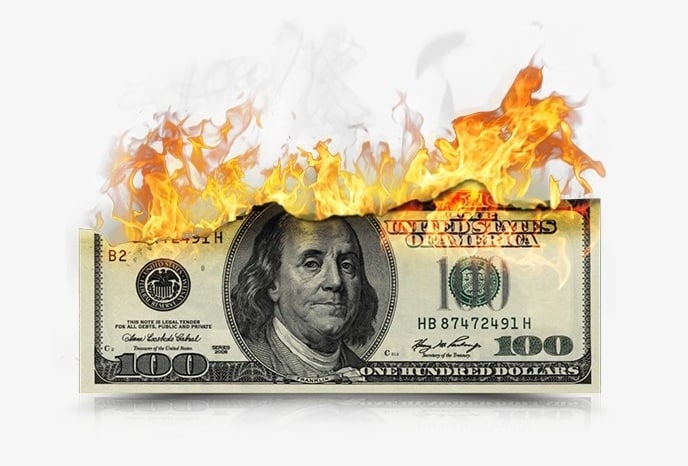
One of the world’s leading financial institutions, Deutsche Bank AG – a German multinational investment bank and financial services company headquartered in Frankfurt, Germany, has issued a warning regarding a potential escalation in the crisis of confidence surrounding the US dollar.
Deutsche Bank’s caution comes in the wake of US President Donald Trump’s declaration of massive new blanket tariffs, which have unsettled financial markets and heightened concerns about a possible global trade war.
In a communication to bank’s clients, George Saravelos, the global head of foreign exchange research at the German banking institution, indicated that significant shifts in capital flows could lead to instability in currency markets.
This week, the US dollar has experienced a significant decline, decreasing by over 1.5% against both the euro and the Japanese yen, and more than 1% against the British pound. These drops follow President Trump’s announcement of tariffs, which will range from 10% to 50% on a wide array of imports from numerous countries. The escalating concerns regarding a potential global trade war have led investors to turn to safer assets.
“Our overall message is that there is a risk that major shifts in capital flow allocations take over from currency fundamentals and that FX moves become disorderly,” Mr. Saravelos wrote.
Saravelos warned that a sustained decline in trust in the dollar could lead to significant repercussions, especially for the eurozone, creating difficulties for the European Central Bank (ECB).
“The last thing the ECB wants is an externally imposed disinflationary shock from a loss in dollar confidence and a sharp appreciation in the euro on top of tariffs,” Deutsche Bank official added.
The European Central Bank (ECB) has expressed apprehensions that the trade measures implemented by the United States may hinder global economic collaboration, destabilize inflation expectations, and necessitate adjustments in monetary policy.
The impact of the tariffs has been immediate. Global stock markets have experienced significant declines, oil prices have fallen, and bond yields have decreased as investors prepare for a potential slowdown in economic growth. In contrast, assets considered safe havens—such as gold, German bunds, and the Swiss franc—have witnessed a surge in demand.
Other financial entities, including JPMorgan and Fitch, have issued comparable alerts, projecting that the tariffs could lead to a reduction in US GDP growth by as much as 1.5% and possibly push other major economies into recession.







Switzerland and Israel too considering their options
Countermeasures are planned: The EU is discussing slapping its own 25 percent tariff on US goods After US President Donald Trump announced new tariffs in Washington.
Switzerland is affected: 31 percent tariffs are proposed.
Trump also discusses tariff plans after Netanyahu meeting.
After a meeting with Israeli Prime Minister Benjamin Netanyahu at the White House, Donald Trump continued to discuss the situation with the new tariffs. He stated that they are willing to negotiate. However, these must be “meaningful negotiations.” Suspending the tariffs for 30 days, as still does not seem to be an option.
After the meeting, the Israeli Prime Minister announced that Israel would reduce tariffs and trade barriers with the US. “We intend to do this very quickly,” Netanyahu said at a reception at the White House.
Dear Jurgen, I fully agree with you. I quoted you last week in an article to Nexotur, nº1 tourist media in Spain and Latin America (“Sombras sobre el turismo mundial”). Best regards. Robert Lanquar