
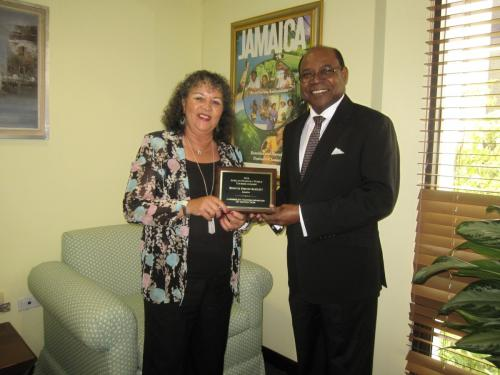
Recognized as a World Tourism Network Hero, Diana McIntyre-Pikestands as one of the most influential pioneers of community tourismin Jamaica and the wider Caribbean. Her life’s work represents a powerful alternative to mass tourism—one that moves beyond five-star, all-inclusive resorts and returns tourism to its roots: human connection, cultural exchange, and direct benefits to local people.
This legacy is inseparable from her parents, Mark and Ceceline McIntyrewhose vision, courage, and commitment to people-centered hospitality laid the foundation for a movement that would eventually position Jamaica as the Home of Community Tourism.
Roots in Negril and Savanna-la-Mar: Tourism with Heart (1960s)
In the 1960s, when tourism in Jamaica was still finding its footing, Diana’s parents were among the pioneers of Negril, establishing some of the first cottagesin an area that would later become world-famous. At the same time, the family operated guest houses in Savanna-la-Mar, where Diana lived from the age of seven and later again during her teenage years.
These early experiences were formative. Guests did not merely “stay” at the properties—they became part of family life and community living. They attended local events, shared meals, learned customs, and formed genuine relationships with Jamaicans. This Westmoreland experiencedeeply shaped Diana’s mindset, convincing her that tourism should be organized not only around hotels, but also around homestays and community lifestyles, where visitors and hosts learn from one another.
Mandeville and The Astra Hotel: A Defining Choice (1970)
In 1970, the family moved to Mandeville, where her parents established The Astra Hotel. At a pivotal moment in her life, Diana faced a choice: she had been accepted to study Dramatic Artsat the prestigious Rose Bruford College of Speech and Dramain the UK. Instead, guided by her parents’ vision, she chose a different path— Hotel Management and Catering—believing tourism could be a vehicle for national and community development.
From 1971 to 1973, she pursued a Diploma in Hotel Management and Cateringat the Cambridgeshire College of Arts and Technology, gaining the technical foundation that would later support her innovative ideas.
Montego Bay and Cultural Innovation (1973–1974)
Upon returning to Jamaica, Diana accepted a position as Guest Relations Directorat the Holiday Inn Montego Bay, then the largest hotel in Jamaica, with fewer than 200 rooms. Even in this conventional hotel setting, she saw a missing element: authentic Jamaican culture.
Her response was visionary. She created the “Jamaica Chit Chat Session,”a daily cultural exchange where guests learned about Jamaican life, heritage, and values. Community members were invited to participate, turning the hotel into a living classroom of Jamaican culture. The response was overwhelming—what began as an experiment became a daily highlight for guests.
Her work attracted international attention, leading to an offer of a German scholarship, reflecting the growing number of German visitors to Jamaica.

Runaway Bay, Abe Issa, and a Turning Point
Instead of leaving immediately, Diana accepted a position at the Runaway Bay Hotel and Golf Club, owned by the late Abe Issa, who was deeply impressed by her work ethic and community-centered approach. After encouragement from her parents, she eventually accepted the German scholarship, further expanding her global perspective.
Returning to Jamaica in 1977, she made another defining choice: rather than accept a senior position within Abe Issa’s expanding company, she chose to work at The Astra Hotel, determined to focus on community-based developmentrather than corporate advancement.
The Birth of Community Tourism (1977–1978)

In 1977, Diana met with the late Desmond Henry, then Director of Tourism, to explore a new way forward. Together, they branded the concept “Community Tourism”at The Astra Hotel and began with research to determine whether communities—especially on the South Coast—would embrace it.
The response was resoundingly positive.
After Desmond Henry left office, Diana and her colleagues went on to create the South Coast Marketing Organizationin 1978, alongside the Central and South Community Tourism Committee. Treasure Beach, rooted in Desmond Henry’s own heritage, became the first flagship community, followed by initiatives in Mandeville.
At The Astra Hotel, Diana launched six-month community tourism training programmesfor young people who lacked Grade 9 certification and were excluded from traditional employment. Over time, more than 3,000 participantswere trained and successfully placed in jobs locally and overseas. The programme emphasized self-development, spiritual growth, cultural knowledge, and pride in community and country—preparing participants not just for employment, but for life.
International Recognition: IIPT and Global Impact (1980)
In 1980, Dr. Louis D’Amore, Founder and President of the International Institute for Peace through Tourism (IIPT), visited Mandeville. Deeply inspired by the programme, he declared Jamaica the Home of Community Tourism, established the IIPT Community Tourism Network, and appointed Diana as its Coordinator.
From this platform, community tourism in Jamaica was marketed internationally as a tool for peace, empowerment, and sustainable development.
Countrystyle Community Tourism Network and Global Partnerships
The vision expanded further with the creation of the Countrystyle Community Tourism Network (CCTN)—a membership organization for communities—followed by the Villages as Businesses Programme. Communities were empowered to offer Community Lifestyle Experience Tours, which could be packaged with hotel vacations.
A major milestone was a three-year contract with TUI, the world’s largest tour operator, through Caribic Vacations. The programme in Orange Bay Village, Hanover, near Negril, was so successful that TUI’s camera crew documented the experience—schools, churches, community bars, and restaurants—sharing authentic Jamaican village life with European audiences.
The Present: A Caribbean Movement
Today, Diana’s work has influenced community tourism across the Caribbean. Through training in Community Tourism Entrepreneurship, she has supported initiatives in Dominica, St. Lucia, St. Vincent, Barbados, Grenada, Trinidad, Antigua, and St. Eustatius. This regional impact led to an invitation from the Organization of Eastern Caribbean States (OECS)to share Jamaica’s experience with ten Caribbean countries, introducing niche markets such as:
- Church and faith-based tourism
- Cultural and heritage tourism
- Health and wellness tourism
- Nature and home-garden tourism
- Graveyard tourism
- Ecotourism
With support from the University of the West Indies Open Campus, certification programmes were launched in Barbados, leading to the establishment of the Barbados Community Tourism Network.
In Jamaica, the Northern Caribbean University (NCU) Morris Entrepreneurship Centrein Mandeville now offers certification in Community Tourism Entrepreneurship and Hospitality, under a signed MOU.
Looking Ahead: 2026 and Beyond
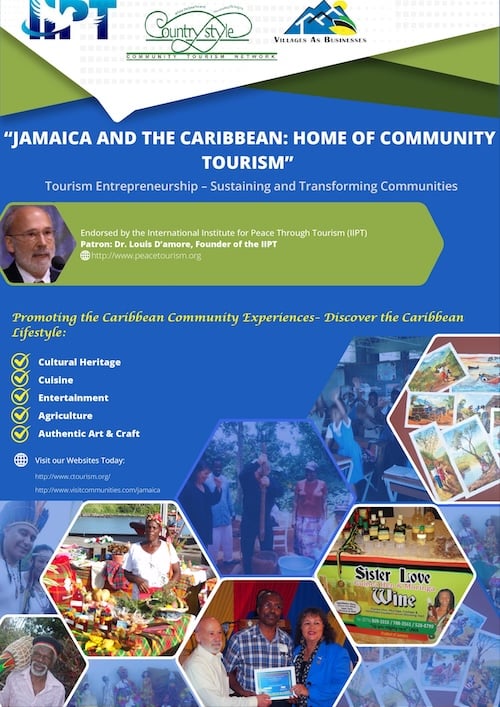
The vision continues to expand with the “Jamaica and the Caribbean: Home of Community Tourism” Marketing Campaign (2026), with Dr. Louis D’Amoreas Patron. Plans include:
- Community Tourism Study Tours(May–July)
- A 5-day certified training programmewith NCU
- Visits to communities affected by recent hurricanes to support “Pick a Project and Adopt a Village”initiatives
Outstanding communities include Treasure Beach(with Jason Henzell, Jakes Village, and the Treasure Beach Foundation), Bluefields/Belmont, Beeston Spring, and others leading recovery through community tourism.
Additional initiatives include:
- The IIPT/CCTN Community Tourism Youth Ambassador Programme
- A Spiritual Revival Retreatfor youth and entrepreneurs
- A proposed IIPT Caribbean Community Tourism Conference
- The development of Temples for Peacein western and central Jamaica
- The creation of the International Community Tourism Association, with Diana appointed President for the Caribbean Chapter
A Living Legacy
Diana McIntyre-Pike’s journey—from a child living among guests in Savanna-la-Mar, to a global leader in community tourism—embodies a powerful truth: tourism can be a force for dignity, empowerment, peace, and pride. Built on the legacy of her parents, Mark and Ceceline McIntyre, her work has ensured that tourism in Jamaica is not only about places—but about people, purpose, and shared humanity.




Leave a Comment