

If playback is interrupted, you can restart it.
A reported drone strike at Egypt’s Mediterranean port of Damietta has crossed an important psychological boundary.
For the first time in the current regional confrontation, a commercial and energy facility inside Egypt appears to have been directly affected. Maritime security company Ambrey reported that a drone struck the U.S.-owned gas-storage tanker Energos Winter at Damietta Port on July 29, causing a fire that reportedly spread to another vessel. Egypt’s Petroleum Ministry confirmed a fire at the port, but it did not confirm that a drone was responsible or identify Iran as the attacker. No injuries were initially reported.
That distinction is essential.
Until an official investigation establishes responsibility, international media, tourism organizations and political leaders should not present an Iranian attack on Egypt as a confirmed fact. But neither should the tourism industry ignore the incident. A drone reaching an Egyptian port during a widening regional confrontation is a serious national-security development, even when the apparent target was an energy asset rather than tourists.
The immediate danger is not only physical. It is reputational.
Travel decisions are often based less on geography than on headlines. To a nervous prospective visitor in London, Berlin, New York or Tokyo, “attack in Egypt” can quickly become “Egypt is under attack.” The difference between an industrial port in the Nile Delta and a resort in Sharm el-Sheikh may disappear in a social-media post, an insurance assessment or an automated risk alert.
Egypt therefore faces two simultaneous responsibilities: protecting its territory and protecting the accuracy of the global narrative.
Damietta Is Not Egypt’s Main Tourism Corridor
Damietta Port is a strategic commercial and energy facility on Egypt’s northern Mediterranean coast. Official Egyptian maritime information places the port at approximately 31°23′ north and 31°48′ east. It lies roughly 70 kilometers west of Port Said and about 200 kilometers east of Alexandria by the commonly cited coastal geography.
It is not located beside the pyramids, Luxor’s temples, or the major Red Sea resort corridors.
Approximate straight-line distances from Damietta Port illustrate the separation:
- Ras El Bar, the nearest established local seaside destination: approximately 14 kilometers.
- Port Said: approximately 50 kilometers.
- Cairo International Airport: approximately 145 kilometers.
- The Giza pyramid complex: approximately 170 kilometers.
- Central Alexandria: approximately 180 kilometers.
- Sharm el-Sheikh: approximately 455 kilometers.
- Hurghada: approximately 500 kilometers.
- Luxor: approximately 640 kilometers.
- Aswan: approximately 820 kilometers.
These are approximate geographic distances, not road-transfer distances. They nevertheless demonstrate why a localized incident at an industrial port should not automatically be interpreted as a direct attack on Egypt’s national tourism infrastructure.
Cairo International Airport, the Red Sea airports and the tourism airports serving Luxor, Aswan, Hurghada, Marsa Alam and Sharm el-Sheikh were not reported as targets in the Damietta incident.
Current official advisories also continue to distinguish between specific higher-risk areas and Egypt’s principal tourism destinations. The United States maintains a Level 2 “exercise increased caution” advisory for Egypt, while warning against travel to Northern and Middle Sinai, certain border areas and much of the Western Desert. The United Kingdom similarly advises against travel to defined parts of Egypt rather than the country as a whole. As of July 29, the UK advisory had not been updated in response to the Damietta fire.
This does not mean that nothing has changed. It means the evidence does not justify declaring Cairo, Luxor, Aswan, Hurghada or Sharm el-Sheikh unsafe because of one reported incident at Damietta Port.
Tourism Was Apparently Not the Target
The target reported by maritime security sources was an energy-storage vessel at a commercial port. It was not a hotel, passenger terminal, museum, archaeological site, cruise vessel or tourist gathering place.
The distinction should be communicated clearly but not defensively.
Egypt should not simply announce that “tourists are safe” and expect the world to accept the message. Travelers, tour operators, airlines and insurers increasingly demand verifiable information:
- What exactly was hit?
- Was the airspace affected?
- Are passenger airports operating normally?
- Were any tourism facilities damaged?
- Is the incident contained?
- Have additional protective measures been introduced?
- Is there intelligence suggesting further attacks?
A factual briefing answering these questions would be more credible than a broad promotional statement.
Egypt’s strongest message is not that nothing happened. Something serious did happen. Its strongest message is that the incident was contained at a strategic industrial location, that the investigation is continuing, and that authorities are differentiating between risks to military or energy assets and the operating environment in established tourism zones.
Jordan Is the Warning Egypt Should Study
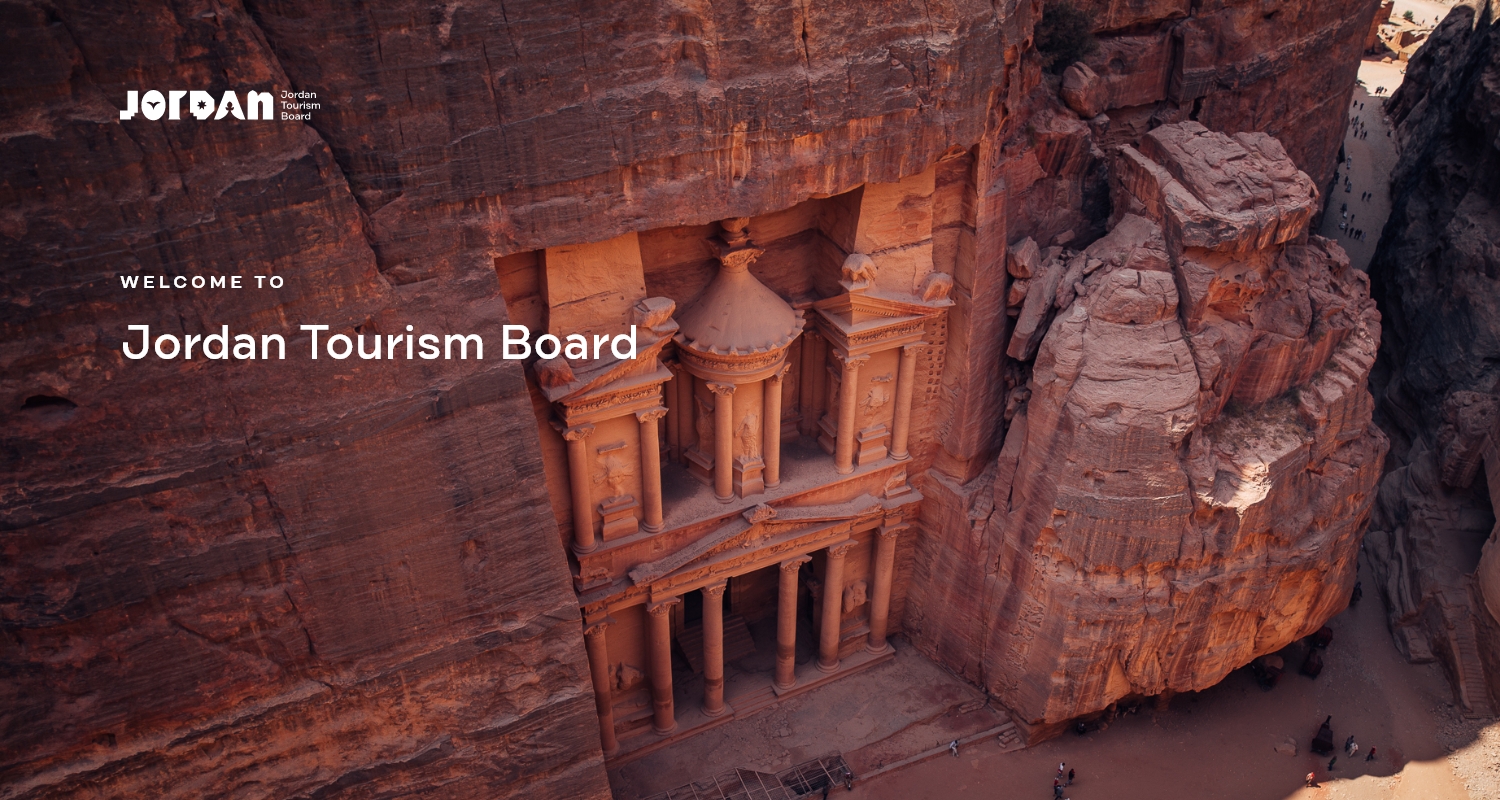
Jordan has already experienced the tourism consequences of being drawn into a conflict that is not directed at its visitors.
Iranian missiles have targeted U.S. military installations in Jordan, including Muwaffaq Salti Air Base near Azraq. During the latest reported attack, Jordanian defenses intercepted the incoming missiles, and initial reports indicated no damage or casualties.
Muwaffaq Salti Air Base is in Jordan’s eastern desert, approximately:
- 75 kilometers from Queen Alia International Airport.
- 80 kilometers from central Amman.
- 110 kilometers from the Dead Sea resort area.
- 210 kilometers from Petra.
- 280 kilometers from Wadi Rum.
- More than 300 kilometers from Aqaba.
The missiles were aimed at a military installation, not at Petra, Wadi Rum, the Dead Sea, Amman’s hotels or Jordan’s archaeological attractions.
Nevertheless, Jordan’s tourism industry has suffered because repeated missile alerts, interceptions, flight disruptions and changing foreign advisories affect confidence throughout the country. Several flights at Queen Alia International Airport were canceled during earlier Iranian attacks, even though intercepted missiles reportedly caused no material damage or casualties.
The United Kingdom warns that attacks against U.S. military and civilian infrastructure have occurred in Jordan and that further escalation is possible. The United States currently places Jordan at Level 3, “reconsider travel,” citing terrorism and armed conflict, with stronger warnings applying to specified border and high-risk areas.
Jordan demonstrates an uncomfortable truth: an attack does not need to target tourism to damage tourism.
Repeated airspace disturbances, intercepted missiles and sensational coverage can be enough to trigger cancellations. In travel, perception can cause economic damage long before an actual tourism facility is threatened.
What Egypt Should Do Now
Egypt should treat the coming 48 hours as a tourism-communications emergency, without turning the incident into a tourism publicity campaign.
First, the government should establish a joint information center connecting the ministries responsible for defense, foreign affairs, civil aviation, tourism, petroleum and maritime transport. Contradictory statements from separate authorities would create more uncertainty than the original incident.
Second, Egypt should publish a regularly updated operational status report covering:
- Cairo International Airport and all major tourism airports.
- Egyptian airspace and any temporary route changes.
- Nile cruises and Red Sea marine excursions.
- Sharm el-Sheikh, Hurghada, Marsa Alam, Luxor, Aswan and Alexandria.
- Damietta and Ras El Bar, where additional local precautions may be appropriate.
- Any changes to port access, coastal navigation or maritime exclusion zones.
Third, Egypt should invite representatives from major source-market embassies, tour operators, airlines and international media to a factual security briefing. These stakeholders should be permitted to ask difficult questions. Transparency will be more effective than reassurance without evidence.
Fourth, Egypt should provide maps. Every official update should show where Damietta Port is in relation to Cairo, Giza, Luxor, Sharm el-Sheikh, Hurghada and the country’s international airports. Geography is one of Egypt’s best defenses against the false impression that the entire destination has been attacked.
Fifth, Egypt should prepare for the possibility of another incident. Saying “this was isolated” before investigators know that to be true could damage credibility. The better message is: “This incident is being investigated, security has been reinforced, tourism infrastructure is operating, and changes will be reported immediately.”
Sixth, the Egyptian tourism industry should introduce flexible rebooking rather than broad discounting. Panic discounts can unintentionally tell consumers that a destination is desperate or unsafe. Temporary flexibility gives travelers confidence without devaluing the product.
What Jordan Should Do
Jordan requires the same transparency, but its task is more difficult because attacks and interceptions have occurred repeatedly.
Jordan should publish a national tourism-operational dashboard showing the status of Queen Alia International Airport, Aqaba Airport, roads to Petra, the Dead Sea tourism area, Wadi Rum, border crossings, and major attractions.
It should clearly distinguish among:
- Military targets in eastern Jordan.
- Air-defense activity over or near populated areas.
- Border regions already covered by travel warnings.
- The principal tourism circuit connecting Amman, the Dead Sea, Petra, Wadi Rum and Aqaba.
Jordan should also request that foreign governments write geographically precise advisories. A warning applying to an eastern military zone or a particular airport should not be expressed in language that unnecessarily implies that Petra or Wadi Rum is under direct attack.
At the same time, Jordan must not pressure governments to minimize genuine risks. The credibility of Jordanian tourism depends on honest reporting of flight disruptions, interception debris, sirens and temporary closures.
International Travel Leaders Must Respond Quickly
Silence from international tourism institutions would be a mistake.
UN Tourism, the World Travel & Tourism Council, regional tourism bodies, airline associations, tour-operator organizations and travel-agent networks should establish a rapid-response tourism resilience group for Egypt and Jordan.
UN Tourism has already estimated that a prolonged Middle East conflict could produce a regional decline of roughly 20% to 23% in international arrivals, equivalent to 20 million to 23 million fewer arrivals under the scenario it examined.
International organizations should now:
- Issue fact-based statements separating attacks on military or energy infrastructure from attacks on visitors.
- Avoid premature declarations that destinations are either completely safe or universally dangerous.
- Ask governments to make advisories geographically specific and review them quickly when conditions improve.
- Coordinate daily information with airlines, cruise companies, destination-management companies and tour operators.
- Support temporary rebooking guarantees and insurance solutions.
- Deploy independent safety and tourism-resilience experts to Egypt and Jordan.
- Challenge misleading headlines that erase distances and regional differences.
- Communicate openly when airspace, airports or tourist regions are genuinely affected.
The correct role of international tourism leadership is not to protect governments from criticism. It is to protect travelers from misinformation and destinations from indiscriminate economic punishment.
Airlines and Tour Operators Must Not Wait
Airlines and major tour operators should communicate destination by destination and airport by airport.
A passenger flying to Sharm el-Sheikh should not receive the same generic message as an energy-sector employee traveling to Damietta. A Petra tour should not automatically be treated like travel to an eastern Jordanian military area.
Operators should confirm:
- Whether flights are running.
- Whether routing has changed.
- Whether a package itinerary enters any affected area.
- Whether flexible rebooking is available.
- Whether insurance remains valid.
- What local emergency support is in place.
Tour operators should also brief sales staff. An uninformed call-center response can destroy confidence faster than a formal government warning.
Egypt and Jordan Need Solidarity — But Not Spin
The international travel community should stand with Egypt and Jordan because neither country’s tourism industry appears to have been the intended target of these attacks.
But solidarity cannot mean pretending there is no risk.
Commercial and military targets can be located within countries that remain open to tourism. At the same time, a strike against an energy vessel or a military base can escalate, disrupt aviation or produce debris and unintended damage far from the original target.
The responsible position lies between panic and denial.
Based on the information available on July 29, the Damietta incident does not provide evidence of a campaign against tourists or Egypt’s principal visitor destinations. It does, however, show that the regional conflict may be expanding geographically and that Egyptian territory and strategic infrastructure cannot be considered entirely insulated.
Jordan has already learned how quickly attacks against military installations can weaken the image of an entire destination. Egypt now has an opportunity to respond faster and more precisely.
The next international headline should not be produced by rumor. It should be shaped by transparent facts, accurate maps, functioning airports, visible security, and a united travel industry willing to speak immediately.




Leave a Comment