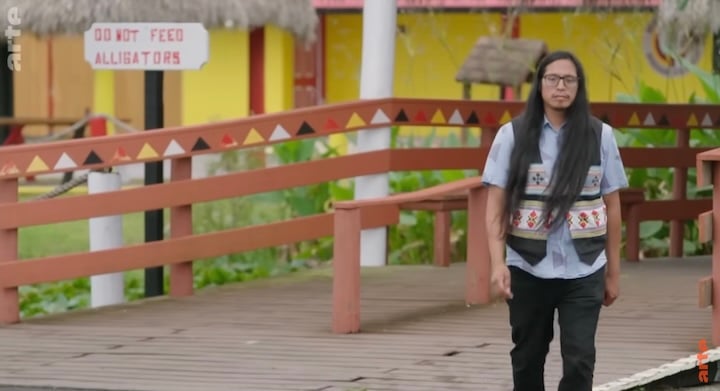
German public broadcasters Arte and ZDF have recast Florida’s “Alligator Alcatraz” as more than a migration story. Their coverage highlights detention in the Everglades, the impact on the Miccosukee tribe, and why the issue resonates deeply with European audiences concerned about human rights and Indigenous land.
🌐 Languages · Idiomas · Sprachen · Langues · اللغات
A recent documentary, “Results from Trump’s System,“aired jointly byArteandZDFin Germany and France, has reshaped how large parts of the European public perceive Florida. Once synonymous with tourism and leisure, the U.S. state is now increasingly framed as a site where migration policy, environmental pressure, and unresolved Indigenous dispossession intersect.
At the centre of this reassessment is a migrant detention facility in the Everglades, commonly referred to as “Alligator Alcatraz”, and the land on which it stands — ancestral territory of theMiccosukee Tribe of Indians of Florida.
An Indigenous Homeland, Not an Empty Landscape
The Arte–ZDF documentary challenges a long-standing external perception of the Everglades as an empty or hostile wilderness. Instead, it presents the region as a living Indigenous homeland, shaped for centuries by Miccosukee communities who adapted their way of life to its wetlands, long before Florida’s incorporation into the United States.
Viewers are reminded that the Miccosukee withdrew deeper into the Everglades in the 19th century to escape U.S. military campaigns against Indigenous peoples. What had once been a refuge is now portrayed as a place of renewed state control, surveillance and confinement.
As the documentary notes in its narration:
“What is presented as wilderness is, in reality, a homeland — and decisions about it are once again being made without those who belong to it.”(Arte/ZDF documentary, translated)
THIS VIDEO is blocked in the United States. Please use a VPN set to Germany to watch
Detention Policy and Colonial Continuities
Rather than treating Indigenous concerns as peripheral, Arte and ZDF place them at the core of their analysis. The detention facility is framed not only as part of U.S. migration enforcement but also as an example of how Indigenous land continues to absorb politically sensitive projects.
The documentary traces a broader pattern: infrastructure developments, environmental degradation and security measures have repeatedly been concentrated in areas where Indigenous political influence is limited, even when formal recognition of tribal sovereignty exists.
In this context, the Miccosukee case is presented as emblematic rather than exceptional. As the programme states:
“Again, Indigenous land absorbs the burden of state policy — quietly, legally, and with lasting consequences.”(Arte/ZDF documentary, translated)
USA: New Findings Reveal Human Rights Violations at Florida’s “Alligator Alcatraz” and Krome Detention Centers
Amnesty International today released a new report documenting cruel, inhuman, and degrading treatment at two immigration detention centers in Florida: The Everglades Detention Facility (“Alligator Alcatraz”) and the Krome North Service Processing Center (Krome). The report, Torture and enforced disappearances in the Sunshine State: Human rights violations at “Alligator Alcatraz” and Krome in Florida, reveals […]
Why the Name Resonates in Germany
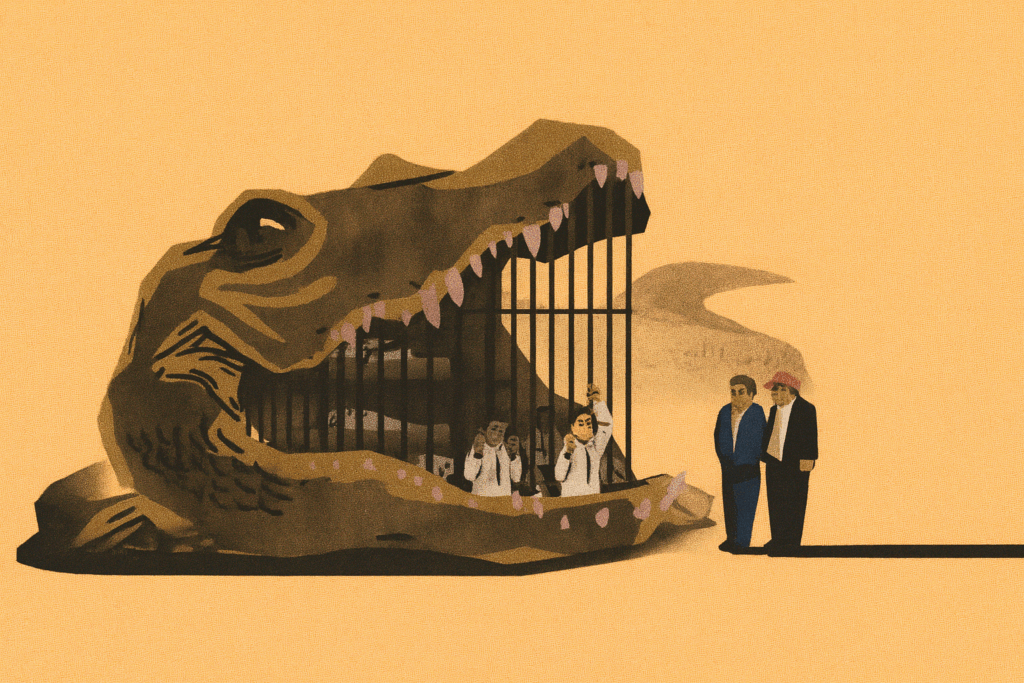
German public broadcasters devote particular attention to the language surrounding the facility. The nickname “Alligator Alcatraz”, officials argue in the film, is not merely informal rhetoric but a deliberate framing that turns isolation and harsh conditions into a political message.
For German audiences, shaped by the country’s own historical experience, such language functions as an early warning signal. The documentary avoids direct historical comparisons, but emphasises that systems of abuse often begin with normalisation, dehumanisation and physical removal from public scrutiny.
“German history has produced a heightened sensitivity to how people are spoken about — especially when isolation and deterrence are presented as administrative solutions.”(Arte/ZDF documentary, translated)
A Shift in Florida’s European Image
The impact of the documentary has extended beyond political debate. European travel and culture editors report that Florida is increasingly discussed not only as a destination, but as an ethical question. For many viewers, the combination of migrant detention and Indigenous land use has altered the moral calculus of leisure travel.
Arte and ZDF argue that while migration detention alone may be contested politically, its implementation on Indigenous land against Indigenous opposition introduces a qualitatively different dimension — one that resonates strongly in Europe, where colonial legacies are undergoing renewed scrutiny.
A Broader Democratic Question
In its closing assessment, the documentary situates the Everglades case within a wider international debate. The question it poses is not limited to Florida or the United States, but concerns democratic governance more broadly: how states manage borders, land and vulnerable populations without reproducing patterns of exclusion rooted in colonial history.
Its conclusion is measured but pointed:
“This is not only a story about migration. It is about whether colonial thinking has ended — or merely adapted to contemporary administration.”(Arte/ZDF documentary, translated)
For the Miccosukee, the issue remains immediate and concrete. For European audiences, the programme has turned Florida into a symbol — and a reminder that the ethical implications of migration policy do not stop at national borders.
Below is apolished closing sectionyou can appendat the end of the article. It is written in a neutral, explanatory tone consistent with European newspaper standards and avoids repetition.
Why Arte and ZDF’s Joint Coverage Matters
Arte andZDFoccupy distinct yet complementary roles in Europe’s media landscape, which helps explain the unusually strong public reaction to their coverage of Florida and the Miccosukee.
Arte,founded in 1992 as a Franco-German public broadcaster, is aimed at a politically engaged, well-educated European audience with a strong interest in history, culture and human-rights issues. Its documentaries are known for long-form analysis and for placing current events within broader historical and ethical frameworks. While Arte does not seek mass audiences, its reporting often shapes elite and opinion-forming debates across Europe.
ZDF,by contrast, is one of Germany’s primary national public broadcasters, with a broad, mainstream audience and significant prime-time reach. Its news and documentary programming plays a central role in setting the public agenda. When ZDF devotes sustained coverage to an international issue, it signals that the subject has moved beyond specialist or niche concern and into the centre of national debate.
The convergence of Arte’s analytical framing with ZDF’s mass legitimacy gives such reporting exceptional weight. For many European viewers, this combination has transformed the situation in the Everglades — and the treatment of the Miccosukee — from a distant U.S. policy dispute into a question of shared democratic values, historical responsibility, and human rights.
Juergen Thomas Steinmetzis a global tourism leader, media entrepreneur, and veteran journalist with 40+ years of industry experience. Founder and Publisher ofeTurboNewssince 1999 and founder of theWorld Tourism Network, he has championed independent tourism journalism, international collaboration, and a stronger voice for destinations and tourism businesses worldwide.Read full biography »










Leave a Comment