

Berlin— As Germany prepares special repatriation flights for citizens stranded in the Gulf following widespread airspace closures, the Berlin-based Chairman of the World Tourism Network (WTN) , Juergen Steinmetz, is calling on the German Federal Government to broaden its support to include international tourism professionals unable to reach home — even if they are not German nationals.
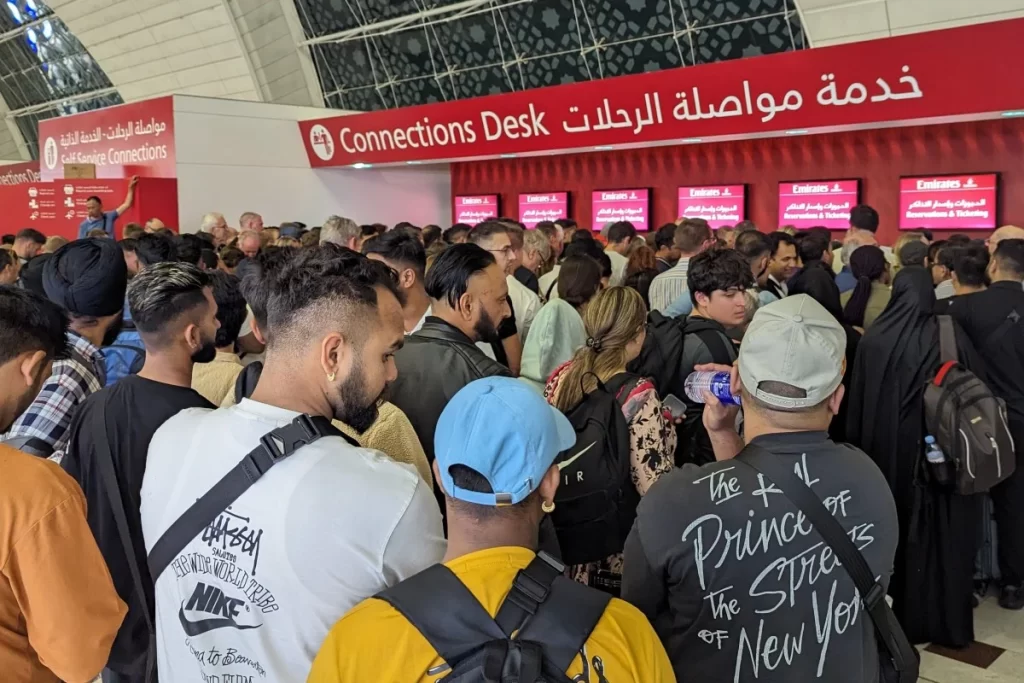
Thousands of industry delegates, exhibitors, and buyers are currently attempting to travel to or from ITB Berlin, the world’s largest travel trade fair, which is scheduled to take place this week in Berlin. Many participants from the Middle East and Asia remain stranded in hubs such as Dubai, Doha, and Bahrain after cascading flight cancellations linked to the escalating regional conflict and airspace shutdowns.
German Foreign Ministry in Contact With Riyadh and Muscat
According to government sources, the German Federal Foreign Officeis in active contact with authorities in Saudi Arabia and Oman, where airports are open. Germany is exploring evacuation corridors and logistical options.
Berlin is reportedly:
- Coordinating with Saudi authorities to facilitate the evacuation of German citizens via Saudi Arabia, where airspace remains operational.
- Exploring whether stranded Germans in the UAE or Qatar could be transported overland or by short-haul flights into Saudi Arabiafor onward repatriation.
- Assessing charter or commercial aircraft departures from Saudi airports if Gulf hubs remain restricted.
This diplomatic coordination reflects a strategy of using open regional gatewaysto safely move stranded travelers out of affected zones.
“Tourism Is Global — The Response Should Be Too”
In its statement, the World Tourism Network stressed that the disruption affects not only German holidaymakers but also “the very international partners who make ITB Berlin possible.”
WTN argues that:
- Numerous exhibitors and tourism ministers were scheduled to attend ITB Berlin.
- Some delegates are stranded mid-journey due to abrupt flight suspensions.
- Others are unable to leave Gulf states where commercial aviation remains limited.
- Many affected participants represent small and medium-sized tourism enterprises.
The organization is urging Berlin to ensure that any government-coordinated evacuation or charter arrangements include stranded ITB participants, regardless of passport, particularly where spare capacity exists on outbound flights from Saudi Arabia or other operational hubs.
Germany’s Current Repatriation Efforts
The German government has announced plans to organize civilian evacuation flights for German nationals impacted by the airspace crisis, working in coordination with commercial carriers such as Lufthansaand other aviation partners.
Priority is expected to be given to vulnerable individuals — including families with children, the elderly, and those with medical needs. Military aircraft deployment has reportedly been ruled out for now due to safety concerns and ongoing airspace instability.
However, these measures currently focus on German citizens.
Why ITB Berlin Is Uniquely Affected
ITB Berlin draws over 100,000 participants from more than 180 countries each year. Delegations from the Gulf region, Asia, Africa, and Europe are central to the event’s global scope.
With the exhibition days approaching:
- Some national tourism boards face reduced delegations.
- Exhibitors report missing freight shipments and personnel delays.
- Panel speakers and ministers may not arrive in time.
- Buyers and hosted guests remain stuck in transit hubs.
Industry observers warn that the situation risks undermining the show’s international character and weakening fragile post-pandemic tourism recovery efforts.
A Broader Diplomatic Gesture?
WTN framed its appeal not merely as logistical, but symbolic.
“Germany is the host of the world’s leading tourism trade show,” the statement noted. “Extending assistance beyond nationality would send a powerful signal of solidarity to the global tourism community.”
Legal experts note that while governments are primarily responsible for their own citizens, evacuation or charter flights have, in past crises, included foreign nationals when capacity allowed, and diplomatic arrangements were secured.
As Germany works with Riyadh to create viable evacuation routes, tourism stakeholders now wait to see whether that effort will also extend to stranded international guests of ITB Berlin.
For many in the global travel industry, the episode underscores a stark lesson: geopolitical shocks ripple instantly through tourism, and international cooperation often becomes the industry’s most essential lifeline.
The Situation for Tourists in Saudi Arabia
Saudi Arabia is currently experiencing elevated security and aviation risk due to the ongoing Iran conflict. Several European governments have tightened travel advisories, warning that the regional situation can escalate quickly and that further military activity is possible. While major cities like Riyadh and Jeddah are not active war zones, the overall risk level is higher than normal, and official guidance is trending cautious.
Air connectivity is the bigger concern. Parts of regional airspace have faced temporary closures or restrictions, and airlines are rerouting, suspending, or adjusting Middle East services at short notice. This creates a real possibility of flight cancellations, delays, or sudden schedule changes, even if airports inside Saudi Arabia remain operational.
In short: Saudi Arabia is not completely shut down, but tourism right now carries higher-than-usual security uncertainty and unreliable flight operations. If travel is optional, postponing is the lower-risk choice. If travel is necessary, flexible tickets, strong insurance coverage, and close monitoring of airline updates are essential.



Leave a Comment