

If playback is interrupted, you can restart it.
As London prepares to welcome the global travel industry to World Travel Market, WTTC is promoting the pedestrianization of Oxford Street as a model for tourism-led economic growth. Yet experiences from New York to Madrid and Copenhagen suggest that removing cars is only the beginning.
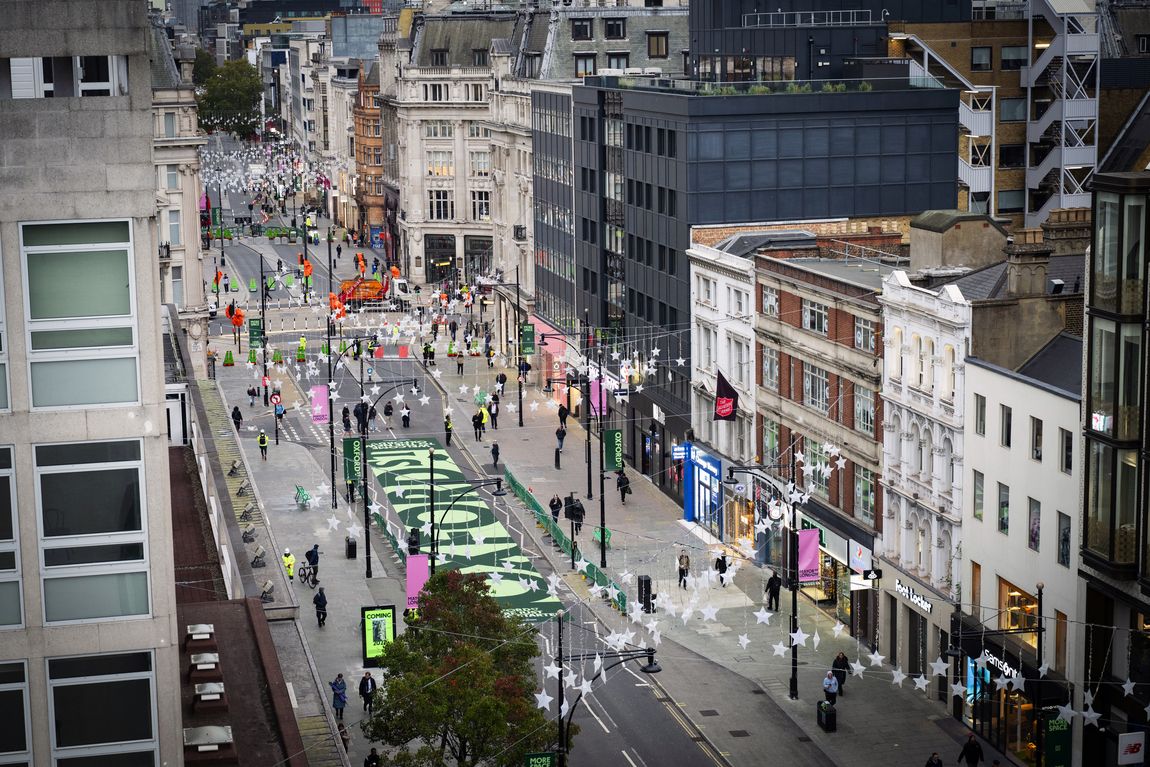
London’s transformation of Oxford Street into a traffic-free shopping and visitor destination is being celebrated by the World Travel & Tourism Council (WTTC) as an example of how infrastructure investment can strengthen tourism competitiveness.
The announcement comes ahead of World Travel Market (WTM) London, where tourism ministers, destination leaders and private-sector executives will discuss the industry’s future. WTTC forecasts 3.1% growth in Europe’s travel and tourism sector in 2026, alongside a 5.8% increase in international visitor spending.
But does pedestrianization actually deliver more visitors, higher spending and lasting benefits for local communities?
WTTC: London Is Sending a Message to the World
WTTC President and CEO Gloria Guevara sees Oxford Street’s transformation as evidence that tourism growth requires government commitment.
“London shows what happens when government treats Travel & Tourism as a strategic priority. Transforming Oxford Street, just as the global travel sector arrives in the city, sends a powerful message that London is open, ambitious and investing in every visitor’s experience.”
Guevara also emphasized that infrastructure investment must be accompanied by wider policies supporting the tourism economy.
“Our sector is set to create around one in three of all new jobs worldwide over the next decade, but that growth is never automatic. It depends on governments putting the right conditions in place, from connectivity and infrastructure to skills.”
For WTTC, Oxford Street provides a highly visible example of its argument that tourism should be treated as an economic priority rather than simply a promotional activity.
London’s Mayor Sees Jobs, Growth and a Greener Capital
The traffic-free zone covers almost one kilometer of Oxford Street, one of London’s most internationally recognized shopping destinations.
London Mayor Sadiq Khan described the pedestrianization as a landmark achievement.
“It is a truly momentous occasion for the capital. Revitalising Oxford Street will boost jobs and economic growth in the capital, unlock the full potential of this key part of the West End, and help build a better, greener and more prosperous London for everyone.”
The project is supported by the UK Government and delivered through the Oxford Street Development Corporation.
Yet while the political and tourism ambitions are clear, the long-term economic impact remains to be demonstrated.
What Other Cities Have Learned from Going Car-Free
New York — Times Square
Beginning in 2009, New York converted major sections of Broadway around Times Square into pedestrian plazas. The transformation became an internationally recognised public-space success, with improvements in pedestrian safety and visitor experience.
The lesson for London: removing vehicles works best when accompanied by attractive public spaces, traffic management and long-term maintenance.
Copenhagen — Strøget
Pedestrianized in 1962, Strøget became one of Europe’s best-known car-free shopping streets. Despite initial resistance, the project helped establish Copenhagen’s reputation for pedestrian-friendly urban design.
The lesson: success can take years, and businesses must adapt to a changing street environment.
Madrid — Gran Vía and Central Madrid
Madrid expanded pedestrian space and introduced traffic restrictions in its central districts. Research into Spanish pedestrianization projects has found generally positive retail effects, although political controversy and business concerns have continued.
The lesson: commercial gains are possible, but public acceptance and access for businesses remain essential.
Barcelona — Superblocks
Barcelona’s superblocks reduced through-traffic in selected neighborhoods, creating more space for pedestrians, greenery and community activities.
However, questions about displaced traffic, accessibility, gentrification and the distribution of economic benefits have complicated the success narrative.
The lesson: environmental improvements do not automatically mean that every resident or business benefits equally.
Why WTTC’s Voice at WTM London Matters
WTTC’s endorsement of Oxford Street is particularly significant because of its timing alongside World Travel Market.
WTM is one of the industry’s major international business gatherings. WTTC, representing the interests of leading private-sector travel and tourism businesses, can use the occasion to connect government policy with tourism investment and economic development.
WTTC’s latest Economic Impact Research forecasts that travel and tourism will contribute US$11.9 trillion to the global economy in 2026, representing 9.9% of global GDP and supporting 375 million jobs.
Those figures underline the industry’s scale, but they do not establish that pedestrianising individual streets automatically generates tourism growth.
The real test for Oxford Street will come after the WTM delegates leave London.
Will the project increase retail revenue, attract more international visitors, create sustainable employment and improve the experience of Londoners? Or will some economic activity and traffic simply move elsewhere?
For WTTC, Oxford Street is a powerful symbol of tourism ambition. For London, it is now an opportunity to demonstrate measurable results.
And for other destinations watching from WTM, the most valuable lesson may be that a successful car-free street requires much more than the absence of cars.




Leave a Comment