
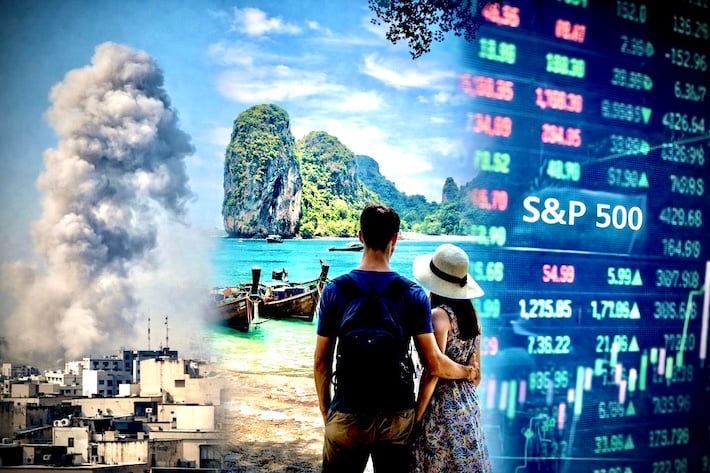
The rapid escalation of conflict in the Gulf region is once again underscoring how tightly intertwined geopolitics, financial markets, and global tourism are.
Military action involving the United States and Israel against Iran has reverberated across the Middle East, with reports of retaliatory strikes, heightened security alerts, and the temporary shutdown of several Gulf-region airports. While the humanitarian implications must remain paramount, the economic consequences — particularly for travel and investor confidence across Asia and Thailand — are already being closely monitored.
Tourism: A Sector That Moves on Sentiment
Tourism is among the most sentiment-driven industries in the global economy. It reacts quickly to headlines and perceived risk — often before any measurable disruption occurs.
Even when destinations are geographically distant from conflict zones, traveler psychology can shift abruptly, especially in long-haul markets. Flight path adjustments, airspace closures, and rising insurance costs contribute to an atmosphere of uncertainty that affects booking behavior worldwide.
This is not the first Gulf conflict involving the United States observed from Thailand. During the First Gulf War in the early 1990s, there were widespread fears that long-haul travel would collapse and that Thailand’s tourism industry would suffer structural damage.
In reality, the impact proved limited and short-lived.

There was an initial pause in bookings and heightened anxiety driven by global headlines. But Thailand was quickly perceived as distant, stable, and safe. Demand returned faster than expected. Regional travel remained resilient. The country emerged with its tourism reputation intact.
The historical lesson is clear: when Thailand is not directly involved, the impact of distant geopolitical conflict has tended to be temporary rather than structural.
Short-Term Impact: Hesitation Over Cancellation
In the immediate term, hesitation is more likely than mass cancellations. Travelers may:
- Delay booking decisions
- Shorten planning horizons
- Choose destinations perceived as predictable and stable
Asia — and Thailand in particular — has long benefited from being viewed as neutral and geographically removed from Middle Eastern conflict. That perception largely remains intact.
However, global instability can still dampen overall travel confidence.
Air Travel Feels Pressure First
Airlines are typically the first to absorb geopolitical shocks. Rising oil prices, airspace restrictions, rerouting costs, and increased security premiums put upward pressure on fares.
For price-sensitive travelers in Europe and North America, even modest fare increases can influence destination choices. Southeast Asia could see some marginal softening in long-haul demand if ticket prices rise significantly or travel times lengthen due to altered flight paths.
That said, Thailand’s tourism fundamentals remain comparatively strong:
- Diversified source markets
- Strong intra-Asia travel flows
- Competitive pricing
- Established global brand for hospitality and safety
Within Asia, short-haul travel is likely to remain robust. Regional travelers tend to be more pragmatic and less reactive to distant geopolitical developments — particularly when there is no direct threat to their routes or destinations. This intra-regional resilience may help cushion any softness from long-haul markets.
Financial Markets: Volatility, Not Collapse
Periods of geopolitical escalation typically trigger short-term volatility rather than structural market decline.
In the United States:
- The Nasdaq Composite tends to be most sensitive to risk-off sentiment. Higher-growth, higher-valuation stocks often see sharper short-term pullbacks during global tension.
- The Dow Jones Industrial Average, with heavier exposure to established industrial and consumer firms, often proves more resilient.
- The S&P 500 typically reflects the broader economy and tends to stabilize once investors refocus on earnings, interest rates, and inflation rather than headlines.
Historically, markets sell first and reassess later. Initial reactions are often emotional; longer-term performance is driven by fundamentals.
Asia-Pacific: Watching Energy and Currencies
For Asia-Pacific economies, the primary transmission channel is energy prices.
Energy-importing nations face pressure from rising fuel costs, which can influence inflation, airline margins, and logistics expenses. Commodity exporters or energy-service providers may benefit in the short term.
Currency stability and central bank responses will likely play a more significant role in shaping regional market performance than equities alone.
Thailand: Indirect Exposure, Manageable Risk
For Thailand, exposure remains largely indirect.
Higher oil prices could raise transport and operating costs across aviation and hospitality sectors. Inflationary pressure could emerge if energy spikes persist. However, domestic demand, regional tourism flows, and government stimulus policies remain the more decisive drivers of near-term performance.
Thailand’s economic structure today is also more diversified than during earlier Gulf conflicts. Digital services, manufacturing supply chains, and regional trade linkages provide additional buffers.
Crucially, Thailand is not on the front line of this conflict.
The Importance of Perspective
Markets dislike uncertainty — but they adapt quickly once clarity improves.
Tourism demand often pauses, recalibrates, and then rebounds when destinations remain safe and accessible. Thailand’s history of navigating external shocks — from regional conflicts to financial crises and pandemics — demonstrates that resilience, not panic, defines long-term outcomes.
For tourism leaders, investors, and policymakers, priorities should include:
- Calm, fact-based communication
- Operational readiness in aviation and hospitality
- Close monitoring of energy markets
- Avoiding reactive or alarmist decisions
The situation in the Gulf remains fluid and developing. Retaliatory cycles and diplomatic maneuvering will shape the next phase. But from a regional perspective, Asia — and Thailand in particular — remains geographically distant from direct conflict exposure.
If history is any guide, sentiment may wobble. Bookings may pause. Markets may fluctuate.
But when safety remains intact, and messaging remains steady, confidence has historically returned faster than feared.
In moments of geopolitical tension, resilience is the most valuable asset of all.










Leave a Comment