
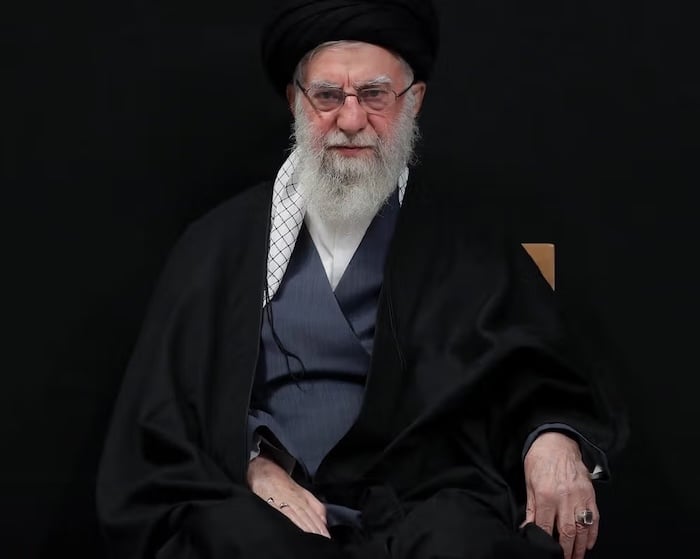
Rumors circulating online and now confirmed by Iran International Publication say that Iran’s supreme leader, Ayatollah Ali Khamenei, has died, prompting a wave of speculation about political succession, regional stability, and the future of diplomacy in the Middle East. Numerous confirmation messages and news articles had been published in Israel.
As of publication, however, there has been no official confirmationfrom authorities in Iran, nor verification from independent international sources, that Mr. Khamenei has died. Iranian state media have not issued statements indicating a leadership change, and Western governments have not publicly corroborated the claims.
US President Trump is expected to make a statement shortly, possibly confirming these rumors. According to Gulf News, Khamenei is alive, and Iran’s Foreign Minister is interested in de-escalation. ‘We have no intention to attack Gulf states, but we are actually attacking American bases.’
Given the central role the supreme leader plays in Iran’s political system — overseeing the armed forces, judiciary, and state broadcasting apparatus — any confirmed death would mark one of the most consequential transitions in the Islamic Republic’s 47-year history.

A System Built Around One Office
Mr. Khamenei, who has led Iran since 1989, holds ultimate authority above the president and parliament. The country’s constitution mandates that the Assembly of Experts, a clerical body, appoint a successor upon a vacancy.
In the event of his death, analysts expect intense maneuvering among political factions, particularly within the powerful Islamic Revolutionary Guard Corps, which wields significant influence over national security and the economy.
A contested succession could produce internal instability. Alternatively, a smooth transition could reinforce continuity and signal institutional resilience.
Regional Tensions and the Risk of Escalation
Iran’s geopolitical posture has long placed it at odds with Israeland the United States. It maintains alliances and proxy relationships across Iraq, Syria, Lebanon, and Yemen.
Should a leadership vacuum emerge, regional actors might interpret the moment as either vulnerability or opportunity. In the worst case, miscalculation could heighten tensions in already fragile theaters, including maritime routes through the Strait of Hormuz, through which a significant share of the world’s oil supply passes.
Energy markets have historically been sensitive to uncertainty about Iran, and even unverified reports can drive volatility in oil prices and shipping insurance costs.
A Potential Opening for Diplomacy?
Some foreign policy analysts argue that leadership transitions, while destabilizing in the short term, can create unexpected diplomatic openings. Western governments have previously sought to revive negotiations over Iran’s nuclear program through multilateral frameworks under the auspices of the United Nations.
A new leadership structure might reassess economic pressures stemming from sanctions and consider recalibrating foreign policy. Conversely, a successor aligned closely with hardline factions could adopt a more confrontational stance to consolidate domestic legitimacy.
Implications for Travel and Regional Tourism
Even without confirmation, speculation alone can influence global travel patterns.
Airlines often reroute flights during periods of heightened uncertainty. Tour operators in Gulf countries, Turkey and Jordan may experience booking hesitations as travelers respond to perception rather than direct risk. Historically, however, regional tourism markets have shown resilience once clarity replaces rumor.
Waiting for Facts
For now, diplomats and markets alike are in a holding pattern. Major news organizations and governments continue to monitor developments, emphasizing that any assessment depends on verified information.
In a region where rumors can travel faster than confirmation, the stakes of accuracy are unusually high. If and when official announcements emerge, they will not only shape Iran’s domestic political trajectory but also reverberate across global diplomacy, energy markets and international security.
Until then, the situation remains unconfirmed — and closely watched.





Leave a Comment