
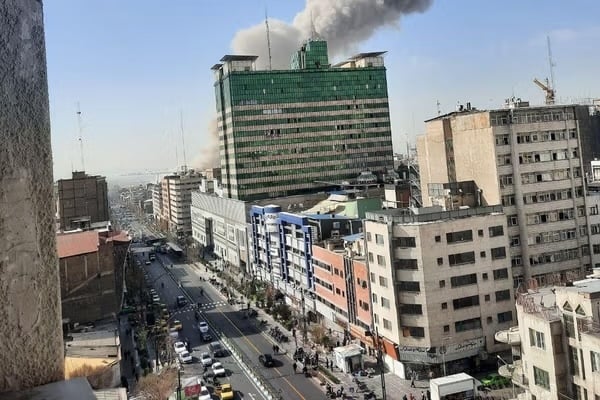
Israel said early Saturday it had launched what it described as “pre-emptive strikes” against targets in Iran, with explosions reported in parts of Tehran. Iranian state media acknowledged blasts in the capital and surrounding areas, while authorities moved swiftly to restrict communications and aviation traffic.
Latest UPDATES:
oldest to newest updates below:
- Attacks are expanding to other areas in Iran.
- Iran is advising its citizens in the United Arab Emirates, Qatar, and Jordan to leave the country.
- Explosion heard in Tel Aviv
- eTurboNews readers in the affected regions are invited to provide information
- Reza Pahlavi issued a statement saying: “Moments of destiny lie ahead of us.”
- Israeli PM is calling on the Iranian People and the Iranian Army to work with them on a better Iran.
- People in Tel Aviv and Tehran are relaxed watching the situation unfold, for many on both sides say: “A better future.”
- Within 2 hours, Iran launched two attacks toward Israel, indicating the regime is still able to respond immediately.
- President Trump, in a message also addressed to the Iranian people, said, ” Bombs will drop everywhere.”
- Iran’s Interior Ministry on Saturday condemned US and Israeli strikes on Tehran and several other cities, accusing Washington and Israel of violating international law. In a statement, the ministry said it was using all available capacity to maintain public order and provide services, and that the interior minister had instructed provincial governors to submit rapid situation reports and mobilize resources to address urgent public needs. The ministry said a national crisis management headquarters had been formed and instructions issued to provincial crisis offices and relevant agencies.
- The US Embassy in Jordan implemented a shelter-in-place order for all personnel and recommended that American citizens do the same until further notice.
- The US Embassy in Bahrain also urged citizens to shelter in place, citing media reports of threats involving missiles or drones over Bahrain.
- eTN readers in Jordan say people are calm but concerned and angry that the U.S. and Israel attacked a sovereign country. (Iran)
- Emergency alerts are sent by the Qatar Authorities to their citizens, telling them to shelter in place, after the Qatar Military is confronted by incoming missiles from Iran.
- Air Space closed in Qatar and Bahrain
- Huge explosion in Abu Dhabi, UAE
The Israeli government announced emergency measures nationwide, including the suspension of classes and limits on public gatherings. Iran’s leadership condemned the strikes and warned of a response, raising fears of rapid escalation across an already volatile region.
Airspace Closures Ripple Across the Region
Within hours of the first reports:
- Israel closed its airspaceto civilian traffic, diverting inbound flights and grounding departures.
- Iran shut its airspaceand imposed temporary telecommunications restrictions.
- Iraq also closed its airspace, affecting major east–west flight corridors.
The closures immediately disrupted one of the world’s busiest aviation corridors linking Europe, the Gulf, and Asia, forcing airlines to reroute aircraft around restricted airspace.
Aviation tracking data showed long-haul flights diverting south over Saudi Arabia or north via Central Asia, increasing flight times and complicating crew scheduling and onward connections.
Impact on Gulf Carriers and Major Transit Hubs
While the closures are concentrated over Iran, Israel, and Iraq, the effects are being felt across the Gulf’s global aviation network.
Emirates — Hub: Dubai International Airport (DXB)
Dubai remains operational, but Emirates is rerouting Europe–Asia services to avoid Iranian and Iraqi airspace. Some flights are operating with longer block times, increasing the risk of missed onward connections. Services to Iran and Iraq are expected to face suspension or cancellation.
Qatar Airways — Hub: Hamad International Airport (DOH)
Qatar Airways, one of the largest global connectors between Europe and Asia, is adjusting flight paths to avoid affected airspace. Doha remains open and fully functional, though minor delays and rolling schedule adjustments are expected. Flights to Iranian destinations are suspended.

Etihad Airways — Hub: Zayed International Airport (AUH)
Etihad is implementing tactical reroutes similar to its Gulf peers. Longer routes may require operational adjustments, including potential payload restrictions on certain ultra-long-haul sectors. Abu Dhabi airport remains open.
Saudia — Hubs: King Abdulaziz International Airport (JED) & King Khalid International Airport (RUH)
Saudi airspace remains open. Saudia is adjusting northern routings but faces comparatively less disruption. The kingdom’s geographic position may temporarily shift additional transit demand toward Jeddah and Riyadh as passengers rebook away from impacted routes.
International Reaction
World leaders urged restraint, warning against further escalation. Several governments updated travel advisories for Israel and Iran and advised citizens to avoid non-essential travel to affected areas.
Energy markets reacted swiftly, with oil prices climbing in early trading amid concerns over broader regional instability.
What Happens Next?
Security analysts outline three potential near-term scenarios:
- Contained Exchange– Limited retaliation followed by diplomatic engagement.
- Regional Escalation– Broader military involvement affecting additional airspace across the Levant or Gulf.
- Prolonged Stand-Off– Continued strikes, cyber operations, and proxy activity without full-scale war.
The scale and timing of Iran’s response are likely to determine whether the aviation disruption remains temporary or widens further.
Travel Advisory
Travelers scheduled to fly to or through Israel, Iran, Iraq, or major Gulf hubs including Dubai (DXB), Doha (DOH), and Abu Dhabi (AUH)should:
- Expect rerouting, delays, and potential cancellations.
- Monitor airline travel waivers for flexible rebooking options.
- Avoid non-essential travel to directly affected countries.
- Allow extended connection times when transiting Gulf hubs.
At present, Gulf airports remain open, but flight schedules are highly fluid and subject to rapid change.
More updates to follow as this developing story unfolds.






Leave a Comment