

Port Louis & Malé – Mauritius has announced the immediate suspension of all diplomatic relations with the Republic of Maldives, in a dramatic escalation of a long-running dispute over the sovereignty of the Chagos Archipelago in the central Indian Ocean.
The move comes after Maldivian authorities withdrew recognition of Mauritian sovereignty over the islands, rejecting a high-profile agreement between Mauritius and the United Kingdom. In that arrangement — signed in May 2025 — the UK agreed to cede sovereignty to Mauritius while retaining military rights over the strategically vital Diego Garcia baseunder a long-term lease.
Mauritius’s government described the Maldivian position as a direct challenge to international law and its territorial integrity. Port Louis signalled that severing diplomatic ties is intended to protect national interests and uphold principles of sovereignty and regional stability.
The Maldives, for its part, has argued that its geographic proximity to the Chagos Archipelago (roughly 500 km from Malé) and historical links justify its objections — including over maritime boundaries decided by the International Tribunal for the Law of the Sea (ITLOS) in 2023.
Background: What’s Driving the Dispute?
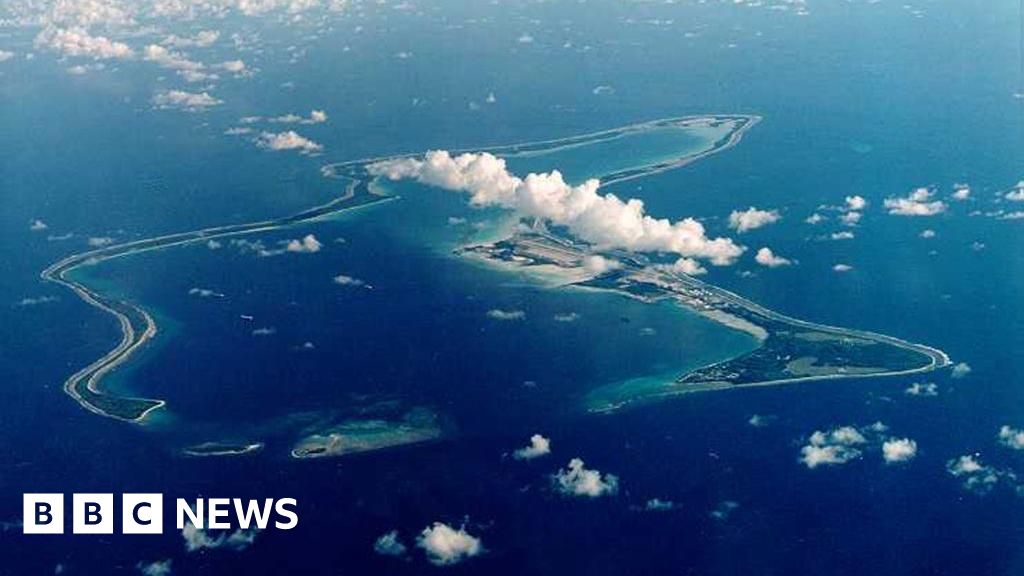
The Chagos Archipelago — a group of atolls in the Indian Ocean — was excised by the UK from Mauritius before the latter’s independence in 1968 and administered as the British Indian Ocean Territory (BIOT). It includes Diego Garcia, where a joint British-U.S. military base operates and plays a major role in Indo-Pacific strategic dynamics.
Though the UK and Mauritius struck a deal to return sovereignty to Mauritius, the arrangement remains politically sensitive. That deal has been opposed by voices including former U.S. leaders and faces ongoing legal and diplomatic contention.
The dispute also has a deep human dimension: the Chagossian people were forcibly removed from their homeland in the 1960s–70s to make way for the military base, a historical injustice that continues to affect regional perspectives.
Regional and Strategic Fallout
The diplomatic rupture between Mauritius and the Maldives has broader implications across the Indian Ocean region— a strategic maritime corridor for global trade, energy, and tourism.
1. Geopolitical Tensions Rising
The dispute overlaps with great-power competition in the Indian Ocean. India, long a partner of Mauritius, supports Port Louis’s claim to the archipelago as part of its broader maritime strategy in the region. China’s expanding ties in the Indian Ocean further complicate the landscape.
India’s role is particularly significant given its extensive cooperation with Mauritius on maritime security and economic initiatives, contrasted with concerns over shifting Maldivian positions that may strain New Delhi’s relationship with Malé.
2. Economic and Tourism Impacts
While neither Mauritius nor the Maldives are dependent on the Chagos Islands for mass tourism (the islands are uninhabited and largely inaccessible), the diplomatic dispute threatens wider regional tourism linkages and investor confidence:
- Perception of instability:Both Mauritius and the Maldives rely heavily on tourism as a pillar of their economies. Diplomatic acrimony can dampen traveler confidence in the Indian Ocean as a safe, peaceful destination, particularly among European and Asian markets sensitive to geopolitical news.
- Regional cooperation setbacks:Tourism infrastructure often benefits from regional cooperation — from joint marketing campaigns to eased travel arrangements. Strained ties could limit collaborative tourism initiatives between Indian Ocean nations.
- Indirect spillovers:Perceptions of maritime insecurity — whether from territorial disputes or military build-ups — can influence cruise itineraries, airline route planning, and luxury hospitality investments. Potential tourists may opt for destinations perceived as more stable.
This confluence of geopolitical friction and economic stakes underscores how an ostensibly diplomatic territorial dispute can ripple into tourism and broader economic sectors across the Indian Ocean region.
What Comes Next?
Diplomacy may yet offer a path back from this standoff. Former Maldives President Mohamed Nasheed and others have called for renewed dialogue between Malé and Port Louis, warning of adverse consequences if relations remain frozen.
International actors — including the UK, U.S., India, and regional organisations — may also play mediating roles, given their strategic interests and investments in Indian Ocean stability.
As the dispute evolves, key questions remain:
- Will the UK-Mauritius sovereignty agreement be fully ratified?
- Can Mauritius and the Maldives restore diplomatic engagement?
- How will broader Indian Ocean tourism stakeholders react to emerging geopolitical tensions?
The answers will shape not only the future of the Chagos Islands but also the regional balance between security, sovereignty, and economic prosperity in one of the world’s most strategically important seas.





Leave a Comment