

If playback is interrupted, you can restart it.
A new day may be rising for Jordan tourism, and its colors are the brilliant blue of the Red Sea. The inscription of the Aqaba Marine Reserve on the UNESCO World Heritage List is being celebrated across Jordan as far more than an environmental achievement. It is a moment of national pride, but it also creates an extraordinary opportunity for tourism.
For an industry that has long introduced Jordan to the world through Petra, Wadi Rum, the Dead Sea, Biblical history and legendary Jordanian hospitality, UNESCO has now added another globally recognized reason to visit the Hashemite Kingdom.
This one lies beneath the sea.

Jordan’s tourism industry is already looking at how the UNESCO recognition can be transformed into international awareness, new itineraries and new reasons for travelers to discover Aqaba.
The message is simple but potentially powerful: Jordan is not only Petra and desert. Jordan is also the Red Sea.
And what lies beneath the waters of Aqaba is now officially recognized as part of the natural heritage of humanity.
From UNESCO Celebration to Tourism Opportunity
eTurboNews reported on August 2 on the significance of the UNESCO recognition for Jordan and the Aqaba Marine Reserve. The story is now moving into its next chapter.
The challenge — and opportunity — is to turn international recognition into international curiosity.
Jordanian tourism officials and the private sector have good reason to be excited. UNESCO recognition gives Aqaba a globally understood seal of significance that can resonate with travelers interested in diving, snorkeling, nature, marine conservation, sustainable tourism and science, as well as traditional sun-and-sea holidays.
It can also introduce Aqaba to millions of potential visitors who know Petra but may have no idea that Jordan has a sophisticated Red Sea resort destination.
The Hashemite Kingdom of Jordan celebrated the inscription of the Aqaba Marine Reserve on the UNESCO World Heritage List following the formal adoption of the decision by the World Heritage Committee during its 48th session in Busan, Republic of Korea.
The Committee inscribed the Reserve under natural World Heritage criteria (ix) and (x), recognizing its outstanding processes, exceptional marine biodiversity and globally significant contribution to the conservation of threatened marine species and ecosystems.
According to a statement released by Aqaba Special Economic Zone Authority (ASEZA), the inscription represents an “international recognition” of one of the northern Red Sea’s most exceptional marine ecosystems and highlights the growing global importance of climate-resilient coral reefs at a time when marine environments worldwide are facing unprecedented environmental pressures.
This landmark achievement is in line with ongoing efforts undertaken upon the directives of His Majesty King Abdullah II and with the continued support and follow-up of His Royal Highness Crown Prince Al Hussein bin Abdullah II, to safeguard Jordan’s natural heritage and advance environmental sustainability as a national priority.
It is also the result of the collective efforts of the Government of Jordan, ASEZA, national institutions, scientists, local communities and international development partners over several years.
ASEZA Chief Commissioner Shadi Al Majali stressed the importance of this milestone.
“The inscription of the Aqaba Marine Reserve on the UNESCO World Heritage List is a source of immense honor for Jordan and a recognition of the Kingdom’s leadership in protecting a marine ecosystem of global importance.
“Guided by His Majesty King Abdullah II’s vision, Jordan accepts this recognition with pride, humility and with a renewed commitment to preserving the Reserve’s Outstanding Universal Value for future generations,” he pointed out.
Where Is Aqaba?
For travelers who know Jordan primarily through photographs of Petra, Aqaba can be a revelation. Jordan has a Red Sea coast, and Aqaba is its gateway.
The city sits at the extreme south of Jordan at the northern end of the Gulf of Aqaba, an arm of the Red Sea. It is Jordan’s only coastal city and seaport and occupies a remarkable geographic position close to Saudi Arabia, Israel and Egypt.
For tourism, the location is almost ideal. Wadi Rum is roughly an hour away by road. Petra can be reached in around two hours, depending on route and conditions.
That means an international visitor can experience the coral reefs of the Red Sea, the desert landscapes of Wadi Rum and the ancient Nabataean city of Petra in a single journey without having to travel enormous distances.
Amman and Queen Alia International Airport are connected to Aqaba by highway, while King Hussein International Airport serves Aqaba itself.
Aqaba can therefore function not simply as the beach at the end of a Jordan tour, but as a destination in its own right — and potentially as an international gateway to southern Jordan.
What Makes the Aqaba Marine Reserve So Special?
Located at the northernmost tip of the Red Sea, the Aqaba Marine Reserve protects an exceptional mosaic of coral reefs, mesophotic reefs and seagrass habitats. Its coral reefs are internationally recognized for their exceptional thermal resilience, while the Reserve is home to more than 150 species of hard corals, over 500 fish species and approximately 1,000 species of mollusks, including numerous endemic and threatened species.
This is where the UNESCO recognition has implications extending far beyond tourism marketing.
At a time of worldwide concern about warming oceans and the future of coral reefs, Aqaba is increasingly important to marine scientists as well as travelers.
Its corals have demonstrated remarkable thermal resilience, making protection of this ecosystem relevant not only to Jordan but to international research into the future survival of coral reefs.
That provides Aqaba with the opportunity to develop a tourism identity built around conservation rather than mass consumption.
Diving and snorkeling are obvious attractions, but the possibilities extend to marine education, scientific tourism, university programs, citizen science, environmental conferences and conservation-focused travel.
“World Heritage inscription is not the conclusion of Jordan’s efforts; it is the beginning of an even strengthened, long-term commitment to protecting this globally significant site,” Al Majali added.
He also noted Jordan reaffirms its “full” commitment to the UNESCO World Heritage Convention and to implementing the decisions and recommendations of the World Heritage Committee.
Through ASEZA and its partners, he stated Jordan will continue to strengthen the Reserve’s legal protection, management, scientific research, ecological monitoring and responsible visitor management, as well as community engagement.
As for future policy, he stated “priority” actions will focus on implementing the Second Aqaba Marine Reserve Integrated Management Plan (2027–2030), and strengthening long-term environmental monitoring of water quality, pollution, desalination discharge, sea temperature, salinity, turbidity, sedimentation, underwater light, and underwater noise to safeguard the site’s Outstanding Universal Value.
Jordan also welcomes the Committee’s emphasis on enhanced regional cooperation and will continue working with regional and international partners to strengthen conservation of the Gulf of Aqaba and the wider Red Sea, while exploring future opportunities for coordinated transboundary protection, he remarked.
Additionally, he noted Jordan’s government expresses its sincere appreciation to the World Heritage Committee, UNESCO and its World Heritage Center, the International Union for Conservation of Nature (IUCN), the Republic of Korea as host of the 48th session, and all national, regional and international institutions, experts, and partners whose contributions supported the nomination and evaluation process.
Jordan, he said, dedicates this achievement to its people and to the international community, reaffirming that the Aqaba Marine Reserve is both a national treasure and a shared natural heritage of humanity.
Aqaba Is Ready to Receive Visitors
One reason the UNESCO designation could have an immediate tourism impact is that Aqaba already has much of the infrastructure an international destination requires. This is not a remote protected area where tourism infrastructure needs to be created from zero.
Aqaba has an established hotel and resort sector, restaurants, beaches, diving centers, marinas, shopping, tourism services and an international airport. International hospitality brands are well represented alongside Jordanian hotels and independent properties.
The destination includes Kempinski Hotel Aqaba Red Sea, InterContinental Aqaba, Hyatt Regency Aqaba Ayla Resort, Mövenpick Resort & Residences Aqaba, Mövenpick Resort & Spa Tala Bay, DoubleTree by Hilton Aqaba and Al Manara, a Luxury Collection Hotel.
Large tourism developments such as Ayla and Tala Bay have expanded Aqaba’s resort, marina and recreational offering and helped position the city for both regional and international tourism.
That gives Jordan an opportunity many newly recognized destinations do not have: UNESCO can generate awareness while the destination already has beds, restaurants, transportation and tourism professionals ready to serve the resulting demand.
Who Comes to Aqaba?
Aqaba draws an important domestic Jordanian market as well as travelers from neighboring and regional Arab markets. But the international opportunity is much larger.
European travelers are particularly important for Aqaba because the destination can offer winter sunshine, diving, beaches and cultural touring in the same vacation. Markets including Germany, the United Kingdom, France, Italy, Poland and other European countries are natural candidates for expanded Aqaba tourism.
North American and Asian travelers represent another opportunity, particularly for combined Jordan itineraries. For many of these visitors, Petra is what initially puts Jordan on the travel wish list.
UNESCO now gives Jordan an opportunity to say: come for Petra, but don’t leave before discovering what is under the water in Aqaba.
That could help extend stays, increase visitor spending and distribute tourism revenue more widely across southern Jordan.
Jordan’s International Gateway Gets Good News Too
The celebratory mood surrounding Jordan tourism received another boost Monday.

Airport International Group (AIG), the Jordanian company operating Queen Alia International Airport (QAIA), announced that the airport has achieved Level 1 of the Airports Council International (ACI) Accessibility Enhancement Accreditation (AEA), following its first participation in the global accreditation program.
The recognition may concern a very different part of the visitor journey, but it fits neatly into the larger story Jordan has an opportunity to tell.
A world-class destination also needs an international gateway that makes travel easier and more inclusive.
AIG said the accreditation reflects QAIA’s efforts to provide a more accessible and inclusive travel experience while aligning its facilities, services and operational practices with international standards.
The group said the accreditation is awarded to airports adopting an integrated approach to improving accessibility and incorporating inclusive practices throughout their operations.
With Level 1 accreditation, QAIA joins a growing network of airports working to enable passengers to navigate airport facilities with greater ease, confidence and independence.
Accessibility, AIG emphasized, is a key component of its approach to improving the passenger experience.
Devilliers said the accreditation reflects the group’s commitment to making accessibility a fundamental part of the airport experience.
“At Airport International Group, we see inclusion as an ongoing journey rather than a destination,” he said, adding that the milestone reinforces the group’s commitment to continuously developing Queen Alia International Airport in line with international best practices.
The timing makes the two international recognitions particularly interesting. One celebrates what Jordan has protected.
The other recognizes how Jordan welcomes people arriving to experience it.
Petra, Wadi Rum and Now a UNESCO Red Sea
For Jordan’s tourism industry, perhaps the greatest opportunity is not to market Aqaba separately from the country’s established attractions, but to connect them.
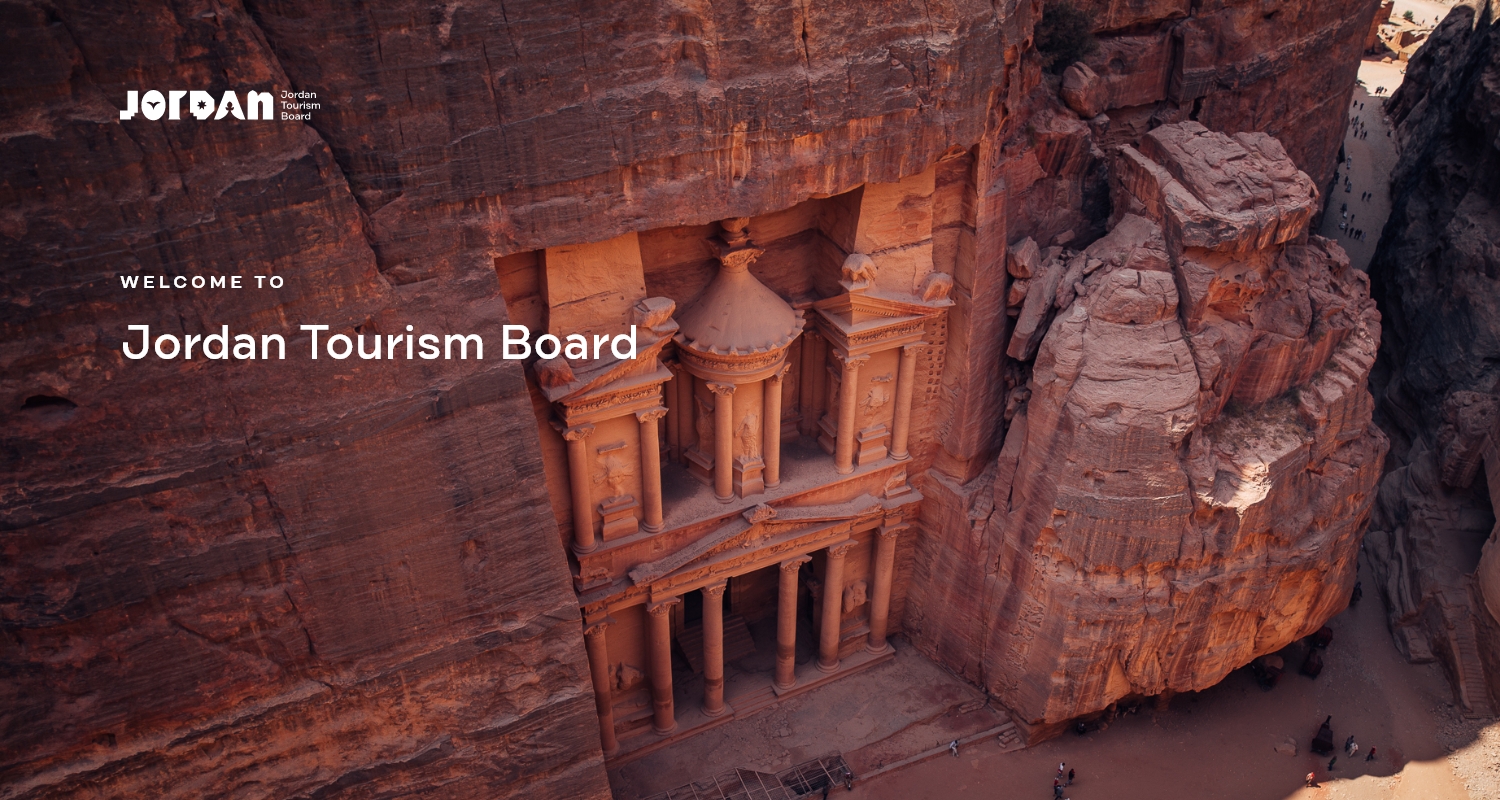
Few destinations can offer such dramatically different experiences within such manageable distances. A traveler can walk through the Siq and emerge before the Treasury at Petra. The next day can bring the silence and immense landscapes of Wadi Rum.
And shortly afterward, that same traveler can be underwater among corals and hundreds of species of Red Sea fish in a marine ecosystem UNESCO considers to possess Outstanding Universal Value.
- Petra represents civilization and history.
- Wadi Rum represents desert, adventure and space.
- Aqaba represents the living Red Sea.
Together they form an extraordinary tourism triangle in southern Jordan.
Now Jordan Has to Tell the World
UNESCO recognition does not automatically put passengers on airplanes or guests into hotel rooms. That is the next job.
The opportunity now belongs to Jordan’s tourism authorities, ASEZA, the Jordan Tourism Board, airlines, hotels, tour operators, travel agents, dive operators and the country’s international tourism partners.
The UNESCO designation provides them with a new story at precisely the right moment.
It can be told at travel trade shows. It can become part of airline campaigns. It can be incorporated into tour operator programs. Hotels can build marine conservation experiences around it. Dive operators can explain why Aqaba’s reefs matter globally. International journalists and influencers can see a Jordan that goes far beyond the familiar images of Petra.
Most importantly, Jordan can use the attention without sacrificing the treasure that created it. The strongest tourism strategy would not be to send unlimited numbers of visitors into a fragile marine environment. It would be to use UNESCO status to increase the value of visiting Aqaba while ensuring tourism contributes directly to its protection.
That is sustainable tourism at its most practical: protecting something extraordinary because its survival has environmental, social and economic value.
There is genuine reason for Jordan’s tourism community to celebrate. The country has gained international recognition for an extraordinary natural treasure in Aqaba. Its principal international airport has simultaneously received recognition for advancing accessibility and inclusion. Its hotels, resorts and tourism infrastructure are already in place. And Petra and Wadi Rum give Aqaba two globally famous neighbors capable of turning a Red Sea vacation into an unforgettable Jordan journey.
Now comes the exciting part.
- Jordan has a new story.
- Aqaba has a new place on the world tourism map.
And after UNESCO put the Aqaba Marine Reserve among the natural treasures of humanity, Jordan’s tourism industry is getting ready to tell the world.




Leave a Comment