

When travelers think of religious tourism, one destination dominates the conversation: Mecca, Saudi Arabia, where millions of Muslims perform the annual Hajj pilgrimage and millions more undertake Umrah throughout the year. Mecca is unquestionably the world’s largest religious tourism destination, demonstrating the enormous economic, cultural, and spiritual power of faith-driven travel.
Yet beyond Mecca lies a far broader—and often overlooked—global travel segment.
Every year, an estimated 300 to 400 million people travel for religious or spiritual reasons, making faith-based travel one of the largest specialized sectors of international tourism. According to industry estimates cited during the International Congress on Religious Tourism in El Salvador, these journeys generate approximately US$18 billion annually, while encompassing everything from pilgrimages and sacred festivals to visits to monasteries, temples, shrines, cathedrals, synagogues, mosques, and spiritual heritage sites.
Unlike adventure tourism or luxury travel, religious tourism crosses every demographic, economic class, and generation. It combines spirituality with culture, history, gastronomy, local traditions, and increasingly sustainable community development.
A Global Tourism Segment Hidden in Plain Sight
Religious tourism rarely receives the same attention as beach tourism, cruises, or meetings and conventions despite its remarkable scale.
Within the broader tourism industry, it is generally classified under cultural and heritage tourism, although its unique characteristics distinguish it from conventional cultural travel.
UN Tourism(formerly the UN World Tourism Organization) frequently recognizes religious tourism as an important component of cultural tourism because it contributes to heritage preservation, intercultural dialogue, and sustainable local development. Faith-based destinations are regularly included in discussions surrounding cultural routes, World Heritage Sites, and intangible cultural heritage.
The World Travel & Tourism Council (WTTC), meanwhile, typically measures the sector as part of overall travel and tourism’s economic contribution rather than as a separate category. This means religious tourism’s full economic impact is often hidden inside broader tourism statistics, making it difficult for governments to fully appreciate its value.
Industry experts increasingly argue that this lack of dedicated measurement has prevented many destinations from developing coherent national strategies.
The Americas: A Tourism Giant That Nobody Notices
One of the most striking paradoxes in global tourism is found in the Americas.
The Western Hemisphere is home to the world’s largest Catholic population, approximately 3,000 registered Catholic shrines, hundreds of pilgrimage routes, UNESCO religious heritage sites, Indigenous spiritual traditions, Jewish heritage destinations, evangelical centers, and countless festivals rooted in faith.
Yet despite these extraordinary assets, the region remains largely absent from international religious tourism strategies.
“We’re invisible—no one sees us,” said Adrián Lomello, Americas Coordinator for the Global Religious Tourism Network, speaking during the International Congress on Religious Tourism held in San Salvador.
His numbers tell the story.
- Mexico’s Basilica of Our Lady of Guadalupewelcomes approximately 22 million visitors annually, making it the most visited Catholic shrine in the world.
- Brazil’s National Shrine of Our Lady of Aparecidaattracts around 12 million pilgrims each year.
- Argentina’s Basilica of Our Lady of Lujánwelcomes roughly seven million visitors annually.
Even relatively small celebrations can generate enormous visitor flows. Chile’s Festival of the Virgin of La Tirana brings approximately 250,000 pilgrimsto a town with just 15,000 permanent residents.
Despite these remarkable figures, experts say the Americas lack coordinated public policies, consistent visitor statistics, integrated pilgrimage routes, and international marketing strategies.
El Salvador: An Unexpected Emerging Player

Few countries would have been considered candidates for hosting an international conference on religious tourism just a decade ago. El Salvador is one of them.
Once associated primarily with security concerns, the Central American nation has undergone a dramatic transformation that has significantly altered international perceptions.
Hosting the International Congress on Religious Tourism – Land of Living Faith 2026represented a symbolic milestone.
Tourism Minister Morena Valdeztold delegates that only seven years ago visitors were warned not to leave their cars when entering parts of San Salvador’s historic center.
Today, the country presents a very different picture.
El Salvador welcomed 4.1 million international visitors in 2025, while recording 2.5 million arrivals during the first half of 2026. Tourism generated more than US$3.6 billion in foreign exchange earningsand supports over 340,000 jobs.
Government officials now see religious tourism as one of several niche markets capable of diversifying the country’s visitor economy alongside surfing, volcano tourism, archaeology, and cultural heritage.
Rather than attempting to compete with established pilgrimage giants, El Salvador is positioning itself as a destination where visitors can combine spirituality with history, nature, and authentic local experiences.
Peru Launches the Leo XIV Route
One of the conference’s major announcements came from Peru.
Officials unveiled the new “Paths of Pope Leo XIV”, a government-supported pilgrimage route connecting four regions associated with the Pope’s pastoral ministry: Piura, La Libertad, Callao, and Lambayeque.
Backed by an investment of approximately 10 million Peruvian soles, the route combines churches, shrines, archaeological attractions, museums, natural parks, and coastal destinations.
Rather than focusing exclusively on religious sites, the itinerary reflects an emerging global trend—blending spirituality with broader cultural tourism experiences.
Visitors can explore the Cathedral of Chiclayo, the Shrine of Our Lady of Peace, the famous Cross of Chalpón de Motupe, the Royal Tombs of Sipán Museum, forests, beaches, and archaeological treasures within a single itinerary. The concept illustrates how religious tourism increasingly overlaps with experiential travel.
More Than Christianity
Although Christianity dominates religious tourism across much of Europe and the Americas, faith-based travel is remarkably diverse.
- Millions travel annually to Buddhist temples in Thailand, Japan, and Sri Lanka.
- Hindu pilgrims journey to Varanasi, Tirupati, and countless sacred rivers and temples across India.
- Jewish travelers visit Jerusalem’s Western Wall and historic synagogues throughout Europe.
- Sikh pilgrims travel to the Golden Temple in Amritsar.
- Islamic pilgrimages extend well beyond Mecca, including destinations throughout the Middle East, North Africa, Central Asia, and Southeast Asia.
In many cases, travelers are motivated by faith. Others come for history, architecture, culture, genealogy, or personal reflection.
UNESCO’s Silent Connection
Religious heritage already occupies a central place within global heritage conservation.
Approximately 20 percent of UNESCO World Heritage Sitesare directly connected to religious heritage, while nearly 80 percent of UNESCO’s Intangible Cultural Heritage elementsare linked to religious traditions, rituals, festivals, or spiritual practices.
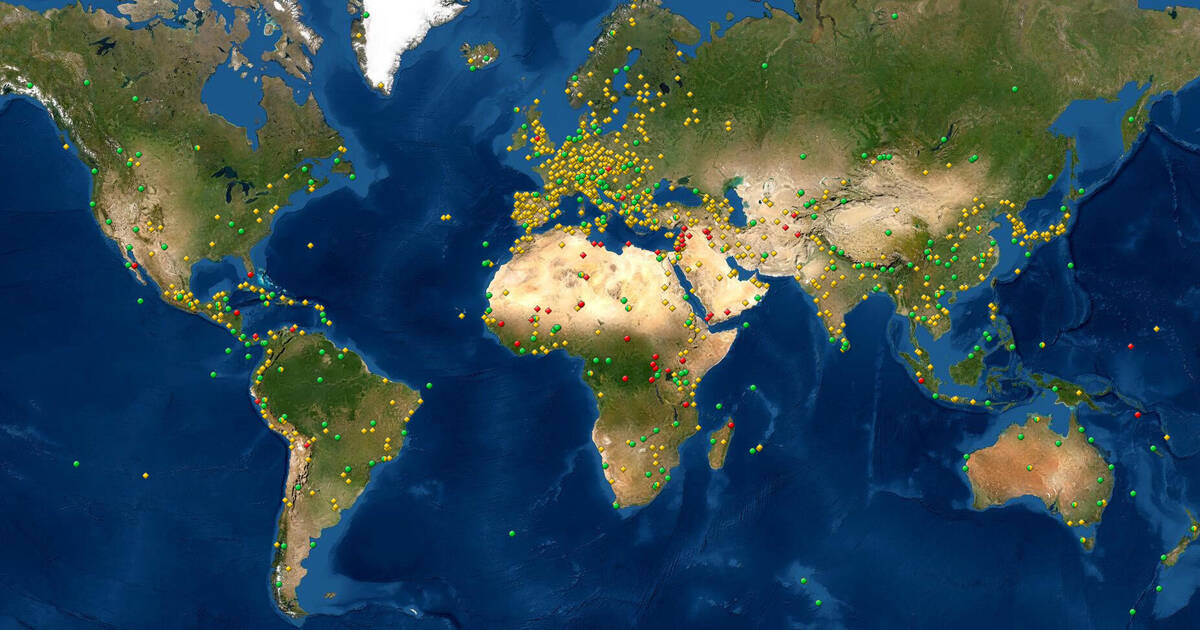
This illustrates why religious tourism often serves as a bridge between heritage conservation and destination development.
Protecting sacred places frequently protects architecture, traditional crafts, music, gastronomy, languages, and community identity simultaneously.
Beyond Pilgrimage
One important theme emerging from the San Salvador conference was the distinction between pilgrimage and religious tourism.
Pilgrimages are primarily motivated by faith, devotion, sacrifice, and spiritual transformation.
Religious tourism encompasses a broader spectrum that may include historical curiosity, cultural appreciation, architecture, festivals, family heritage, education, and personal wellness.
The two frequently overlap rather than compete.
A visitor attending Easter processions in Guatemala, exploring medieval monasteries in Spain, visiting Buddhist temples in Japan, or walking Portugal’s Fatima pilgrimage route may be driven by both spiritual and cultural motivations.
A Sustainable Opportunity for Smaller Destinations
Perhaps the greatest opportunity lies not with the world’s largest pilgrimage centers but with smaller destinations.
Unlike mass tourism, religious tourism often encourages longer stays, year-round visitation, deeper engagement with local communities, and greater respect for cultural authenticity.
Small towns can build tourism economies around annual festivals, historic churches, monasteries, Indigenous sacred landscapes, or regional pilgrimage routes without requiring large-scale resort development.
Events announced during the El Salvador congress—including the first Ibero-American Forum of Cities with Marian Shrines and regional cooperation surrounding the devotion to the Christs of Esquipulas—demonstrate growing interest in cross-border religious tourism networks throughout Latin America.
Faith as a Driver of Tourism
Delegates concluded the congress by signing the San Salvador Manifesto, calling for a more ethical approach to religious tourism.
The declaration argues that sacred destinations should never become merely commercial attractions stripped of their spiritual significance. Instead, it urges governments, tourism authorities, and communities to preserve the authenticity that gives these places meaning while allowing tourism to support local economies and cultural preservation.
For an industry constantly searching for sustainable growth, religious tourism offers an unusual combination of resilience, authenticity, heritage conservation, and community participation.
While Mecca will remain the undisputed giant of global faith tourism, the future of the sector may increasingly belong to destinations that understand how to balance spirituality, culture, and responsible tourism development.
From El Salvador and Peru to Guatemala, Colombia, and beyond, many of those destinations are only now beginning to realize their potential.




Leave a Comment