
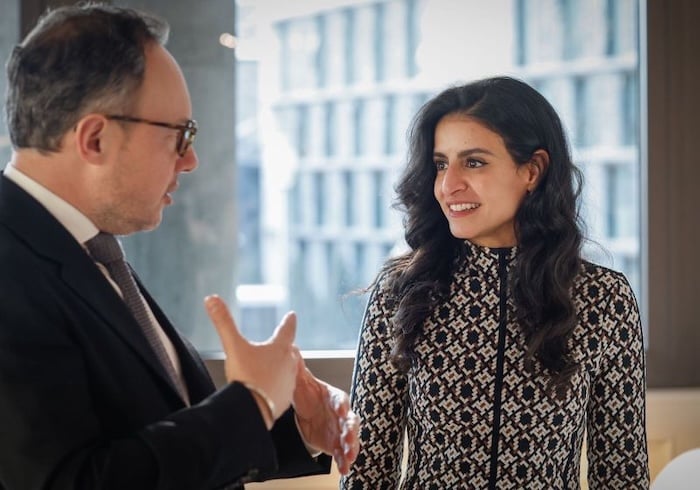
ANDORRA LA VELLA, Andorra— High in the Pyrenees, where narrow valleys open into sweeping ski slopes and winding roads trace the borderlands between Spain and France, a quiet but consequential conversation about the future of global tourism is unfolding.
This week, UN Tourism Secretary General Shaikah Al Nowais arrived in Andorra to meet with Xavier Espot Zamora, Prime Minister of Andorra and President of the Democrats for Andorra since 2019, ahead of the 13th World Congress on Snow, Mountain, and Wellness Tourism. The setting—remote, scenic, and meticulously managed—offered a fitting backdrop for a pressing global question: not how to grow tourism, but how to sustain it.
During her visit, Ms. Al Nowais signed the principality’s Golden Book, a ceremonial gesture that signals diplomatic respect. But the discussions that followed, joined by Jordi Torres Falcó, carried a more urgent tone.
Tourism, long measured in arrivals and revenue, is being forced to redefine success.

A World That Has Changed
For decades, tourism was one of globalization’s most visible success stories. Low-cost airlines, open borders, and rising middle classes helped turn travel into a defining feature of modern life. Cities strained under the weight of popularity; remote regions rushed to build infrastructure; governments counted visitors as a measure of progress.
That model now faces profound strain.
The war in Ukraine has redrawn travel routes across Europe, disrupting airspace and dampening demand in once-busy corridors. At the same time, escalating tensions involving Iran have injected uncertainty into global aviation and energy markets, driving up costs and complicating long-haul travel.
Security concerns, inflation, and shifting traveler confidence have combined to make the industry no longer predictable.
In this context, the language used in Andorra—balance, sustainability, long-term thinking—can sound both aspirational and, to some, out of step with immediate realities.

Redefining Success
“Tourism success is no longer about numbers alone,” officials emphasized during the meetings.
It is a statement that reflects growing discomfort with the excesses of the past. From overcrowded European capitals to fragile ecosystems pushed beyond capacity, the consequences of unchecked growth have become difficult to ignore.
The alternative being proposed is deceptively simple:
- Balance between visitors and residents
- Distribution of tourism across seasons
- Growth that does not erode the very assets that attract visitors
Yet simplicity masks difficulty. Achieving balance requires limits, and limits often come at a cost.
For governments still recovering from pandemic-era losses—and now navigating geopolitical instability—the temptation to prioritize short-term gains remains strong.
A Mountain Laboratory
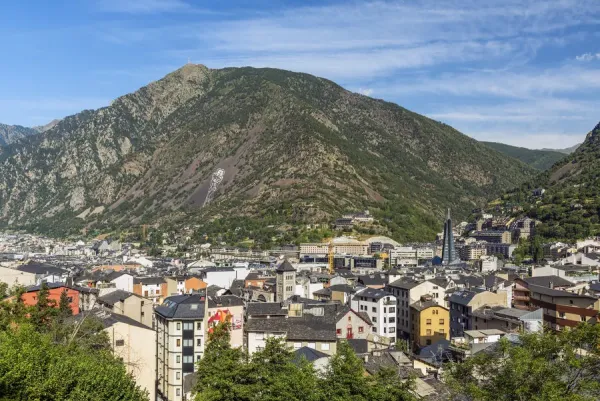
If there is a place to test these ideas, it may be Andorra.
With fewer than 80,000 residents and a landscape dominated by mountains, the country has long relied on tourism as an economic lifeline. Each year, it receives millions of visitors—drawn by ski resorts, duty-free shopping, and increasingly, wellness tourism.
Its scale, however, offers a degree of control that larger destinations lack.
“We cannot afford imbalance,” an Andorran official said in discussions surrounding the congress. “For us, sustainability is not a slogan. It is survival.”
Climate change has made that reality more immediate. Warmer winters threaten snow reliability, the backbone of Andorra’s tourism economy. In response, the country has invested in diversification—promoting summer hiking, cycling, and wellness experiences to reduce dependence on a single season.
The Paradox of Sustainability
Still, the vision articulated in Andorra sits uneasily alongside global trends.
Sustainability depends on long-term planning, stable investment, and predictable demand. War, by contrast, introduces volatility—altering travel patterns overnight, redirecting flows, and forcing governments into reactive policies.
The result is a paradox:
The more unstable the world becomes, the harder it is to pursue sustainable tourism—yet the more necessary it becomes to do so.
In times of uncertainty, destinations often revert to what is immediate and measurable: visitor numbers, hotel occupancy, revenue. Sustainability, with its longer horizon, risks becoming secondary.
A Shift in Mindset
What distinguishes the current moment is not just the challenges facing tourism, but a growing recognition that the old model may no longer be viable.
Even before recent conflicts, protests against overtourism in cities like Barcelona and Venice signaled a shift in public sentiment. Residents increasingly questioned whether the economic benefits of tourism justified the social and environmental costs.
Now, with geopolitical tensions adding pressure, the need for a more resilient model has become harder to ignore.
In Andorra, that model is taking shape around a different set of priorities:
- Fewer visitors, but higher value
- Experiences tied closely to nature and culture
- Infrastructure designed for sustainability rather than scale
It is, in many ways, a return to fundamentals—an attempt to align tourism with the limits of place.
Can It Scale?
The question is whether what works in a small mountain principality can be applied more broadly.
Andorra’s advantages—its size, its geography, its ability to control access—are not easily replicated. Large urban destinations, dependent on mass tourism, face a more complex transition.
There is also the issue of competition. In a global marketplace, destinations that impose limits risk losing visitors to those that do not.
Yet the alternative—continuing on an unsustainable path—carries its own risks.
A Moment of Reckoning
As the World Congress on Snow, Mountain and Wellness Tourism approaches, the discussions in Andorra reflect a broader reckoning within the industry.
Tourism is no longer insulated from global events. It is shaped by them—sometimes abruptly, often unpredictably.
The meeting between Ms. Al Nowais and Andorran leaders did not produce easy answers. But it highlighted the central tension of this moment:
How to pursue sustainability in a world that is anything but stable.
For Andorra, the answer lies in control, balance, and adaptation.
For the rest of the world, the path forward remains less certain.
What is clear is that tourism, once defined by growth, is entering a new era—one in which endurance may matter more than expansion.





Leave a Comment