

WTTC President & CEO Gloria Guevara puts global tourism’s economic power, 200+ CEOs and a new generation of leaders at center stage as Malta welcomes the World Travel & Tourism Council to Valletta
If playback is interrupted, you can restart it.
VALLETTA, Malta (eTN) —Under brilliant Mediterranean sunshine and overlooking one of Europe’s most spectacular natural harbors, the World Travel & Tourism Council began its 2026 Global Summit in Malta Wednesday morning with CEOs, ministers, international media — and the thunder of traditional cannon fire following the opening press conference.
It was difficult to imagine a more Maltese opening.
Before delegates moved to the official WTTC Global Summit, the organization’s leadership joined Malta’s tourism leaders and international journalists for an outdoor press conference at the historic Saluting Battery below the Upper Barrakka Gardens in Valletta.
The Grand Harbour glittered in the morning sun, framed by Valletta’s honey-colored fortifications and centuries of history. The weather could hardly have been better, and the press conference was packed. Some journalists stood throughout the event as WTTC President and CEO Gloria Guevara, WTTC Chairman Manfredi Lefebvre d’Ovidio, Malta Tourism Minister Jo Etienne Abela, Malta Tourism Authority Chairman Charles Mangion, and MTA CEO Carlo Micalleflaid out their vision for the summit and for an industry that has again become one of the great economic engines of the world.
At the conclusion, Malta supplied an appropriate punctuation mark when the traditional cannons of the Saluting Battery fired across the Grand Harbour.
WTTC Malta 2026 had announced its arrival.
Gloria Guevara: Tourism is a $11.6 trillion global force

The strongest global message of the morning came from Gloria Guevara, who is again leading WTTC as President and CEO and now finds herself presiding over an organization eager to expand its influence in the global tourism conversation.
Her message in Malta was upbeat, ambitious and backed by some extraordinary numbers.
Travel and tourism contributes approximately $11.6 trillion to the global economy, Guevara told the press conference, supporting around 366 million jobs, or approximately one out of every nine jobs worldwide.
“If we were a country,” Guevara said, travel and tourism would effectively rank among the world’s largest economies.
The industry gathering in Malta this week reflects some of that economic power. According to Guevara, more than 200 CEOs and senior executives, more than 60 government leaders and around 1,000 delegates from around the worldare participating.
“This is the Davos of tourism,” was how WTTC Chairman Manfredi Lefebvre d’Ovidio described the summit.
Guevara was equally clear about what makes this meeting different, telling journalists that there is no comparable event in the sector bringing together the same quality and quantity of decision-makers.
These are not simply conference participants. Many of the people sitting in Valletta this week make decisions about where billions are invested, where companies expand, where jobs are created and which technologies will change how people travel.
“The people that are here in Malta, they shape the future,” Guevara said. That may ultimately be the real significance of WTTC 2026.
Bringing the next generation into the room
Guevara also highlighted something different about this year’s summit: WTTC has brought approximately 100 young people representing 40 countriesto Malta.
For an industry that frequently talks about workforce shortages and attracting the next generation, Guevara said it is essential that young people are not simply discussed by today’s tourism leaders but are actually brought into the conversation.
“They are the future leaders,” she said.
WTTC wants to hear their opinions, understand their needs and encourage them to become part of the travel and tourism sector. It was one of the morning’s more refreshing messages and an acknowledgment that the future of tourism cannot be designed exclusively by the people currently sitting in executive offices.
Europe is doing better than expected
Guevara also brought encouraging economic news to Malta.
European travel and tourism growth is forecast at approximately 3.2%, she said, compared with 2.6% last year. International visitor spending is projected to increase by approximately 5.8%, while leisure and business travel spending are also expected to grow.
Malta itself has emerged as a standout European tourism performer.
WTTC forecasts travel and tourism will contribute roughly US$4.9 billion to Malta’s economy in 2026, equivalent to about 16.9% of GDP, while supporting approximately 72,200 jobs — more than one in five jobs in the country.
For a small island nation, those numbers explain why hosting WTTC matters far beyond prestige.
Manfredi Lefebvre: The “Davos of Tourism”

WTTC Chairman Manfredi Lefebvre d’Ovidiowelcomed delegates with the relaxed confidence of someone who clearly enjoys Malta and has a personal connection with the islands.
He said Malta had been chosen from 21 competing destinationsseeking to host the 2026 Global Summit. Its history, beauty and extraordinary position between Europe and Africa helped Malta win.
Lefebvre also pointed to the rapid development of WTTC itself, saying the organization now represents approximately 210 companiesand has expanded its membership by around 30% over the last year.
More important was what he said about WTTC’s ambition.
The organization wants to provide leadership for the global travel sector and work directly with governments to help shape tourism growth. That is worth watching closely.
WTTC has traditionally represented the world’s largest private-sector travel and tourism businesses. Under Guevara and Lefebvre, its ambitions appear to be widening as governments, destinations and corporations increasingly confront the same issues together.
Malta this week provides an unusually concentrated meeting place for all three.
Minister Jo Etienne Abela: Valletta becomes a capital of world tourism

For Malta Tourism Minister Jo Etienne Abela, hosting WTTC is much more than another international convention.
Tourism represents roughly 17% of Malta’s GDP and approximately one in five Maltese jobs is directly or indirectly linked to the sector. For the next two days, the minister said, Valletta effectively becomes a global capital of tourism.
With more than 200 CEOs gathered alongside government leaders and destination decision-makers, the discussions taking place here will extend far beyond the conference program. Investment, employment, sustainability and future tourism development will all be on the table, and some of the conversations beginning in Valletta could help determine where future tourism investment and jobs eventually go.
Standing with the Grand Harbour behind him, Abela also captured the symbolism of the location.
Malta may be tiny, he said, “a country in miniature” perhaps, but its Grand Harbour and history demonstrate a national characteristic that has repeatedly defined the islands: resilience.
The minister emphasized that tourism’s future cannot be measured solely by money. Economic, social and environmental considerations have to coexist.
“The interplay between the economic, the social and the environmental dimensions — this is what sustainability is all about,” he said.
For Malta, where tourism is both enormously successful and extraordinarily visible in everyday life, finding that balance is critical.
Charles Mangion: Growth must come with responsibility
Malta Tourism Authority Chairman Charles Mangionexpanded on the same theme.
Tourism has opened Malta to the world, generated opportunities for businesses and workers and enabled millions of visitors to experience the country’s history, culture and Mediterranean way of life. But tourism, he said, is about considerably more than economic performance.
“At its best, tourism creates connections.”
It brings people together, encourages understanding between cultures, supports communities, creates employment and investment, and allows destinations to share their identity with the world.
For Malta, however, continued success comes with responsibilities. “We must continue to grow, but growth must be accompanied by responsibility,” Mangion said.
That means protecting what makes Malta distinctive while embracing innovation and technology without losing the human experience at the heart of travel and hospitality.
Mangion pointed to climate and sustainability, talent and skills, technology, geopolitical uncertainty and changing consumer expectations as challenges facing destinations everywhere. None of them can be addressed effectively by governments, destinations or corporations acting in isolation.
That, he argued, is precisely why a summit such as WTTC matters. Its value extends beyond speeches and conference sessions to the relationships created, ideas exchanged and partnerships that can emerge when decision-makers meet face-to-face.
Carlo Micallef: Malta wants value, not simply volume

MTA CEO Carlo Micallefwent further in explaining what Malta wants its tourism industry to become.
Rather than pursuing visitor numbers as an objective in themselves, Malta wants to build a high-value, year-round and sustainable tourism economy that contributes positively to the community while remaining rooted in the identity that makes the islands different.
Micallef said this requires shifting the emphasis from volume toward value while spreading tourism more intelligently across seasons, geography and visitor segments. It also requires investment in quality, digital transformation, sustainability, skills and talent.
His most important point may have been his insistence that “tourism cannot sit in a silo.”
Tourism needs to be considered alongside climate policy, infrastructure, resident well-being, culture, education and digitalization because the future of a destination cannot realistically be planned by a tourism ministry or tourism authority alone.
Micallef connected that idea to the city surrounding the press conference.
Valletta itself was conceived following a crisis and built according to a long-term strategic vision designed to serve generations to come. Tourism, he argued, now requires the same kind of thinking — not simply from season to season or quarter to quarter, but across generations.
Overtourism enters the conversation
When international journalists were invited to ask questions, one of the inevitable issues surfaced: overtourism.
How can WTTC help travelers discover new destinations while encouraging visitors to experience already popular destinations differently?
Guevara pointed to WTTC’s Destination Stewardshipwork and seven principles designed to encourage better planning between governments, communities and tourism businesses.
Her central argument was straightforward. Tourism cannot be planned separately from mobility, water, waste management and infrastructure because visitors use all of them, just as residents do.
For tourism to remain sustainable, Guevara argued, its benefits have to work for both the visitor and the resident.
WTTC’s objective is not to stop tourism growth, but to spread its economic and social benefits into smaller cities, communities and less-visited destinations while protecting the cultural and natural assets that made those places attractive in the first place.
That conversation could hardly be more relevant in Europe — or in Malta.
Eight priorities for the future
Guevara said WTTC has identified eight prioritiesthat will feature prominently throughout the summit, addressing issues including geopolitical instability, connectivity, sustainable aviation fuel, seamless travel, artificial intelligence, workforce challenges and destination management.
But the tone in Valletta was not one of crisis. Quite the opposite.
WTTC sees many of these challenges as opportunities to unlock the next period of global tourism growth, and Guevara repeatedly emphasized action rather than simply discussion.
The objective in Malta is not to identify problems everyone in the industry already knows exist or to produce another conference declaration. It is to put people capable of making decisions in the same place and determine how challenges can be transformed into practical opportunities.
Where will the next 91 million tourism jobs go?
One number mentioned by Guevara should attract the attention of governments everywhere.
Travel and tourism is expected to create 91 million additional jobs over the next decade.
Where those jobs will be created, where investment will flow and how governments prepare their workforces and infrastructure will depend partly on decisions being made now.
That is where WTTC believes its unusual combination of CEOs, ministers, investors and destination leaders gives the summit influence beyond the conference stage.
The deals, relationships and private conversations formed in Malta may ultimately matter as much as — and perhaps more than — what is said from the official stage.
And then there is Malta
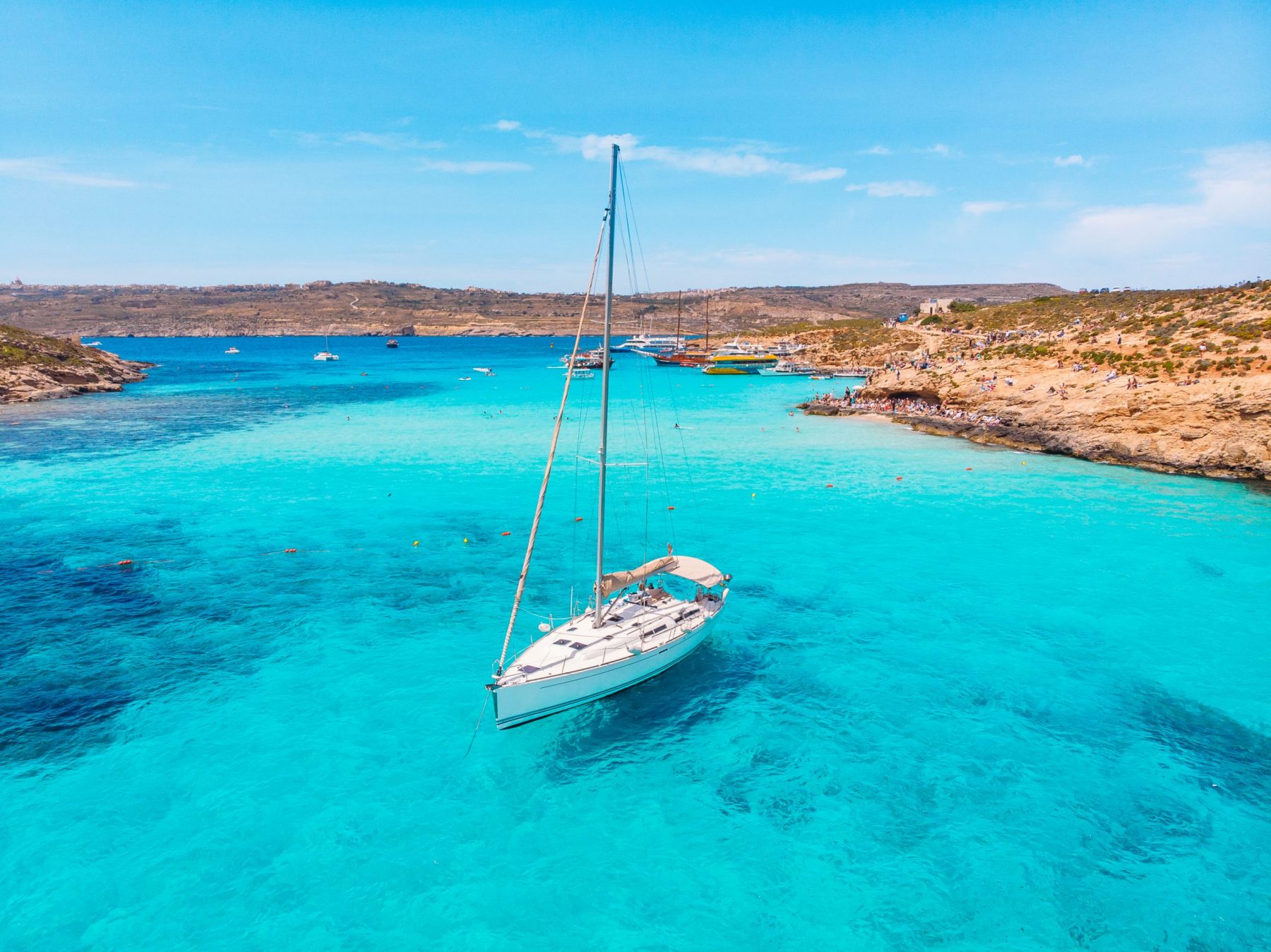
It is impossible to separate this particular summit from its host.
The Maltese islands contain some of the oldest freestanding monumental structures on Earth, with prehistoric temples predating Stonehenge and the Egyptian pyramids.
Only minutes from the WTTC press conference is St John’s Co-Cathedral, home to Caravaggio’s monumental The Beheading of Saint John the Baptist, his largest known painting and the only work known to carry his signature.
Valletta itself is a UNESCO World Heritage city so densely packed with history that simply walking between summit events can become an architectural and cultural experience.
On this bright October morning, all of that history surrounded the world’s tourism industry.
The sun illuminated Valletta’s limestone walls as boats moved through the Grand Harbour below. Government ministers sat alongside global tourism CEOs while journalists from around the world squeezed into the Saluting Battery, some standing, to hear where WTTC believes one of the world’s most important economic sectors is heading next.
For Malta, it was difficult to imagine a better stage.
And then came the cannons

There was one final item on the press conference agenda, and nobody standing at Valletta’s historic Saluting Battery was going to be allowed to forget where they were.
After the final question, attention shifted from tourism statistics, investment and artificial intelligence to the cannons overlooking the Grand Harbour.
The traditional salute was fired, and the blast rolled across one of the Mediterranean’s great harbors.
For a moment, GDP figures, overtourism, sustainable aviation fuel and the future of AI could wait. This was Malta, and this was quite an opening.
The serious business now moves to the WTTC Global Summit, where Guevara, Lefebvre, government leaders and more than 200 of the industry’s most influential corporate executives will spend the coming days discussing where tourism goes next.
Sustainability, investment, artificial intelligence, jobs, connectivity, destination management and the next generation will dominate the official conversations. There will undoubtedly also be deals, introductions and discussions that never make it onto a conference stage.
That may be where the real WTTC story is found.
On a brilliant sunny morning above Valletta’s Grand Harbour, Malta supplied the history, Gloria Guevara supplied the global vision, and the cannons made certain nobody missed the opening message.
WTTC 2026 is underway.







Leave a Comment