

How WTTC Is Expanding Beyond the World’s Largest Tourism Companies
If playback is interrupted, you can restart it.
The World Travel & Tourism Council (WTTC)may be evolving from the voice of the world’s largest travel and tourism companies into something considerably bigger: a global public-private network connecting corporations, destinations, governments, associations and potentially one million small and medium-sized tourism businesses.
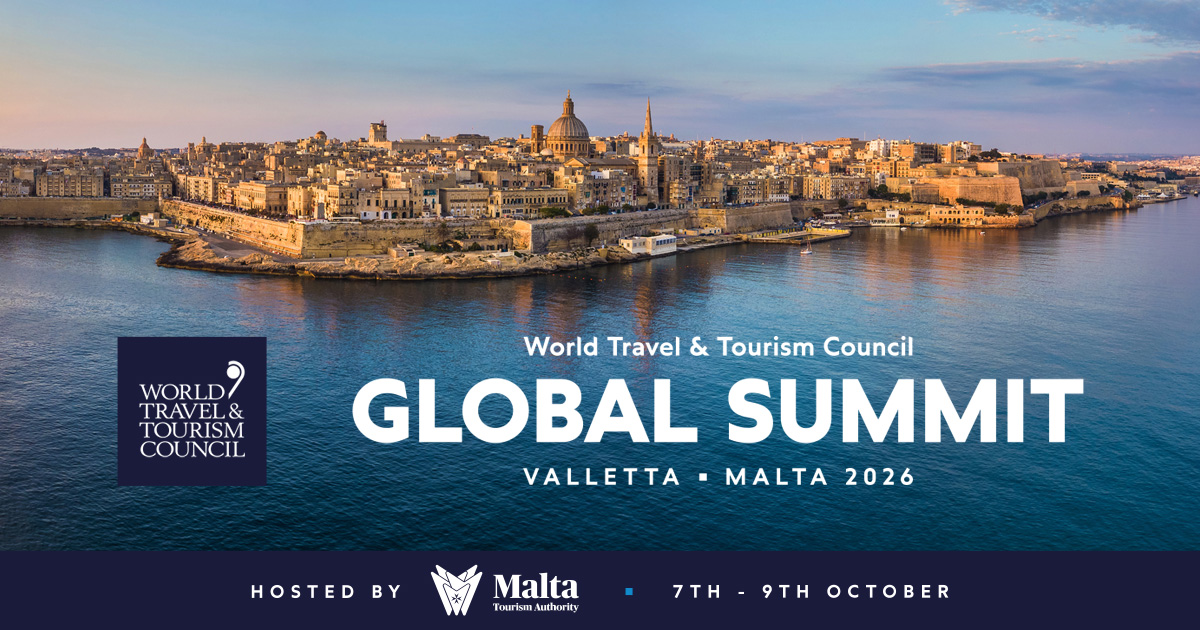
At the WTTC Global Summit in Malta, October 7–9, 2026, more than 1,000 delegates from over 100 countries are expected, including more than 200 CEOs and senior industry leaders and more than 100 speakers. As WTTC expands its relationships with destinations, governments, associations and SMEs, could it be creating a new global tourism architecture alongside UN Tourism, IATA and other established organizations?
After more than 40 years in travel and tourism, I am going to Malta to find out.

I am going to Malta to find out.
Why I Am Watching This
I have spent more than 40 years in travel and tourism and attended almost every WTTC Global Summit for decades, along with UN Tourism meetings and countless other international tourism events. In 1999, I launched the online news wire that became eTurboNews, years before WordPress existed and while Google itself was still young. I later helped establish the World Tourism Network, giving me another perspective on the challenge of bringing SMEs into global tourism discussions.
I have seen organizations, initiatives and leaders come and go. What hasn’t stopped is technological change—from calculators and fax machines to the internet, smartphones and now AI—and the resulting transformation in how this industry communicates and connects.
That is why what I see happening around WTTC interests me.
I will not be watching this alone
I will not be watching this alone.Journalist friends and colleagues such as CNN’s Richard Quest and CBS News travel editor Peter Greenberg will be among those in Malta observing what unfolds, alongside tourism icons and longtime industry personalities such as former UNWTO Secretary-General Taleb Rifai, SUNx co-founder Geoffrey Lipman and Madame Dho Young-shim. These are people who have witnessed decades of changes in global tourism leadership themselves. Whether what emerges in Malta really amounts to the transformation I anticipate remains to be seen — but having so much institutional memory, experience and influence gathered in one place makes this summit particularly interesting to watch.
Why I Think Something Bigger May Be Happening
After more than 40 years in the travel and tourism industry, I have seen organizations come and go, initiatives launched with enormous enthusiasm and quietly disappear, alliances form and dissolve, and plenty of ambitious declarations be forgotten shortly after the conference ended.
Technological change has never stopped.
I remember when a calculator was an essential piece of new technology on a travel des. I remember when travel agents could print airline tickets instead of handwriting them. We moved through telex, fax machines, reservation systems, personal computers, email, websites, smartphones, social media, instant global communication, and now artificial intelligence.
With every technological revolution, the way our industry communicates has changed as well. Information that once took days to circulate can now travel around the world in seconds. A small tourism business can communicate directly with a minister, a destination can speak directly to travelers, and an association can create a global community without establishing offices in 50 countries.
Today, I believe we are at another crossroads where technology, communication, business, government, and human networks are reaching what could become a combinable peak.
This is one reason I am particularly excited about attending the upcoming World Travel & Tourism Council Global Summit in Malta.
I have attended almost every WTTC Global Summit for decades, along with countless UN Tourism meetings and events organized by many of the associations discussed in this article. I have watched their leaders change, their priorities evolve, and, sometimes, the behind-the-scenes politics become more interesting than what was said from the podium.
In 1999, I launched this online news wire that became eTurboNews. Google was still operating from a garage, and WordPress had not yet been invented. The idea that an independent travel industry publication could distribute news globally and instantly was itself relatively new.
Later, I became involved in creating the World Tourism Network, with a particular focus on small and medium-sized tourism businesses and bringing their voices into the broader international tourism discussion.
So what follows is not an academic prediction about organizational structures. It is an observation based on watching this industry for a very long time.
And something appears to be changing.
I am not suggesting that I know exactly where this is going. Malta may prove some of these observations right or prove them wrong. That is precisely why I am writing this before the summit.
My urgent advice: if you haven’t registered yet, do it now!
Something Is Changing at WTTC
For most of its history, WTTC was relatively easy to define. It was the powerful private-sector voice of the world’s biggest travel and tourism corporations, bringing together leaders from airlines, hotel groups, cruise companies, airports, tour operators, technology platforms and financial and distribution companies.
The CEOs sat at the table, and governments listened.
Having attended WTTC summits over many years, I have watched this formula work. The attraction was precisely that WTTC could put some of the most influential private-sector decision-makers in tourism into one room and then bring government leaders into the conversation.
But that model no longer describes everything WTTC is becoming.
Today, WTTC has multiple membership categories, including Global Members, Industry Partners, Destination Partners, Regional Members, and Association Partners. It has also created an Associates Community, giving SMEs with annual turnover below US$10 million access to its global network. This is no longer simply a club for multinational tourism giants.
That raises the question at the center of this opinion article:
Is WTTC no longer simply expanding its membership? Is it gradually building a parallel global tourism architecture that can include important countries, destinations, associations, SMEs, and private-sector actors that the existing intergovernmental system does not currently bring together under one roof?
Malta may give us the first serious indication.
Malta Could Be More Than Another Tourism Summit

From October 7–9, WTTC will hold its 26th Global Summit in Valletta, Malta, under the theme FUTU[RE]SET. The organization expects more than 1,000 delegates from over 100 countries, including more than 200 leading travel and tourism CEOs, senior executives, and government leaders.
More than 100 speakers are on the program, including CEOs, ministers, members of parliament, commissioners, senior policymakers, tourism authorities, representatives of international institutions and former heads of government. The sectors represented range from airlines and airports to hotels, destinations, technology companies and investors.
That is impressive.
But after decades of attending international tourism conferences, I have learned something else: sometimes the most consequential part of a summit never appears on the program.
What may ultimately be more impressive in Malta is what happens in the hallways, at private lunches and breakfasts, behind closed doors, during bilateral meetings and through renewed relationships among people who suddenly find themselves in the same place at the same time.
A CEO meets a minister. A destination leader meets an investor. An association leader encounters someone running one of the world’s largest tourism corporations. An airline executive has coffee with a tourism minister. Two people who have known each other for 20 years suddenly discover that circumstances have created an opportunity to work together.
An idea discussed casually over lunch can become a working group, an investment, a partnership or eventually even policy. The speeches matter, but tourism runs on relationships.
If WTTC is indeed evolving into a broader global tourism architecture, the first real evidence may therefore not appear on the Malta stage. It may become visible in the hallways.
Fifteen and more Destinations Are Lining Up
In February 2026, WTTC revealed that a record 15 destinations across four continents had formally expressed interest in hosting future WTTC Global Summits: the Bahamas, Bahrain, Canada, Colombia, Greece, India, Indonesia, Japan, Mexico, Monaco, Morocco, Puerto Rico, South Korea, Türkiye and the United States – and most likely this number may have been growing.
These aren’t corporations applying for membership. They are destinations seeking to bring WTTC’s global public-private platform to their countries and territories.
WTTC describes hosting a Global Summit as an opportunity for destinations to attract investment, raise their international profile, bring governments and industry leaders together, and have their voices heard alongside global business leaders and international media.
To me, that looks like something considerably larger than another annual corporate conference with speeches, awards, a nice gala dinner, handshakes, photographs, and all the usual ingredients of the global tourism summit circuit.
Canada and the United States Deserve a Closer Look
Two names on that list deserve particular attention: Canada and the United States.
Neither country is currently a member state of UN Tourism. The United Kingdom and Australia also sit outside UN Tourism’s state membership. These are hardly insignificant tourism economies, yet they are clearly not absent from the international tourism conversation.
The United States and Canada are among the destinations expressing formal interest in hosting future WTTC Global Summits. Former Canadian Prime Minister Justin Trudeau will be a headline speaker in Malta, while U.S. Special Presidential Envoy for Tourism Nick Adams, who was asking to be named the Minister of Tourism for the United States of America, is also scheduled to participate. Australia hosted WTTC’s 2024 Global Summit in Perth, Western Australia, while WTTC itself is headquartered in London.
None of this means these governments are becoming WTTC members, nor does it mean WTTC is replacing UN Tourism. But after watching the sometimes complicated relationship between public- and private-sector tourism institutions for decades, I find this development particularly interesting.
Countries outside the formal membership structure of the United Nations tourism agency can engage deeply with another global tourism platform through destination organizations, companies, associations, government officials, summit participation and public-private partnerships.
That flexibility could become one of WTTC’s most important advantages.
UN Tourism and WTTC Are Fundamentally Different
UN Tourism remains the United Nations specialized agency for tourism, deriving its legitimacy from governments and the international system. Its role is essential because governments negotiate with governments, while tourism policy intersects with borders, visas, infrastructure, development, sustainability, statistics, education, and international cooperation.
No private-sector association can simply replace that mandate, nor should it.
But anyone who has spent enough time around international organizations understands diplomacy’s realities. Diplomacy is necessary, but it can also make blunt advocacy difficult. Governments can say some things, prefer not to say others, and sometimes need someone to say what the travel industry desperately needs.
A private organization has greater freedom. It can challenge visa policies that damage tourism, taxation that makes destinations uncompetitive, inadequate connectivity, or regulation that makes little commercial sense. It can question policies that treat tourism primarily as a convenient revenue source rather than an economic ecosystem supporting millions of livelihoods.
That doesn’t require WTTC to become political. In my view, it requires the opposite: an ability to defend the interests of travel and tourism across political divisions without becoming another geopolitical institution itself.
Everyone Has a Piece of the Puzzle
This brings me to organizations such as IATA, Destinations International, Skål International, IGLTA, the World Tourism Network, the World Economic Forum,and numerous specialist organizations.
Consider IATA, the International Air Transport Association. It represents more than 370 airlines across more than 120 countries and carries approximately 85% of global air traffic. Its work encompasses the standards and systems that help global aviation function, including safety, operations, financial settlement, distribution, sustainability, regulation, and passenger facilitation.
Without aviation, much of international tourism simply doesn’t happen. Yet IATA doesn’t need to become WTTC, and WTTC certainly doesn’t need to become IATA.
The same applies elsewhere. Destinations International has developed deep expertise representing destination organizations and professionals. Skål International has spent more than nine decades building professional relationships around its concept of doing business among friends. IGLTA brings specialist expertise around LGBTQ+ tourism, equality, safety, and destination engagement.
I know the SME side particularly well because it was one of the reasons behind creating the World Tourism Network . Smaller businesses make up an enormous portion of this industry, but they don’t automatically have access to the rooms where international tourism policy and investment are discussed.
Organizations working in accessibility, resilience, sustainability, human rights, indigenous tourism and peace through tourism have similarly developed expertise that a large general tourism organization cannot simply reproduce by creating a committee. The World Economic Forum brings another dimension through economic research, global convening power, and its Travel & Tourism Development Index.
Everybody has a piece of the puzzle.
Perhaps what tourism has been missing is the table large enough to assemble the puzzle without destroying the individual pieces.
Don’t Merge Them. Connect Them.
This is where I think the opportunity may lie.
Don’t swallow specialized tourism organizations. Don’t replace them. And don’t tell an organization that has spent decades developing expertise that a larger organization can suddenly do its job better.
Connect them.
Imagine these organizations remaining legally, financially, and operationally independent while participating in a broader architecture through serious councils and task forces addressing accessibility, SMEs, LGBTQ+ tourism, destination stewardship, resilience, peace through tourism, human rights, aviation and connectivity, artificial intelligence, investment, and other issues.
The specialist organizations bring expertise and constituencies. WTTC brings corporate influence, research, advocacy, government access and a global microphone.
Suddenly, the niche isn’t so niche anymore.
From 200 Companies to One Million SMEs?
This could be the most consequential part of what WTTC is trying to do.
WTTC historically represented the biggest players, and today more than 200 companies are represented on the Council. SMEs, however, constitute the overwhelming majority of tourism businesses worldwide.
WTTC launched Together in Travelat its Perth Summit in 2024 specifically to support small and medium-sized enterprises. Its Associates Community now provides an entry-level route into the WTTC network for businesses with annual turnover below US$10 million.
WTTC’s ambition goes much further: building an SME community that could reach one million businesses.
As someone who helped establish an organization focused strongly on SMEs, I know how enormous that challenge is. There is a huge difference between collecting one million names and representing one million businesses.
SMEs don’t need another newsletter. They need access, customers, financing, training, technology and representation. They need governments to understand what regulations actually do to small businesses. Sometimes they need somebody willing to say publicly what everybody privately knows.
Meaningful representation on this scale would require regional structures, serious task groups, transparent mechanisms determining who speaks for whom, and bottom-up communication rather than simply top-down information.
A family hotel in Greece, a tour operator in Nepal, a DMC in Tanzania or a travel advisor in Kansas cannot technically become part of a million-member global community while remaining practically invisible behind multinational corporations.
Scale without representation creates a database. Scale with representation creates a movement.
The Umbrella Also Carries Risks
I am excited about the possibilities, but that doesn’t mean the questions disappear. An umbrella can protect, but it can also overshadow.
If WTTC truly evolves toward representing a much broader tourism community, governance becomes critical. The interests of the world’s largest hotel companies, airlines, cruise companies, and technology platforms (the core members of WTTC) are not automatically identical to those of independent hotels, local guides, DMCs, travel advisors, and family-owned tour operators.
Likewise, WTTC cannot become an expert in LGBTQ+ tourism, accessibility, human rights, sustainability, resilience or peace simply by establishing committees with impressive names.
The expertise already exists. Bring those organizations into the architecture, give them meaningful influence within their areas of expertise, but allow them to remain independent. That could be the difference between building an empireand building an ecosystem.
Gloria Guevara Has an Extraordinary Opportunity
Institutional change also has a human factor.
I have known the CEO and Chairman of WTTC, Gloria Guevara, for years. I watched her during her previous period leading WTTC, through some of the most difficult circumstances our industry has experienced, and I have followed her career in government and the private sector.
In my personal assessment, Gloria has the relationships, international experience, energy and understanding of both government and business required to attempt something this ambitious.
That doesn’t mean success is guaranteed. Nobody can bring together corporations, governments, destinations, associations and potentially hundreds of thousands of SMEs without encountering competing interests, institutional sensitivities and plenty of politics.
But I believe she has what it takes to try. And perhaps just as importantly, the timing may finally be right.
Where Is the Global Tourism Table Actually Being Built?
The question isn’t whether WTTC can replace UN Tourism. It cannot, and it shouldn’t.
The more interesting question is whether WTTC can create a complementary global tourism architecture that the intergovernmental system, by its nature, cannot— one where countries outside UN Tourism participate through other channels, UN Tourism members participate through both systems, CEOs meet ministers, tourism boards meet investors, airlines and airports meet destinations, SMEs meet multinational corporations, and specialist associations gain meaningful access to policymakers.
Global tourism could then have two very different but complementary pillars: one primarily intergovernmental and another primarily industry-driven and public-private.
Around them could remain strong specialist organizations such as IATA, Destinations International, Skål, IGLTA, PATA, ETOA, African Tourism Board, World Tourism Network and many others — independent in their mandates but connected where their interests overlap.
Why Malta Matters to Me
Perhaps that is why I am looking forward to Malta more than I have looked forward to many tourism conferences. After more than 40 years in this business, I don’t expect another declaration to transform tourism. I’ve seen too many.
I don’t expect technology alone to unite the industry either. Technology changes how we communicate, but people still determine whether they want to communicate with one another.
What feels different now is that several developments are converging at once: instantaneous global communication, artificial intelligence, enormous economic scale, increasingly blurred lines between public and private tourism leadership, growing destination participation, specialized global networks, and WTTC’s ambition to reach down from the largest corporations to potentially one million SMEs.
Maybe these pieces won’t fit together. Maybe Malta will simply be another successful WTTC Global Summit. But perhaps we are reaching one of those rare crossroads where technology, relationships, institutional ambition and economic necessity arrive at approximately the same time.
After watching tourism organizations and initiatives come and go for four decades, I think that possibility deserves to be taken seriously.
And I also know something from publishing an online global travel news service since 1999: the biggest changes aren’t always announced with a press release.
Sometimes you notice them happening before somebody gives them a name. That is what I think I am seeing around WTTC. I am going to Malta to find out whether I am right.
And perhaps the answer won’t come from the stage. It may come over coffee, at a private lunch, in a hallway, or from two people who finally realize they should have been talking all along. With just a touch of AI, of course.







Leave a Comment