


PR
Calendar
Category
Hiekka aikaa
(731)Suomi
(322)Lappi
(53)Kuksa ククサ
(23)Luonto
(25)erämaa
(18)huomio
(162)muovimalli
(32)musiikki
(301)eläinpelastus
(79)veitset (knives)
(41)Olkoon voima kanssasi!
(35)剣の巻
(37)今は昔
(21)陽明学
(441)道家思想
(126)孫子兵法
(12)人鏡論
(13)海外通販/個人輸入
(26)日本独立計画
(49)隷属への道
(25)多目的道具
(206)現代甲冑考 - Modern Armors -
(80)実用物具考
(85)民間防具考
(177)民間防衛
(219)戦ふ日本刀
(97)實戦刀譚
(103)臨戦刀術
(94)古傳鍛刀術
(2)北欧
(118)西欧
(260)中欧
(35)彫金
(20)意匠
(58)『傭兵たちの挽歌』
(141)2011 jalkeen
(34)TORIAEZ
(11)Needle Felted Animals
(262)Weekly SAK
(597)Weekly SL
(485)Weekly EXP
(39)Keyword Search
▼キーワード検索
2026年10月
2026年09月
2026年08月
2026年07月
2026年06月
2026年09月
2026年08月
2026年07月
2026年06月
2026年05月
2026年04月
2026年03月
2026年02月
2026年01月
2026年04月
2026年03月
2026年02月
2026年01月


2015年03月11日

テーマ: 理力と共に(35)
カテゴリ: Olkoon voima kanssasi!
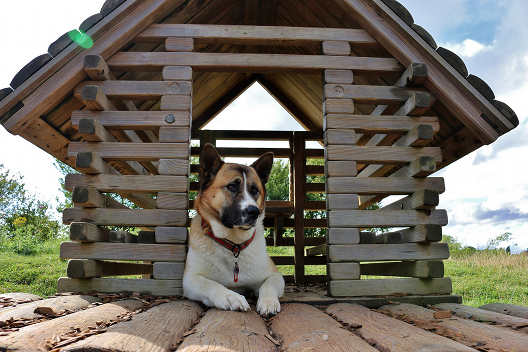
Photo By samantha Gillard & Kiba the Akita "bunnysmith2785"

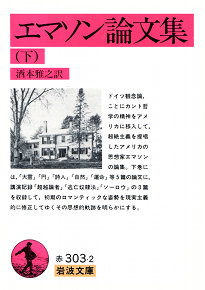
エマソン論文集(下)(岩波文庫)
酒井雅之 訳 岩波書店 発行
http://books.rakuten.co.jp/rb/1613757/
注文出来ない商品
"May the force be with you"
宇宙一元論と ラルフ・ウォルドー・エマソン 15
自然は、運勢を人間の品性に結実することによって、
魔術師さながら、人間を運勢に合わせてしまう。
家鴨〈あひる〉は水に、鷲は空に、渉禽類は汀〈みぎわ〉に、猟師は森に、
こうしてできごとは、人間とおなじ幹に茂り出る、いわば亜人間だ。
人生の喜びはその人生を生きる人間次第であり、仕事や地位には左右されない。
人生は一種の恍惚だ。恋にはどれほどの狂気がつきものか、
__つまらない物象を天国の色調で描くどれほどの能力がつきものかということを、
われわれは知っている。
正気を失った人間が、自分の服装や食事、その他の便宜に対して無関心であるように、
それにわれわれだとて夢のなかでは、このうえなく愚劣な行為を平然と行なうように、
われわれが口にする人生の盃〈さかずき〉にもうひとしずく酒をそそげば、
なじみのない仲間や仕事もなじめるものになる。
たとえばなめくじが体内から分泌した粘液で、
梨の葉のうえにぬるぬるとした家を作り、
そして貝が自分の殻を作るように、生物にはそれぞれに、
自分の体内から自分の境遇や生活の場を産み出す。
若いあいだわれわれは、わが身にさまざまな虹の衣服を着せ、
黄道帯に劣らず雄々しく進む。
年をとると、いままでとは種類のちがう汗を、
ある人間の運勢は、当人の品性の結実だ。
あるひとと交わる友人たちは、そのひとにそなわる磁力だ。
「運命」の実例をわれわれは、ヘロドトスやブルタークに求めるが、
しかしわれわれこそが実例なのだ。
「ひとりびとりが自分の霊に耐えている」。
人間は誰でも、自分の資質にそなわっているものを、
ともすればすべて実行しようとする傾きがあり、
このことは、いくら宿命から逃れようと努力しても、
所詮はその宿命のなかに連れこまれることに役立つだけだという
昔ながらの信念に表れている。
わたしの気づいたところでは、
人間は、自分が実際にあげた功績よりも、功績をあげる立場のほうを、
窮極的に、あるいは全体的に素質がすぐれている証〈あかし〉として、
褒めてもらいたいものなのだ。
人間は、初めて見かけるように思えながら、実は自分の中からにじみ出て、
自分につきしたがうさまざまなできごとに、
自分の品性が射出されているのを見てとるものだ。
できごとは品性に一致して広がっていく。
かつては玩具にとりかこまれていたのが、
いまは巨大な秩序のなかで一定の役割を果たしており、
自分の成長ぶりが、自分のいだく大志、つきあう仲間、
行なう動作にはっきりと示される。
人間は一片の運のように見えるが、実は一片の因果関係であり、
彼の満たす隙間にうまくはまりこむように角をつけ、
磨き上げられたモザイク〔寄せ木細工〕だ。
だからこそどんな町にも、自分の頭脳や動作によって、
その町の耕作、生産、工場、銀行、教会、暮らしぶり、
社交を説明してくれる人間が誰かひとりはいるものだ。
もしそういう人間に出会う機会がなければ、
何を見ても少しは理解に苦しむはめになるものだが、
もしもそのひとに会えば、それがはっきりと分るものになるのだ。
マサチューセッツに住むわれわれには、
誰がニューベッドフォードを建設し、誰がリン、ロウェル、
ロレンス、クリントン、フィッチバーグ、ホーリヨーク、ポートランド、
そのほか多くの賑やかな商業中心地を建設したかが分っている。
こういう人びとは、もしも彼らが透明なら、
それぞれに人間というよりもむしろ歩く都会のように見え、
たといどこに住まわせてみても、おそらくまた都会を建設することだろう。
(『エマソン論文集 下』「運命」P.224 ~ 226 )
Nature magically suits the man to his fortunes,
by making these the fruit of his character.
Ducks take to the water, eagles to the sky, waders to the sea margin,
hunters to the forest, clerks to counting-rooms, soldiers to the frontier.
Thus events grow on the same stem with persons; are sub-persons.
The pleasure of life is according to the man that lives it,
and not according to the work or the place.
Life is an ecstasy.
We know what madness belongs to love,
what power to paint a vile object in hues of heaven.
As insane persons are indifferent to their dress, diet,
and other accommodations, and, as we do in dreams, with equanimity,
the most absurd acts, so, a drop more of wine in our cup of life will
reconcile us to strange company and work.
Each creature puts forth from itself its own condition and sphere,
as the slug sweats out its slimy house on the pear-leaf,
and the woolly aphides on the apple perspire their own bed, and the fish its shell.
In youth, we clothe ourselves with rainbows,
and go as brave as the zodiac. In age,
we put out another sort of perspiration,
gout, fever, rheumatism, caprice, doubt, fretting, and avarice.
A man's fortunes are the fruit of his character.
A man's friends are his magnetisms.
We go to Herodotus and Plutarch for examples of Fate;
but we are examples.
"Quisque suos patimur manes."
The tendency of every man to enact all that is in his constitution is expressed
in the old belief, that the efforts which we make to escape from our destiny
only serve to lead us into it:
and I have noticed, a man likes better to be complimented on his position,
as the proof of the last or total excellence, than on his merits.
A man will see his character emitted in the events that seem to meet,
but which exude from and accompany him. Events expand with the character.
As once he found himself among toys, so now he plays a part in colossal systems,
and his growth is declared in his ambition, his companions,
and his performance. He looks like a piece of luck,
but is a piece of causation;
the mosaic, angulated and ground to fit into the gap he fills.
Hence in each town there is some man who is, in his brain and performance,
an explanation of the tillage, production, factories, banks, churches, ways of living,
and society, of that town.
If you do not chance to meet him, all that you see will leave you a little puzzled:
if you see him, it will become plain.
We know in Massachusetts who built New Bedford, who built Lynn, Lowell,
Lawrence, Clinton, Fitchburg, Holyoke, Portland,
and many another noisy mart. Each of these men,
if they were transparent, would seem to you not so much men, as walking cities,
and, wherever you put them, they would build one.
Fateby Ralph Waldo Emerson from The Conduct of Life
Boston: Ticknor and Fields, 1860
お気に入りの記事を「いいね!」で応援しよう

Last updated
2015年03月13日 09時42分02秒
[Olkoon voima kanssasi!] カテゴリの最新記事
-
"May the force be with you" 宇宙一元論… 2015年06月24日
-
"May the force be with you" 宇宙一元論… 2015年06月17日
-
"May the force be with you" 宇宙一元論… 2015年06月10日


【毎日開催】
15記事にいいね!で1ポイント


© Rakuten Group, Inc.
