



PR

こばのん
メディアで取り上げられた「気になる」サービス・商品をご紹介。
2017.05.17

テーマ: 福岡・博多情報(696)
カテゴリ: 旅行
1st JUL 2017 - 15th JUL 2017
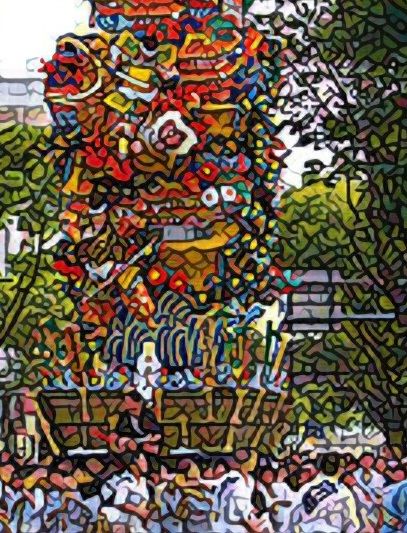
Although there are various opinions about the origin of Hakata Gion Yamakasa, when epidemics faded in Hakata in 1241 in the Kamakura period , Seiichi Kokushi, the founder of Jutenji that time, It is the common opinion that it rings on the wooden gokugaku shelf carried by townspeople, cleansing the town while sowing water and praying for the plague of the plague devastation.
During the Azuchi-Momoyama period, Mr. Shimazu and Mr. Toyotomi brought the town of Hakata to a burned-out field, but when Toyotomi Hideyoshi returned home, the city of Hakata was grouped as "flow" for each section and reconstruction I went (Taikacho Town). This "flow" is the birth of the group unit of Hakata Gion Yamakasa. For the first time after the war, the flow that built Yamakasa was increased to 13, but the current "flow" is the seven streams of Ebisu, Daikoku, Doiyu, Toho, West, Nakasu and Chiyo (Fukushinari does not build Yamakasa).
In the past, like the Gion Festival in Kyoto, each town was competing while competing for the spectacular ornaments of the decorative canvas but in the Edo period 1687 (Sadahiro 4), Doiyu is resting at Tochoji Temple, "Esui" flowed over the "incident" occurs. At that time, the two streams were pulled out and one match race was unfolded and received by the townmen, so "Toyama" started competing for the speed of running around with carry-over. Since the festival's climax, except for a period after World War II, this "Toyama" has been performed, attracting a large audience from not only Fukuoka City but also from neighboring neighborhoods.
In 1955 (1954), "Hakata Gion Yamakasa Promotion Association" was established, and from that time decoration Yamakasa event was held in Shintencho etc. of "Hakata Department Department" 1962 (Showa 37) The popular mountain show and so on entering the center of Fukuoka city, which is "Hakata Department Department Department", began to be held. From 1970 (Showa 45), a child (elementary school student) begins a small Yamakasa "Kids Yamakasa" also started.
お気に入りの記事を「いいね!」で応援しよう

[旅行] カテゴリの最新記事
-
YOSAKOI SORAN FESTIVAL 2017.05.13
-
『昼めし旅』 しずちゃん オイルサーディ… 2016.09.24
-
経済発展の中、緩やかに時間が流れる古都… 2016.09.21


【毎日開催】
15記事にいいね!で1ポイント


© Rakuten Group, Inc.
