
The Oily Nature of War
On April 20, 2020, something unprecedented happened: The price of West Texas Intermediate crude, the main U.S. oil benchmark, closed on a negative note, settling at -$37.63 a barrel. Producers were paying buyers to take their oil. A price war between Saudi Arabia and Russia had flooded the market, and storage tanks at Cushing, Oklahoma, were nearly full. Tankers loaded with unwanted crude sat at anchor offshore, turned into floating storage because there was nowhere else to put the oil.
Six years later, a series of providential coincidences converged to make oil valuable again.
From Flood to Shortage
A series of oil refineries just happened to mysteriously shut down, creating shortages. They suddenly went dark in Covenant, Louisiana; Martinez, California; Gallup, New Mexico; Cheyenne, Wyoming; Dickinson, North Dakota; and Rodeo, California; among many other locations. Then came the Russia-Ukraine War, in which military drones have been sent over the border into Russia, purposely targeting oil and gas refineries for destruction. Ukrainian drones have hit Russia’s 32 refineries repeatedly, and Kyiv claims it has disabled 51 percent of Russia’s refining capacity. That claim can’t be independently verified, but the International Energy Agency reports Russian diesel output down about 30 percent, and Moscow has banned diesel exports.
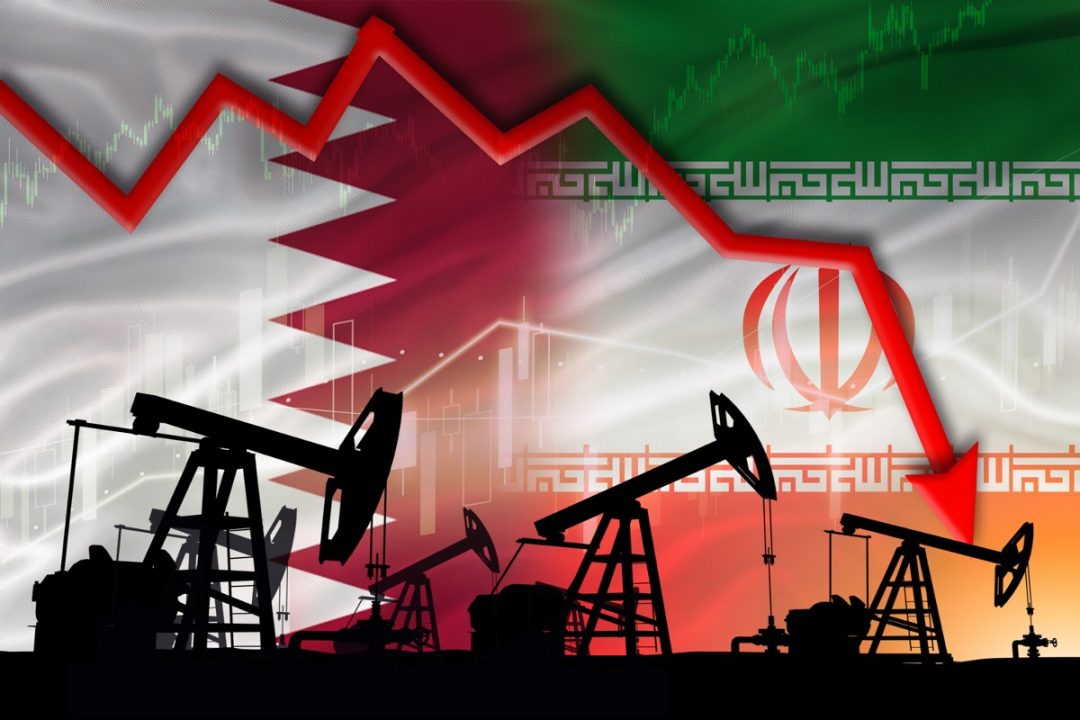
The U.S.-Iran War, which began in February, added a far bigger shock. The Strait of Hormuz, which normally carries about one-fifth of the world’s oil, has been effectively closed for much of the year. Supertankers are hitting mines, oil has repeatedly topped $100 a barrel, and Brent crude still trades near $89. Houthi missiles are striking Saudi oil facilities.
Africa’s producers are no steadier. On September 21, an armed group shut a pipeline valve at Libya’s Al-Sharara field , the country’s largest, sharply cutting its output. Sudan’s civil war continues to disrupt the region’s oil routes.
Part of the Plan
Some financial analysts argue that the 2020 crisis was about more than a virus. Former BlackRock portfolio manager Edward Dowd has said the world faced “a global debt problem,” and that the pandemic gave central banks an excuse to print money under an emergency label. Catherine Austin Fitts , a former assistant secretary of housing under President George H.W. Bush, has gone further, calling the pandemic response a cover for injecting about $6 trillion into a failing financial system.
The record shows the system was buckling. In September 2019, the overnight lending market between banks seized up, with rates briefly reaching 10 percent, and the Fed launched its first emergency lending in more than a decade. After the pandemic hit, the Fed’s balance sheet grew by about $3 trillion in three months, from $4.2 trillion to $7.2 trillion, and Congress added trillions more in spending.
So due to a series of unfortunate “coincidences” — from decommissioned refineries, to conflicts in oil-producing nations, to choked-off energy supply chains — the price of petroleum is no longer negative, and record profits are being booked by energy companies as Americans struggle with record prices at gas pumps.
This article is part of The New American’s weekly online newsletter Insider Report , which is emailed to TNA subscribers each week. Click here to subscribe to The New American to receive the Insider Report and access exclusive content.