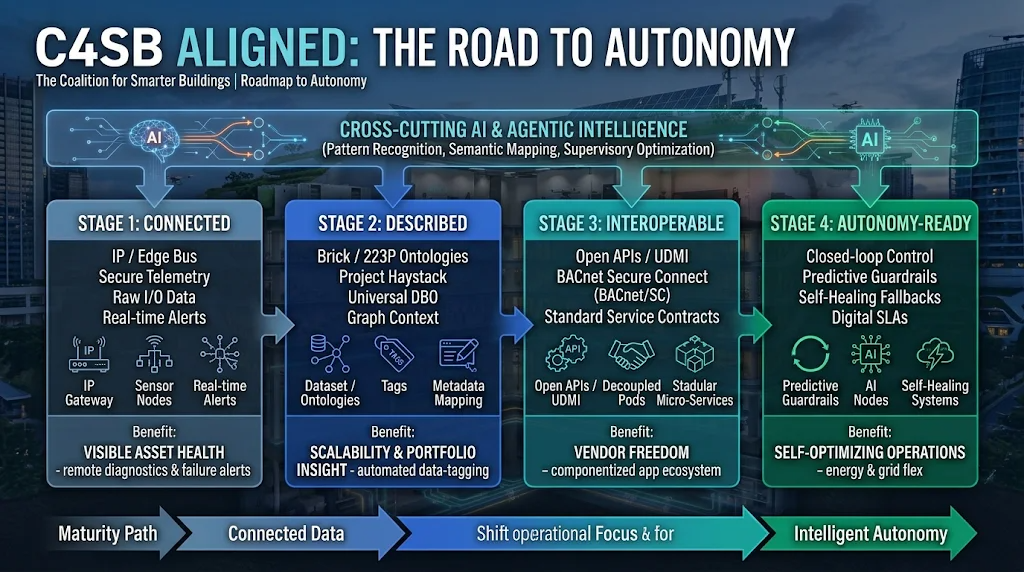
The “C4SB Aligned” Road to Autonomy
This post was generated for the Mondaylive.org discussion on November 23 to start a discussion of what the route, or “road,” to autonomy might look


This post was generated for the Mondaylive.org discussion on November 23 to start a discussion of what the route, or “road,” to autonomy might look
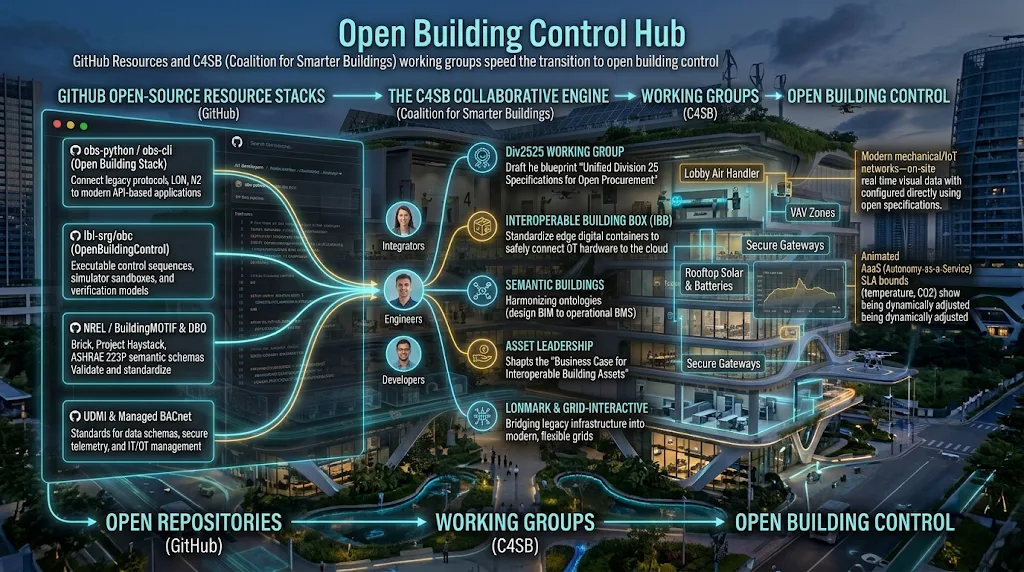
Moving the building automation industry from proprietary, locked-in silos to open building control requires replacing bespoke, closed engineering with shared code, standardized data models, and
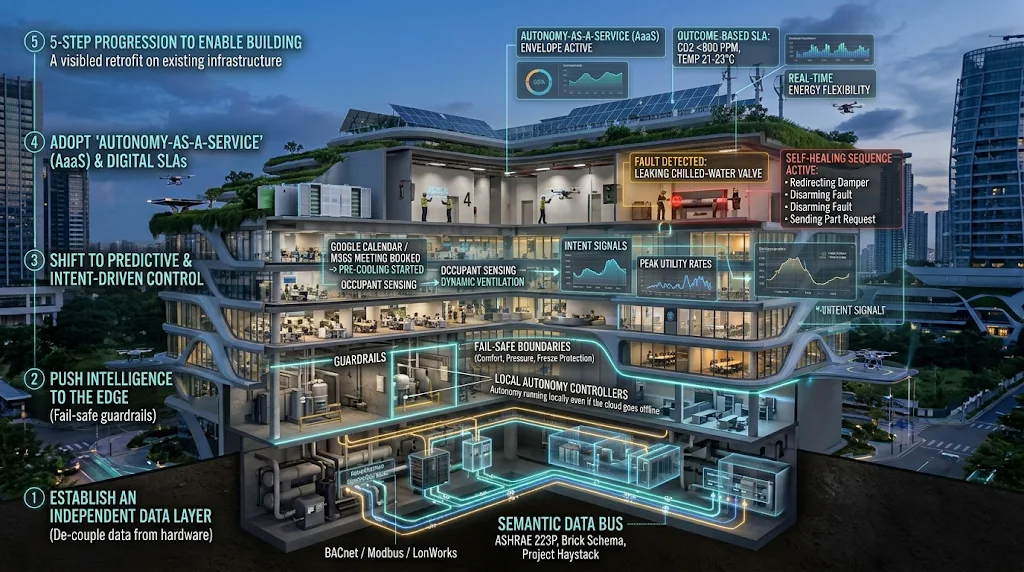
Enabling autonomy in existing or new buildings does not require ripping out functional HVAC, lighting, or electrical hardware. Instead, it requires layering semantic context, edge
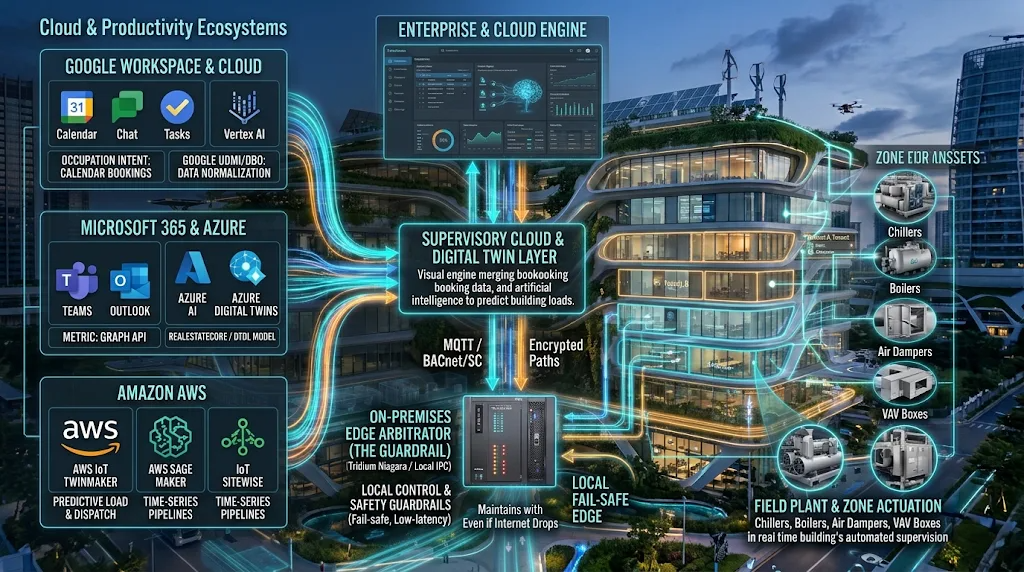
Can we use Google Workspace or Microsoft or Amazon to create an autonomous Autonomous environment Yes, but not within their standard office productivity suites alone
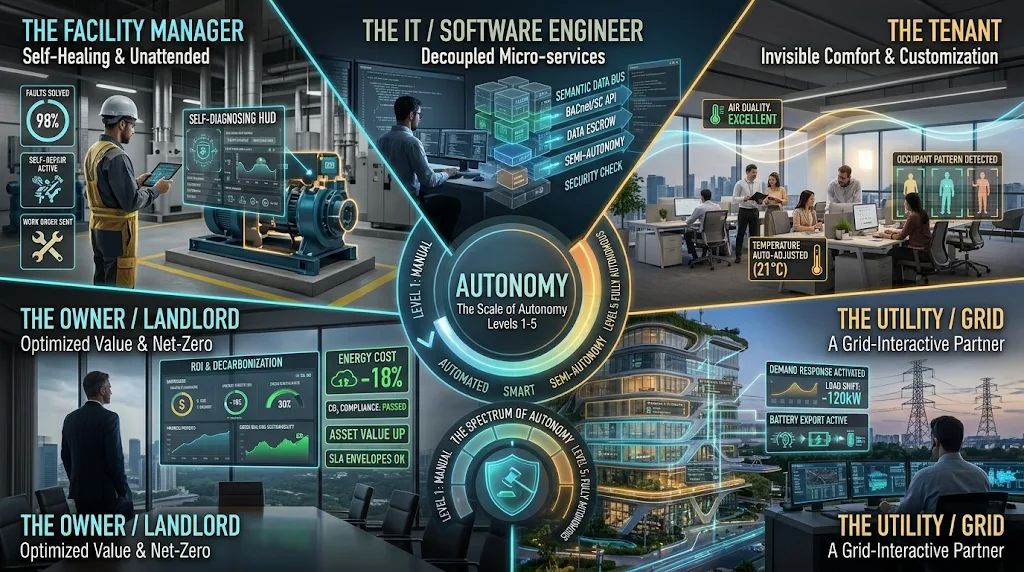
5 Perspectives of “Autonomous” 1. For the Facility Manager: “Self-Healing & Unattended” To the boots-on-the-ground operational team, autonomy isn’t about futuristic high-tech; it’s about reliability
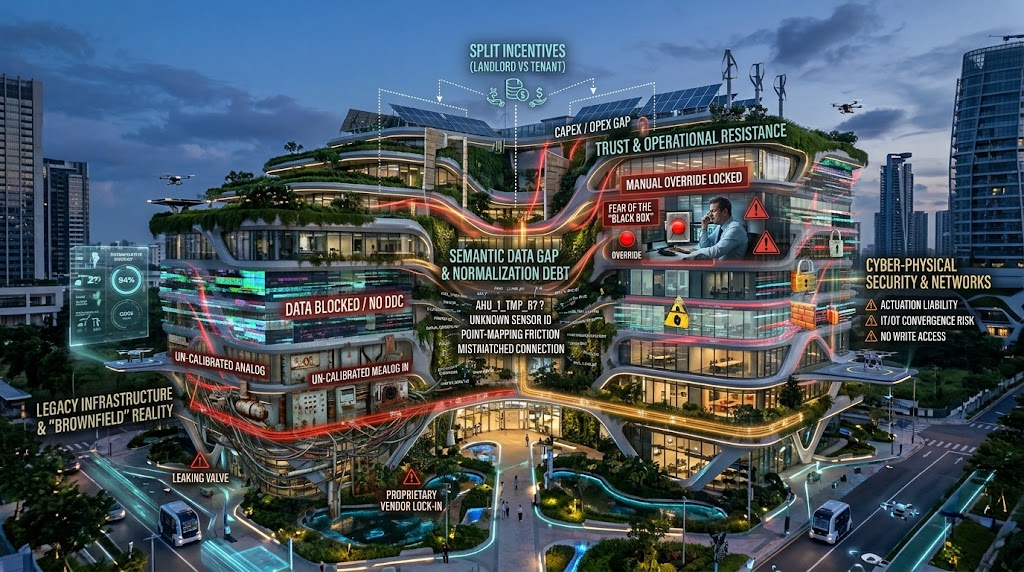
The barriers preventing buildings from transitioning from automated or “smart” to truly autonomous are rarely about the availability of machine learning algorithms. Instead, they stem
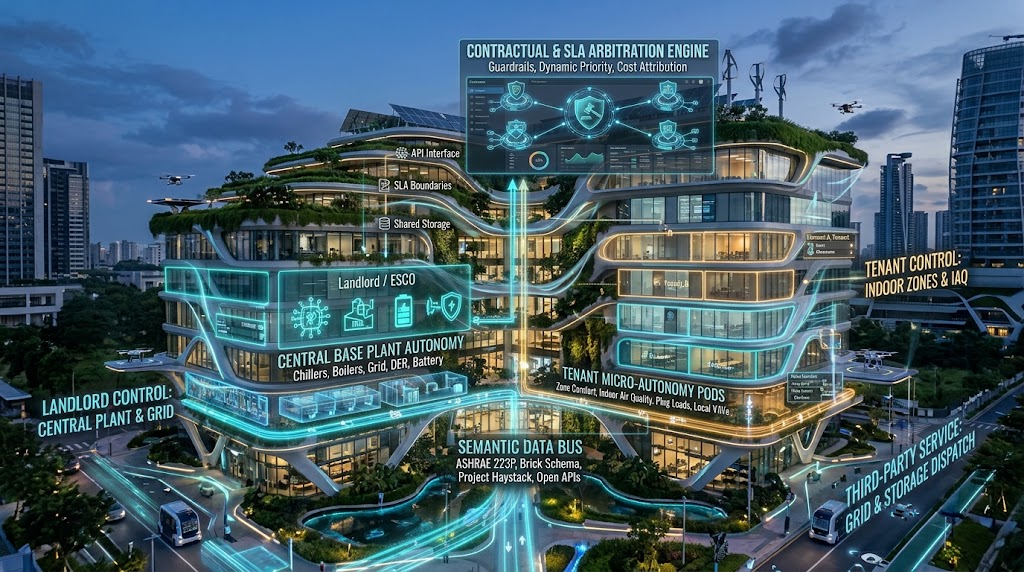
Splitting building autonomy across multiple stakeholders—base building landlords, anchor tenants, retail operators, facility managers, and energy service providers—creates friction over control, data liability, and cost

November’s Monday Live! theme is autonomous buildings, and the opening discussion began with a deceptively simple question: What does “autonomous” actually mean? Buildings have been
Twenty-four children occupy a classroom as indoor CO? rises, outdoor particulate pollution increases, and an air handler exhibits abnormal behavior. The AI proposes a ventilation adjustment. But who establishes whether that intervention is justified? TA-14 examines the missing boundary between intelligent building decisions and authorized physical execution.
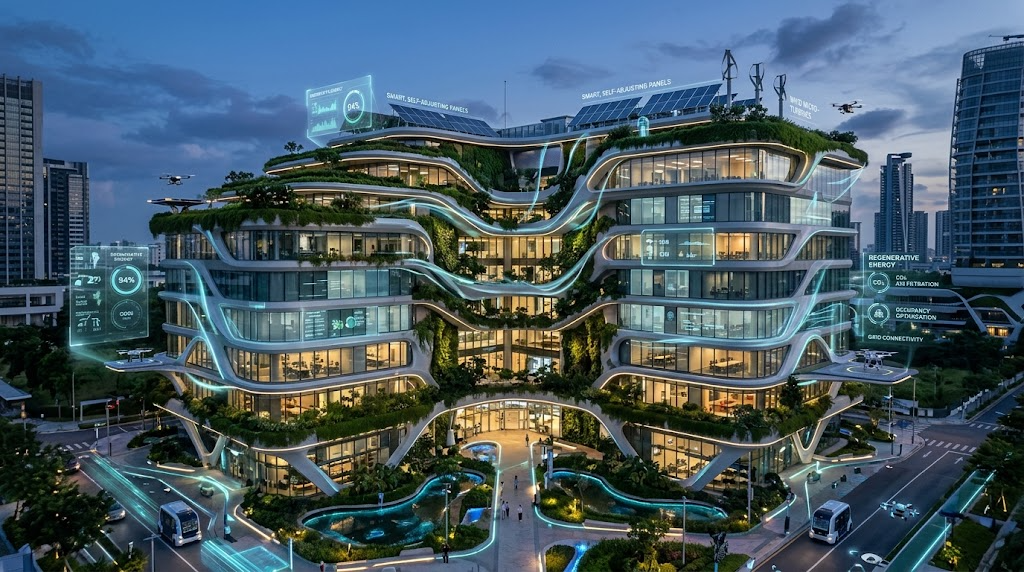
An autonomous building is a facility designed to monitor, adapt, manage, and optimize its own physical operations—such as HVAC, lighting, energy consumption, and indoor environmental
This post was generated for the Mondaylive.org discussion on November 23 to start a discussion of what the route, or “road,” to autonomy might look
Moving the building automation industry from proprietary, locked-in silos to open building control requires replacing bespoke, closed engineering with shared code, standardized data models, and
Enabling autonomy in existing or new buildings does not require ripping out functional HVAC, lighting, or electrical hardware. Instead, it requires layering semantic context, edge
Can we use Google Workspace or Microsoft or Amazon to create an autonomous Autonomous environment Yes, but not within their standard office productivity suites alone
5 Perspectives of “Autonomous” 1. For the Facility Manager: “Self-Healing & Unattended” To the boots-on-the-ground operational team, autonomy isn’t about futuristic high-tech; it’s about reliability
The barriers preventing buildings from transitioning from automated or “smart” to truly autonomous are rarely about the availability of machine learning algorithms. Instead, they stem
Splitting building autonomy across multiple stakeholders—base building landlords, anchor tenants, retail operators, facility managers, and energy service providers—creates friction over control, data liability, and cost
November’s Monday Live! theme is autonomous buildings, and the opening discussion began with a deceptively simple question: What does “autonomous” actually mean? Buildings have been
Twenty-four children occupy a classroom as indoor CO? rises, outdoor particulate pollution increases, and an air handler exhibits abnormal behavior. The AI proposes a ventilation adjustment. But who establishes whether that intervention is justified? TA-14 examines the missing boundary between intelligent building decisions and authorized physical execution.
An autonomous building is a facility designed to monitor, adapt, manage, and optimize its own physical operations—such as HVAC, lighting, energy consumption, and indoor environmental
