
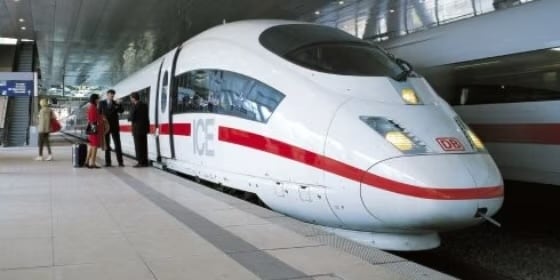

Europe’s push toward integrated air-rail travel is accelerating as Lufthansa Group expands its long-running German intermodal model beyond national borders. The latest development — a new ICE high-speed rail link to Brussels Airport — marks a significant milestone in how airlines and railways are redefining airport access. Yet while the infrastructure is evolving quickly, ticket pricing and commercial logic remain stubborn obstacles.
A German Concept Goes International
The cooperation between Deutsche Bahn and Brussels Airlines will introduce the first direct ICE connection to Brussels Airport from western Germany, allowing passengers to book a combined train-and-flight itinerary under one reservation. The service begins in September 2026, linking Cologne, Aachen and Liège with the airport in roughly two hours.
The concept is not entirely new. Lufthansa’s “Express Rail” programme has, for more than two decades, treated trains as virtual flights, giving ICE services airline flight numbers, through-ticketing and protected connections.
Under the new expansion, Brussels Airlines — also part of Lufthansa Group — effectively turns Brussels Airport into another node in the airline’s rail-integrated network, extending the “airport rail terminal” philosophy beyond Germany.
Industry observers say this reflects a broader shift: rail is increasingly replacing short-haul feeder flights, offering a lower-carbon alternative while freeing up airport slots for long-haul operations.
How the Airport Rail Terminal Model Works
At its core, Lufthansa’s air-rail system treats the train as an extension of the airport terminal rather than a separate journey. Passengers check in once, receive boarding passes for both train and aircraft, and benefit from airline protections such as rebooking if delays occur.
In Germany, Frankfurt Airport’s AiRail Terminal embodies this approach, enabling baggage drop-off, lounge access and seamless transfers between high-speed rail platforms and airline gates.
The Brussels project mirrors these operational features:
- Combined ticketing in one booking step
- Airline codeshare flight numbers on rail segments
- Guaranteed connections and mileage accrual
- Integrated city transport in some cases
For airlines, the model expands their catchment area without adding aircraft capacity. For rail operators, it boosts premium traffic and strengthens international relevance.
Strategic Logic for Lufthansa Group
The expansion to Brussels highlights how Lufthansa Group is leveraging its multi-hub structure. With Lufthansa, Brussels Airlines and other subsidiaries sharing alliance infrastructure, rail integration becomes a network-wide feeder strategy rather than a single-airport experiment.
This is particularly important in regions where short-haul flights face environmental scrutiny or operational limits. Lufthansa Express Rail already connects more German cities by train than Lufthansa serves by domestic flights — a signal that rail is becoming a structural component of the airline’s network planning.
Brussels adds another dimension: cross-border intermodality. Instead of funnelling all rail passengers through Frankfurt, Lufthansa Group can distribute traffic across multiple hubs, strengthening resilience and reducing congestion.
The Pricing Problem Nobody Has Solved
Despite the operational progress, pricing remains the weakest link in air-rail integration — and arguably the biggest barrier to mainstream adoption.
Passengers frequently encounter fare structures that appear inconsistent or illogical:
- In some cases, adding a rail segment dramatically increases the overall airfare.
- In others, the train leg costs almost nothing or results in a cheaper ticket than flying alone.
- Pricing often reflects airline revenue management systems rather than the real cost of rail transport.

This disconnect stems from how intermodal fares are constructed. Airline booking engines typically price the entire journey using aviation yield management logic, meaning the rail leg becomes part of a broader fare calculation rather than a transparent add-on.
As a result, two identical flights may cost radically different amounts depending on whether the rail segment is included — confusing passengers and travel managers alike.
Industry analysts note that rail operators and airlines still use separate pricing models, making truly seamless intermodal revenue management difficult. While integrated booking technology has improved, fare logic has not fully caught up with the concept of rail as a “flight.”
Why Air-Rail Integration Matters Now
The Brussels expansion arrives at a moment when European transport policy increasingly encourages rail as a substitute for short-haul flights. Integrated tickets offer a way to maintain airline connectivity while reducing emissions and airport congestion.
For Lufthansa Group, the strategy also serves a competitive purpose: expanding its virtual network footprint without deploying additional aircraft.
However, the long-term success of airport rail terminals may depend less on infrastructure and more on commercial alignment. If passengers continue to see unpredictable pricing, adoption could stall despite strong environmental and operational arguments.
The Future: Rail as the First Leg of Flight
The ICE link to Brussels Airport suggests that the air-rail model is moving beyond Germany toward a broader European ecosystem. As intermodal partnerships grow within Star Alliance and beyond, the distinction between “train” and “flight” may continue to blur.
Yet the next challenge is clear. The physical integration of rail into aviation is largely solved; the commercial integration is not.
Until pricing becomes intuitive and consistent, the promise of seamless airport rail terminals — whether in Frankfurt, Brussels or elsewhere — may remain only partially realised.





Leave a Comment