
When ITB Berlin celebrates its 60th anniversary from 3–5 March 2026, all eyes will be on one country: Angola.
The anniversary edition will open on 2 March with a spectacular gala staged by this year’s Official Host Country. Under the theme “The Rhythm of Life”, Angola will set the tone for the world’s leading travel trade show with an immersive cultural production designed to reposition the country on the global tourism map.
But beyond the colour, choreography and high-level speeches, a bigger question lingers: Is Angola’s ITB hosting role a symbolic political gesture — or a serious strategic push to become a competitive tourism destination?
A High-Profile Opening with Global Powerbrokers
The opening gala is designed as more than ceremony. Around 700 to 800 invited guests from politics, tourism, media and international institutions will attend.
Expected guests include:
- Kai Wegner, Governing Mayor of Berlin
- Dr. Christopher Ploß, Federal Government Coordinator for Maritime Economy and Tourism
- Gloria Guevara, President and CEO of the World Travel & Tourism Council
- Shaikha Nasser Alnuwais, Secretary-General of UN Tourism
- Dr. Mario Tobias, CEO of Messe Berlin
Hosting duties will be led by Angola’s Minister of Tourism, H.E. Márcio Daniel, alongside H.E. José de Lima Massano, Minister of State.
“This partnership offers a unique opportunity to showcase Angola’s cultural diversity, natural beauty and uniqueness on one of the most important international platforms,” said Tourism Minister Márcio Daniel. “With our new brand identity, ‘Visit Angola – The Rhythm of Life’, we invite the international travel industry to experience the rhythm of the country with all their senses.”
The message is clear: Angola is not simply attending ITB — it is using the platform to reposition itself.
A Cultural Narrative Designed for Rebranding
The gala’s centrepiece production, “Travessia – From Traditional to Modern,”is conceived as an artistic metaphor for Angola’s transformation.
The performance begins with the traditional dikanza , played by Dr. Raul Tolingas, symbolising heritage and memory. Congas, guitars and percussion follow, building into contemporary interpretations of semba, rebita and rumba. Guitar solos by Dr. Teddy Nsingui and a piano-violin transition represent generational dialogue and modern dynamism.
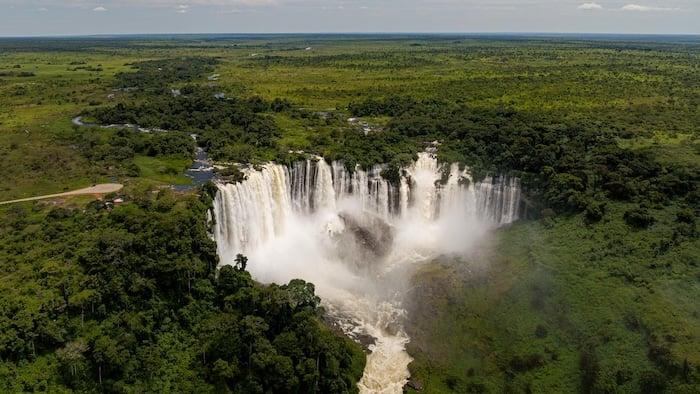
LED installations will transport guests visually across Angola’s dramatic landscapes — from the thunderous Kalandula Falls to the sweeping dunes of the Namib Desert and the Atlantic coastline.
Cuisine will reinforce the narrative. Michelin-starred Angolan chef Helt Araújo will reinterpret traditional ingredients in a contemporary menu, presenting gastronomy as an expression of national identity.
The production is carefully curated: heritage, energy, authenticity and forward momentum.
Political Theatre — or Economic Diversification Strategy?
Sceptics might view the spectacle as diplomatic pageantry. After all, Angola remains heavily dependent on oil revenues and faces structural challenges in aviation connectivity, tourism infrastructure and global perception.
Yet multiple indicators suggest this is more than symbolic positioning.
Angola has:
- Launched a new international tourism brand identity
- Increased marketing budgets in key European markets
- Introduced visa facilitation measures for several countries
- Targeted MICE and high-value tourism segments rather than mass arrivals
Hosting ITB Berlin 2026 — especially its milestone 60th edition — gives Angola direct access to global tour operators, airlines, investors and policy influencers. It is a calculated visibility play in the world’s most influential B2B tourism environment.
Unlike consumer-facing expos, ITB is where destination contracts are negotiated and investment conversations begin.
The Risk: Visibility Without Follow-Through
However, history shows that a host country spotlight does not automatically translate into sustained visitor growth.
To convert momentum into measurable results, Angola must:
- Expand international air connectivity
- Strengthen hospitality training and service standards
- Improve transport infrastructure to key natural sites
- Maintain policy consistency and investor confidence
Without sustained implementation, the ITB spotlight risks becoming a fleeting branding moment.
The Strategic Verdict
Angola’s presence at ITB Berlin 2026 appears to be a serious strategic move embedded within a broader economic diversification agenda— not merely a political showcase.
The scale of preparation, the new national tourism identity, and the high-level diplomatic and industry engagement indicate long-term ambition. The narrative of “The Rhythm of Life” is carefully constructed to present Angola as authentic, culturally rich and investment-ready.
Whether the strategy succeeds will depend less on the opening gala — however spectacular — and more on what follows in the months and years after Berlin’s stage lights dim.
For now, one thing is certain: when ITB Berlin celebrates six decades, Angola intends to ensure the rhythm of its transformation is heard across the global tourism industry.







Leave a Comment