

For decades, Bulgaria’s international tourism image was dominated by two seasonal products: inexpensive Black Sea holidays and winter skiing. That picture is beginning to broaden.
Visitors are increasingly treating Sofia, Plovdiv, Veliko Tarnovo and other historic centers as destinations in their own right, rather than as gateways to the coast. Bulgarian tourism expert Bayko Baykov has linked the shift to improving transport connections and rising demand from European markets including Poland, Italy and Spain.
The trend is visible most clearly in Sofia. Between January and September 2025, the Bulgarian capital received more than one million tourists, an increase of 10 percent from the same period in 2024. Foreign visitors represented 63 percent of the total. Separate reporting on the city’s tourism market identifies Italy, Germany, the United Kingdom and Spain—countries with extensive low-cost air connections—as important sources of visitors. The typical stay lasts two or three nights, the classic pattern of a European city break.
Across the Danube, Romania is competing for much the same traveler. Bucharest offers Belle Époque architecture, museums, nightlife and an increasingly sophisticated food scene, while Brașov, Sibiu, Cluj-Napoca, Timișoara and Iași combine historic centers with festivals, universities and access to rural or mountain attractions.
Together, Bulgaria and Romania offer something that is becoming harder to find in Europe’s best-known capitals: culturally rich cities that remain comparatively affordable, relatively uncrowded and compact enough for a long weekend.
The price advantage
Cost is arguably their strongest shared advantage.
Eurostat’s preliminary estimates for 2025 placed Bulgaria and Romania at the bottom of the European Union’s consumer-price table. Overall household consumption prices were approximately 37 percent below the EU average in Bulgaria and 35 percent below it in Romania.
That difference is tangible to a visitor. Accommodation, restaurant meals, public transport, museum tickets and drinks generally cost less than in Western or Northern European capitals. A traveler who might economize heavily during a weekend in Paris, Amsterdam or Copenhagen can often afford a central hotel, several restaurant meals and paid cultural attractions in Sofia or Bucharest without turning the trip into a luxury purchase.
Affordability also allows the two countries to compete for younger independent travelers, families and repeat visitors who have already seen Europe’s most famous capitals. It is particularly valuable during a period when accommodation prices and visitor taxes in established destinations are rising, and concerns about overtourism are encouraging travelers to look elsewhere.
However, low prices are not automatically a sustainable tourism strategy. Cheapness can attract volume without generating enough income for heritage conservation, staff training or infrastructure. The longer-term task is to convert affordability into value: distinctive experiences at a competitive price, rather than a permanently discounted product.
Culture concentrated into a weekend
Bulgaria’s city-break proposition rests on an unusually dense historical timeline.
In central Sofia, Roman remains, an Ottoman mosque, an early Christian rotunda, Orthodox churches, a synagogue and monumental twentieth-century architecture stand within walking distance of one another. Plovdiv combines a Roman theatre, Ottoman-era houses, a preserved old town and the creative Kapana district. Veliko Tarnovo’s hilltop fortress evokes the medieval Bulgarian empires, while Kazanlak provides access to the UNESCO-listed Thracian Tomb and the Valley of the Thracian Kings.
Romania offers a complementary cultural landscape. Bucharest mixes French-inspired boulevards, Orthodox churches, communist-era landmarks and adaptive reuse of former industrial and commercial spaces. Brașov and Sibiu provide the visual appeal of fortified Transylvanian towns; Timișoara combines Habsburg architecture with the cultural legacy of its year as a European Capital of Culture; Cluj-Napoca has become a center for festivals, contemporary art and technology.
Both countries also offer city-plus itineraries. Sofia can be paired with Rila Monastery or the Vitosha mountain; Plovdiv with wineries and Thracian sites; Bucharest with Sinaia, Peleș Castle and Brașov; and Cluj or Sibiu with villages, fortified churches and mountain landscapes.
This ability to combine urban culture with nature or heritage in a short trip is a major competitive advantage. It gives visitors more than a checklist of monuments and encourages them to extend a two-night stay into four or five nights.
Who is visiting?
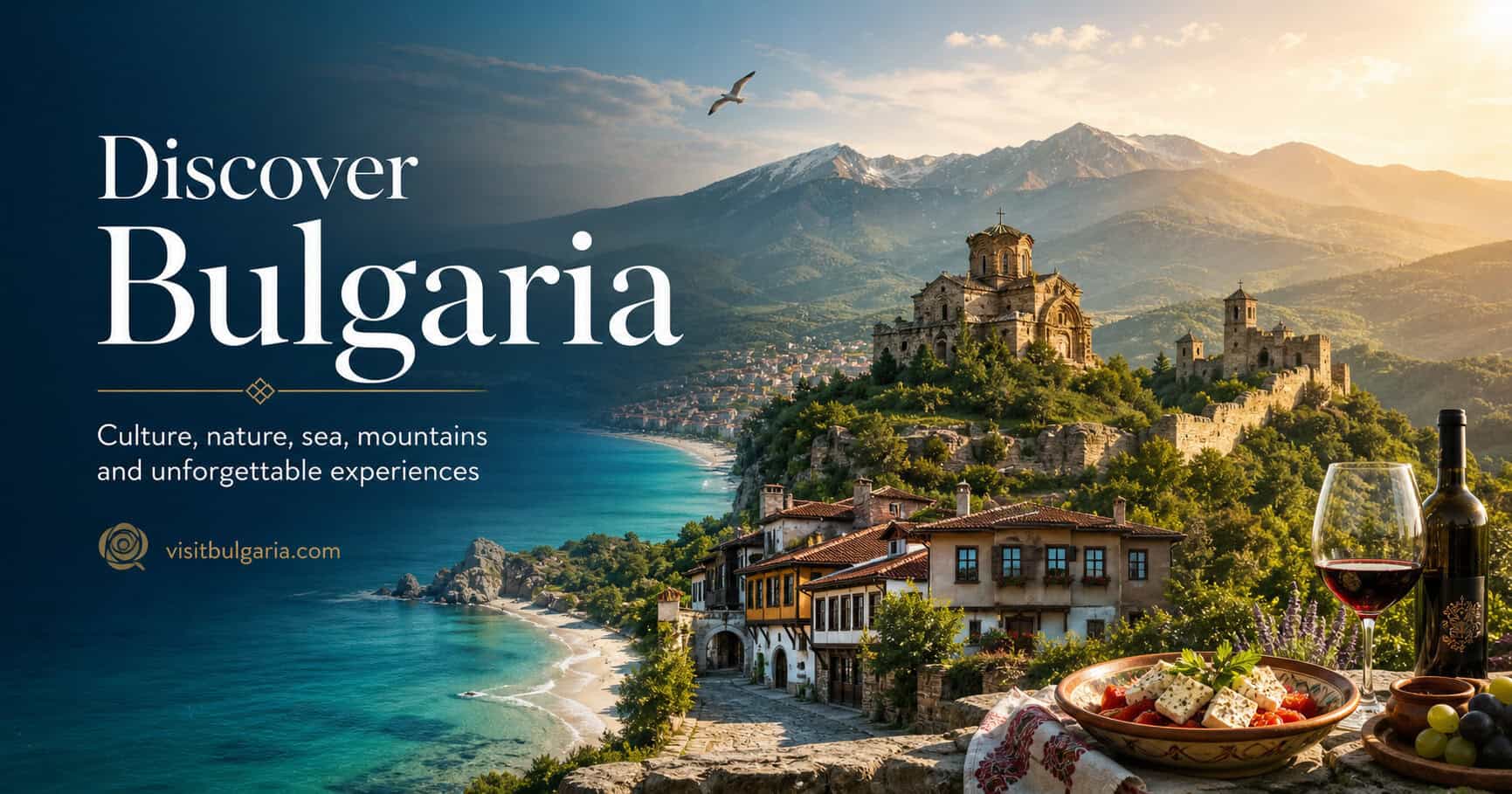
Bulgaria’s strongest city-break demand currently comes from nearby countries and short-haul European markets with direct or inexpensive flights.
Sofia tourism officials have identified Italy, Germany, Britain and Spain as significant markets, alongside neighboring Greece, Türkiye, Serbia and Romania. Polish demand has also been growing, while visitors from Israel, China and the United States appear in smaller numbers.
At national level, Bulgaria recorded about 13.6 million arrivals from abroad in 2025, including transit and non-holiday travel, an increase of 2.7 percent from 2024. Holiday and leisure arrivals grew faster, while increased traffic in April, May, October and November suggested some progress in extending tourism beyond the peak summer period.
Romania’s accommodation sector remains much more dependent on domestic tourism. In 2024, Romanian residents accounted for more than 83 percent of arrivals, while foreign tourists represented about 17 percent. Germany was the largest recorded foreign source market, followed by Italy and Israel.
In 2025, Romania’s accommodation establishments registered approximately 13.9 million tourist arrivals, but the total was 2.4 per cent lower than in 2024 and foreign visitors still represented only about one-fifth of the market.
This is both a weakness and an opportunity. Romania has a substantial domestic base that supports hotels and attractions, but it remains underrepresented in international leisure travel relative to its size, cultural assets and location. Bulgaria has stronger international recognition, but much of that recognition remains tied to the coast, skiing and low prices.
Long-haul markets are underdeveloped in both countries. Visitors from the United States, Canada, China and Japan face limited direct air access and often need to connect through Istanbul, Frankfurt, Munich, Vienna, Warsaw or another European hub. For a two- or three-night city break, every additional connection weakens competitiveness.
Easier movement after Schengen
Transport access has nevertheless improved.
Bulgaria and Romania became full members of the Schengen Area on January 1, 2025, when checks on people at their internal land borders were removed. Air and sea checks had already ended in March 2024.
For European visitors, full Schengen membership strengthens the perception that the two countries are integrated, easily accessible parts of the European travel system. It also makes combined itineraries more practical, including Bucharest–Ruse–Veliko Tarnovo–Sofia routes and wider journeys connecting Greece, Bulgaria and Romania.
Low-cost airlines have been equally important. Their networks make Sofia and Bucharest realistic weekend destinations from cities in Italy, Spain, Germany, Poland and Britain. The vulnerability is that routes can be seasonal or quickly withdrawn when aircraft capacity or commercial priorities change. Secondary Bulgarian and Romanian cities remain especially dependent on a limited number of operators.
Rail is another weakness. Travelling between major cities can be slow, and international rail connections are not yet strong enough to compete consistently with aviation or private cars. Poor station environments, ageing rolling stock and limited integrated booking can undermine an otherwise attractive low-carbon tourism proposition.
Promotion: from generic scenery to identifiable experiences
Bulgaria is attempting to market a broader range of tourism products and reduce its dependence on summer.
In 2025, the Tourism Ministry announced a model of cooperation with municipalities to promote individual regions more effectively. More recent international digital advertising has highlighted Bulgaria’s affordability and variety, promoting cultural routes, cuisine, mountains, spa tourism and nature alongside the sea. A 2026 campaign targeting markets including France, Spain, Italy, Germany, Britain, Poland and Czechia was distributed through Google and Meta.
The direction is sensible. Sofia, Plovdiv and Veliko Tarnovo require different narratives from Sunny Beach or Bansko. Successful city tourism depends on specific, bookable ideas: a Roman weekend in Plovdiv, a food and architecture break in Sofia, a medieval route through Veliko Tarnovo, or a festival itinerary built around Kazanlak’s rose season.
Romania has adopted a National Tourism Development Strategy for 2025–2035. Its objectives include increasing tourism’s economic contribution, creating jobs in local communities, improving access and modernising infrastructure. International promotion includes tourism fairs, familiarisation trips for media and travel companies, outdoor advertising and digital campaigns.
Resources, however, have been inconsistent. Romania’s tourism budget covering marketing, promotion and destination development fell from RON 55 million in 2024 to RON 26.8 million in 2025. The government said it doubled the promotion allocation again in 2026 and was seeking more modern promotional methods, but the fluctuating funding illustrates the difficulty of building a recognisable national brand over several years.
Romania has powerful individual images—Transylvania, Dracula, painted monasteries, the Danube Delta and the Carpathians—but they do not always form a coherent city-break proposition. Bucharest in particular continues to suffer from an outdated international reputation that does not reflect its current restaurant, nightlife, design and cultural scenes.
Are Bulgaria and Romania safe?
For most visitors, both countries are generally manageable destinations requiring normal urban precautions. Official travel guidance focuses primarily on petty theft, fraudulent transactions and transport-related overcharging rather than widespread violence against tourists.
In Bulgaria, taxi overcharging is one of the most frequently cited problems. Travellers are advised to avoid unsolicited taxis outside hotels and tourist sites, check the licence and displayed tariff, and use the authorised taxi service at Sofia Airport or a recognised local booking application.
Pickpocketing can occur in crowded transport, nightlife areas and major visitor locations. Tourists should also use ATMs inside banks where possible, check restaurant and bar bills, and reject demands to pay through unusual or untraceable methods.
Romania presents a similar risk profile. Official guidance warns of pickpocketing, card fraud, theft on transport and taxi drivers who may overcharge foreigners. In Bucharest, licensed taxis display a company name and price, while app-based services such as Bolt and Uber provide an alternative with a recorded fare and journey.
Bucharest also has a less familiar safety issue: seismic vulnerability. A July 2026 investigation found more than 200 short-term rental listings in buildings classified at the highest earthquake-risk level, despite legal restrictions on tourist accommodation in such properties. Visitors booking older central apartments should therefore check the building’s risk classification and favour professionally managed or clearly certified accommodation.
These problems should be presented proportionately. Taxi disputes and petty theft can spoil a trip, but they do not make either country inherently unsafe. Clearer enforcement, transparent fares, better information at airports and stronger regulation of short-term rentals would nevertheless improve confidence.
The outlook
The outlook for city tourism is positive, but growth is unlikely to be automatic.
Bulgaria has the clearer near-term momentum. Sofia’s rising arrivals, established low-cost links and the country’s existing tourism recognition give it a foundation on which to build. Its main opportunity is to redirect a portion of the millions already familiar with Bulgaria towards cultural and year-round trips.
Romania’s opportunity may be larger, because international tourism still accounts for a comparatively small share of its accommodation market. Foreign visitors nevertheless spent more than €5 billion in the country in 2025, according to Eurostat data cited by property consultancy Colliers, and international expenditure has risen rapidly over the past decade.
Both countries benefit from the same structural trends: travelers seeking lower costs, dissatisfaction with overcrowded destinations, flexible working, expanding low-cost aviation and growing interest in food, architecture and local culture.
They also share the same challenges. These include limited long-haul connectivity, weak rail infrastructure, inconsistent destination marketing, short average stays, labor shortages, uneven service standards and the risk of being sold primarily as “cheap Europe”.
The winners will be the cities that turn low prices into an invitation rather than an identity.
Bulgaria and Romania do not need to imitate Prague, Budapest or Vienna. Their advantage lies in offering something different: layered history without overwhelming crowds, lively neighborhoods that still serve residents, access to mountains and rural heritage, and enough value to make spontaneous travel possible.
The beach will remain central to Bulgaria’s tourism economy, just as Transylvania will remain central to Romania’s global image. But the next stage of tourism development may be shaped in Sofia’s streets, Plovdiv’s Roman theatre, Bucharest’s revived old buildings and the squares of Sibiu, Brașov and Veliko Tarnovo.
For European travelers looking beyond the usual weekend map, the two countries are no longer merely inexpensive alternatives. They are emerging city-break destinations with a credible cultural case of their own.




Leave a Comment