
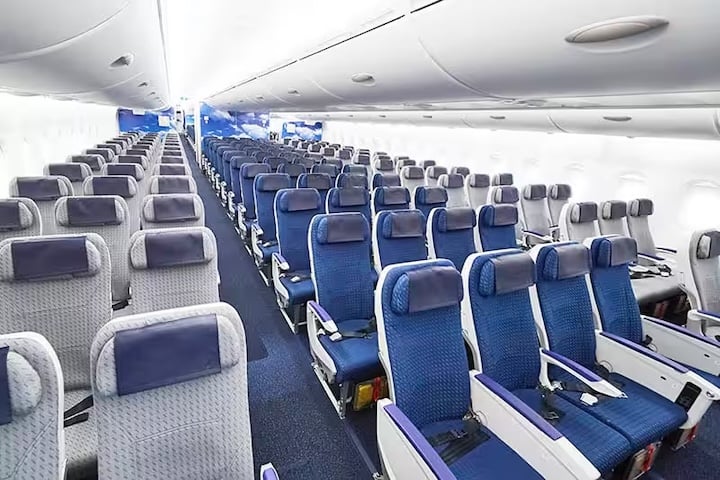
As global travel rebounds and airlines finalize fleet investments, economy class — historically the most uniform cabin — has become a key area of differentiation. From seat pitch and entertainment screens to power outlets and ergonomic headrests, what passengers experience varies widely by airline, aircraft, and route. In this eTurboNews comparative analysis, we examine how Japan Airlines, ANA, and new entrant Riyadh Airstack up against heavyweights like Qatar Airways, Emirates, Turkish Airlines, Lufthansa, Delta, United, and Ethiopian Airlineson both short-haul and long-haul flights.
Japan Airlines: Premium Economy at Standard Prices
Japan Airlines (JAL) has taken notable steps to elevate its economy cabin, particularly on long-haul services. On aircraft such as the Airbus A350-1000, JAL’s economy seats feature about 34 inches (86 cm) of pitch, a 13-inch 4K screen, universal power outlets (AC + USB), adjustable headrests, cup holders, and generous storage — amenities that place it toward the upper tier of long-haul economy offerings.
On short-haul flights, JAL’s economy hardware is more conventional (aligned with typical regional specs), but its service consistency and cabin fit continue to outshine many peers.
ANA: Consistency and Quiet Comfort
All Nippon Airways (ANA) — another leading Asian full-service carrier — emphasizes consistency and passenger comfort across its fleet. ANA’s long-haul economy on aircraft like the 787 Dreamliner and 777often offers approximately 34 inches of pitchand solid ergonomic design, though screen sizes and power options can vary by aircraft.
Passengers often praise ANA for overall cabin quietness, clean finishes, and a balanced in-flight experience, making it a strong alternative to JAL in the Asian market.
Riyadh Air: New Entrant with Modern Tech

The newest global airline, Riyadh Air, plans to reshape expectations with a cabin designed from scratch for its Boeing 787-9 Dreamliners.According to the airline’s cabin reveal, economy will feature:
- 223 seats in a 3-3-3 layoutwith 31-inch pitchand 17.2-inch width, comparable to many long-haul carriers’ standard offerings.
- 13.3–13.4-inch 4K OLED screensat every seat — larger than many legacy airline installs.
- Six-way adjustable headrestsand two USB-C charging pointsper seat.
This configuration blends modern entertainment tech with ergonomics and should feel competitive with other premium carriers on long-haul routes. Riyadh Air’s design philosophy emphasizes uniformity across its future fleet, avoiding the “luck of the aircraft draw” that plagues some legacy carriers.
Riyadh Air’s economy pitch is slightly less than JAL’s flagship long-haul pitch but is in line with many global carriers and focused on modern techand service consistency.
Gulf Carriers: Qatar Airways & Emirates
Qatar Airways
Qatar’s economy product remains highly rated globally, with competitive seat pitch (typically low-30s inches), excellent entertainment systems, and renowned service. While Qatar rarely advertises higher pitch than flag carriers like JAL or ANA on paper, its soft product— meal quality, cabin service, and amenities — keeps it competitive on global rankings.
Emirates
Emirates offers economy cabins with 31–34 inch pitchon aircraft like the A380 and newer 777s. Adjustable headrests and large personal screens are standard, though Emirates’ long-haul density (and thus comfort) can vary by aircraft. On short-haul and regional flights, Emirates’ configurations often align with typical European norms.
European Network Carriers: Turkish Airlines & Lufthansa
Turkish Airlines
Turkish is often cited for comfortable short- and medium-haul economy, particularly within Europe and the Middle East. Legroom is competitive (often better than some peers), and the carrier’s full-service model (meals, bags included) enhances overall value. On long-haul flights, economy pitch commonly sits in the 31–33 inch range.
Lufthansa
Lufthansa’s economy product is reliable and functional. On long-haul flights, seats generally offer 31–32 inches of pitchwith modern finishes on newer aircraft. However, cabin density has increased industry-wide, and Lufthansa steers many customers toward Premium Economyfor meaningful legroom gains.
US Legacies: Delta & United
Delta Air Lines
Delta’s economy experience depends on aircraft age and route, with long-haul pitches typically around 31 inches. Delta has invested in newer cabins with bigger screens and better power accessibility, although seat pitch remains conservativecompared with top Asian or Gulf carriers. Delta monetizes extra comfort via branded fare families and preferred seating.
United Airlines
United’s strategy similarly pushes upsell products like Economy Plusto sell additional legroom. Standard economy seats remain tighter than many global peers on long flights, though improvements in IFE and power outlets are notable on newer aircraft.
Ethiopian Airlines: A Competitive Mid-Tier Player
Ethiopian Airlinesmay fly under the radar for many travelers, but its economy class on modern aircraft like the Boeing 787 is competitive with industry norms. Seat pitch typically sits in the 31–32 inch range, screens and power options are modern, and service reliability is often praised, especially on routes connecting Africa to Europe and Asia.
Qantas: Long-Haul Focus and Ultra-Long-Range Ambitions
Qantas occupies a unique position, operating some of the world’s longest flights and preparing for even longer ultra-long-haul services. On existing long-haul aircraft, Qantas economy seating typically offers 31–32 inches of pitch, with modern entertainment systems and USB power on newer aircraft.
Looking ahead, Qantas’ upcoming Airbus A350s—designed for nonstop flights from Australia to Europe and North America—are expected to feature upgraded economy ergonomics, improved lighting, and enhanced in-flight entertainment to mitigate passenger fatigue on flights exceeding 18 hours. On short-haul domestic routes, however, economy seating remains tighter and optimized for high-frequency operations.
Short-Haul vs. Long-Haul: What Passengers Should Expect
Short-haul economyremains a space where airlines cluster tightly: pitch often ranges from 30 to 32 inches, and competition emphasizes punctuality, boarding experience, and service rather than seat specs alone.
On long-haul flights, however, true differentiation emerges. Carriers like JAL and ANA are anchoring comfort deeper into their standard product, while others rely on upselling seat selection, extra legroom blocks, or premium economy to capture business from more comfort-conscious travelers.
Bottom Line
- Japan Airlinesstands out for long-haul economy comfort and tech.
- ANAoffers consistent, refined economy experiences worldwide.
- Riyadh Air’s economypromises a modern, tech-forward cabinthat competes with legacy players.
- Qatar Airwaysand Emiratesretain strength through service and global connectivity.
- Turkish Airlinesexcels on short-haul comfort, with solid long-haul delivery.
- Lufthansa, Delta, and Unitedlean on upsell strategies for additional space.
- Ethiopian Airlinespunches above its weight with competitive economy hardware.
- Qantasfocuses on endurance and ergonomics for ultra-long-haul flying.
Economy class is no longer a commodity — it’s a strategic product.For travelers, knowing the cabin hardware, service philosophy, and route patterns of each airline can make the difference between a tiring flight and a genuinely comfortable journey.






Leave a Comment