
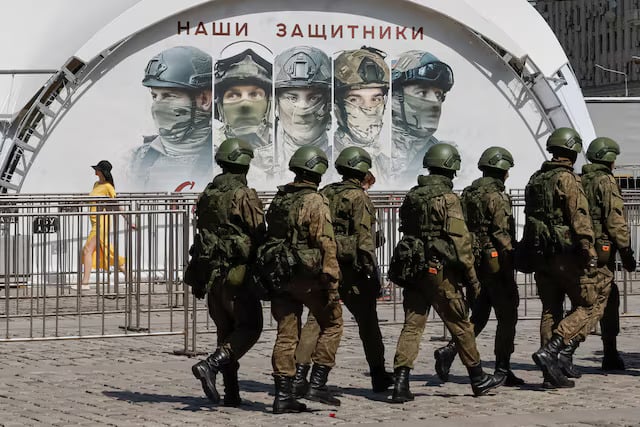
BRUSSELS — European Union member states are increasingly concerned about the recruitment of African nationals to fight for Russia in Ukraine, warning that the trend is not only a humanitarian and security issue but also one with growing implications for tourism, migration patterns, and business travel between Europe and Africa.
As Europe marks four years since Russia’s full-scale invasion of Ukraine on February 24, investigators and policy researchers say the recruitment networks targeting African citizens have expanded in scale and sophistication. Intelligence estimates suggest more than 1,400 individuals from at least 36 African countries have fought on Russia’s side, with a number now held by Ukrainian forces as prisoners of war.
During a briefing in Brussels, Thierry Vircoulon, a senior researcher at the French Institute for International Relations, said Russian-linked actors used social media campaigns and diaspora networks to attract recruits. According to investigators, Africans already living in Russia often served as intermediaries, persuading students and job seekers to enlist under promises of salaries, visas, or academic opportunities.
Recruitment Tactics and Human Impact
Researchers say many African nationals were drawn in through false job offers or student visa schemes. Fake employment agencies and online platforms reportedly promised housing, high wages, and stable work — only for recruits to find themselves deployed to the battlefield.
Vincent Gaudio, co-founder of investigative group INPACT, told journalists that recruiters exploited travel-related pathways, including football tournaments, visa sponsorships, and student exchanges. These tactics blurred the line between migration and militarization, creating what analysts describe as an “informal recruitment pipeline” linking immigration channels to military service.
The human cost has been significant. Intelligence reports estimate that at least 171 African fighters from countries including Cameroon, Ghana, and Egypt have died in the war, many between the ages of 18 and 25. Analysts say sub-Saharan Africa has been particularly vulnerable due to high youth unemployment and strong migration ambitions among young people seeking opportunities abroad.
Tourism and Business Travel Under Pressure
Beyond the battlefield, European officials warn that the recruitment phenomenon is reshaping perceptions of mobility between Europe and Africa, with consequences for tourism and corporate travel.
The war has already disrupted aviation routes linking Europe, Russia, and parts of Africa. Sanctions and restricted airspace have forced airlines to take longer routes, increasing fuel costs and ticket prices. East African tourism boards report declines in European visitors during peak travel seasons, partly linked to rising travel expenses and broader geopolitical uncertainty.
Security analysts say the discovery of recruitment networks tied to student visas or travel programs has made European immigration authorities more cautious, leading to stricter visa screening. Industry insiders worry this could slow the recovery of tourism flows that were just beginning to rebound after the COVID-19 pandemic.
Tourism experts note that Europe remains the largest source market for African tourism investment and leisure travel. Any tightening of mobility rules or perception of risk may reduce conference tourism, cultural exchanges, and educational travel — all of which are crucial revenue streams for destinations across East and West Africa.
Historical Context and Similar Patterns
The use of foreign fighters is not new in modern conflicts. Analysts draw parallels with recruitment campaigns seen during conflicts in Syria and Libya, where economic hardship and online propaganda drew individuals from multiple regions. However, the targeting of African students through academic and migration channels represents a more complex hybrid strategy that intersects with global mobility systems.
Researchers also point to the broader geopolitical competition for influence in Africa, where Russia has expanded diplomatic, military, and economic engagement in recent years. The recruitment controversy risks straining relationships between African governments and European partners, particularly as EU states push for stronger oversight of travel programs linked to Russia.

Economic Ripple Effects
Tourism operators across Africa say the conflict has contributed to currency volatility, higher insurance costs, and reduced investor confidence. European tour companies report cancellations tied to uncertainty over travel routes and safety perceptions, even in regions far from the conflict itself.
Business travel has also shifted. Companies operating between Europe and Africa are reassessing logistics as sanctions complicate financial transactions and transportation networks. Some analysts warn that if recruitment networks continue to exploit migration pathways, governments may impose additional travel restrictions that could further affect airlines, hotels, and conference industries.
Looking Ahead
European officials are calling for closer cooperation with African governments to address recruitment networks while preserving legitimate travel and education opportunities. Analysts emphasize that the challenge lies in balancing security concerns with the need to maintain open tourism corridors and economic partnerships.
As the war in Ukraine enters its fifth year, policymakers say the issue underscores how modern conflicts extend far beyond the battlefield, shaping migration, tourism, and international mobility in ways that could redefine Europe-Africa relations for years to come.




Leave a Comment