

If playback is interrupted, you can restart it.
Island maintains powerful global demand despite operating with only 70 percent of its pre-Hurricane Melissa room capacity
MONTEGO BAY, JAMAICA —Jamaica’s tourism industry is delivering one of the clearest demonstrations yet of the strength and resilience of the island’s global brand, welcoming 2.34 million visitors and generating approximately US$2.5 billion in tourism earnings through August 31, 2026, even as the destination continues to recover from the devastating impact of Hurricane Melissa.
On the surface, 2.34 million visitors is an impressive number for an island nation of Jamaica’s size. Put into historical and economic context, however, the achievement becomes considerably more significant.
Jamaica is doing so while operating at only about 70 percent of its previous hotel room capacity, with a substantial portion of the accommodation sector still undergoing repairs and refurbishment following Hurricane Melissa in October 2025.
The remaining 30 percent of room inventory is expected to return progressively through the end of 2026 and into the first quarter of 2027.
Official government figures show that arrivals through August were approximately 17 percent below the corresponding period in 2025, while tourism earnings were down approximately 18 percent. Tourism Minister Hon. Edmund Bartlett nevertheless described the performance as satisfying given the extraordinary reduction in available accommodation.
That comparison helps explain why the latest numbers deserve attention.
Jamaica currently has roughly seven out of every ten of its former hotel rooms available, yet visitor arrivals are running at approximately 83 percent of the previous year’s leveland tourism revenue at approximately 82 percent.
In other words, the reduction in tourism business has been considerably smaller than the reduction in available hotel inventory.
While total visitor arrivals include cruise passengers and therefore cannot be directly equated with hotel-room capacity, the figures nevertheless point to substantial underlying demand for the destination.
A tourism industry tested repeatedly — and still growing
The achievement is even more striking when viewed against Jamaica’s tourism history.
Before the COVID-19 pandemic, 2019 was one of the strongest tourism years Jamaica had ever experienced. The island welcomed approximately 4.3 million visitors, including roughly 2.7 million stopover visitors and 1.6 million cruise passengers, generating approximately US$3.64 billionin tourism earnings.
Then came an unprecedented collapse in international travel.
Jamaica closed its borders to international visitors as COVID-19 spread around the world and reopened the tourism sector in June 2020. During the first year following reopening, the country received approximately 816,632 stopover visitors and generated around US$1.31 billion as the industry began the difficult process of rebuilding.
The rebound that followed was extraordinary.
By 2022, Jamaica welcomed approximately 3.3 million visitors and earned an estimated US$3.7 billion, with arrivals up 117 percent and earnings up 71.4 percent compared with 2021.
Then, in 2023, Jamaica received approximately 2.89 million stopover visitors and 1.27 million cruise passengers, while tourism generated approximately US$4.27 billionin foreign-exchange earnings.
By 2024, Jamaica was firmly back among the Caribbean’s tourism heavyweights. Final Ministry of Tourism figures put total arrivals at approximately 4.15 million, generating around US$4.3 billiondespite travel advisories, Hurricane Beryl, airlift constraints, geopolitical uncertainty and other disruptions.
The longer-term transformation is equally notable. Jamaica’s Ministry of Tourism has said visitor volumes have roughly doubled from fewer than two million to more than four million over the industry’s recent growth era. Tourism has also been estimated to directly employ approximately 175,000 people, with another 350,000 indirect and induced jobsconnected to the sector.
Then came Hurricane Melissa
Just as Jamaica’s tourism industry had completed its remarkable post-pandemic recovery, it was confronted with another major shock.
Hurricane Melissa struck Jamaica in October 2025, damaging tourism properties and communities and forcing a significant share of the country’s accommodation inventory offline.
Yet the speed of the response was remarkable.
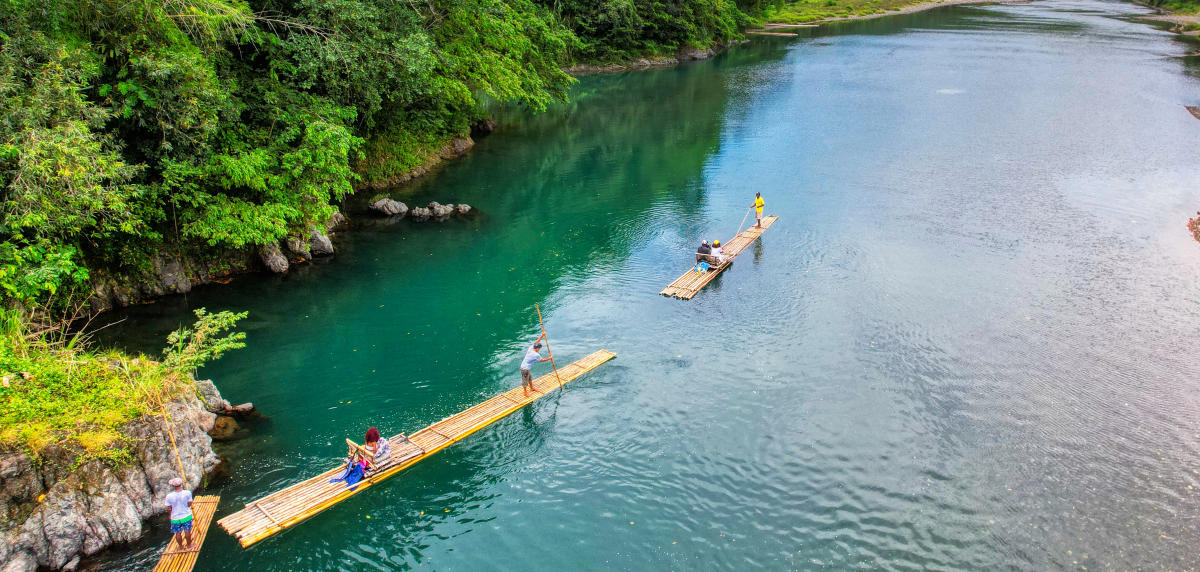
By the tourism sector’s official reopening on December 15, 2025, approximately 70 percent of Jamaica’s tourism assets were ready to receive visitors. Tourism workers played a central role in preparing hotels, attractions and tourism communities for the reopening.
Air connectivity also recovered rapidly. In the early stages of the post-Melissa recovery, Jamaica reported that capacity at its three international airports had already returned to more than 85 percent of pre-hurricane levels.
The Jamaica Tourist Board has continued promoting the message that while parts of the island remain in recovery, much of Jamaica is open and ready for visitors.
Against that backdrop, reaching 2.34 million visitors and US$2.5 billion in earnings by the end of August 2026is more than another tourism statistic.
It is evidence that Jamaica’s tourism brand retained considerable consumer demand even after a major natural disaster temporarily removed a substantial amount of the product available for visitors to purchase.
The US$2.5 billion number may be just as important
There is another reason the latest results stand out: spending has remained remarkably resilient.
Dividing US$2.5 billion in tourism earnings by 2.34 million visitors produces a simple average of roughly US$1,068 in tourism earnings per visitor.
Using the Government’s reported year-on-year declines, the comparable 2025 period would have represented roughly 2.82 million visitors and US$3.05 billion in earnings. That implies approximately US$1,082 per visitor.
These are broad calculations rather than an official measure of individual visitor expenditure, particularly because Jamaica’s visitor total combines stopover and cruise traffic. Nevertheless, they suggest that the revenue generated relative to overall visitor volume has remained remarkably stabledespite the disruption.
That matters enormously for Jamaica.
Tourism is not simply about filling hotel rooms. Visitor expenditure flows through hotels, restaurants, attractions, transportation companies, farmers, entertainment businesses, craft producers, tour operators and thousands of other Jamaican enterprises and workers.
The Ministry of Tourism has previously estimated that tourism directly accounts for around 9.5 percent of Jamaica’s GDP, generates approximately 53 percent of the country’s foreign exchange, and supports a much wider network of direct, indirect and induced employment.
Every billion dollars in visitor spending therefore has consequences far beyond the resort gates.
Jamaica’s brand has survived crisis after crisis
Jamaica’s tourism performance also needs to be considered against a decade in which the destination has confronted an unusual succession of external shocks: the COVID-19 pandemic, inflation, geopolitical uncertainty, airline capacity constraints, travel advisories, Hurricane Beryl and, most recently, Hurricane Melissa.
Yet international demand has repeatedly returned.
That resilience is particularly significant because tourism is now experiencing powerful competition worldwide. Global Travel & Tourism reached a record US$11.6 trillion contribution to GDP in 2025, according to the World Travel & Tourism Council, with the sector growing 4.1 percent—faster than the wider global economy.
Jamaica is therefore competing for travelers not merely against other Caribbean islands, but against an expanding universe of destinations worldwide.
Maintaining millions of visitors under constrained operating conditions demonstrates the continuing power of the Jamaica brand.
“This performance indicates robust demand for Jamaica’s tourism product despite operating with a reduced room stock following the passage of Hurricane Melissa in October 2025,” Minister Bartlett said.
“The fact that the arrival numbers remain strong reflects the resilience of Jamaica’s tourism sector and excellent job by the Jamaica Tourist Board and our overall tourism stakeholders to keep demand at this level.”
Airlines and travel partners remain critical
The numbers also suggest that confidence within the international travel trade has remained intact.
Jamaica’s tourism model depends heavily on airlift from its principal source markets, particularly the United States, Canada and the United Kingdom, as well as the relationships built with airlines, tour operators, travel advisors and cruise companies.
According to Donovan White, Jamaica’s Director of Tourism, sustained traveler demand has helped the destination maintain strong relationships with airline and cruise partners and support healthy passenger loads.
“Confidence in Jamaica remains high from our trusted airline, cruise, tour operator and travel agent partners, which is a testament to the priority we place on maintaining outstanding relationships,” White said.
“We are very grateful to everyone helping us meet the ongoing demand from travelers who continue to seek out the unique product that Jamaica offers.”
From recovery to Tourism 3.0
The bigger question is what happens when the missing room inventory returns.
Jamaica is no longer approaching tourism development simply as a race for higher arrival numbers.
Under the Government’s new Tourism 3.0framework, the emphasis is shifting toward a broader model involving human-capital development, stronger governance, community participation, innovation, deeper economic linkages and ensuring that more of the wealth created by tourism remains within Jamaica.
The strategy follows Jamaica’s earlier “5x5x5” growth ambitions, which targeted five million annual visitors and US$5 billion in tourism earnings. Those ambitions were interrupted by the COVID-19 pandemic, forcing the country effectively to rebuild its visitor economy.
Tourism 3.0 therefore represents something different: not merely recovering what was lost, but attempting to build a stronger and more inclusive tourism economy.
That means connecting hotels more deeply with Jamaican agriculture and manufacturing; expanding opportunities for small and medium-sized businesses; strengthening cultural and experiential tourism; developing workers; attracting investment; expanding air connectivity; and increasing the amount of each tourism dollar that circulates through Jamaican communities.
Why 2.34 million is a fantastic achievement
The significance of the 2026 number ultimately comes down to context.
Jamaica did not welcome 2.34 million visitors under normal circumstances.It did so while approximately 30 percent of its room inventory remained unavailable.
It did so less than a year after a major hurricane disrupted one of the country’s most economically important industries. It did so after tourism workers and businesses had already endured the most severe global tourism shutdown in modern history only a few years earlier.
And despite those constraints, the country generated US$2.5 billion in eight months.
The numbers are below 2025’s exceptional performance, and that distinction is important. But judging the achievement solely by the year-on-year decline misses the larger story. The more revealing question is: How much tourism business has Jamaica managed to retain while a significant portion of its tourism plant is unavailable?
On that measure, the answer is impressive.
With roughly 70 percent of its previous room capacity, Jamaica has maintained visitor volumes equivalent to about 83 percent of the previous year’s level and tourism earnings equivalent to roughly 82 percent.
That points to something exceptionally valuable for any tourism destination: demand that has survived a supply shock.
As Jamaica’s remaining resorts reopen through late 2026 and early 2027, the country could therefore enter the next stage of its recovery with something many disaster-affected destinations have to spend years rebuilding—traveler awareness, airline relationships, travel-trade confidence and, most importantly, demand.
The 2.34 million visitors recorded through August are consequently more than tourists passing through immigration.
They represent billions of dollars entering the Jamaican economy, jobs and livelihoods being sustained, businesses continuing to operate and international travelers effectively casting 2.34 million votes of confidence in Destination Jamaica.
For an industry operating at significantly reduced capacity less than a year after Hurricane Melissa, that is not simply a good result.
It is a powerful statement about the resilience of Jamaican tourism—and about the strength of the Jamaica brand.




Leave a Comment