

If playback is interrupted, you can restart it.
AMMAN/SHANGHAI —Jordan is looking to China as an increasingly important tourism and economic partner, with King Abdullah II using his recent visit to Shanghai to position the Kingdom for a new generation of Chinese travelers while advancing a broader strategy of economic diversification and pragmatic international engagement.
During a meeting with executives of Trip.com Group in Shanghai on August 19, the King discussed expanding tourism cooperation between Jordan and China, including smart destination marketing, cultural tourism and stronger air connectivity. He stressed Jordan’s interest in attracting more Chinese visitors and introducing them to the Kingdom’s archaeological, natural and cultural diversity. ( RHC )
The meeting was significant not simply because of Trip.com’s reach in the international travel market, but because it illustrated how Jordan is attempting to navigate a difficult geopolitical environment through diversification.
Located at the center of a region frequently affected by political and military crises, Jordan faces a particular challenge in tourism: events elsewhere in the Middle East can influence perceptions of the Kingdom even when Jordan itself remains stable. Developing stronger tourism relationships with China and other Asian markets can therefore help reduce dependence on traditional source markets while building new economic and cultural connections.
King Abdullah’s approach in China reflects Jordan’s wider foreign-policy balancing act — maintaining deep relationships with Western, Arab and regional partners while expanding economic and diplomatic cooperation with major Asian powers. Tourism fits naturally into that strategy because it combines investment, aviation, technology and cultural diplomacy with direct economic benefits for local communities.
China: A major opportunity for Jordan Tourism
The Chinese market represents substantial untapped potential.
Chinese visitor numbers to Jordan are already moving upward. During the first seven months of 2026, Jordan received 11,931 Chinese visitors, compared with 10,294 during the same period of 2025, an increase of 15.9 percent. Of the 2026 total, 11,160 were overnight visitors.
The figures are still relatively small compared with the enormous scale of China’s outbound travel market, but that is precisely what makes the opportunity attractive.
Chinese travelers are also becoming more independent, digitally oriented and interested in experiences beyond conventional sightseeing. Travel platforms play a central role in how destinations are discovered and trips are planned, making Jordan’s engagement with Trip.com particularly relevant.
Rather than waiting for Chinese tourists to discover Jordan, the strategy emerging from Shanghai is to place the Kingdom directly within the digital environment where Chinese travelers search, compare, and book.
WTTC member Trip.com said its discussions with the Jordanian delegation included integrating cultural heritage with entertainment, data-driven destination marketing, aviation connectivity, and ways to increase visitor flows.
More than Petra
Jordan already possesses a considerable advantage: an exceptional concentration of attractions within a relatively small geographical area.
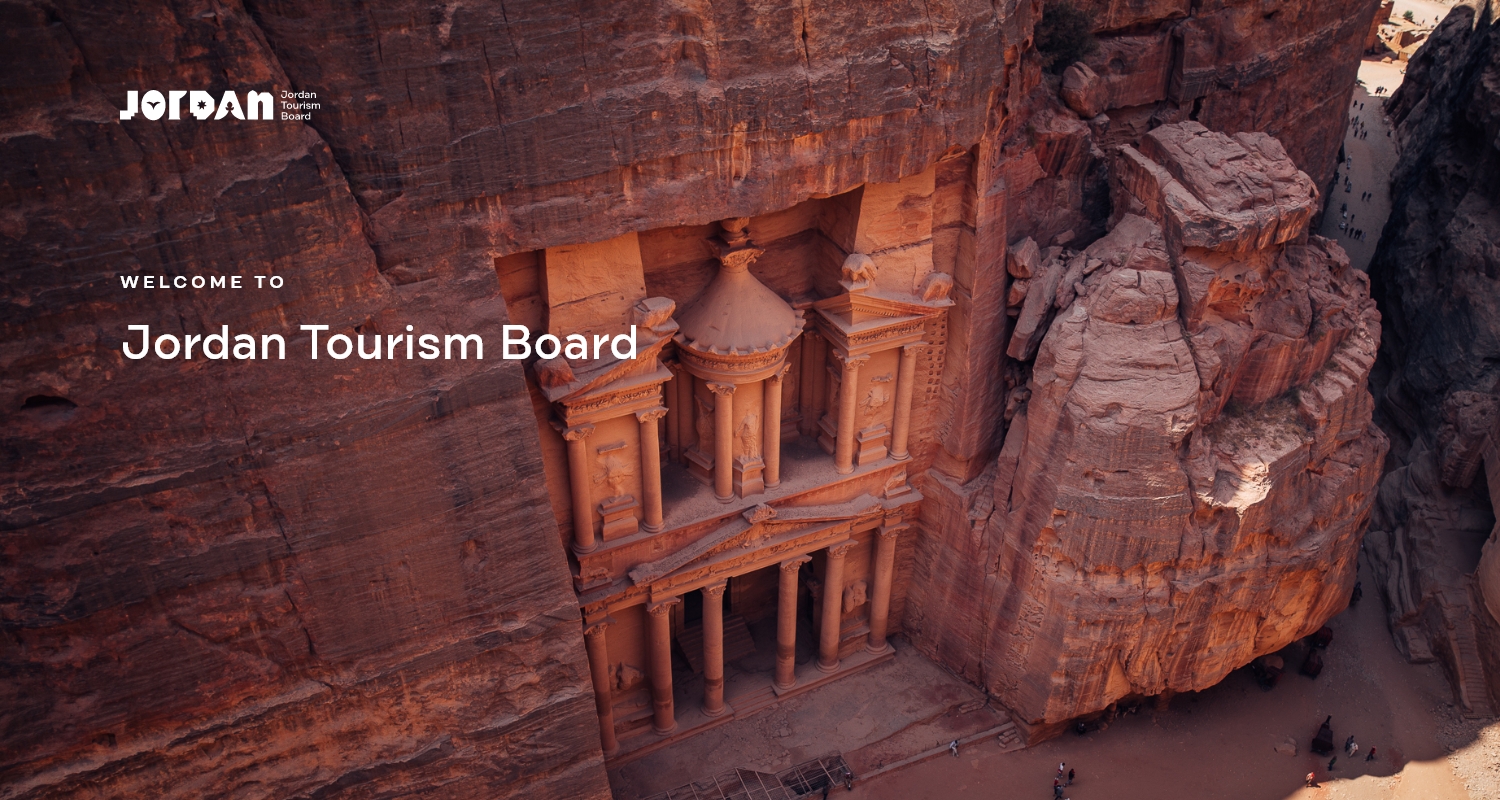
Petra provides the internationally recognized image that can initially attract visitors, but Jordan can offer Chinese travelers a much broader journey.
A single itinerary can combine Amman’s restaurants and contemporary culture, the Roman ruins of Jerash, the Dead Sea, Petra, the desert landscapes of Wadi Rum and the Red Sea resort city of Aqaba.
This variety is particularly valuable for long-haul visitors. Instead of traveling enormous distances between attractions, visitors can experience archaeology, desert adventure, wellness, religious heritage, gastronomy and seaside tourism during one relatively compact holiday.
Jordanian tourism industry representatives have therefore called for packages specifically designed for Chinese visitors encompassing Amman, Petra, Wadi Rum, the Dead Sea, Jerash and Aqaba, rather than concentrating almost exclusively on Petra.
Such an approach could also increase the average length of stay and distribute tourism income among more destinations and communities.
Jordan’s cultural story may prove equally important. Its archaeological landscape reflects Nabataean, Roman, Byzantine, Islamic and Arab civilizations, while biblical destinations including the Baptism Site, Mount Nebo and Madaba add another dimension.
For Chinese travelers increasingly interested in cultural immersion, Jordan can therefore be marketed not simply as a desert destination but as a crossroads of civilizations.
How prepared is Jordan for Chinese Visitors?
The opportunity is considerable, but Jordan’s tourism sector recognizes that attracting Chinese travelers requires more than translating existing advertisements into Mandarin.
Tourism industry representatives responding to the King’s Shanghai visit identified several priorities: more Chinese-speaking guides, Chinese-language information, hospitality services adapted to visitor preferences, suitable food choices, easier digital communication and stronger air links.
Progress is already underway.
Jordan’s tourism authorities have been developing specialized training for Chinese-speaking tour guides. The initiative involves the Ministry of Tourism and Antiquities, the Jordan Tourism Board, the Aqaba Special Economic Zone Authority, and the Petra Development and Tourism Region Authority. =
This is important because Chinese-market readiness ultimately depends on the visitor’s experience after arrival. Language support, knowledgeable guides, appropriate menus and easily accessible digital information can significantly improve confidence and satisfaction.
The private sector is also being encouraged to design tourism products specifically around Chinese preferences rather than simply translating conventional Jordan itineraries. Industry leaders have advocated luxury, affordable, family and group packages, Chinese-language marketing material and easier booking, payment and pre-arrival communication.
In other words, Jordan is moving in the right direction, but becoming fully “China-ready” will require coordinated work across hotels, restaurants, tour operators, guides, airlines and digital platforms.
Air connectivity remains crucial
Perhaps the largest challenge is aviation. King Abdullah’s meeting with Trip.com specifically addressed the importance of establishing new and increased air links between Jordan and China.
Better connectivity could fundamentally change the market. More convenient flights would reduce journey times and complexity, make Jordan more attractive for organized groups and independent travelers, and support business, trade and cultural exchanges alongside tourism.
For Jordan, this makes aviation connectivity part of a much larger economic strategy rather than simply a tourism concern.
Tourism as diplomacy
The initiative also has a diplomatic dimension. King Abdullah’s visit demonstrates how Jordan is seeking opportunities despite the geopolitical difficulties surrounding it. Rather than allowing regional instability to define its international image or economic prospects, the Kingdom is attempting to strengthen relationships across multiple global centers of influence.
Tourism offers an unusually effective instrument for doing so.
Chinese visitors who experience Petra, Wadi Rum, Amman, Jerash or the Dead Sea encounter Jordan directly rather than primarily through international coverage of Middle Eastern conflicts. Tourism can therefore generate economic activity while simultaneously strengthening cultural understanding and Jordan’s international profile.
The Shanghai initiative therefore represents more than a campaign to increase visitor numbers. It reflects a progressive effort to connect diplomacy with technology, aviation, cultural heritage and economic diversification.
Jordan already possesses the attractions. The next challenge is making them easier for Chinese travelers to discover, book and experience.
If stronger air links, Chinese-language services, tailored itineraries and cooperation with major digital travel platforms follow the King’s Shanghai discussions, China could develop from a promising market into an important pillar of Jordan’s tourism industry.
For Chinese travellers, the proposition is compelling: within one relatively compact country they can walk through the Nabataean city of Petra, sleep beneath the stars in Wadi Rum, float in the Dead Sea, explore Roman ruins in Jerash, experience modern Arab life in Amman and finish their journey beside the Red Sea.
For Jordan, the opportunity is equally significant — to transform its extraordinary heritage into new economic opportunities while demonstrating that, even amid regional geopolitical uncertainty, the Kingdom intends to remain connected, outward-looking and increasingly engaged with the changing global travel market.







Leave a Comment