
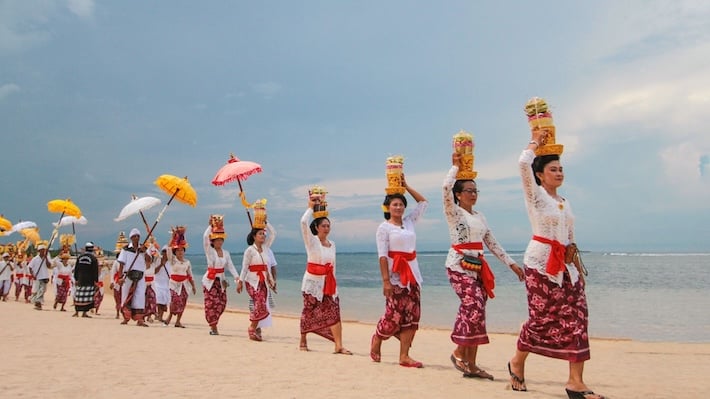
By the time guests arrive at a cliffside resort in Bali, the narrative is already written for them: culture, connection, transformation. Luxury hospitality brands increasingly frame their programs not just as vacations but as immersive journeys into local traditions — promising authenticity alongside ocean views and curated wellness rituals.
But as five-star resorts expand experiential cultural programming, a more complex question is emerging behind the polished storytelling: who truly benefits when culture becomes part of a premium package?
The New Currency of Luxury: Experience Over Excess
Across the global luxury travel sector, experiential tourism has replaced overt displays of opulence as the defining marker of prestige. Programs now include guided visits to family compounds, traditional craft workshops, temple excursions, and spiritual rituals positioned as pathways to “meaningful connection.”
The Ritz-Carlton, Bali Experience Program is one example of this trend, offering batik-making sessions with local artisans, excursions to iconic cultural sites, and participation in ceremonies such as Melukat, a traditional Balinese purification ritual. Marketing materials emphasize authenticity, sustainability, and emotional storytelling — language increasingly common across the luxury hospitality industry.
Industry analysts say the shift reflects changing guest expectations.

“High-net-worth travelers want depth,” said one tourism consultant familiar with Southeast Asia’s resort market. “They’re no longer satisfied with just a suite and a spa. They want a sense of cultural intimacy.”
Yet critics argue that intimacy, when curated by luxury operators, risks becoming performance.
Authenticity or Staged Encounter?
For guests, stepping into a traditional compound or learning from a craftsperson can feel deeply personal. But researchers studying tourism in Bali note that many such interactions exist within tightly controlled frameworks designed to maintain comfort and predictability.
“It’s important to understand the power dynamics,” said a cultural anthropologist who has studied heritage tourism on the island. “The guest enters a space framed by the hotel’s narrative. That framing shapes what is shown, what is omitted, and how culture is interpreted.”
Local artisans interviewed for this article described mixed feelings. Some said resort partnerships provide stable income and international exposure. Others expressed concern that traditional practices are gradually adapted to meet tourist expectations — shortened rituals, simplified explanations, or performances scheduled around resort timetables.
“When we teach guests, we show only a part,” said one batik instructor who collaborates with several luxury properties. “It becomes easier to demonstrate, easier to understand. But it’s not exactly how we would do it at home.”
The Economics of Cultural Tourism
Luxury resorts often frame cultural programs as community engagement initiatives, highlighting job creation and partnerships with local guides or performers. In regions where tourism is a major economic driver, such collaborations can indeed offer opportunities.
However, questions about sustainability remain.
Tourism economists warn that when cultural experiences are filtered through high-end resorts, a significant portion of revenue stays within corporate structures rather than flowing directly to communities. Critics argue that while individual participants may benefit, broader structural inequalities persist.
“There’s a difference between participation and ownership,” said a Southeast Asian development researcher. “If the narrative, pricing, and branding are controlled by international luxury brands, local culture becomes an asset within someone else’s business model.”
Resort representatives counter that such programs help preserve traditions by generating demand and funding. Without tourist interest, some crafts or performances might struggle to survive amid modernization and changing lifestyles.
Spirituality in a Luxury Setting
Perhaps the most controversial aspect of experiential programming involves sacred rituals. Practices like Melukat carry deep spiritual meaning in Balinese Hinduism, traditionally marking life transitions or personal healing. When offered as part of a wellness itinerary, the ritual exists at the intersection of devotion and commodification.
Some local priests and cultural leaders support respectful participation by visitors, arguing that cultural exchange can foster understanding. Others worry that the sacred becomes diluted when scheduled between spa treatments and sunset cocktails.
Guests themselves often report mixed reactions. Interviews with travelers revealed genuine emotional responses to ceremonies alongside lingering uncertainty about whether they had witnessed something authentic or a version designed for outsiders.
“It felt real,” said one European traveler interviewed after attending a resort-organized ritual. “But I also knew it was arranged for us. I couldn’t tell where the line was.”
Can Cultural Luxury Be Sustainable?
The luxury hospitality sector increasingly emphasizes sustainability — not only environmental, but social and cultural. Yet experts say true sustainability requires long-term collaboration with communities, fair compensation, and shared decision-making about how traditions are presented.
Some resorts have begun consulting local cultural councils or reinvesting profits into community programs, though transparency varies widely.
Ultimately, the debate over authenticity may miss a deeper issue: culture is not static. It evolves, adapts, and responds to economic realities. For many locals, working with resorts represents both opportunity and compromise.
As experiential travel continues to grow, travelers may face a more complicated question than whether an experience feels meaningful.
They may need to ask who defines authenticity — and whether the emotional memories sold as part of a luxury stay can truly translate into sustainable benefit for the people whose traditions shape the journey.








Leave a Comment