

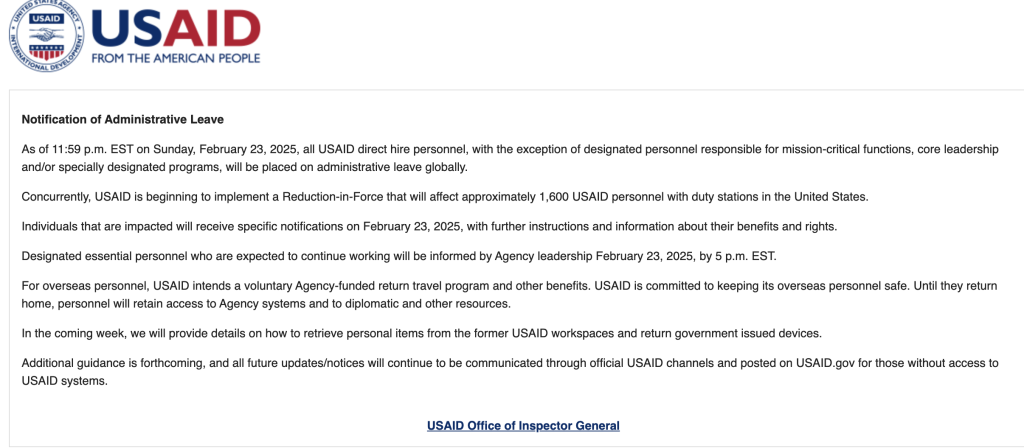
When pulling up the USAID website, the homepage was turned off and was replaced with a notification of administrative leave for USAIDS 4,700 full-time employees.
USAID is 1% of the overall US budget. Still, it is the agency that raises the image abroad for the United States of America, often to a heartwarming high and a glimmer of hope for millions in this world. It gives hope and makes people survive.
From the American People
The slogan “From the American People” made America Great for many.
The shutdown of USAID happened after the stroke of a signature by US President Trump and three short court hearings. Of course, cuts for some projects could be done and won’t kill, but shutting it down may cost those who got their lifesaving HIV medicine their lives, and closing hospitals funded by USAID will kill babies.
The Great American people turned into a monster for many
USAID is the world’s largest AIDS agency, and Tourism has a role to play. China’s Belt and Road projects are waiting for this to happen and become the world’s savior.
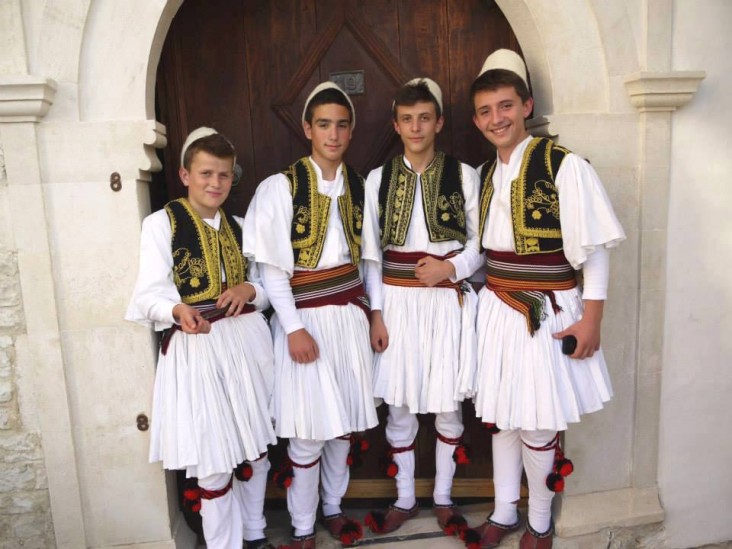
US AID was involved in putting a friendly American face worldwide, raising the image of the US through lifesaving projects and preventive assistance, including tourism.
Jordan
Jordan’s tourism sector accounts for 14% of the country’s GDP and is its largest private-sector employer.
Despite these facts, tourism’s potential to contribute to the economy has yet to be fully realized. The Government of Jordan is committed to more private investment in tourism and protecting national historical and environmental treasures.USAID works with key entities such as the Ministry of Tourism and Antiquities, the Department of Antiquities, and the Jordan Tourism Board.
2005 HM King Abdullah II launched the Jordan National Tourism Strategy at the World Economic Forum.
Its implementation was supported by the first USAID tourism project, known as the Jordan Tourism Development Project I – Siyaha (2005-2008). The USAID Jordan Tourism Development Project II (2008-2013) built on this success and resulted in several outstanding achievements. The 18-month USAID Economic Growth Through Sustainable Tourism Project (2013-2015) continued to improve Jordan’s competitiveness as an international tourism destination to boost the country’s GDP, create jobs, and engage women and youth.
Albania
USAID first started supporting the development of tourism in Albania in 2003. Despite the country’s tourist-friendly mountains and sandy beaches, fewer than 300,000 international travelers visit the country annually. Today, tourism accounts for 25 percent of the country’s GDP, with more than 4.1 million tourists visiting in 2015 alone. The sector is one of the country’s most important sources of employment and small business growth.
The Western Balkans Geotourism Stewardship Council is also part of the Geotourism MapGuide project. Nancy Tare, who has worked for the last three years as the country director for this project in Albania, says: “I look forward to the Western Balkans being marketed in the way the tourism industry in the U.S. markets the Caribbean, Latin America, or West and East Coast destinations. Geotourism is the right approach for countries in the Western Balkans, but more work needs to be done to realize its potential.”
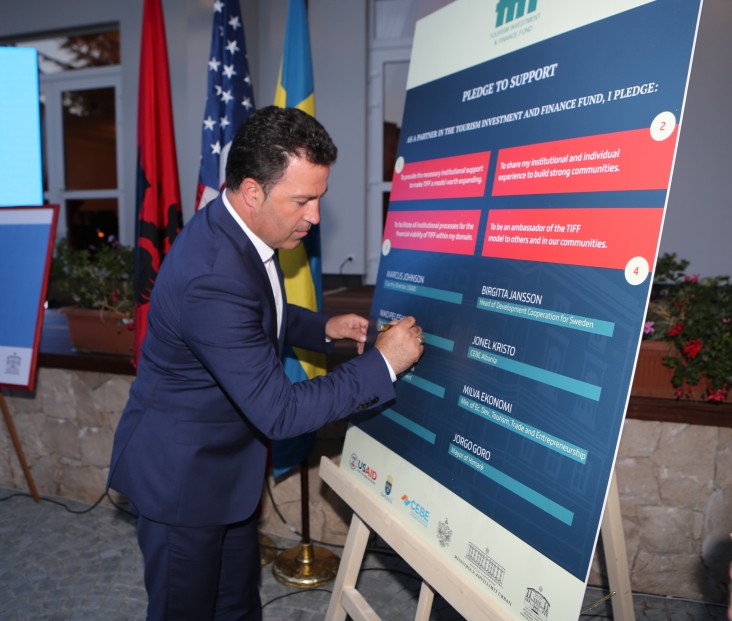
Albanian Deputy Prime Minister Niko Pelesh signed a pledge of support for the Tourism Investment Finance Fund, a foundation made possible by USAID, Sweden, and a local NGO, the Center for Economic and Business Education.
A Wake-Up Call for Africa’s Tourism Industry
For decades, Africa’s community conservancies, the backbone of the safari industry, have leaned on donor funding to stay afloat. USAID has been one of the most prominent players, channeling millions into wildlife protection, anti-poaching initiatives, and local livelihoods.
Kenya
With the U.S. government shutting down USAID programs in Kenya, an estimated $15 million financial gap will hit the tourism sector. And let’s be honest—this was inevitable. We’ve been building an industry where conservation is subsidized rather than sustained. And now, the cracks in this system are showing.
This is not just a funding problem. This is a business model failure.
What Happens When the Donor Money Stops?
USAID’s funding has kept community conservancies running—covering everything from ranger salaries to conservation programs—while private tourism investors (lodge owners) focused on selling safaris and driving revenue. With this financial support gone, tourism investors now face an impossible choice:
1. Raise Prices & Cut Costs – Lodges will pass costs onto guests, making community conservancies even less competitive.
2. Divert Resources from Communities—Funds meant for local education, health, and jobs will now be used to keep conservation efforts alive, destroying trust between tourism investors and local communities.
3. Let Conservation Collapse – The worst-case scenario? With no money to sustain them, some community conservancies could fail. And when tourism dries up, so do jobs. The result? Increased human-wildlife conflict, poaching, and environmental destruction.
Hundreds of projects that the American People helped are now self-sustainable, enjoying visitors flocking in and remaining safe. Many of the destinations that American travelers prefer have been jump-started by USAID.
Destruction of established partnerships
The abrupt termination of many or even all projects is destroying an extensive, well-established network of partnerships.
There were already signs of cuts in the US development budget before Donald Trump took office.
The current situation goes far beyond that. If the US government continues dismantling USAID at the current pace, it will create path dependencies that will be difficult to reverse.
The unilateral termination of cooperation agreements, the dismantling of trust-based partnerships, and the loss of experienced staff will make it challenging to rebuild networks and trust, even if US development policy is realigned later. Overall, the US is at risk of losing its principal and fundamental instrument of soft power.
Loss of vital development projects
Countless projects in the countries of the Global South that represent central pillars of health management (e.g., vaccination campaigns), peacebuilding or humanitarian aid are already being discontinued or put on hold. These projects often complement (weak) state structures and, in particular, benefit vulnerable groups such as women and children. The loss of this support risks leading to considerable social and economic instability. In addition, the US is signaling a loss of solidarity in its international relations with these massive cuts.
Leaving the field open for autocratic actors
Ironically, many see US President Trump develop into an autocratic leader, and USAID helped to prevent such developments in other countries.
Discontinuing USAID programs would leave an enormous funding gap and a power vacuum. Autocratic donors such as China, the Gulf States or Russia stand ready to fill this gap to broaden their own authoritarian networks and generate new dependencies.
For Russia, for example, this could prove to be a strategic opportunity to forge a broader network of potential allies. Therefore, the dismantling of USAID has far-ranging security policy relevance.
Fatal signaling effects and further erosion of democracy
The impending closure of USAID signals that democracy promotion is no longer a priority in US foreign policy. That risks spreading to other democracy-promoting actors and reducing or discontinuing democracy-promoting programs.
In addition, the domestic politics of Western democracies risk being affected if Western governments follow the US government and weaken their own democratic norms and institutions.
Populist and extremist movements will feel emboldened by the Trump administration to undermine democratic institutions and principles further.
Thus, signaling effects in both the international and domestic spheres will likely further reinforce the global trend towards democratic backsliding, especially in politically fragile democracies or those challenged by populist forces.
Last but not least, the destruction of USAID sends a disheartening signal to democratic movements and opposition forces in authoritarian states. These movements, committed to democratic values and positive change in their societies, are now at even greater personal risk.
They are deprived of essential and often decisive support for concrete action.
With the Trump administration’s decision, international development cooperation and democracy promotion have faced the most fundamental turning point since the end of the Cold War.
At that time, the systemic bloc confrontation between capitalist democracies and socialist dictatorships ended, leading to a reassessment and reorientation of Western democracy promotion.
The US withdrawal will cause another fundamental shift in the international development architecture, with far-reaching geopolitical and normative consequences.
What do these developments mean for Europe?
European governments and their development agencies must prove that they will support development projects financially and stand by their partners in the Global South and elsewhere (such as Ukraine) regardless of the US administration’s decisions.
The fourth United Nations Financing for Development Conference in June 2025 offers a good opportunity to reaffirm a commitment to global solidarity.



Leave a Comment