
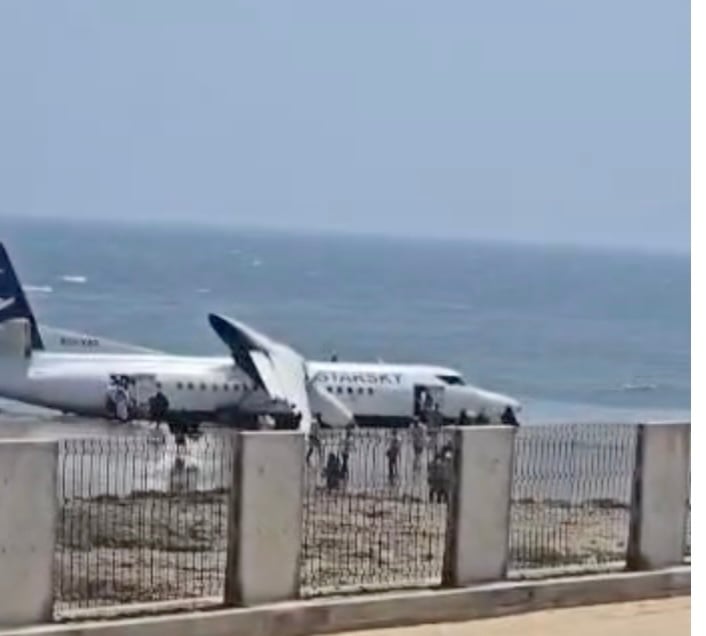
MOGADISHU, Somalia (eTN)— A routine domestic flight turned into an unforgettable shoreline arrival this afternoon, after a turboprop aircraft operated by Starsky Aviationwas forced into an emergency landing moments after take-off from Aden Adde International Airport.
The aircraft, a Fokker 50, failed to gain proper performance shortly after departure and was unable to safely continue the flight. The crew attempted to manage the emergency as the plane veered off the runway area and came to rest on the sandy coastline bordering the Indian Ocean — an area so close that locals often joke the runway and the sea are on a first-name basis.
In a moment already circulating widely on social media, all 55 people on boardcalmly evacuated the aircraft and walked away unharmed. One passenger was overheard quipping, “Is this baggage claim or low tide?” — a line that perfectly captured the mix of shock and relief following the incident.

No fatalities, swift evacuation
Airport authorities confirmed that all passengers and crew survived, with no serious injuries reported. Emergency services responded immediately, securing the area and assisting passengers away from the aircraft.
The Somali Civil Aviation Authority has launched an investigation into the incident, focusing on possible technical or mechanical failure during take-off. Operations at Aden Adde were temporarily disrupted but later resumed.
About Starsky Aviation
Starsky Aviation is a Somali-owned regional airline, established in 2013, operating domestic and limited regional routes across East Africa. Based in Mogadishu, the airline provides passenger, charter, and cargo services, primarily serving destinations with short runways and limited infrastructure.
Like many regional carriers in developing aviation markets, Starsky operates a small fleet, relying on proven turboprop aircraft well-suited for short-haul routes. The airline has stated it is cooperating fully with investigators and has grounded the aircraft pending inspection.
The Fokker 50: a rugged but aging workhorse
The Fokker 50, designed in the Netherlands and introduced in the late 1980s, is known for its durability, fuel efficiency, and ability to operate from challenging runways. Although production ended decades ago, the aircraft remains in service worldwide, particularly with regional airlines.
However, aviation experts note that aging aircraft demand rigorous maintenance, especially in hot, coastal, and sandy environments such as Mogadishu — conditions that can accelerate wear on engines and critical systems.
Geography adds complexity
Aden Adde International Airport’s proximity to the Indian Oceanhas long been a known operational challenge. Any runway excursion risks ending not in grass or gravel, but in water or sand — leaving little margin for error during take-off and landing.
Investigation underway
Authorities will review maintenance records, crew actions, weather conditions, and aircraft performance data to determine the precise cause. While the incident did not result in loss of life, it underscores ongoing concerns around aviation safety, infrastructure, and fleet agein parts of the developing world.
For the passengers involved, however, the outcome was clear: a failed take-off, a successful beach landing — and a story few airline travelers will ever top.



Leave a Comment