
At a time of renewed geopolitical sensitivity between the United Statesand Denmark, particularly regarding the strategic and political future of Greenland, an international ocean organization is advancing an alternative path—one rooted not in rivalry but in cooperation.
The OACMhas issued a formal appeal for Ocean Unity, positioning environmental cooperation as a neutral and constructive platform for dialogue at a moment when traditional diplomatic narratives are increasingly strained. Central to this appeal is a landmark proposal to grant Greenland exclusive status as the Arctic’s first Certified SAFE Marine Area (CSMA)—a designation intended to protect both marine ecosystems and human communities.
Ocean Alliance Conversation Member: Diplomacy by Design
OACM stands for Ocean Alliance Conservation Member, a name that reflects its founding philosophy: that lasting ocean protection begins with conversation. The organization was established on the belief that the ocean—by nature borderless—is uniquely positioned to bring nations together, even when political positions diverge.
The concept of Ocean Alliance emphasizes voluntary cooperation beyond geopolitical alignment. Conversation highlights dialogue as a precursor to peace, while the Member affirms inclusivity, recognizing that governments, institutions, communities, and individuals all share responsibility for safeguarding marine and human life.
This approach has proven effective in practice. In 2013, OACM worked with the U.S. State Departmentto support the cleanup and protection of the Croatian coastline, demonstrating that environmental collaboration, sustainable tourism, and people-to-people exchange can succeed even in complex international environments. According to OACM, such initiatives often become rare neutral spaces where trust can be built and dialogue maintained.
Greenland at the Center of Environmental Diplomacy
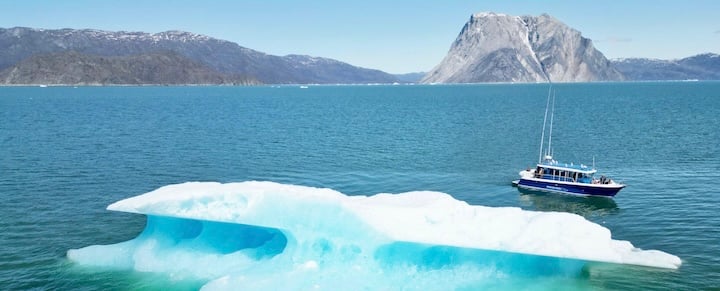
With the official launch of its North American Alliance Program scheduled for next week, OACM now turns its focus northward. Greenland, the world’s largest island, is increasingly at the center of global attention—strategically, politically, and economically. Yet OACM argues that the future of the island should not be defined solely by security considerations or sovereignty debates.
Instead, the organization advocates a human-centered vision that prioritizes employment opportunities for Greenland’s young people, environmental stewardship, and long-term economic resilience through Blue Economy principles.

Environmental cooperation, OACM contends, offers a constructive pathway to bridge sensitive discussions around Greenland’s independence, while strengthening its relationship with Denmark and maintaining open, cooperative engagement with the United States. By shifting the focus toward shared environmental responsibility, Greenland could emerge not as a point of contention but as a model for peaceful transition and international collaboration.
The EDEEC Centre and Arctic Jobs
As part of this vision, OACM proposes establishing the International Environmental Diplomacy Education and Employment Centre (EDEEC)in Greenland. The center would function as a global hub for environmental diplomacy and as a specialized training facility, preparing divers and environmental professionals to operate in extreme Arctic conditions.
The initiative is designed to create skilled jobs, attract international expertise, and position Greenland as a leader in Arctic marine protection. Trained Environmental Diplomats and Special Envoys would be deployed globally to establish SAFE Marine Areas and promote dialogue before conflicts arise.

Certified SAFE Marine Areas and Sustainable Tourism
OACM has also proposed issuing a €7 million CSMA Bondto support the creation and expansion of SAFE Marine Areas along Greenland’s coastline—one of the longest in the world at more than 44,000 kilometers. Initial efforts would focus on a 50-kilometer coastal pilot zone, aiming to certify more than half of Greenland’s coastline within five years.
Among the first proposed sites is the volcanic black-sand beach on Disko Island, which could become the world’s first Certified SAFE Black Beach. The designation is intended to anchor a new model of controlled, sustainable tourism that protects fragile ecosystems while generating economic opportunity for local communities.
A Neutral Channel in a Divided World
As geopolitical pressures intensify in the Arctic, OACM believes that Environmental Diplomacy—anchored in Ocean Unity—may represent one of the last remaining neutral channels for sustained dialogue. By focusing on the ocean as shared heritage rather than contested territory, the organization seeks to reduce tension, foster cooperation, and offer Greenland a future defined by opportunity rather than division.

“The ocean connects nations beyond borders and politics; it is humanity’s last truly shared space,” said Kristijan Curavić, President of OACM. “As long as we keep the conversation alive around our shared ocean, cooperation, unity, and peace remain not only possible, but inevitable.”
In an era of global uncertainty, OACM’s proposal positions Greenland not merely as a strategic asset but as a symbol of how environmental leadership, youth opportunity, and diplomacy can converge—setting a precedent for cooperation in the Arctic and beyond.
What’s Next for the OACM Environmental Diplomacy Center?
As international attention grows around the proposed OACM Environmental Diplomacy Education and Employment Centre (EDEEC)in Greenland, momentum is now shifting from vision to implementation. The initiative—designed to position environmental cooperation as a tool for peace, employment, and sustainable growth—has received a significant boost from public backing from the World Tourism Network, which represents more than 33,000 small and medium-sized tourism enterprises (SMEs) across 133 countries.
The support signals that the OACM initiative is no longer viewed solely as an Arctic or environmental project, but as a globally scalable model linking ocean protection, diplomacy, and sustainable tourism economics.
From Arctic Hub to Global Platform
The OACMhas proposed Greenland as the host nation for the EDEEC—a first-of-its-kind international center focused on Environmental Diplomacy, Arctic marine protection, and workforce development. The center is envisioned as both a training facility and an operational headquarters for deploying environmental diplomats, marine specialists, and sustainable tourism frameworks worldwide.
With Greenland increasingly at the intersection of geopolitical interest, climate vulnerability, and economic transition, OACM argues that environmental cooperation offers a rare neutral platform for dialogue and long-term stability.
Tourism SMEs as a Force Multiplier
The endorsement from the World Tourism Network brings a powerful operational dimension to the proposal. Its global SME membership provides an immediate pathway to:
- Deploy environmentally controlled tourism modelswithin Certified SAFE Marine Areas
- Create jobs and entrepreneurship opportunities for local and Indigenous communities, particularly youth
- Align tourism growth with Blue Economy and environmental certification standards
By engaging SMEs rather than mass-tourism operators, OACM and its partners aim to ensure that tourism supports conservation and community resilience rather than ecological strain.
Building the Arctic Workforce of the Future
One of the EDEEC’s first expected steps is the launch of Arctic-focused education and employment programs, including:
- Specialized diver and marine protection training for cold-water environments
- Environmental diplomacy fellowships and envoy programs
- International exchange programs connecting Greenlandic youth with global tourism and conservation networks
Support from a global SME alliance accelerates the creation of real employment pipelines, turning diplomacy and conservation into tangible economic opportunity.
Toward a Global Environmental Diplomacy Corps
Looking ahead, OACM envisions the EDEEC evolving into the headquarters of a Global Environmental Diplomacy Corps—a deployable network of trained professionals capable of supporting marine protection, SAFE Marine Area certification, and dialogue facilitation in politically sensitive or climate-vulnerable regions.
Such a corps would operate at the intersection of environmental science, diplomacy, and sustainable development, reinforcing cooperation where traditional diplomatic channels may be limited.
A Model Designed to Scale
While Greenland is intended as the flagship, OACM and its partners see the EDEEC as a replicable modelfor:
- Small island developing states
- Post-conflict coastal regions
- Climate-exposed tourism destinations
With the World Tourism Network’s reach across 133 countries, replication could occur rapidly once standards, certification processes, and training modules are established.
A Convergence of Environment, Economy, and Peace
As governments, institutions, and global business networks signal support, the next phase for the OACM Environmental Diplomacy Center is expected to focus on formal endorsements, pilot programs, and international coordination.
What began as an Arctic proposal could now be e merging as a global framework—one in which ocean protection, sustainable tourism, youth employment, and diplomacy reinforce one another.
One Coastline at a time
In an era of geopolitical uncertainty and climate urgency, the initiative suggests that environmental cooperation may not only protect ecosystems, but also help stabilize economies, open dialogue, and build peace—one coastline at a time.





Leave a Comment