


2025年03月27日

カテゴリ: 都内近郊散策
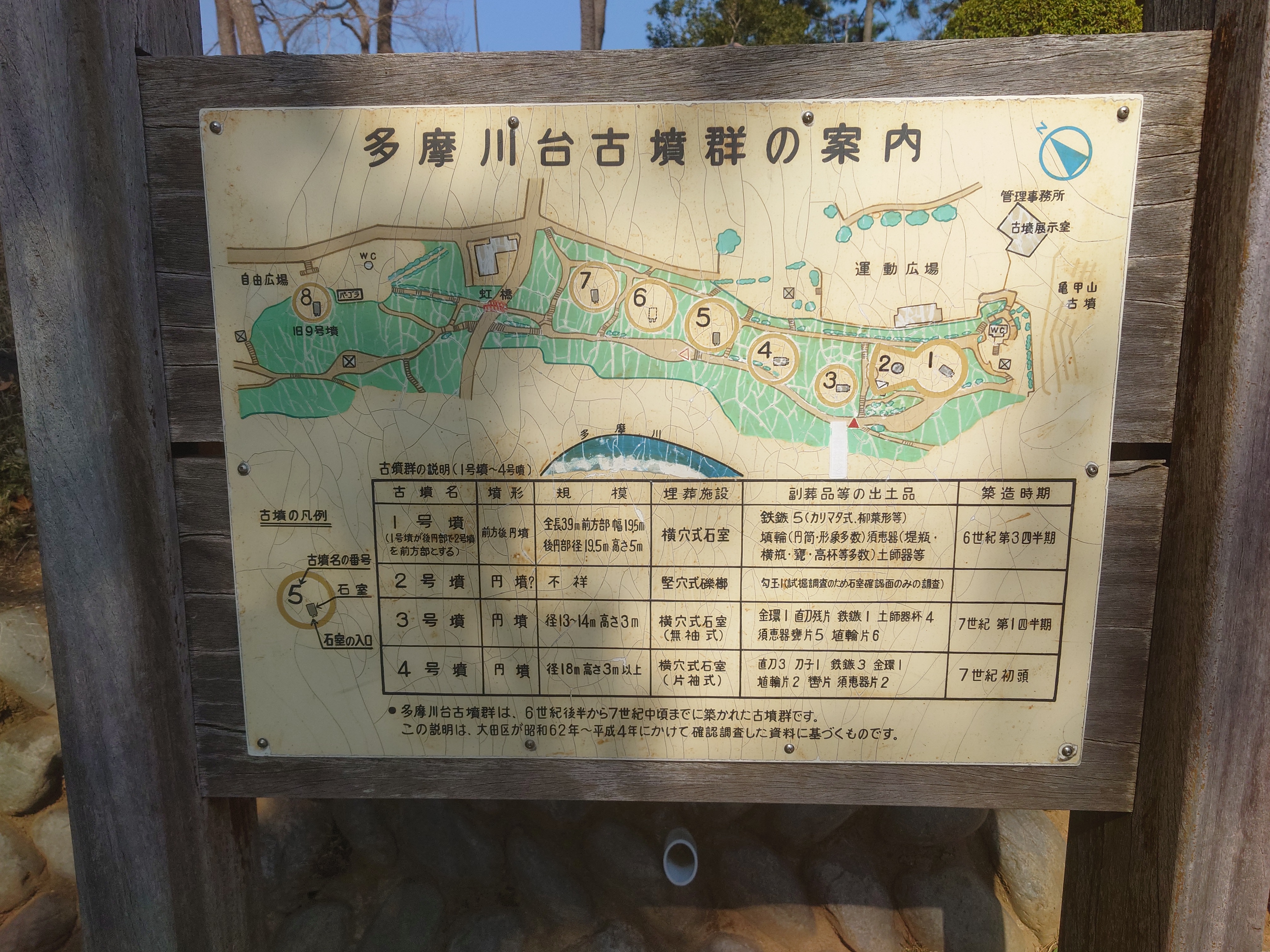
I was walking across the ten kofun in Tamagawadai Park, moving from the Kamekoyama Kofun on the far right to the Horaisan Kofun on the far left. It’s quite a distance.
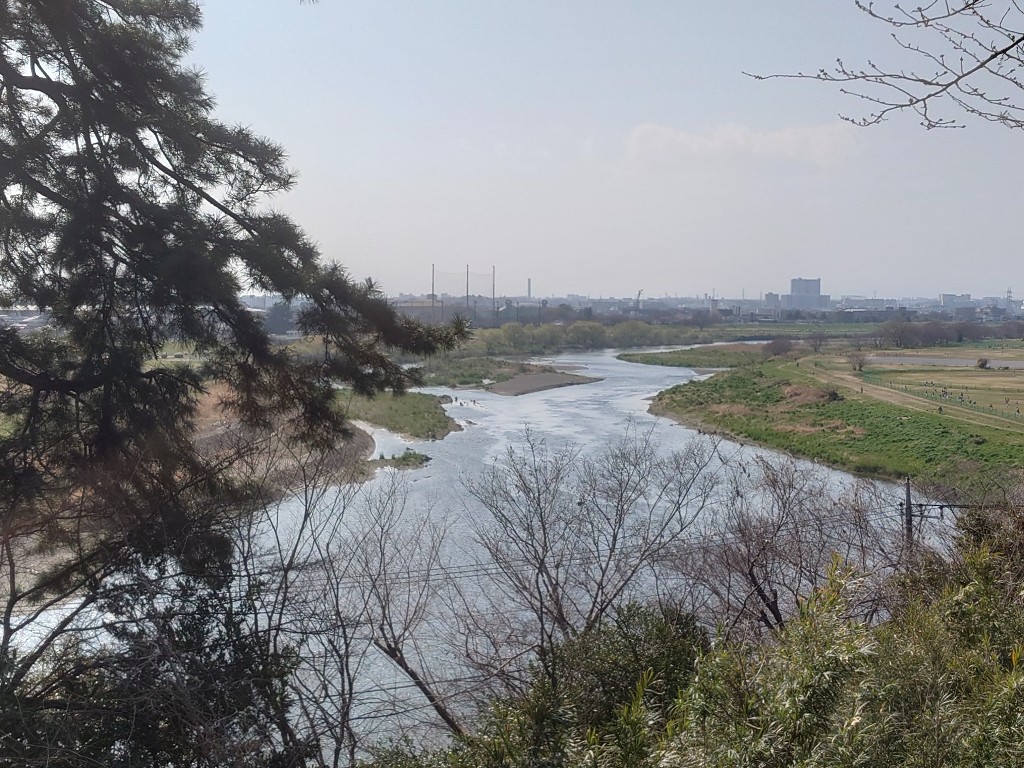
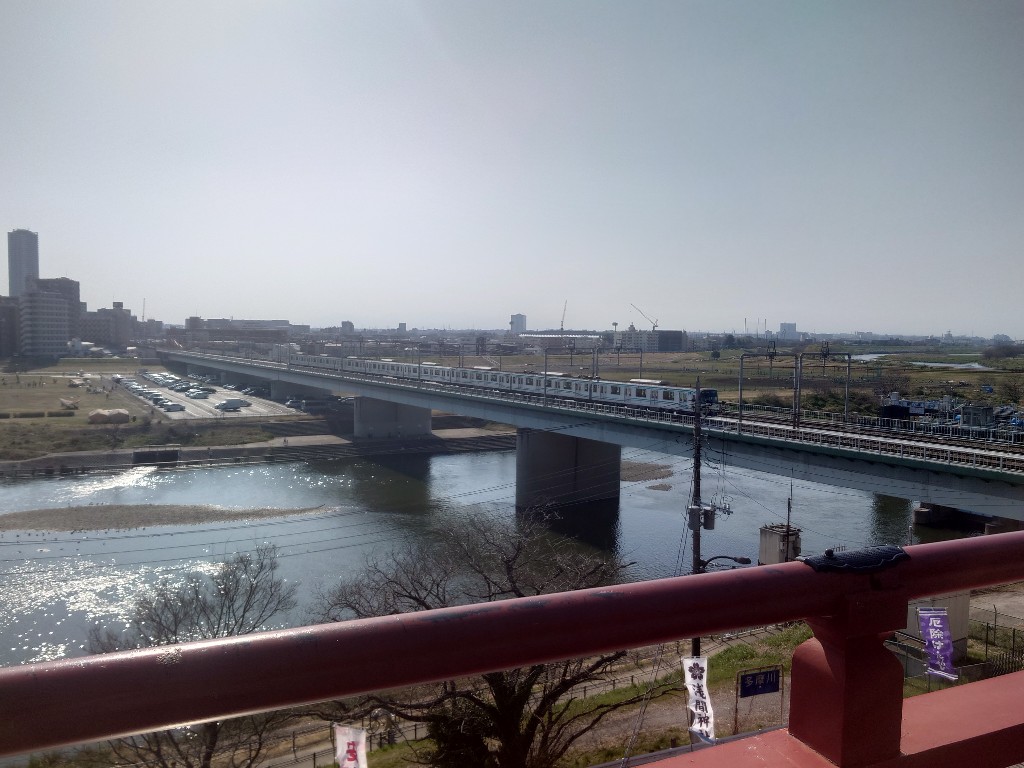
途中、多摩川の見晴らしが素晴らしいスポットがあった。「多摩川八景」のひとつなのだという。
このあたりは、武蔵野を東西に横切る「国分寺崖線」上に位置していて、高低差が非常に大きい。国分寺崖線沿いは、その急峻な地形のため宅地化が進まず、緑が残っているエリアが少なくない。ここの古墳が宅地化を免れたのもそれが理由だろう。
Along the way, there was a spot with a fantastic view of the Tama River. It’s said to be one of the “Eight Views of the Tama River.”
This area sits on the Kokubunji Cliff Line, which runs east to west across Musashino, and the elevation changes are quite dramatic. Because of the steep terrain along the cliff line, much of the area has avoided residential development, leaving quite a bit of greenery intact. This is probably also why the kofun here were spared from urbanization.
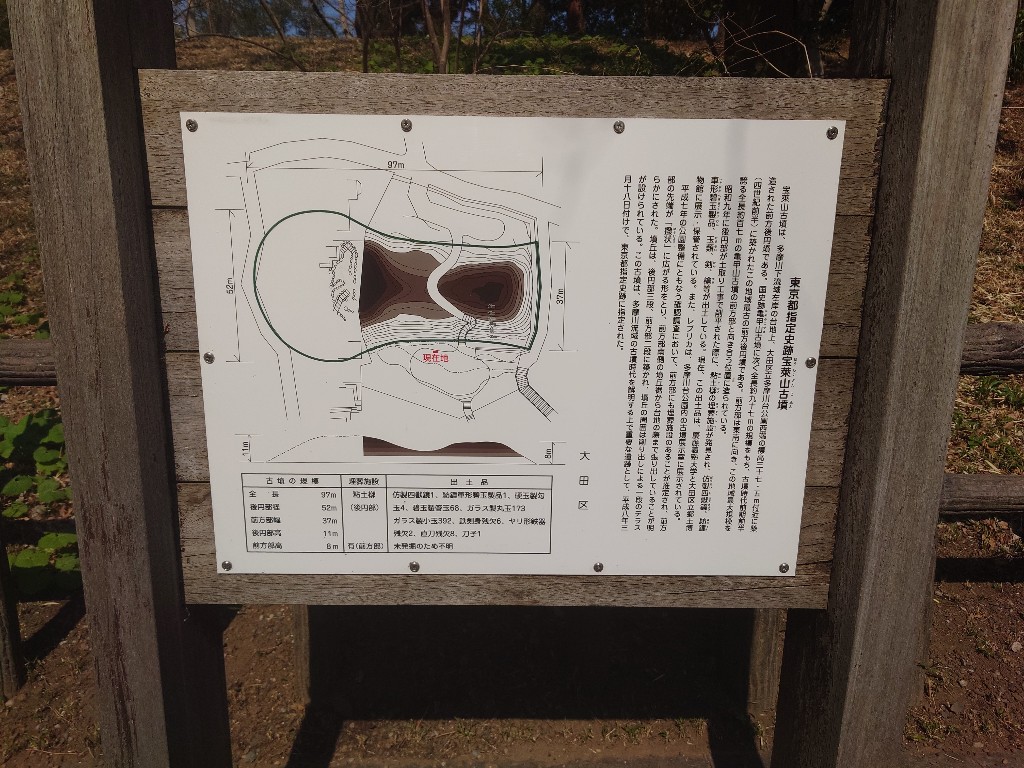
宝来山古墳は、墳丘長97.5メートル、4世紀の造成で、亀甲山古墳に先立ち、多摩川下流域でも最初の首長墓と考えられている。1934年に土取りで後円部の3分の2が失われ、その際に埋葬施設が露出して副葬品が出土している。その他の墳丘残存部は良好に遺存しており、1995年には確認調査が実施されている。
Horaisan Kofun has a mound length of 97.5 meters and was constructed in the 4th century. It predates the Kamekoyama Kofun and is considered the first chief’s tomb in the lower Tama River area. In 1934, about two-thirds of the posterior circular portion was lost due to soil excavation, during which the burial chamber was exposed and grave goods were discovered. The remaining parts of the mound are well preserved, and a verification survey was conducted in 1995.
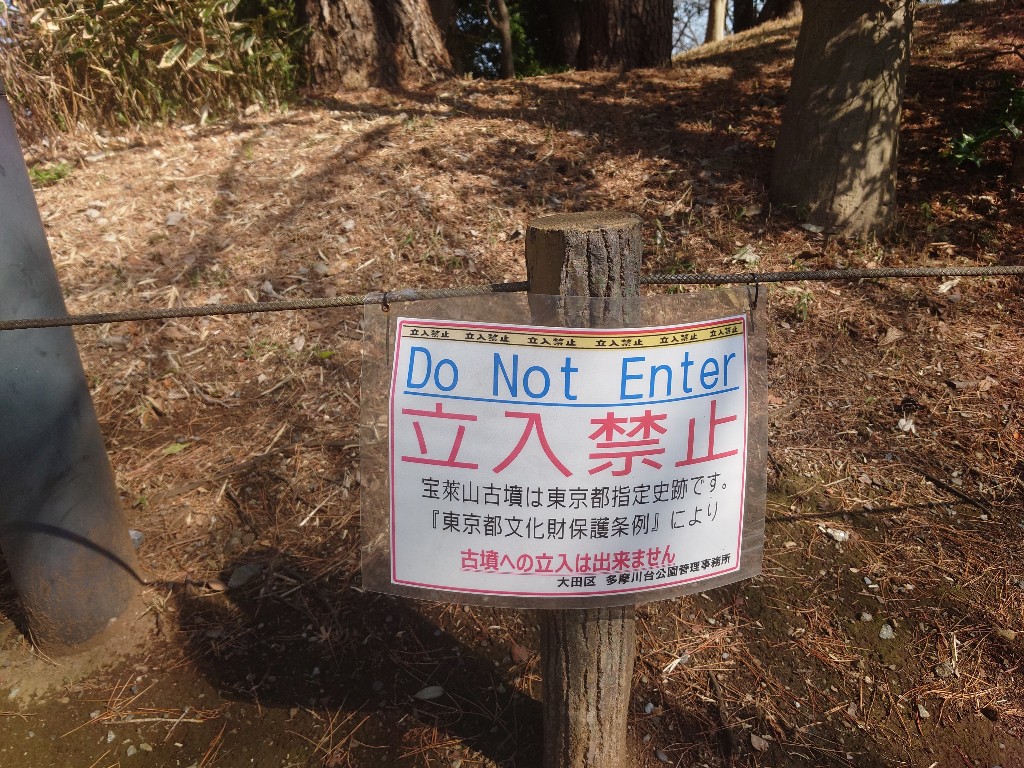
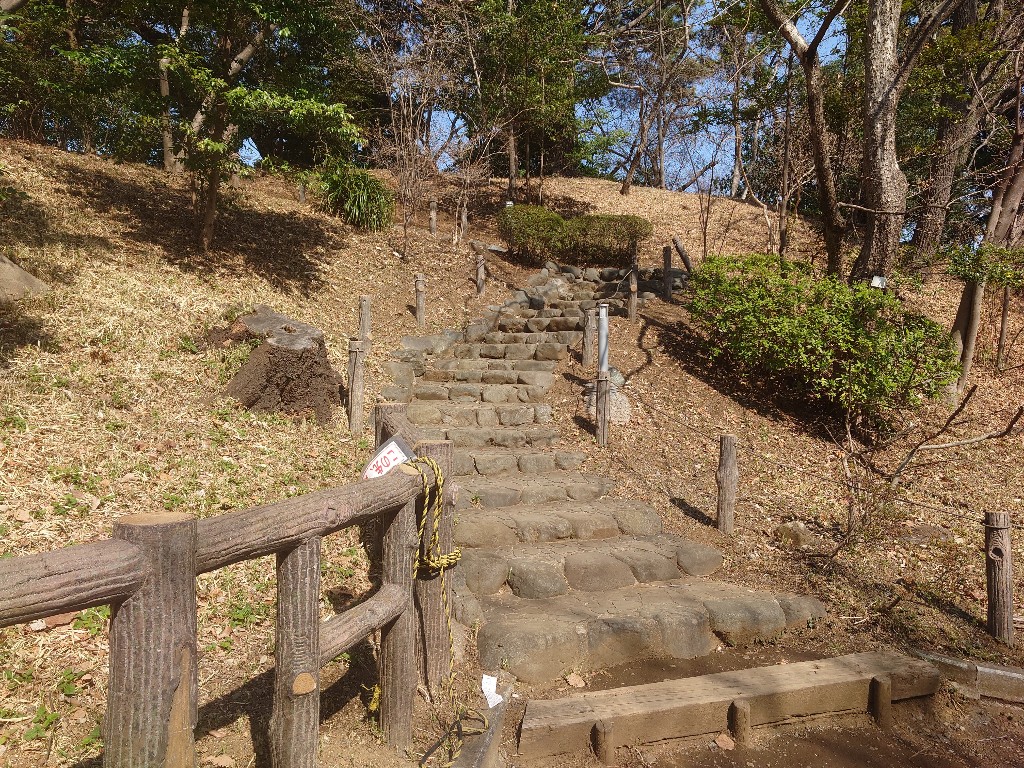
古墳内は立ち入り禁止だが、くびれの部分に歩道が敷かれているので、古墳上を歩くことはできる。実際歩いてみると、どうというものでもないが。
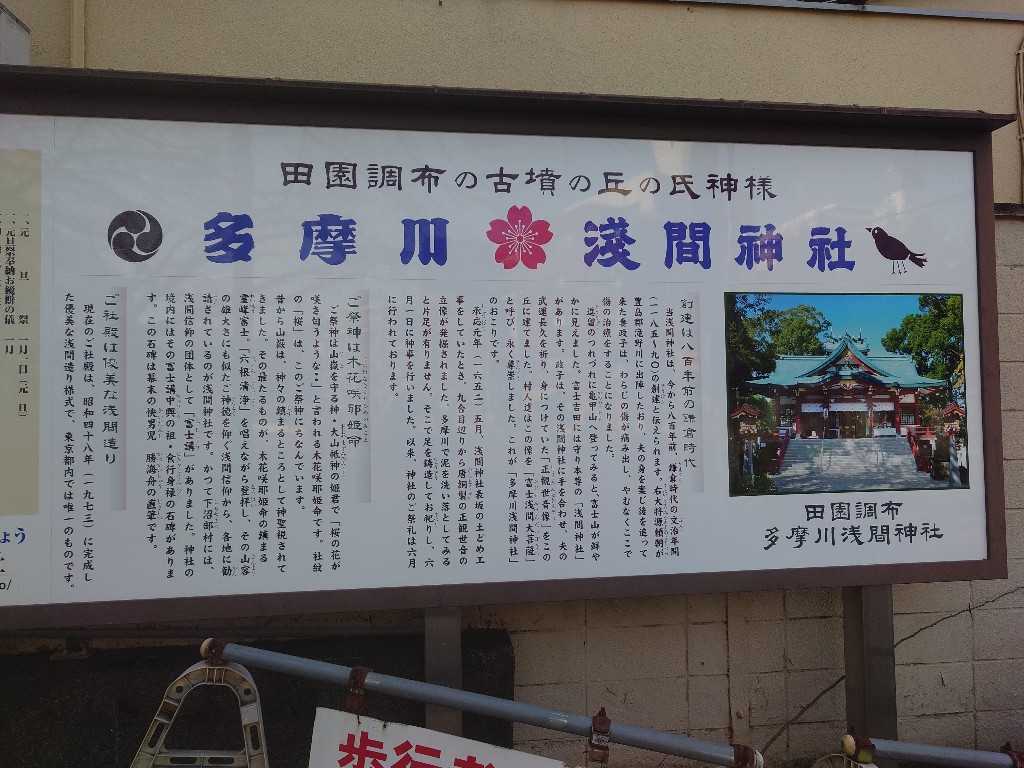
すぐ隣にある多摩川浅間神社に立ち寄ってみた。鎌倉時代創建と伝えられる由緒ある神社で、全国にある浅間神社の一社。
源頼朝が豊島郡滝野川松崎に出陣した時、夫の身を案じた北条政子が後を追って多摩川まで来た。その時わらじの傷が痛んだため、この地で傷の治療をすることにして逗留した際に亀甲山(かめのこやま)へ登ってみると富士山が鮮やかに見えた。富士吉田には、自分の守り本尊である浅間神社があるので、政子はその浅間神社に手を合わせ、夫の武運長久を祈り、身につけていた正観世音像をこの丘に建てたという。それ以来、村人たちはこの像を「富士浅間大菩薩」と呼び祀ったのが、この神社の起こりとされている。
I also stopped by Tamagawa Sengen Shrine, located right next to the kofun. It’s a historic shrine said to have been founded in the Kamakura period and is one of many Sengen Shrines across Japan.
When Minamoto no Yoritomo marched to Takino-gawa Matsuzaki in the Toshima District, his wife Hojo Masako followed him to the Tama River, worried about his safety. While there, her feet hurt from wearing straw sandals, so she decided to stay in the area to tend to the injuries. During her stay, she climbed Kamekoyama and saw Mount Fuji vividly. Since her guardian deity was enshrined at a Sengen Shrine in Fujiyoshida, Masako prayed at that shrine for her husband’s continued success in battle and erected a statue of Shokan Kannon on this hill. From that time on, the villagers called and worshiped the statue as the “Fuji Sengen Daibosatsu,” which is considered the origin of this shrine.
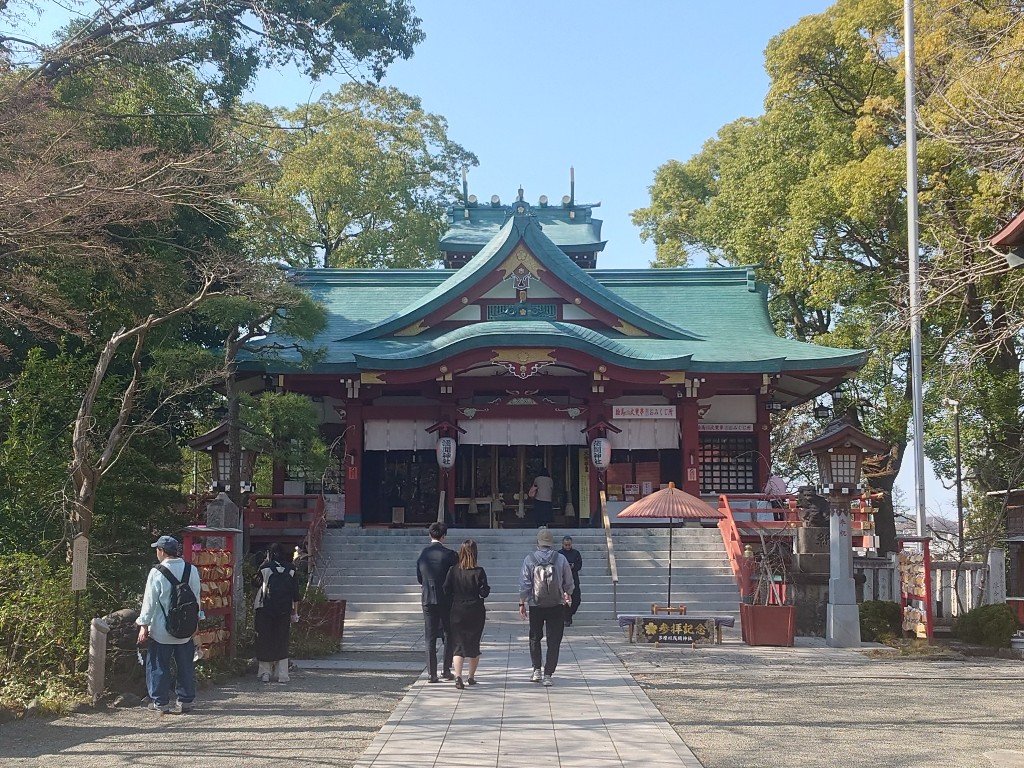
本殿の建築様式は浅間造であり、これは東京都内では唯一なのだそうだ。なお、社殿は浅間神社古墳の上に建てられている。
The main hall is built in the Sengen-zukuri architectural style, which is said to be the only one of its kind in Tokyo. The shrine itself is constructed atop the Sengen Shrine Kofun.
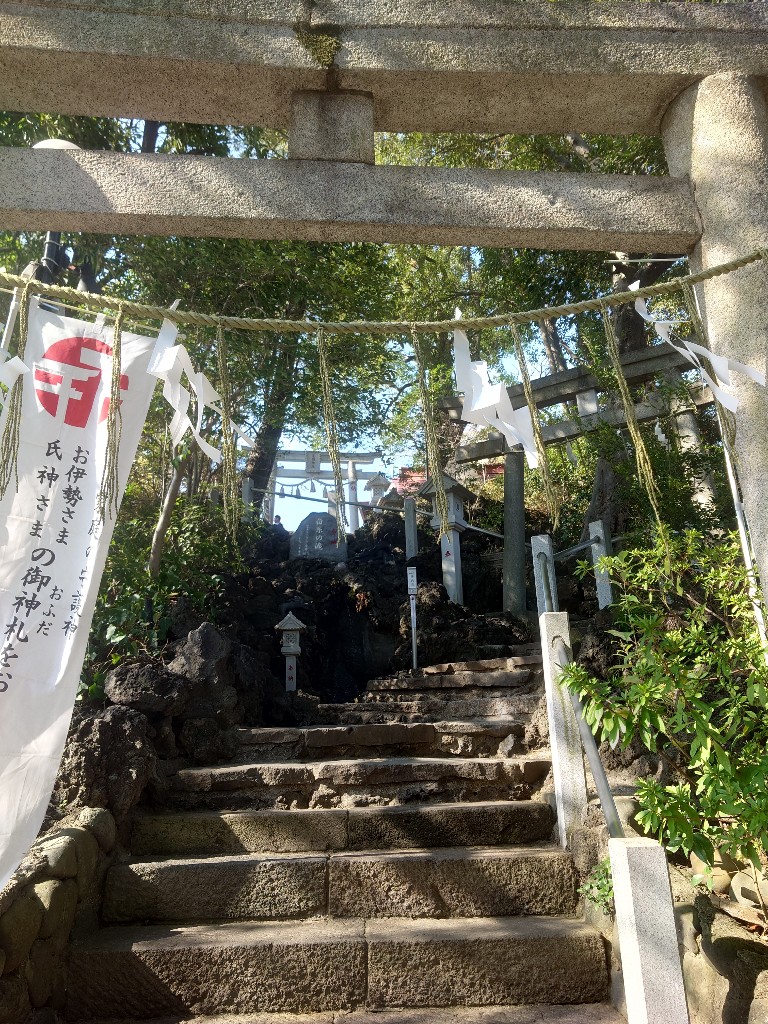
社殿までの参道は多数の溶岩が置かれ、富士塚のように富士登山を模している。
The approach to the main hall is lined with numerous lava rocks, mimicking a climb up Mount Fuji, much like a Fujizuka.
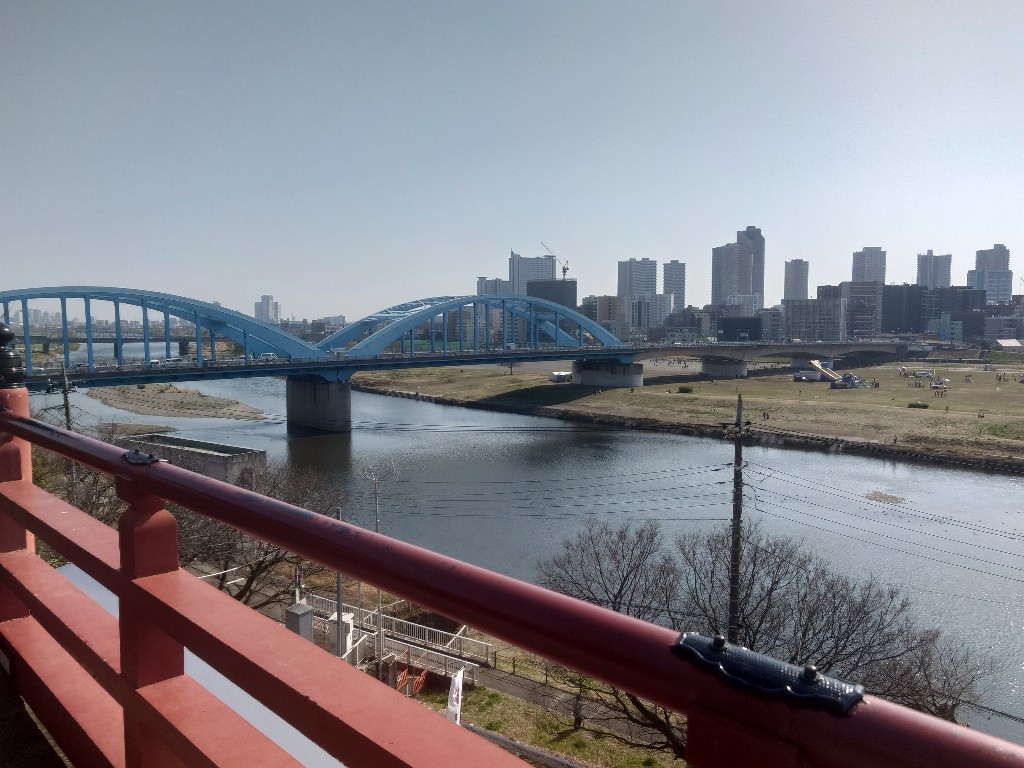
展望デッキより丸子橋を臨む。
From the observation deck, you can look out toward Maruko Bridge.
古墳自体はさして楽しいものではないが、歴史的背景や立地などを学びながら、近隣をぶらぶらするのも悪くないものだ。都内にある他の古墳にも機会があれば行ってみようと思う。
The kofun itself isn’t particularly exciting, but wandering around the area while learning about its historical background and location isn’t a bad way to spend time. If I get the chance, I’d like to visit some of the other kofun in Tokyo as well.
お気に入りの記事を「いいね!」で応援しよう

[都内近郊散策] カテゴリの最新記事
-
東京ぶらり散歩その41~太田黒公園の紅葉… 2025年12月02日
-
東京ぶらり散歩40~豪徳寺の紅葉 Tokyo S… 2025年11月28日
-
ぶらり東京散歩その39〜三宿神社と世田谷… 2025年11月26日


【毎日開催】
15記事にいいね!で1ポイント


PR
Comments
shuz1127
@ Re[1]:モーリス・ユトリロ展@SOMPO美術館~その1 Maurice Utrillo Exhibition at the SOMPO Museum — Part 1(11/10)
Henryさん おお、西山美術館に行かれたの…
Henry@ Re:モーリス・ユトリロ展@SOMPO美術館~その1 Maurice Utrillo Exhibition at the SOMPO Museum — Part 1(11/10)
西山美術館、メルカリで無料招待券をお安…
shuz1127
@ Re[1]:ほどよく均整の取れたベリーA~マスカットベリーA2023(白百合醸造) Well-Balanced Berry A – Muscat Bailey A 2023 (Shirayuri Winery)(10/10)
noir-funさんへ 熊本ワインファーム、例…
noir-fun
@ Re:ほどよく均整の取れたベリーA~マスカットベリーA2023(白百合醸造) Well-Balanced Berry A – Muscat Bailey A 2023 (Shirayuri Winery)(10/10)
機会があれば是非、熊本ワインファームの…
shuz@ Re[1]:悪くはないのだけど…エラスリス MAX・カベルネソーヴィニヨン2020 “Not bad, but not quite…” — Errazuriz MAX Cabernet Sauvignon 2020(09/24)
noir-funさん ご無沙汰していますが、お…
Category
カテゴリ未分類
(10)お知らせ・リンク集
(28)ワイン新着情報
(518)ワインコラム
(343)ワインコラム2(話飲徒然草拾遺集)
(75)ワインコラム3(RWGコラム拾遺集)
(28)都内近郊散策
(284)こんな店に行った
(328)B級グルメ・カフェ
(248)健康
(220)エッセイ
(76)ひとりごと・備忘録
(541)カミサン推薦ネタ
(28)語学・資格・学び直し
(95)山歩き・ハイキング
(123)アクアリウム・ガーデニング
(339)育児・教育
(88)PCネット時計カメラ
(129)音楽・オーディオ
(70)リフォーム引越し
(50)こんなワイン買った
(129)ボルドー
(99)ブルゴーニュ・ジュブレシャンベルタン
(90)ブルゴーニュ・モレサンドニ
(40)ブルゴーニュ・シャンボールミュジニー
(45)ブルゴーニュ・ヴォーヌロマネ・ヴジョ
(56)ブルゴーニュ・NSG
(58)ブルゴーニュ・その他コートドニュイ
(63)ブルゴーニュ・コルトン・ポマール・ヴォルネイ
(30)ブルゴーニュ・ボーヌ周辺
(56)ブル・ピュリニー・シャサーニュ・ムルソー
(21)ブルゴーニュ・その他コートドボーヌ
(27)ブルゴーニュ・裾モノイッキ飲み!
(221)ブルゴーニュ・その他地域
(37)ボジョレー再発見プロジェクト
(32)シャンパーニュ
(195)ロワール・アルザス・ローヌ
(54)その他フランス
(16)イタリア
(80)スペイン・ポルトガル
(37)ニュージーランド・オーストラリア
(49)USA
(40)安泡道場(シャンパーニュ以外)
(37)その他地域・甘口など
(44)日本ワイン
(64)ワイン会・有料試飲
(173) 【長崎旅行】新しい…
 New!
ささだあきらさん
New!
ささだあきらさん
デイリーワイン
New!
yonemuさん
アンヌ・エ・ジャン…
New!
mache2007さん
今日の富士山
zzz.santaさん
エマニュエル・レイ…
hirozeauxさん
EF210-328 EF510-3… musigny0209さん
ワイン&ジョギング … Char@diaryさん
道草日記 旅・釣… 道草.さん
鴨がワインしょって… うまいーちさん
Wine Lover margaux1966さん
New!
ささだあきらさんデイリーワイン
New!
yonemuさんアンヌ・エ・ジャン…
New!
mache2007さん今日の富士山
zzz.santaさんエマニュエル・レイ…
hirozeauxさんEF210-328 EF510-3… musigny0209さん
ワイン&ジョギング … Char@diaryさん
道草日記 旅・釣… 道草.さん
鴨がワインしょって… うまいーちさん
Wine Lover margaux1966さん
Keyword Search
▼キーワード検索
Calendar
© Rakuten Group, Inc.
