
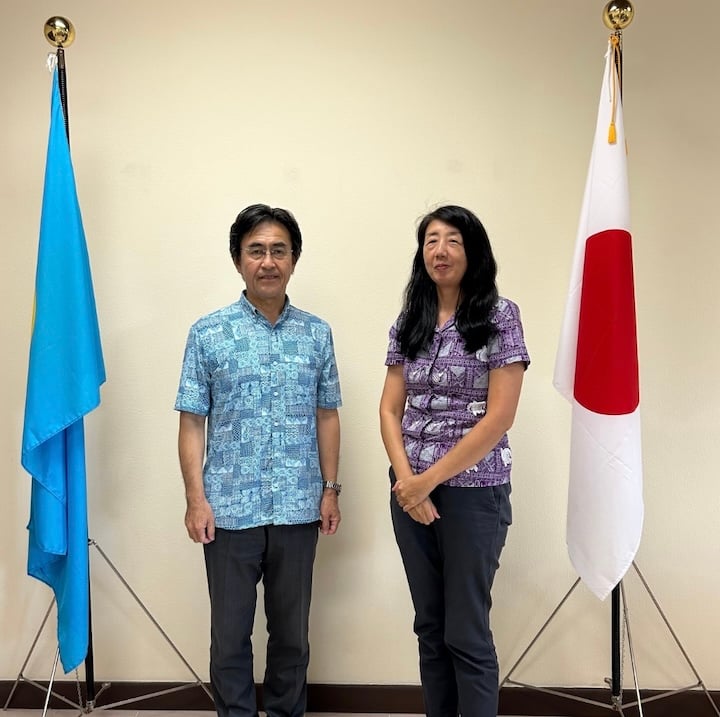
Koror, Palau —Ms. ONODERA Mika, a tourism development expert from the Japan International Cooperation Agency (JICA), paid a courtesy visit to H.E. KASAHARA Kenichi, Ambassador of Japan to Palau, to discuss the way forward for sustainable tourism development in Palau, a nation internationally renowned for its pristine marine environment and conservation leadership.
Palau’s Tourism Background and Development
Tourism has played a central role in Palau’s economy since the late 1980s, following the development of international air links and resort infrastructure. The sector expanded steadily after Palau gained independence in 1994, with the country positioning itself as a high-end, nature-based destinationrather than a mass tourism hub. Its world-famous dive sites, rich biodiversity, and the Rock Islands Southern Lagoon—designated a UNESCO World Heritage Site—have attracted global attention.
Before the COVID-19 pandemic, Palau welcomed tens of thousands of visitors annually, with the main source markets including Japan, Taiwan, the Republic of Korea, China, and the United States. Japanese visitors, in particular, have historically formed one of the most significant and consistent segments of Palau’s tourism market, supported by direct flights and long-standing people-to-people ties.
Current Tourism Challenges and Opportunities
During the meeting, Ms. Onodera shared observations on Palau’s post-pandemic tourism recovery, noting both opportunities and challenges. While visitor numbers are gradually rebounding, Palau continues to face pressures related to environmental protection, limited human resources, infrastructure constraints, and climate change impacts such as coral bleaching and rising sea levels.
Palau has taken pioneering steps to address these challenges, including the introduction of the Palau Pledge, which asks visitors to commit to responsible behavior during their stay. This policy has positioned Palau as a global model for sustainable tourism, emphasizing quality over quantity.

Discussion on Future Cooperation
Ambassador Kasahara praised Palau’s proactive approach to sustainability and reaffirmed Japan’s commitment to supporting these efforts through JICA’s technical cooperation. Both sides discussed strengthening destination management, improving tourism data collection, enhancing local workforce skills, and encouraging community-based tourism initiatives that ensure economic benefits reach local residents.
Ms. Onodera emphasized the importance of aligning tourism policies with conservation goals, stating that Palau’s long-term competitiveness depends on preserving its natural and cultural assets. She also highlighted the value of continued collaboration between the Government of Palau, local communities, the private sector, and international partners.
The meeting concluded with a shared understanding that sustainable tourism remains a key pillar of Palau’s national development strategy. Japan and JICA reaffirmed their support for building a resilient tourism sector that balances economic growth with environmental stewardship and cultural preservation, strengthening the enduring partnership between Japan and Palau.




Leave a Comment