

At the just-concluded ITB Berlin, the world’s largest travel trade exhibition, one change stood out to many industry observers.
The once-dominant pavilion of the Saudi Tourism Authority — previously one of the largest and most ambitious displays at the show — appeared noticeably smaller and quieter than in previous years.
Just a year ago, Saudi Arabia had arrived at ITB Berlin with enormous fanfare. Massive LED walls, sprawling exhibition spaces and high-profile announcements reflected the Kingdom’s determination to become one of the world’s leading tourism destinations.
This year, the mood was different.
Gone was much of the promotional momentum surrounding the ambitious launch of Riyadh Air and the rapid expansion plans of Saudia and other Saudi carriers. While Saudi representatives remained present, the messaging was more cautious and the tone markedly subdued.
Behind the change in atmosphere lies a reality that no tourism campaign — no matter how well funded — can easily overcome: geopolitical instability.
As tensions and conflict ripple across the Middle East, Saudi Arabia’s ambitious effort to position itself as a peaceful global tourism hub is facing one of its most serious tests yet.
A tourism revolution in the making
For nearly a decade, Saudi Arabia has been undergoing one of the most dramatic tourism transformations in modern history.
Under the national reform program known as Saudi Vision 2030, the Kingdom set out to diversify its economy beyond oil and develop tourism as a central pillar of future growth.
The scale of the ambition is difficult to overstate.
Saudi Arabia has launched hundreds of billions of dollars in tourism infrastructure projects, many of them unprecedented in size and scope. Among the most prominent are:
- NEOM, the $500-billion futuristic development on the Red Sea coast that includes the planned linear city known as “The Line.”
- Red Sea Project, a chain of ultra-luxury island resorts designed to rival the Maldives.
- Diriyah Gate, a massive restoration of the historic birthplace of the Saudi state intended to attract cultural tourism.
- Qiddiya is an enormous sports and entertainment complex near Riyadh.
Collectively, these developments aim to transform the Kingdom into a tourism powerhouse connecting Europe, Asia, and Africa.
The strategy initially set a target of attracting 100 million visitors annually by 2030, a milestone Saudi Arabia achieved years ahead of schedule. Officials subsequently raised the goal to 150 million visitors annually.
For a country that only opened to international leisure tourism in 2019, the growth has been remarkable.
A new industry full of young ambition
Equally striking has been the social dimension of Saudi Arabia’s tourism boom.
Thousands of young Saudis entered the hospitality, aviation and tourism sectors for the first time. Universities launched new tourism programs. International hotel brands rushed to train local workforces.
Across the Kingdom, a generation of young professionals began building careers in an industry that barely existed a decade earlier.
For many of them, tourism represented more than just economic diversification. It symbolized a new openness and connection with the world.
Hotels, cultural attractions, tour companies, and airlines became gateways to a future where Saudi Arabia would welcome millions of visitors each year.
And it is important to recognize that the current challenges facing the industry are not the fault of this emerging tourism workforce.
The people who built Saudi Arabia’s tourism momentum — the young guides, marketers, hotel managers and aviation professionals — did so with enthusiasm and optimism. They helped transform a previously closed destination into one of the most talked-about emerging travel markets in the world.
But tourism is uniquely vulnerable to events far beyond the control of those working within it.
Travel warnings shake confidence
The latest regional escalation has quickly begun to affect global perceptions of safety.
Several governments have issued updated travel advisories urging citizens to reconsider travel to Saudi Arabia.
Italy, for example, recently advised its nationals to avoid travel to Riyadh and parts of the Eastern Province, citing security concerns following reported explosions and rising regional tensions.
For the tourism industry, such warnings can be devastating.
Travel decisions are shaped not only by reality but also by perception. When governments caution their citizens against travel, tour operators react immediately. Insurance companies reassess coverage. Airlines review routes and capacity.
Even if security risks remain limited or temporary, the impact on traveler confidence can spread rapidly.
For a destination still establishing its reputation in the global tourism marketplace, that perception challenge is particularly significant.
Aviation ambitions face uncertainty
Saudi Arabia’s tourism expansion has been closely tied to a bold aviation strategy.
The Kingdom has invested heavily in expanding its aviation sector, aiming to become a major global transit hub linking East and West.
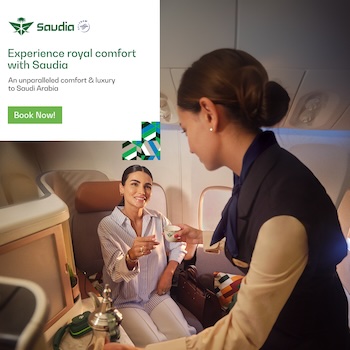
The national carrier Saudia has been modernizing its fleet and expanding international routes, while the newly launched Riyadh Air was designed to serve as a flagship carrier connecting hundreds of global destinations.
Together, these airlines were meant to funnel millions of travelers into Saudi Arabia’s new tourism destinations.
Airports across the Kingdom — including major expansions in Riyadh and Jeddah — are being developed to handle massive future passenger volumes.
However, aviation is one of the sectors most sensitive to geopolitical disruption.
Airspace tensions across the region have already forced some airlines to reroute flights, increasing travel times and operational costs. In a highly competitive aviation market, such disruptions can affect both profitability and passenger demand.
Intrigue and conflicting narratives
The situation has become even more complicated with emerging reports of intelligence activity and political intrigue across the region.
According to reports discussed on a recent broadcast by commentator Tucker Carlson, authorities allegedly arrested Israeli agents suspected of planning explosions in Saudi Arabia.
Such claims remain difficult to independently verify and add another layer of uncertainty to an already volatile geopolitical landscape.
If true, they would suggest that Saudi Arabia is not only navigating the fallout from regional conflict but also confronting covert operations and competing narratives that further complicate the security environment.
The prospect of what some observers describe as a “double war” — both overt conflict and covert intrigue — underscores the complexity of the situation unfolding across the Middle East.
For the tourism industry, however, the details of such geopolitical maneuvering matter less than the overall perception they create.
Travelers simply see headlines about explosions, arrests and warnings — and they hesitate.
Tourism and the power of perception
Tourism analysts often say that the industry runs on two invisible currencies: confidence and stability.
Destinations that enjoy long reputations for safety and hospitality can recover quickly from isolated incidents. Countries such as Spain, France or Italy have decades of established tourism infrastructure and loyal repeat visitors.
Saudi Arabia, by contrast, is still building its tourism identity.
The Kingdom’s tourism sector is young. International travelers are still discovering its cultural heritage sites, desert landscapes, and Red Sea coastlines.
That makes the industry both exciting and fragile.
Years of marketing campaigns can be overshadowed by a few days of dramatic headlines.
Billions invested in a new global destination
The stakes could hardly be higher.
Saudi Arabia has committed hundreds of billions — potentially more than a trillion dollars — to tourism development.
Luxury resorts, historic restoration projects, entertainment complexes and massive infrastructure investments are designed to support a thriving visitor economy that could generate millions of jobs.
International hotel groups have announced dozens of new properties across the country. Cruise tourism is expanding along the Red Sea. Cultural festivals and sporting events have become major attractions.
The Kingdom has also hosted high-profile global events, from Formula 1 races to international boxing matches, in an effort to showcase a new image to the world.
These initiatives were meant to position Saudi Arabia as one of the most dynamic emerging tourism destinations of the 21st century.
A moment of uncertainty
For now, Saudi Arabia’s tourism strategy remains firmly in place.
Government officials continue to promote the Kingdom’s attractions and emphasize that the country remains open to visitors.
Many tourism projects continue progressing rapidly, and the long-term vision has not changed.




Leave a Comment