


PR
jinsan0716
『JINさんの陽蜂農遠日記』にアクセスありがとう ございます。 このブログは、 陽:太陽光発電、 蜂:趣味の養蜂、 農:菜園、花、スロー&アクティブシニアライフ、 遠:旅行、 を中心とした備忘録を兼ねた18年間にわたる毎日のブログ(雑記帳)です。 書き込んでいただける方は、写真下の『コメントを書く』から 気楽に、ご感想、ご意見ご質問等を書き込んでいただきたく。
Keyword Search
▼キーワード検索
NHK 鶴瓶の家族に乾…
New!
オジン0523さん
【街路樹花壇 北2… New!
Gママさん
New!
Gママさん
たけべ町で見た面白…
New!
隠居人はせじぃさん
エコハウスにようこそ ecologicianさん
noahnoah研究所 noahnoahnoahさん
【街路樹花壇 北2…
New!
Gママさんたけべ町で見た面白…
New!
隠居人はせじぃさんエコハウスにようこそ ecologicianさん
noahnoah研究所 noahnoahnoahさん
Comments
Calendar
2026.06.24

カテゴリ: JINさんの農園
そして
「 上の間(かみのま)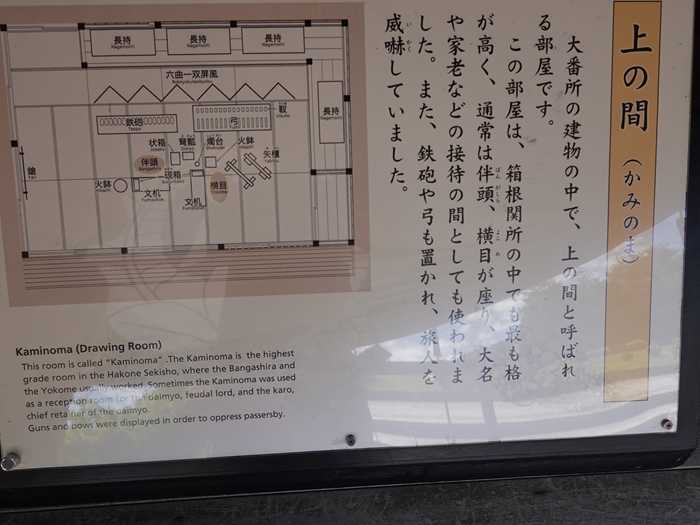
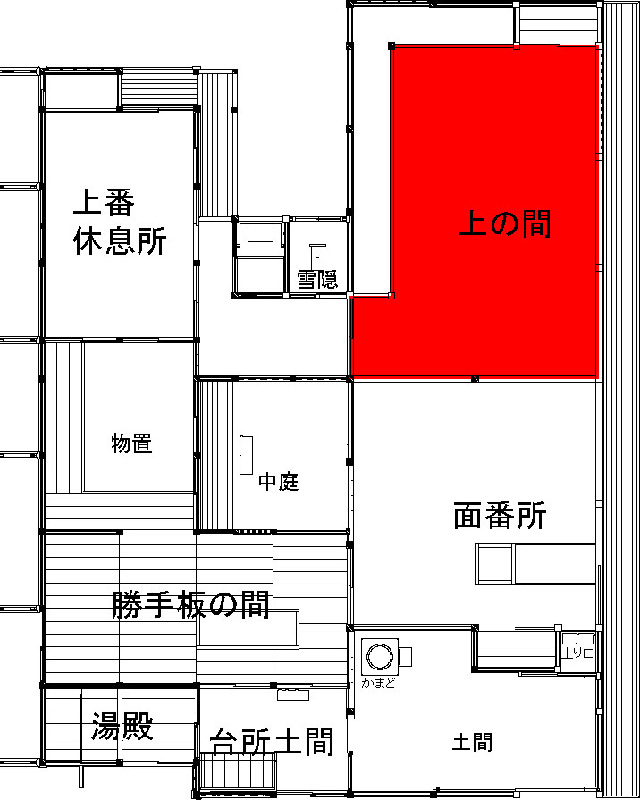
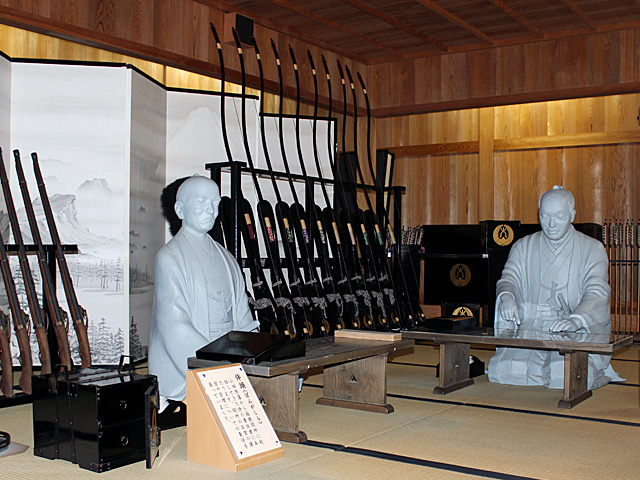
箱根関所の大番所にある「 上の間(かみのま) 」を復元した展示。
説明板にあったとおり、 関所内で最も格式の高い部屋で、伴頭(ばんがしら)や
横目(よこめ)が執務し、大名や家老を迎える応接の場 でもありました。
「 伴頭(ばんがしら) 」
「 伴頭(ばんがしら)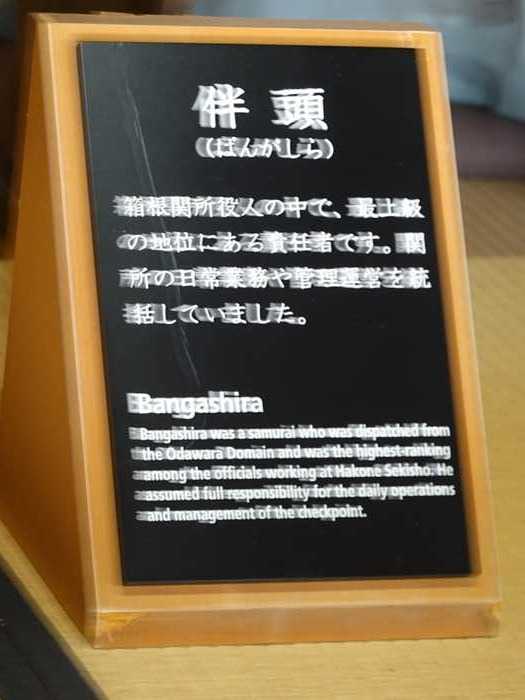
「 横目(よこめ)
伴頭に次ぐ地位で、関所業務の正常で円滑な遂行について監視する役ところです。
江戸時代後期に新設、常置された役職です。」
京口御門 」を振り返って。
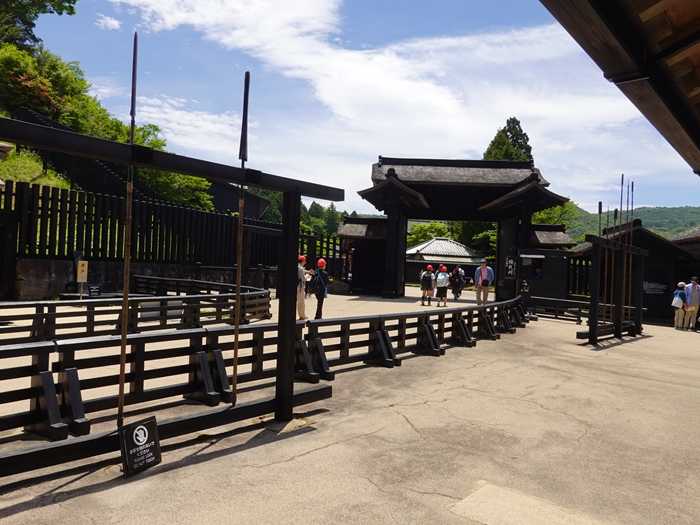
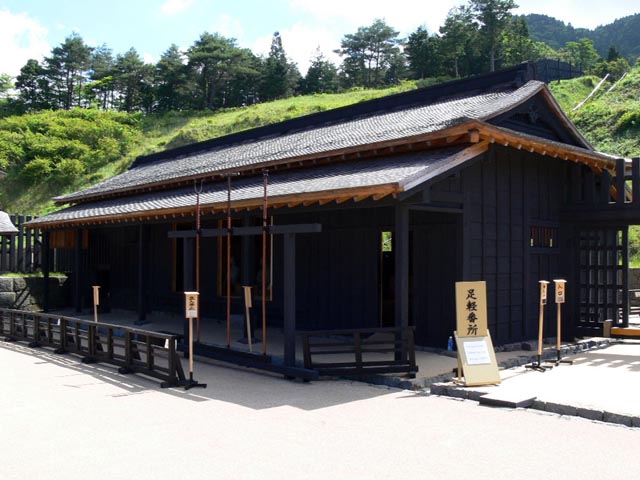
「 足軽番所
大番所・上番休息所の次に大きな建物で、大番所・上番休息所の向かい側、江戸口御門の
脇にあります。昼間は足軽が控えていたり、夜は足軽が寝ていた場所です。建物内には
足軽のための部屋や休息所、不審な武士などを留め置く「揚屋(あがりや)」、
関所破りをした罪人などを一時的に拘置する獄屋(牢屋)などがあります。
屋根は大番所と同様に杉板を薄く割って重ねた「栩葺(とちぶき)」で、外壁は壁板を
「渋墨(しぶすみ)」で黒く塗られています。
特に、「獄屋」は格子で囲まれており、とても頑丈に造られています。」
移動して。

獄屋 」
関所破りをした罪人などを一時的に拘置する獄屋(牢屋)などがあります。屋根は大番所と
同様に杉板を薄く割って重ねた「栩葺(とちぶき)」で、外壁は壁板を
「渋墨(しぶすみ)」で黒く塗られています。特に、「獄屋」は格子で囲まれており、
とても頑丈に造られています。
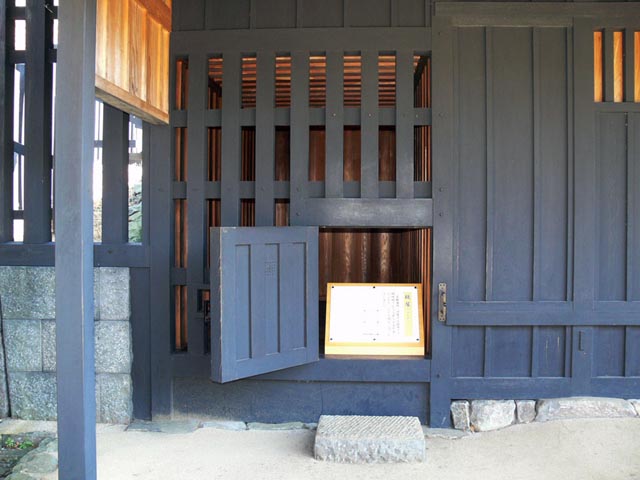
獄屋(ごくや)」
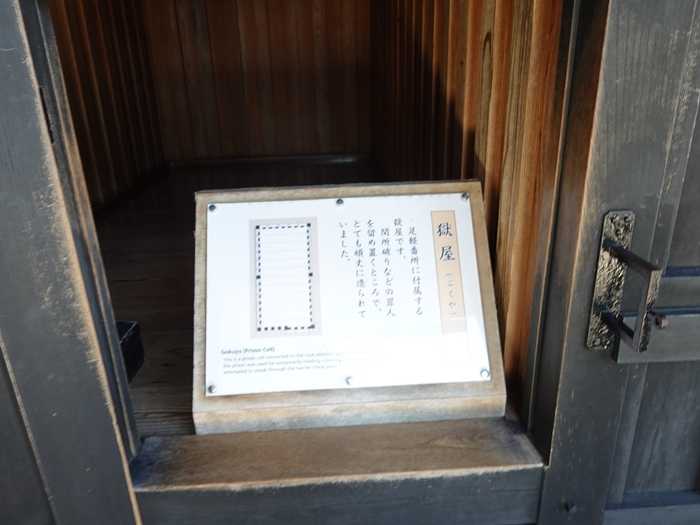
「 獄屋(ごくや)
足軽番所に付属する獄屋です。 関所破りなどの罪人を留め置くところ で、とても頑丈に
造られていました。」
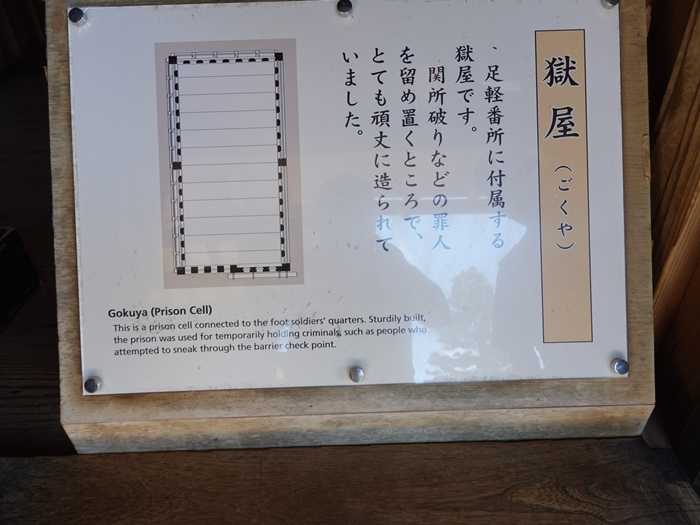
「獄屋(ごくや)」は、「足軽番所」という建物内に設けられていた。
獄屋自体の明確な畳数や平米数の記録は公開されていませんが、獄屋がある足軽番所全体の
広さは 約15×9m(平屋建て)であると。
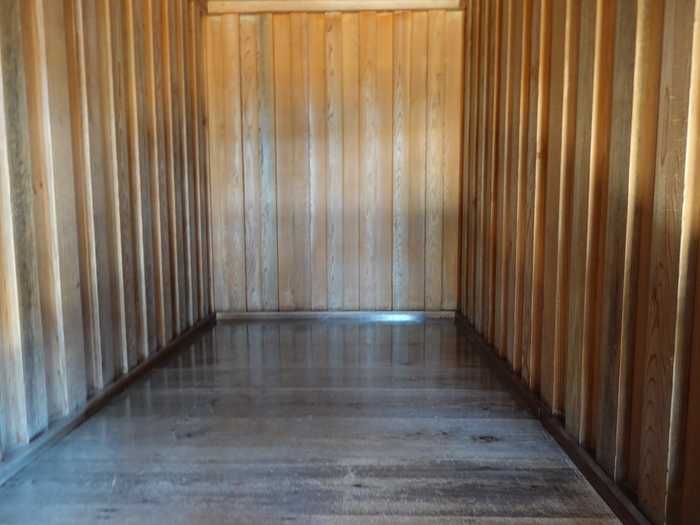
「 和釘(復元)
"Wakugi" (Japanese traditional nails)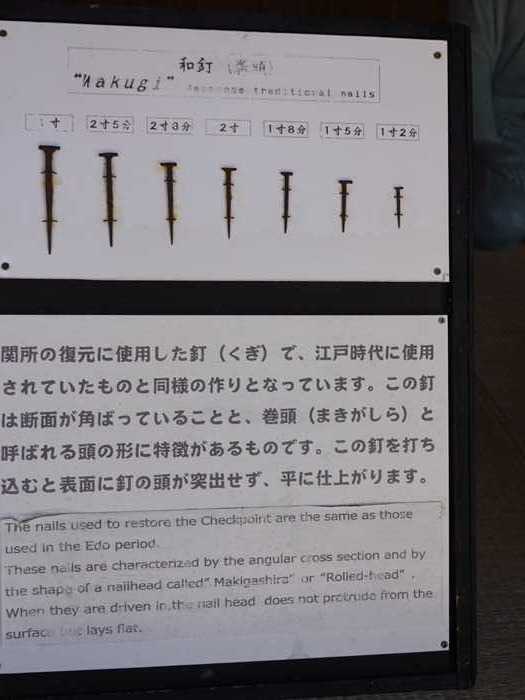
ネットから。

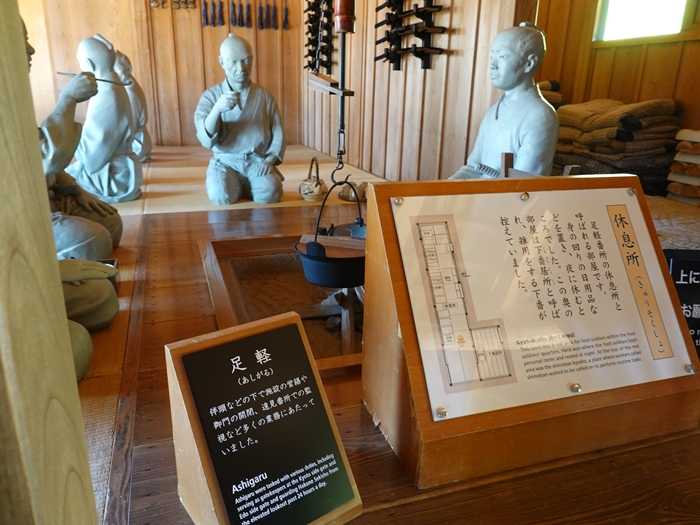
「休息所」の光景 。
「 休息所(きゅうそくしょ)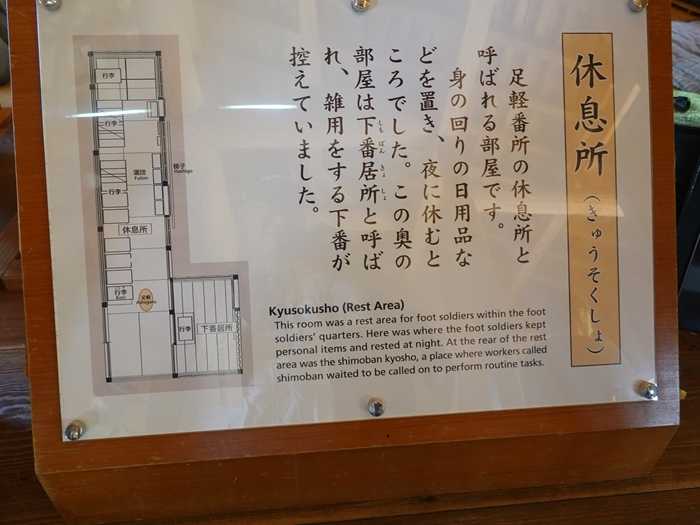
「 足軽(あしがる)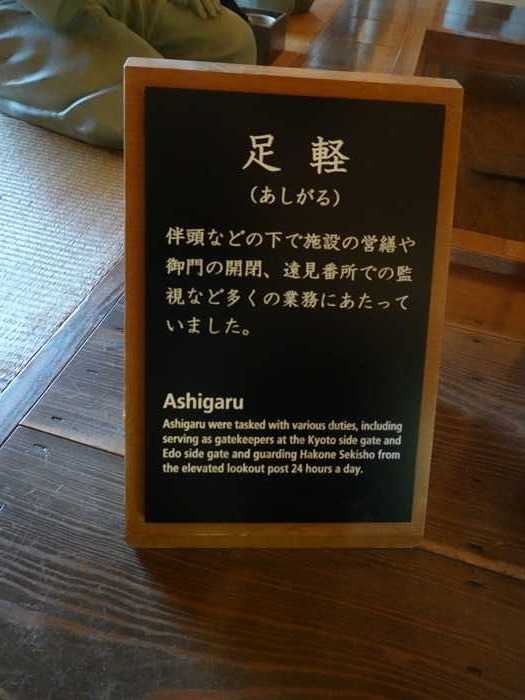
畳敷きの部屋で、勤務の合間を過ごす足軽たちが表現 されています。
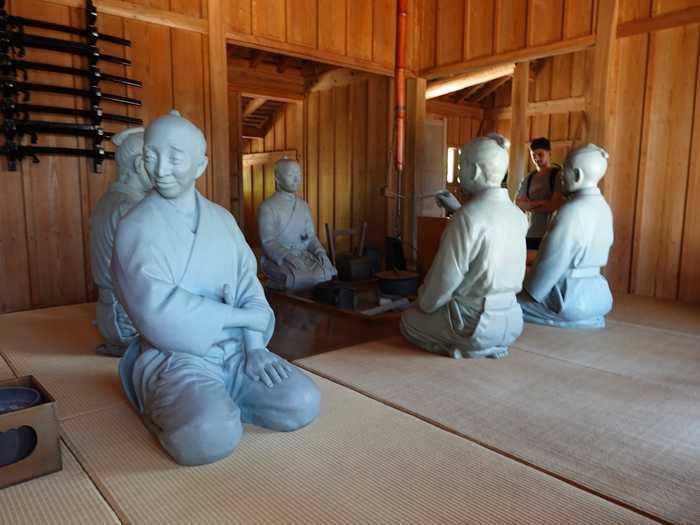
左手前の足軽は、仲間たちの会話に耳を傾けているようです。
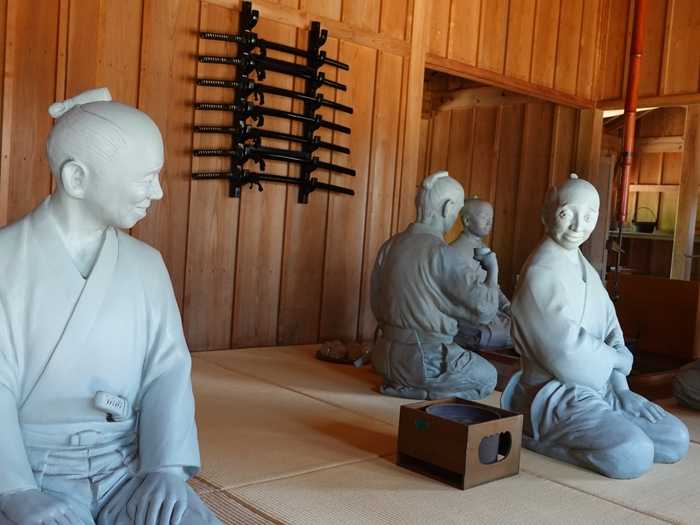
移動して様々な角度から。
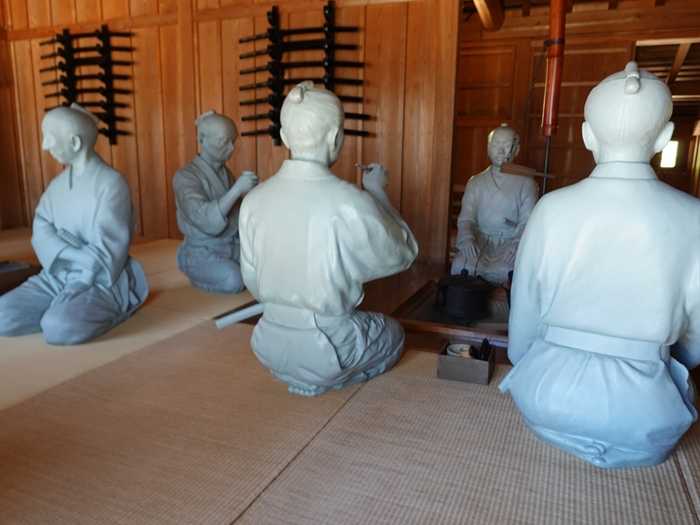
移動して様々な角度から。
白いシルエット人形でありながら、足軽たちの視線や姿勢からは、囲炉裏を囲んで語り合う
江戸時代の詰所の空気がよく伝わってきます。まるで夜勤の合間に交代の時刻を待って
いるような、静かな緊張感と親しみやすさが同居した光景なのであった。
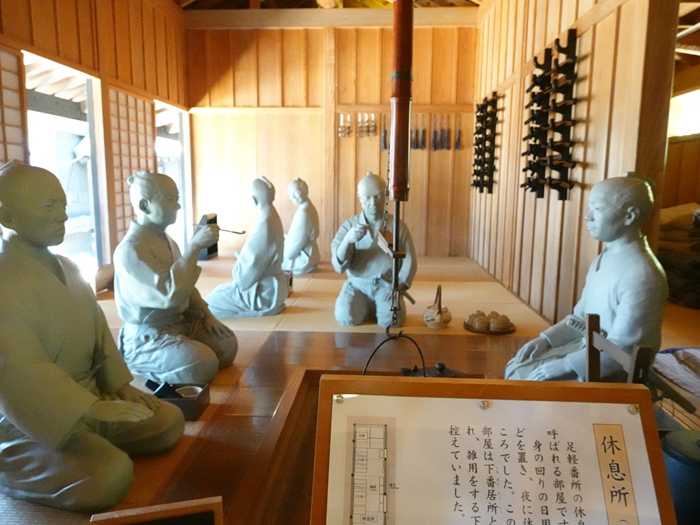
・中央の四角い設備は かまど。
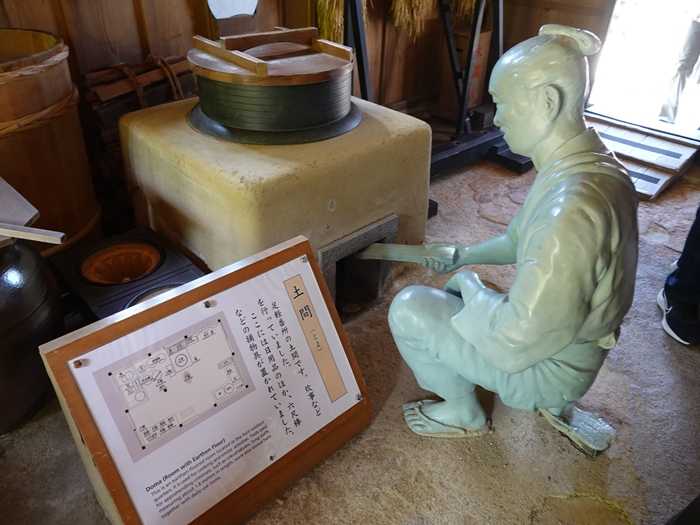
廻り込んで。米を炊いているのであろうか。
「 土間(どま)
such as rokushakubo long staffs measuring about 1.8 meters in length,
were also stored here.」
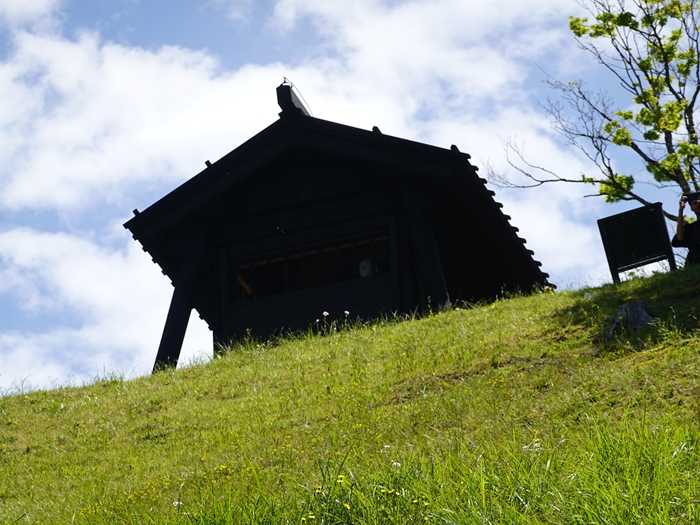
「 遠見番所 」を見上げて。
「 井戸 」。
江戸口・京口の千人溜にそれぞれ1ヶ所ずつ、関所構内に2ヶ所、井戸があり、
関所の役人たちが利用していたものです。
近づいて。
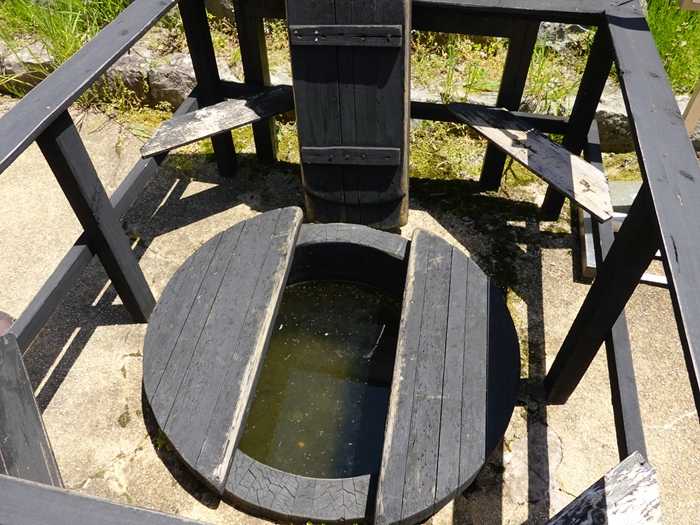
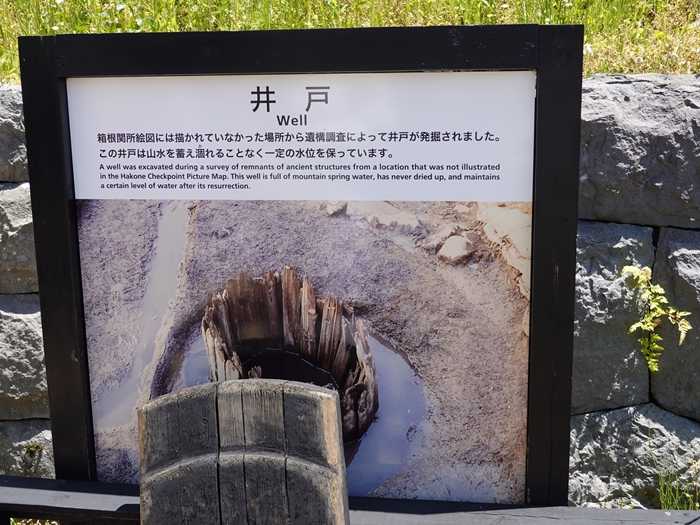
「 井戸
location that was not illustrated in the Hakone Checkpoint Picture Map.
This well is full of mountain spring water, has never dried up, and maintains a
certain level of water after its resurrection.」
「 足軽番所雪隠 」。
雪隠とは、便所のこと。足軽が利用するためのもので、旅人は利用できませんでした。

「遠見番所」を下から見上げて 。
「遠見番所」に上る江戸時代の石段 を見る。

「 石段
Stone steps
遠見番所に上がるこの階段には、発掘調査によって出土した江戸時代の踏み石がそのまま
使われ、急な傾斜も当時を再現しています。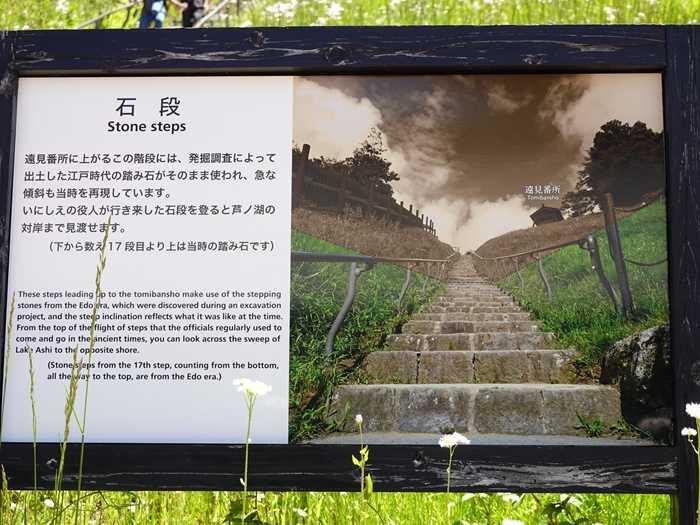
「 遠見番所 」。
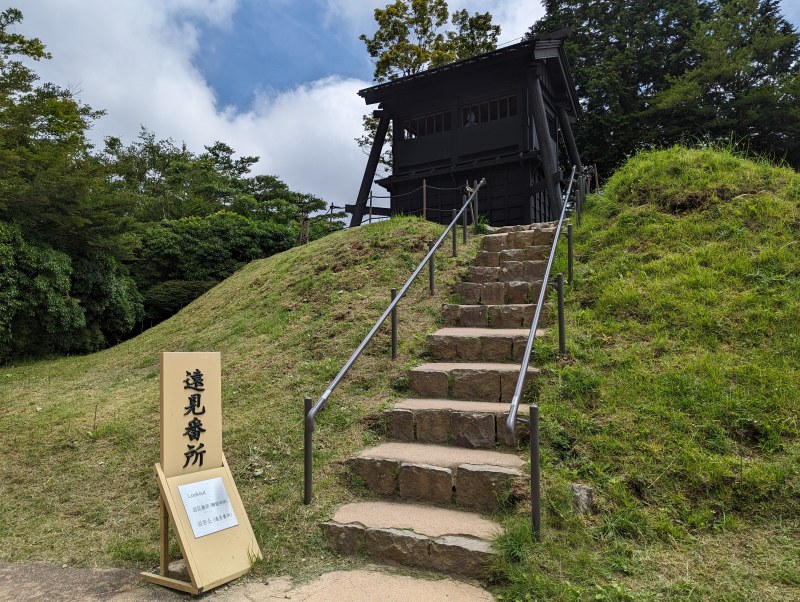
箱根関所で唯一の二階建ての建物。
四方に開かれた大きな窓から 二名の足軽が昼夜を問わず交代で、芦ノ湖や街道沿いを
見張っていた のだ と。
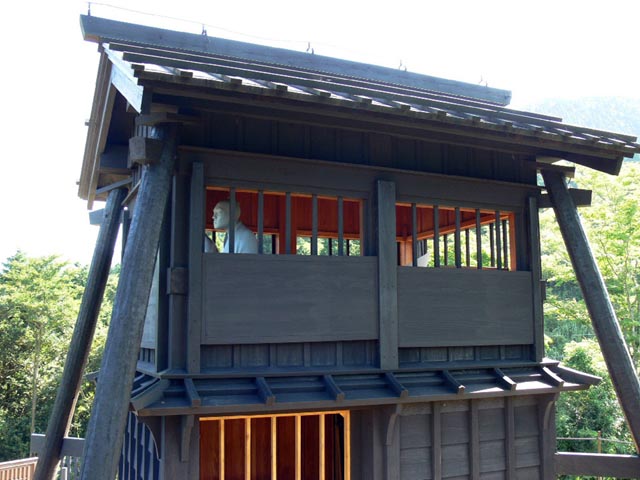
江戸期の芦ノ湖は船の通行は禁止 であった、 遠見番所は芦ノ湖を監視する番屋でもあった。
「箱根関所」の大番所・上番休息所を見下ろす。
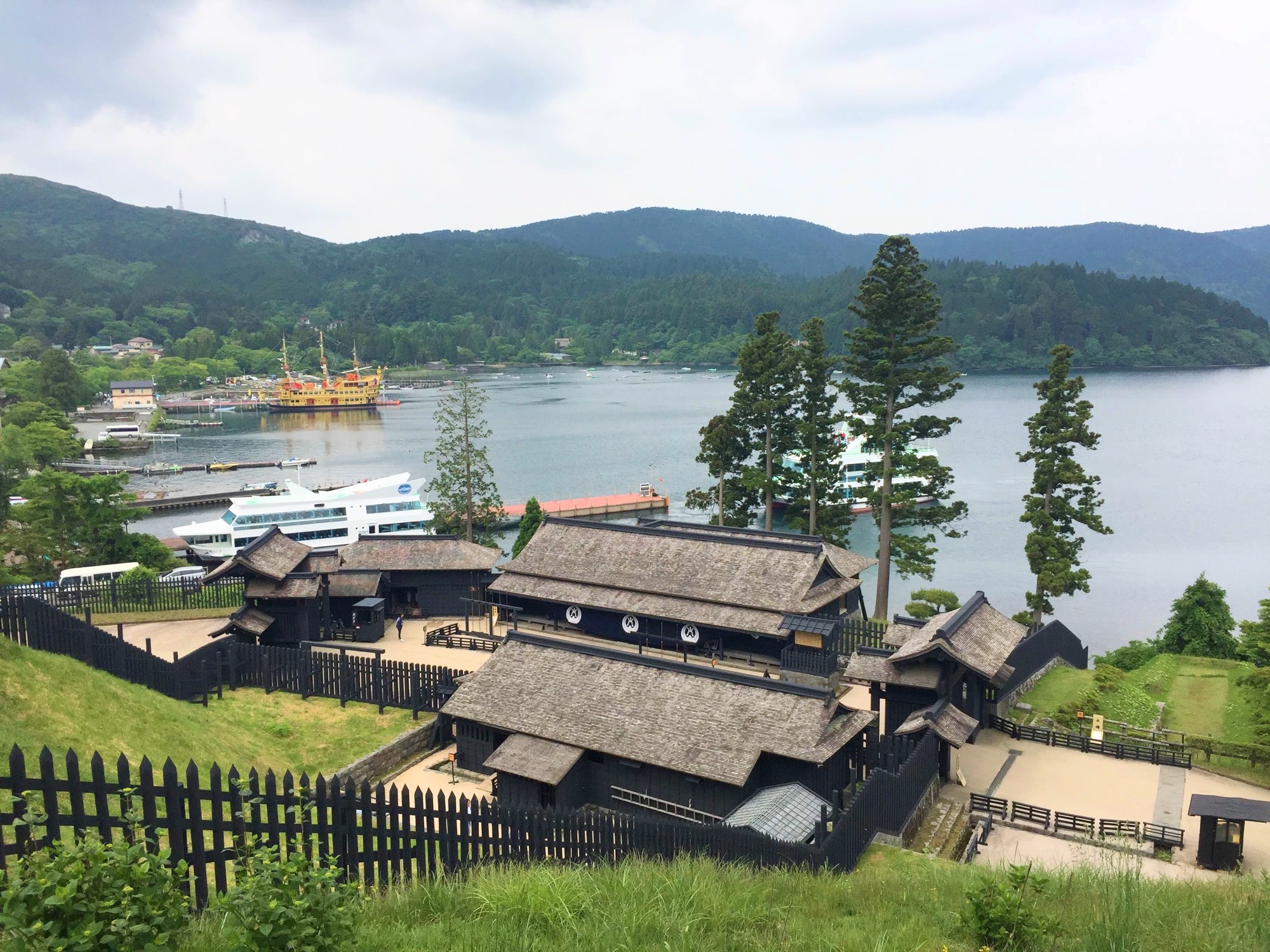
芦ノ湖の観光海賊船と富士山の勇姿も見えた。

この高札は箱根関所に掲げられていた 「定(さだめ)」の一部を復元したもの・御制札場 。
江戸口御門から関所に入って、すぐ右手に「御制札場」という小さな屋根のついた
掲示板のような施設があった。ここに掲げられた札には、正徳元年(1711)に
幕府道中奉行が箱根関所に出した、五項目の取り調べ内容が記載されていた。
板葺(いたぶき)の屋根や渋墨が塗りこまれており、威厳を感じさせる建物。
「 定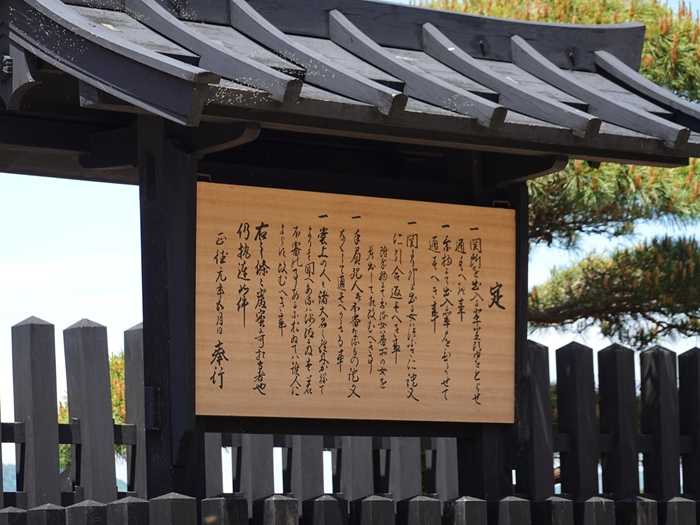
「 江戸口御門 」
京口御門の対面側にあった。高麗門という形式の門で、その高さは6.1mで、大番所・
上番休息所をしのいでいます。屋根や外観は「栩葺」、「渋墨塗り」です。江戸方面から
来た場合には、この門から中が箱根関所の構内で、西へ向う旅人はこの門の前で身支度を
整え、関所の中へと入りました。
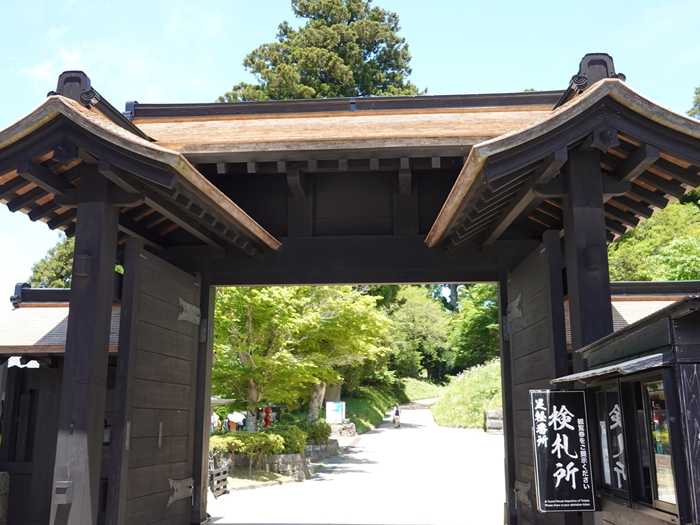
再び「 遠見番所 」を見上げて。
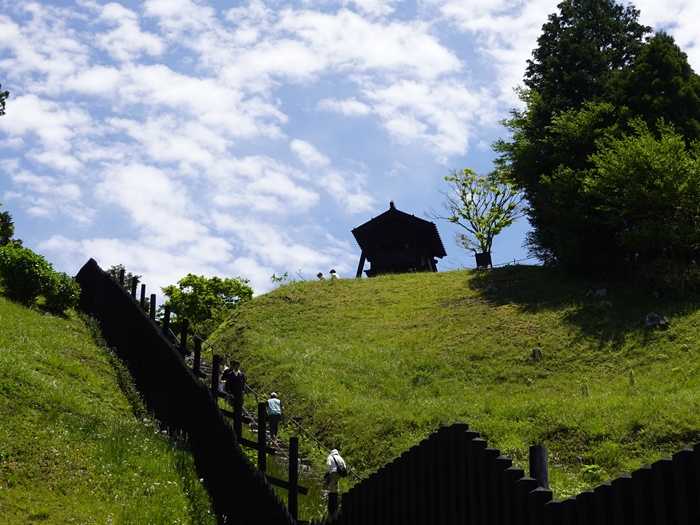
「 江戸口御門 」にも「箱根関所」案内板があった。
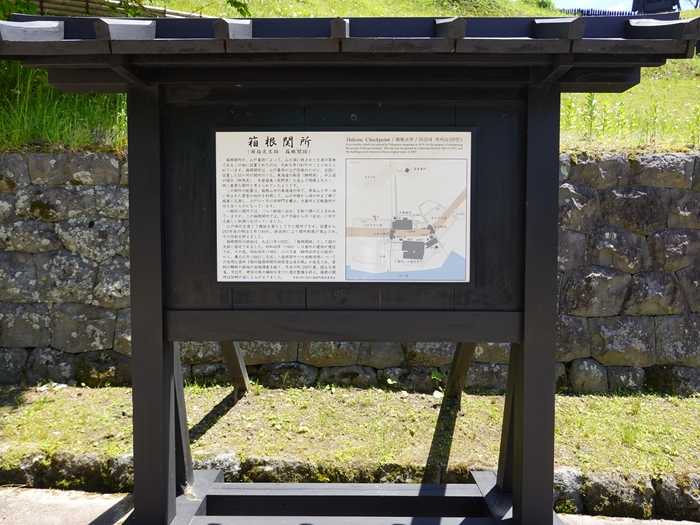
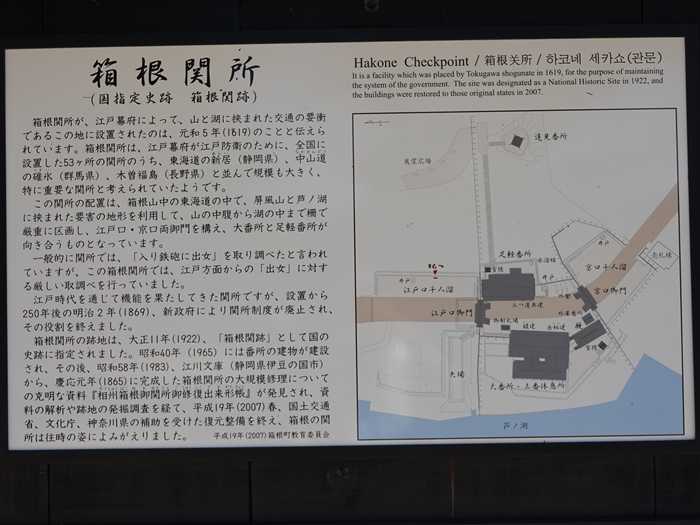
再び「 箱根関所 案内図 」。
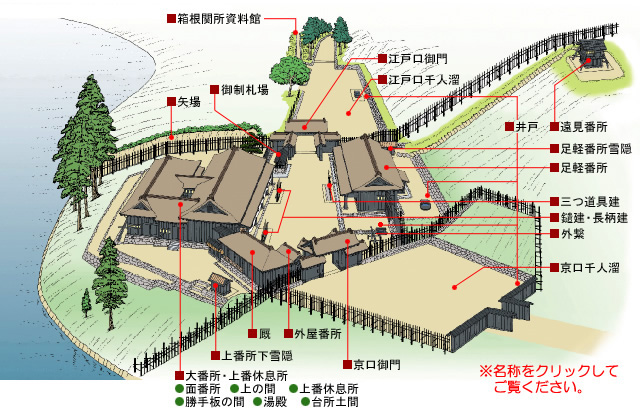
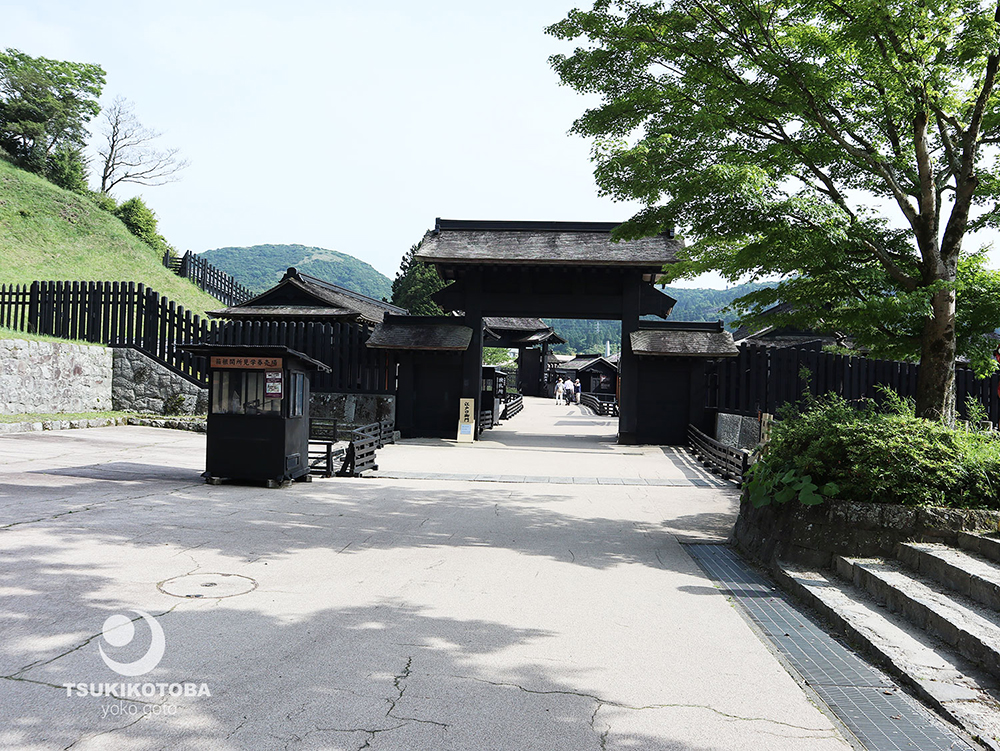
「 江戸口千人溜 」を振り返って(写真はネットから)。
江戸口御門の外にあり、旅人たちが関所改めを待つ待機場として利用された広場。
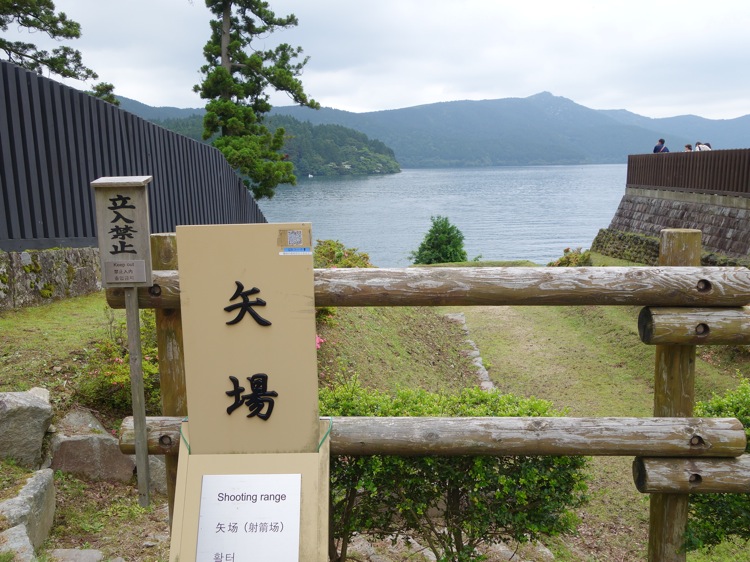
「 矢場 」(写真はネットから)。
弓や鉄砲の練習場で、江戸口御門の外の湖側にあった。
そして 「箱根関所資料館」に向かって歩を進める 。
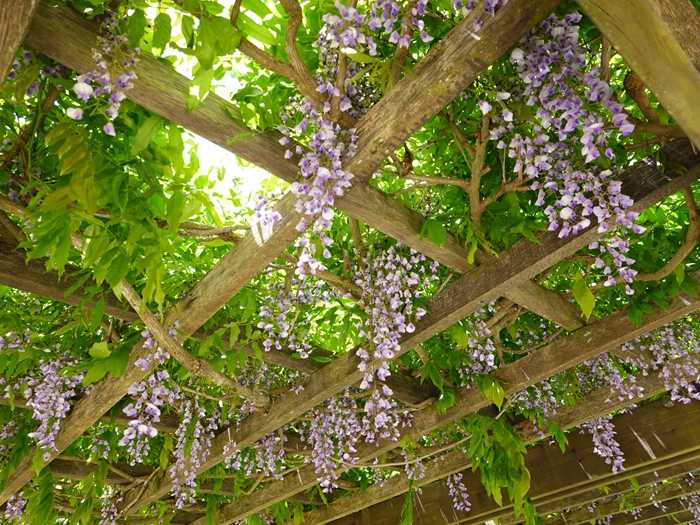
「 御番所茶屋 」手前横の藤棚そしてその先に 芦ノ湖の湖面 。
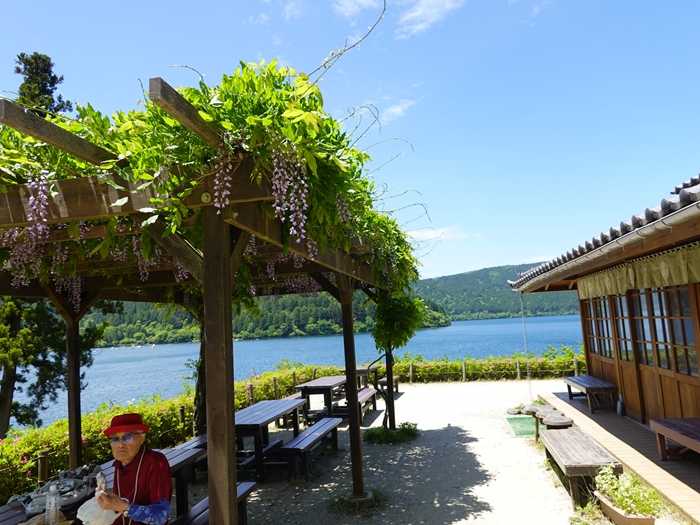
藤の花 を見上げて。
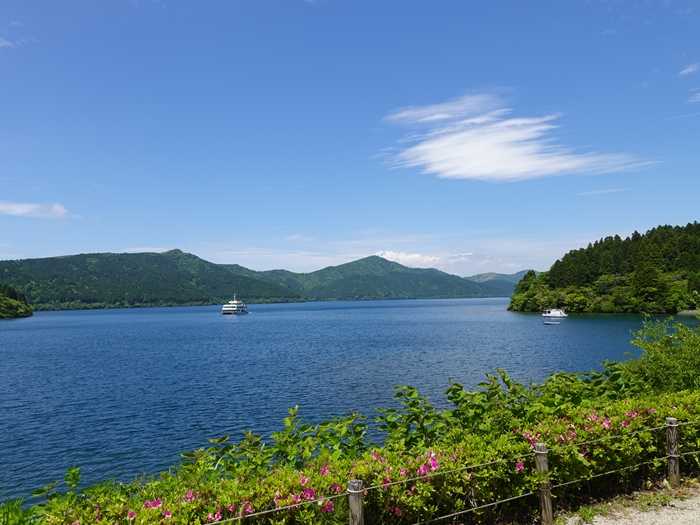
「 芦ノ湖 」。
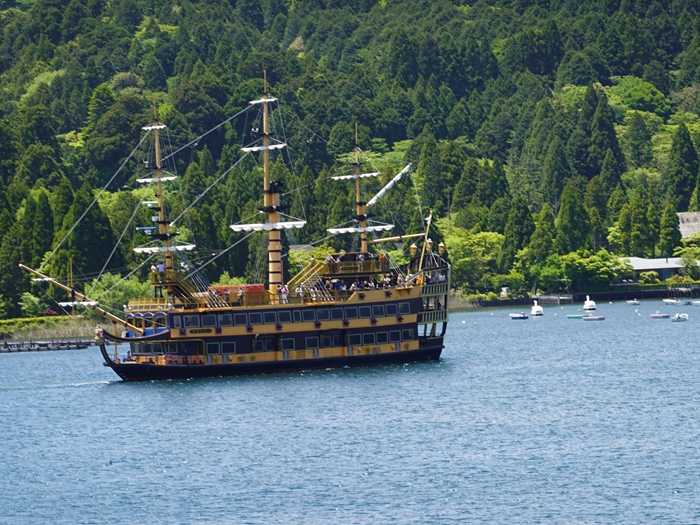
海賊船「ビクトリー」 。
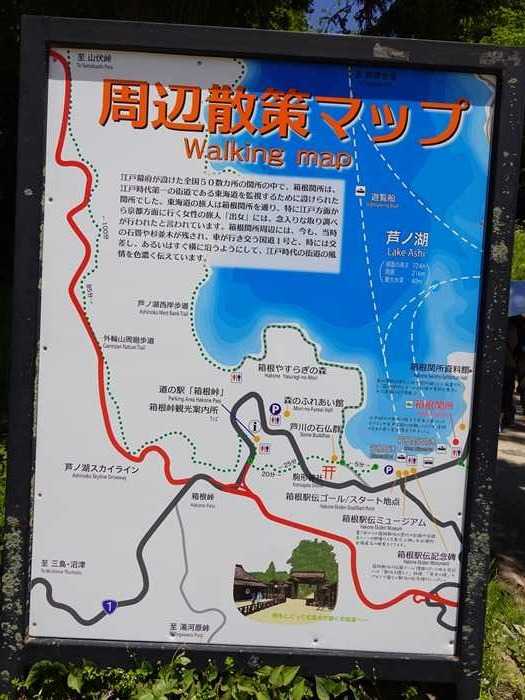
「 箱根関所散策マップ
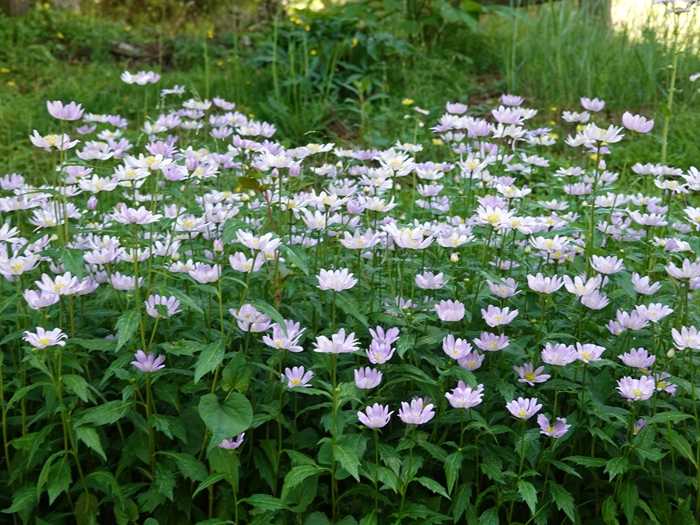
「 ミヤコワスレ(都忘れ) 」か?
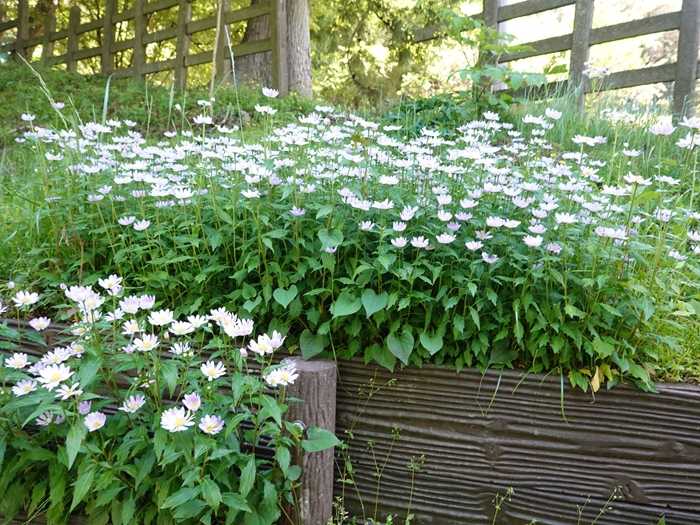
近づいて。
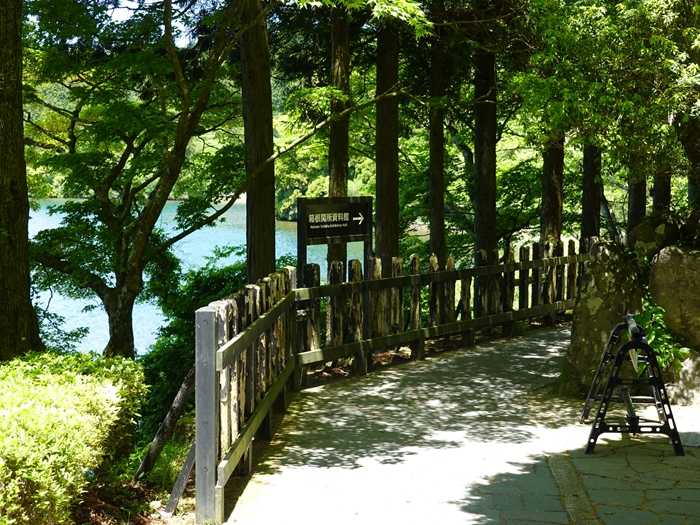
「箱根関所資料館」に向かって、湖岸に沿って遊歩道を進む。
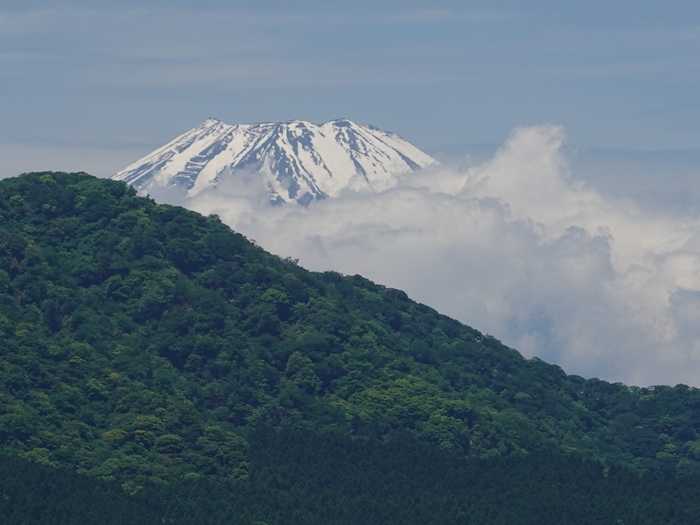
富士山山頂の勇姿 を。
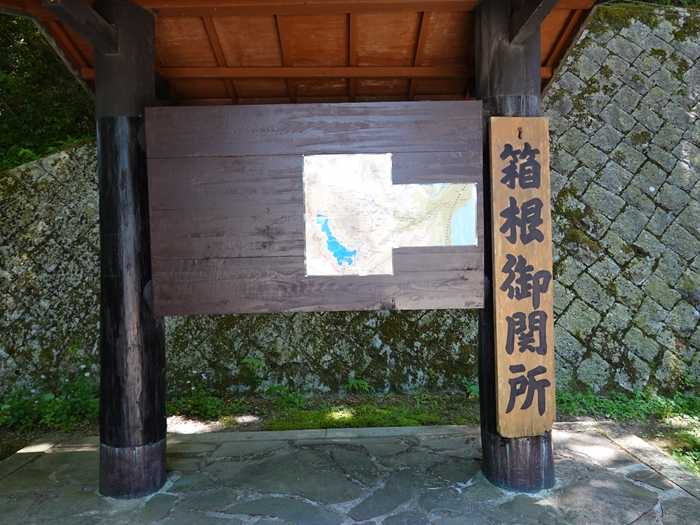
「恩賜箱根公園駐車場側」にあった「 箱根御関所 」案内板。
・・・ もどる ・・・
・・・ つづく ・・・
「 上の間(かみのま)
大番所の建物の中で、上の間と呼ばれる部屋です。
この部屋は、箱根関所の中でも最も格式が高く、通常は伴頭、横目が座り、大名や家老などの
接待の間としても使われました。
接待の間としても使われました。
また、鉄砲や弓も置かれ、旅人を威嚇していました。」
in the Hakone Sekisho, where the Bangashira and the Yokome usually worked.
Sometimes the Kaminoma was used as a reception room for the daimyo, feudal lord,
and the karo, chief retainer of the daimyo. Guns and bows were displayed
in order to oppress passersby.
Kaminoma (Drawing Room)
This room is called "Kaminoma". The Kaminoma is the highest grade room in the Hakone Sekisho, where the Bangashira and the Yokome usually worked.
Sometimes the Kaminoma was used as a reception room for the daimyo, feudal lord,
and the karo, chief retainer of the daimyo. Guns and bows were displayed
in order to oppress passersby.
図面内の表記
・長持
・六曲一双屏風
・鉄砲
・状箱
・弩瓢(どひょう)
・燭台
・火鉢
・伴頭
・硯箱
・文机
・横目
・弓
・矢櫃
・靱(うつぼ)
・槍
「上の間」。
箱根関所の大番所にある「 上の間(かみのま) 」を復元した展示。
説明板にあったとおり、 関所内で最も格式の高い部屋で、伴頭(ばんがしら)や
横目(よこめ)が執務し、大名や家老を迎える応接の場 でもありました。
左側の鉄砲
左には多数の火縄銃(ひなわじゅう)が整然と立て掛けられていた。
これらは関所の武装を示すもので、実際の警備用であると同時に、関所の権威を旅人に示す
役割を果たしていた。鉄砲の下には黒漆塗りの銃箱が置かれていた。
これらは関所の武装を示すもので、実際の警備用であると同時に、関所の権威を旅人に示す
役割を果たしていた。鉄砲の下には黒漆塗りの銃箱が置かれていた。
中央の弓
部屋の中央には多数の和弓が並べられていた。
・長大な弓が一列に整然と立てられている
・弓弦は外され保管されているように見える
・武具庫としての性格を強く感じさせる
配置。
背後の屏風
六曲一双屏風(ろっきょくいっそうびょうぶ)
が置かれていた。
墨絵風の山水画が描かれており、武具が並ぶ厳粛な空間に格式を与えていた。
大名や家老を迎える応接間としての性格を示しています。
大名や家老を迎える応接間としての性格を示しています。
右側の役人
白色のシルエット人形は、先ほどの説明板にあったように、
・顔立ち
・体格
・衣服の色
が不明であるため、あえて白色で表現されています。
机に向かって文書を扱う姿から、伴頭または横目の執務風景を再現したものと思われます。
背後の長持
右奥には家紋入りの長持(ながもち)が積まれています。
長持は衣類・書類・備品などを収納する大型の箱で、格式の高い部屋らしい調度品。
これは箱根関所が単なる事務所ではなく、江戸幕府の威信を背負った警備・取締り施設で
あったことを示していた。
あったことを示していた。
旅人がこの部屋を目にしたとき、
「ここは幕府の関所であり、規則に従わなければならない」
という緊張感を自然に感じるように設えられていたのでしょう。
まさに「 権威を見せる部屋 」であったことが、この復元展示からよく伝わって来たのであった。
まさに「 権威を見せる部屋 」であったことが、この復元展示からよく伝わって来たのであった。
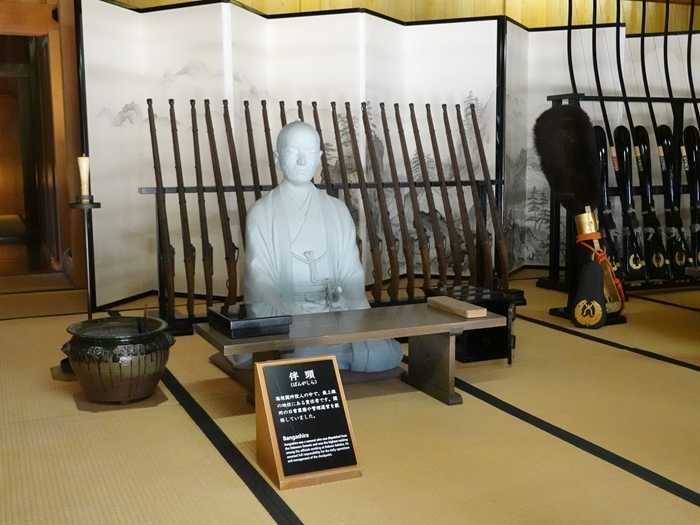
「 伴頭(ばんがしら) 」
「 伴頭(ばんがしら)
箱根関所役人の中で最上級の武士である番頭です。関所の日常業務や審理運営を統括していました。
Bangashira
Bangashira was a samurai who was dispatched from the Odawara Domain and
was the highest-ranking among the officials working at Hakone Sekisho.
He assumed fullresponsibility for the daily operations and management of
the checkpoint.」
was the highest-ranking among the officials working at Hakone Sekisho.
He assumed fullresponsibility for the daily operations and management of
the checkpoint.」
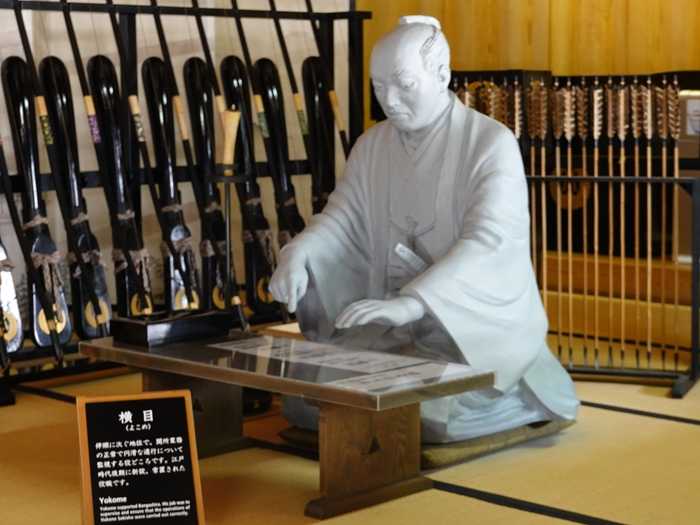
「 横目(よこめ)
伴頭に次ぐ地位で、関所業務の正常で円滑な遂行について監視する役ところです。
江戸時代後期に新設、常置された役職です。」
京口御門 」を振り返って。
「 足軽番所
大番所・上番休息所の次に大きな建物で、大番所・上番休息所の向かい側、江戸口御門の
脇にあります。昼間は足軽が控えていたり、夜は足軽が寝ていた場所です。建物内には
足軽のための部屋や休息所、不審な武士などを留め置く「揚屋(あがりや)」、
関所破りをした罪人などを一時的に拘置する獄屋(牢屋)などがあります。
屋根は大番所と同様に杉板を薄く割って重ねた「栩葺(とちぶき)」で、外壁は壁板を
「渋墨(しぶすみ)」で黒く塗られています。
特に、「獄屋」は格子で囲まれており、とても頑丈に造られています。」
移動して。
獄屋 」
関所破りをした罪人などを一時的に拘置する獄屋(牢屋)などがあります。屋根は大番所と
同様に杉板を薄く割って重ねた「栩葺(とちぶき)」で、外壁は壁板を
「渋墨(しぶすみ)」で黒く塗られています。特に、「獄屋」は格子で囲まれており、
とても頑丈に造られています。
獄屋(ごくや)」
「 獄屋(ごくや)
足軽番所に付属する獄屋です。 関所破りなどの罪人を留め置くところ で、とても頑丈に
造られていました。」
「獄屋(ごくや)」は、「足軽番所」という建物内に設けられていた。
獄屋自体の明確な畳数や平米数の記録は公開されていませんが、獄屋がある足軽番所全体の
広さは 約15×9m(平屋建て)であると。
「 和釘(復元)
"Wakugi" (Japanese traditional nails)
関所の復元に使用した釘(くぎ)で、江戸時代に使用されていたものと同様の作りと
なっています。この釘は断面が角ばっていることと、巻頭(まきがしら)と呼ばれる
頭の形に特徴があるものです。この釘を打ち込むと表面に釘の頭が突出せず、平に仕上がります。
なっています。この釘は断面が角ばっていることと、巻頭(まきがしら)と呼ばれる
頭の形に特徴があるものです。この釘を打ち込むと表面に釘の頭が突出せず、平に仕上がります。
The nails used to restore the Checkpoint are the same as those used in the Edo period.
These nails are characterized by the angular cross section and by the shape of
a nailhead called "Makigashira" or "Rolled-head".
These nails are characterized by the angular cross section and by the shape of
a nailhead called "Makigashira" or "Rolled-head".
When they are driven in, the nail head does not protrude from the surface but lays flat.」
この展示は、箱根関所の復元工事で実際に使用された 和釘(わくぎ) を紹介しています。
現代の洋釘は丸い鉄線を機械で作りますが、和釘は鍛冶職人が鉄を叩いて作ります。
そのため、
・断面が四角形または長方形
・先端が鋭い
・頭部が「巻頭(まきがしら)」になっている
という特徴があります。
なぜ和釘を使うのか
箱根関所は江戸時代の建築を忠実に復元しているため、
・柱や梁の仕口
・板壁
・屋根下地
などに、できる限り当時と同じ工法・材料が採用されました。
和釘は木の繊維を切り裂くように入るため保持力が強く、さらに頭が目立たないので、
建物の外観を美しく仕上げることができます。
建物の外観を美しく仕上げることができます。
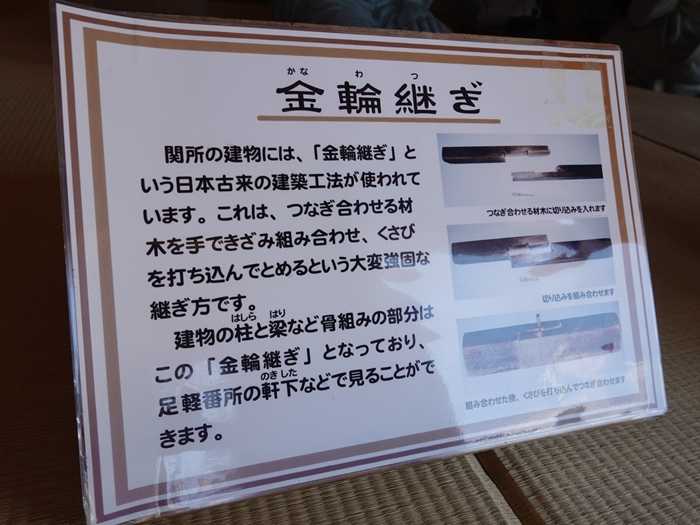
「 金輪継ぎ(かなわつぎ)
関所の建物には、「金輪継ぎ」という日本古来の建築工法が使われています。
これは、つなぎ合わせる材木を手できざみ組み合わせ、くさびを打ち込んでとめるという
大変強固な継ぎ方です。
これは、つなぎ合わせる材木を手できざみ組み合わせ、くさびを打ち込んでとめるという
大変強固な継ぎ方です。
建物の柱と梁など骨組みの部分は、この「金輪継ぎ」となっており、足軽番所の軒下などで
見ることができます。」
見ることができます。」
右側の図の説明
上段
つなぎ合わせる材木に切り込みを入れます
中段
はめ込み組み合わせます
下段
楔(くさび)を打ち込み、はずれないように固定します
ネットから。
「休息所」の光景 。
「 休息所(きゅうそくしょ)
足軽番所の休息所と呼ばれる部屋です。
身の回りの日用品などを置き、夜に休むところでした。この奥の部屋は下番居所と呼ばれ
雑用をする下番が控えていました。
雑用をする下番が控えていました。
Kyusokusho (Rest Area)
This room was a rest area for foot soldiers within the foot soldiers' quarters. Here was
where the soldiers kept personal items and rested at night. At the rear of the rest area
was the Shimoban Kyosho, a place where workers called shimoban waited to be called
on to perform routine tasks.」
where the soldiers kept personal items and rested at night. At the rear of the rest area
was the Shimoban Kyosho, a place where workers called shimoban waited to be called
on to perform routine tasks.」
「 足軽(あしがる)
伴頭などの下で施設の営繕や御門の開閉、遠見番所での監視など多くの業務にあたっていました。
Ashigaru
Ashigaru were tasked with various duties, including serving as gatekeeper
sat the Kyoto side gate and Edo side gate and guarding Hakone Sekisho from
the elevated lookout post 24 hours a day.」
sat the Kyoto side gate and Edo side gate and guarding Hakone Sekisho from
the elevated lookout post 24 hours a day.」
畳敷きの部屋で、勤務の合間を過ごす足軽たちが表現 されています。
・左手前の足軽は横を向き、仲間の様子を見ています。
・中央奥の足軽は囲炉裏端で一服しているように見えます。
・右手前の足軽は振り返り、仲間との会話に加わろうとしているようです。
・奥には二人が向かい合い、談笑している姿も見えます。
厳しい警備任務の合間の、ほっとした時間を切り取った場面なのでしょう。
左手前の足軽は、仲間たちの会話に耳を傾けているようです。
右手前の足軽は振り返りながら微笑んでいるように見え、緊張感のある関所勤務の中にも、
仲間同士の親しさが感じられます。
仲間同士の親しさが感じられます。
奥では二人の足軽が向かい合って座り、勤務の情報交換や雑談をしているようです。
移動して様々な角度から。
移動して様々な角度から。
白いシルエット人形でありながら、足軽たちの視線や姿勢からは、囲炉裏を囲んで語り合う
江戸時代の詰所の空気がよく伝わってきます。まるで夜勤の合間に交代の時刻を待って
いるような、静かな緊張感と親しみやすさが同居した光景なのであった。
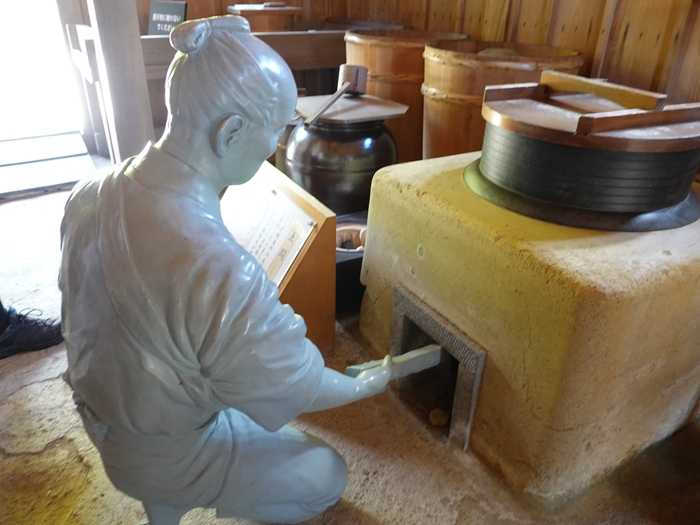
・中央の四角い設備は かまど。
・上に載っている丸い容器は 釜(かま)。
・右側の人形は、かまどの火を管理したり炊事を行ったりする足軽の様子を再現しています。
・土間は土足で作業する場所で、炊事・雑用・警備用品の保管などに使われました。
・説明板にある 六尺棒(ろくしゃくぼう) は長さ約1.8mの棒で、罪人の捕縛に用いられた
捕物道具です。
捕物道具です。
廻り込んで。米を炊いているのであろうか。
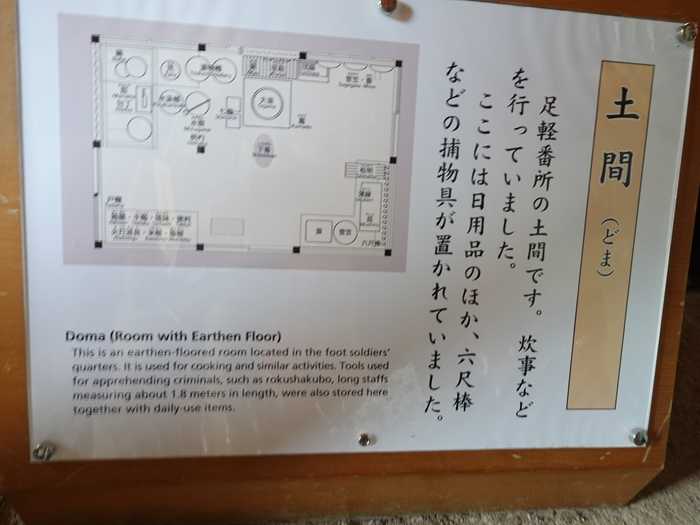
「 土間(どま)
足軽番所の土間
です。 炊事などを行っていました。
ここには日用品のほか、六尺棒などの捕物具が置かれていました。
ここには日用品のほか、六尺棒などの捕物具が置かれていました。
Doma (Room with Earthen Floor)
This is an earthen-floored room located in the foot soldiers' quarters.
It was used for cooking and similar activities. Tools used for apprehending criminals,such as rokushakubo long staffs measuring about 1.8 meters in length,
were also stored here.」
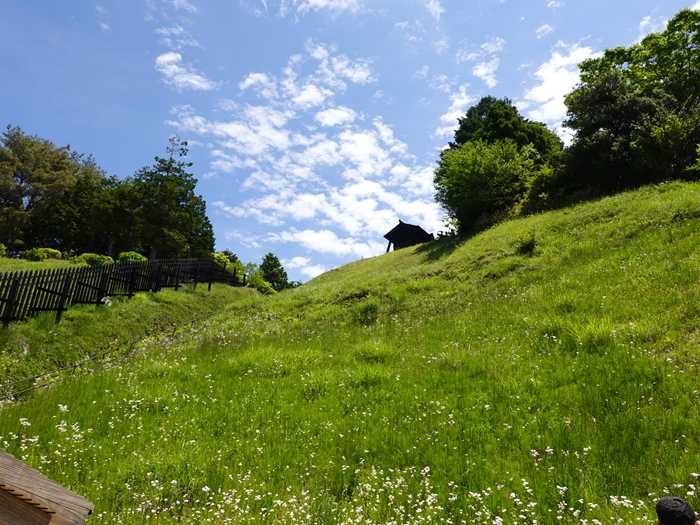
「 遠見番所 」を見上げて。
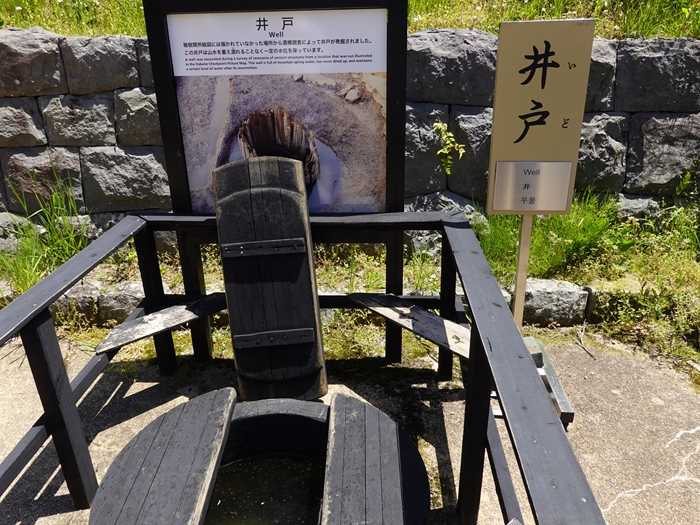
「 井戸 」。
江戸口・京口の千人溜にそれぞれ1ヶ所ずつ、関所構内に2ヶ所、井戸があり、
関所の役人たちが利用していたものです。
近づいて。
「 井戸
Well
箱根関所絵図には描かれていなかった場所から遺構調査によって井戸が発掘されました。
この井戸は山水を蓄え涸れることなく一定の水位を保っています。
A well was excavated during a survey of remnants of ancient structures from alocation that was not illustrated in the Hakone Checkpoint Picture Map.
This well is full of mountain spring water, has never dried up, and maintains a
certain level of water after its resurrection.」
「 足軽番所雪隠 」。
雪隠とは、便所のこと。足軽が利用するためのもので、旅人は利用できませんでした。
「遠見番所」を下から見上げて 。
「遠見番所」に上る江戸時代の石段 を見る。
「 石段
Stone steps
遠見番所に上がるこの階段には、発掘調査によって出土した江戸時代の踏み石がそのまま
使われ、急な傾斜も当時を再現しています。
いにしえの役人が行き来した石段を登ると芦ノ湖の対岸まで見渡せます。
( 下から数え17段目より上は当時の踏み石
です)
These steps leading up to the tomibansho make use of the stepping stones from
the Edo era, which were discovered during an excavation project, and the steep
inclination reflects what it was like at the time.
the Edo era, which were discovered during an excavation project, and the steep
inclination reflects what it was like at the time.
From the top of the flight of steps that the officials regularly used to come and go
in the ancient times, you can look across the sweep of Lake Ashi to the opposite shore.
in the ancient times, you can look across the sweep of Lake Ashi to the opposite shore.
(Stone steps from the 17th step, counting from the bottom, all the way to the top, are
from the Edo era.)」
from the Edo era.)」
「 遠見番所 」。
箱根関所で唯一の二階建ての建物。
四方に開かれた大きな窓から 二名の足軽が昼夜を問わず交代で、芦ノ湖や街道沿いを
見張っていた のだ と。
江戸期の芦ノ湖は船の通行は禁止 であった、 遠見番所は芦ノ湖を監視する番屋でもあった。
「箱根関所」の大番所・上番休息所を見下ろす。
芦ノ湖の観光海賊船と富士山の勇姿も見えた。
この高札は箱根関所に掲げられていた 「定(さだめ)」の一部を復元したもの・御制札場 。
江戸口御門から関所に入って、すぐ右手に「御制札場」という小さな屋根のついた
掲示板のような施設があった。ここに掲げられた札には、正徳元年(1711)に
幕府道中奉行が箱根関所に出した、五項目の取り調べ内容が記載されていた。
板葺(いたぶき)の屋根や渋墨が塗りこまれており、威厳を感じさせる建物。
「 定
一、関所を通る旅人は、笠・頭巾を取り、顔かたちを確認する。
一、乗物に乗った旅人は、乗物の扉を開き、中を確認する。
一、関より外へ出る女(江戸方面から関西方面へ向かう女性:出女)は詳細に証文と照合する
検査を行う。
検査を行う。
一、傷ついた人、死人、不審者は、証文を持っていなければ通さない。
一、公家の通行や、大名行列に際しては、事前に関所に通達があった場合は、通関の検査は
行わない。ただし、一行の中に不審な者がまぎれていた場合は、検査を行う。」 と。
行わない。ただし、一行の中に不審な者がまぎれていた場合は、検査を行う。」 と。
「 江戸口御門 」
京口御門の対面側にあった。高麗門という形式の門で、その高さは6.1mで、大番所・
上番休息所をしのいでいます。屋根や外観は「栩葺」、「渋墨塗り」です。江戸方面から
来た場合には、この門から中が箱根関所の構内で、西へ向う旅人はこの門の前で身支度を
整え、関所の中へと入りました。
再び「 遠見番所 」を見上げて。
「 江戸口御門 」にも「箱根関所」案内板があった。
再び「 箱根関所 案内図 」。
「 江戸口千人溜 」を振り返って(写真はネットから)。
江戸口御門の外にあり、旅人たちが関所改めを待つ待機場として利用された広場。
「 矢場 」(写真はネットから)。
弓や鉄砲の練習場で、江戸口御門の外の湖側にあった。
そして 「箱根関所資料館」に向かって歩を進める 。
「 御番所茶屋 」手前横の藤棚そしてその先に 芦ノ湖の湖面 。
藤の花 を見上げて。
「 芦ノ湖 」。
海賊船「ビクトリー」 。
「 箱根関所散策マップ
Walking map
江戸幕府が設けた全国5 0数カ所の関所の中で、箱根関所は、江戸時代第一の街道である
東海道を監視するために設けられた関所でした。東海道の旅人は箱根関所を通り、特に
江戸方面から京都方面に行く女性の旅人「出女」には、念入りな取り調べが行われたと
言われています。箱根関所周辺には、今も、当時の石畳や杉並木が残され、車が行き交う
国道1号と、時には交差し、あるいはすぐ横に沿うようにして、江戸時代の街道の風情を
色濃く伝えています。
東海道を監視するために設けられた関所でした。東海道の旅人は箱根関所を通り、特に
江戸方面から京都方面に行く女性の旅人「出女」には、念入りな取り調べが行われたと
言われています。箱根関所周辺には、今も、当時の石畳や杉並木が残され、車が行き交う
国道1号と、時には交差し、あるいはすぐ横に沿うようにして、江戸時代の街道の風情を
色濃く伝えています。
地図中の主な表示
芦ノ湖
・芦ノ湖(Lake Ashi):湖面の高さ724m、周囲21km、最大水深40m)
・遊覧船乗り場(Sightseeing boat)
関所周辺
・箱根関所資料館
・箱根関所跡港
・箱根町港
・箱根駅伝ミュージアム
・箱根駅伝往路ゴール/復路スタート地点
散策ポイント
・箱根やすらぎの森
・杉並木公園
・杉並木の石畳
・森のふれあい館
街道・峠
・箱根旧街道(Hakone Old Tokaido)
・箱根峠
・玉ノ浦峠
・外輪山展望歩道(Gaikanzan Observation Trail)
・芦ノ湖西岸歩道(Ashinoko West Bank Trail)
所要時間
箱根関所 → 杉並木の石畳 約20分
杉並木の石畳 → 森のふれあい館 約25分
箱根関所 → 箱根峠 約55分
箱根峠 → 玉ノ浦峠 約85分
玉ノ浦峠 → 湖尻峠方面 約100分」「 ミヤコワスレ(都忘れ) 」か?
近づいて。
「箱根関所資料館」に向かって、湖岸に沿って遊歩道を進む。
富士山山頂の勇姿 を。
「恩賜箱根公園駐車場側」にあった「 箱根御関所 」案内板。
・・・ もどる ・・・
・・・ つづく ・・・
お気に入りの記事を「いいね!」で応援しよう

[JINさんの農園] カテゴリの最新記事
-
村岡史蹟探訪へ(その2) 2026.08.13
-
村岡史蹟探訪へ(その1) 2026.08.12
-
江戸東京博物館へ(その44) 2026.08.11


【毎日開催】
15記事にいいね!で1ポイント


© Rakuten Group, Inc.
