


PR
JP retro games
🎮 JP RETRO GAMES|Japanese Famicom & Retro Games 🇯🇵 Sharing real hardware, gameplay, guides and Japanese gaming culture with retro gamers around the world. 日本のファミコンとレトロゲームの魅力を世界へ発信!
カレンダー
カテゴリ
Tenchi wo Kurau II: Shokatsu Komei Den — A Three Kingdoms Epic on the Japanese Famicom \| JP RETRO GAMES Series No\.25
JESUS: Kyofu no Bio Monster — A Mysterious Sci-Fi Adventure on the Japanese Famicom | JP RETRO GAMES Series No.24
JP RETRO GAMES Series No\.23: Hokuto no Ken 3 – Fist of the North Star on the Japanese Famicom
VEGAS CONNECTION 1989Japanese Famicom Casino Game \| JP RETRO GAMES
コメント新着
キーワードサーチ

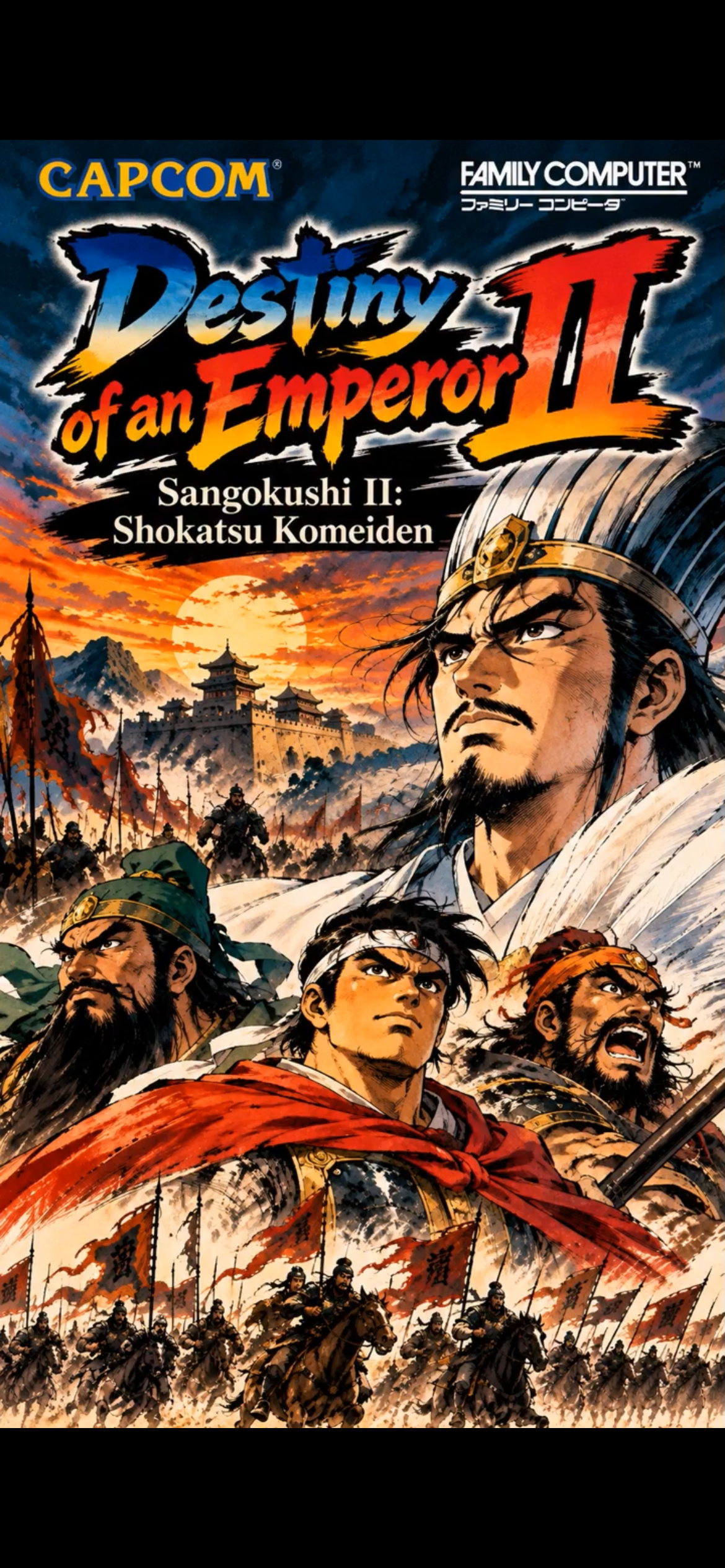
A legendary era. Powerful generals. Strategic battles. One unforgettable 8-bit adventure.
In 1991, CAPCOM brought the world of the Three Kingdoms to the Japanese Family Computer with Tenchi wo Kurau II: Shokatsu Komei Den (天地を喰らうII 諸葛孔明伝).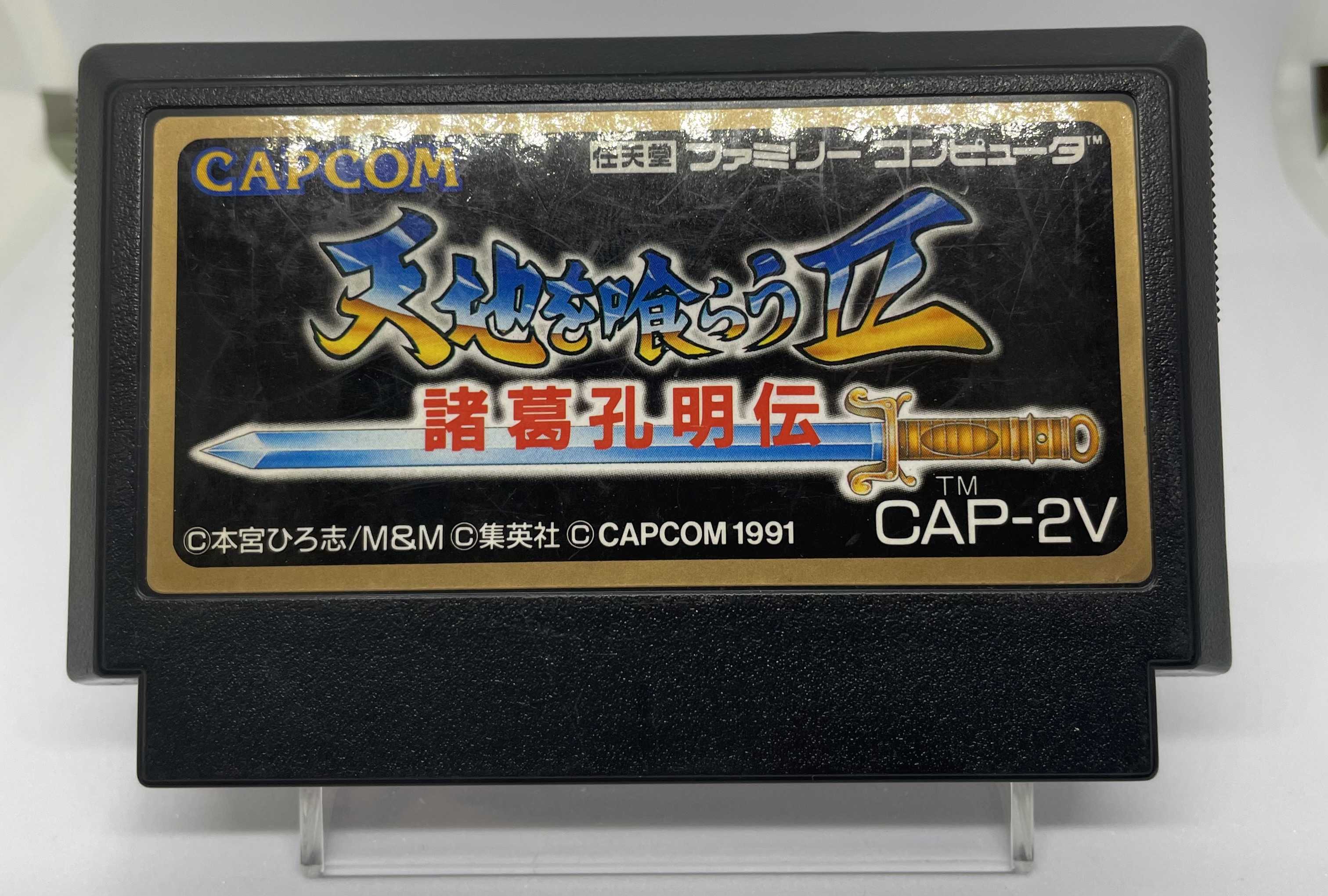
Known among international fans as Destiny of an Emperor II, this Japanese-exclusive RPG combines historical Chinese heroes, classic pixel art, and tactical turn-based battles. It is also based on the manga Tenchi wo Kurau by Hiroshi Motomiya, whose bold character designs give the game a distinctive, powerful atmosphere.
Welcome to JP RETRO GAMES Series No.25, where we explore another fascinating title from Japan’s Famicom history.
Game Information
● Japanese Title: 天地を喰らうII 諸葛孔明伝
● Romanized Title: Tenchi wo Kurau II: Shokatsu Komei Den
● International Fan Name: Destiny of an Emperor II
● Release Date: April 5, 1991
● Platform: Nintendo Family Computer (Famicom)
● Developer / Publisher: CAPCOM
● Genre: Role-Playing Game (RPG)
● Cartridge Model: CAP-2V
●
Region: Japan
This game was released exclusively in Japan. The name Destiny of an Emperor II is widely used by international fans, but it was not an official English-language release title for this Famicom version.
A Three Kingdoms Story with Manga-Inspired Character Design
The Three Kingdoms period has inspired countless stories, games, and works of art. This game brings that legendary setting to an 8-bit RPG, featuring famous military leaders and the struggle to unite the land.
One of its defining features is its connection to Hiroshi Motomiya’s manga Tenchi wo Kurau. The character portraits and warrior designs have a rugged, expressive quality that sets the game apart from many other RPGs of its era.
Rather than presenting a fantasy world filled only with invented creatures, the game draws on a familiar historical epic—one filled with ambitious leaders, powerful armies, alliances, and battlefield strategy.
For fans of historical manga and classic Japanese games, this combination makes the title especially interesting.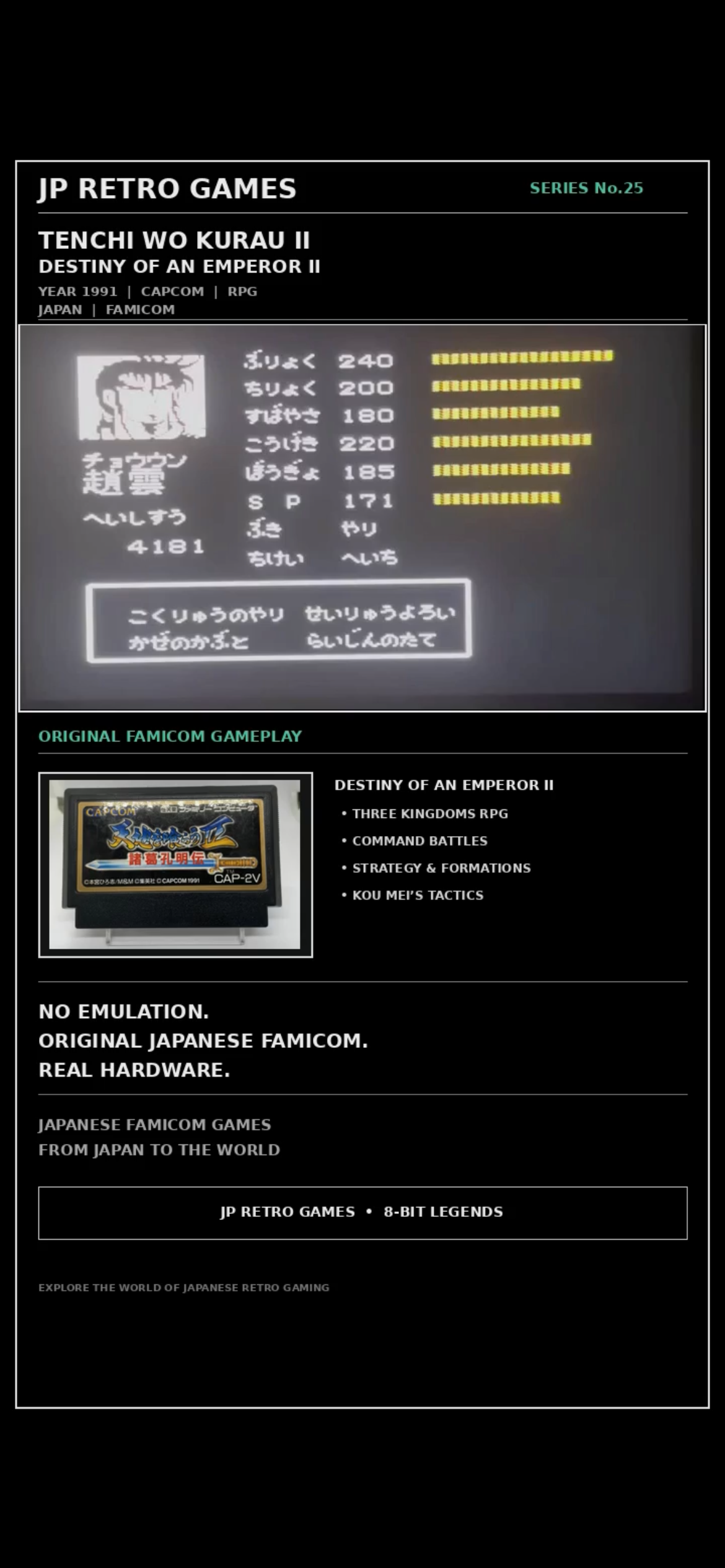
More Than a Traditional RPG: Strategy Matters
At first glance, Tenchi wo Kurau II may look like a familiar 8-bit role-playing game. You explore the world, encounter enemies, develop your characters, and progress through the story.
But the battles are where its strategic side becomes clear.
Command Your Generals
Your party is made up of warriors from the Three Kingdoms world. Managing your officers and their capabilities is an important part of the adventure.
Formation and Tactical Decisions
The formation system adds another layer to combat. Choosing how your forces are arranged can influence the way battles unfold, making strategic planning more important than simply selecting an attack.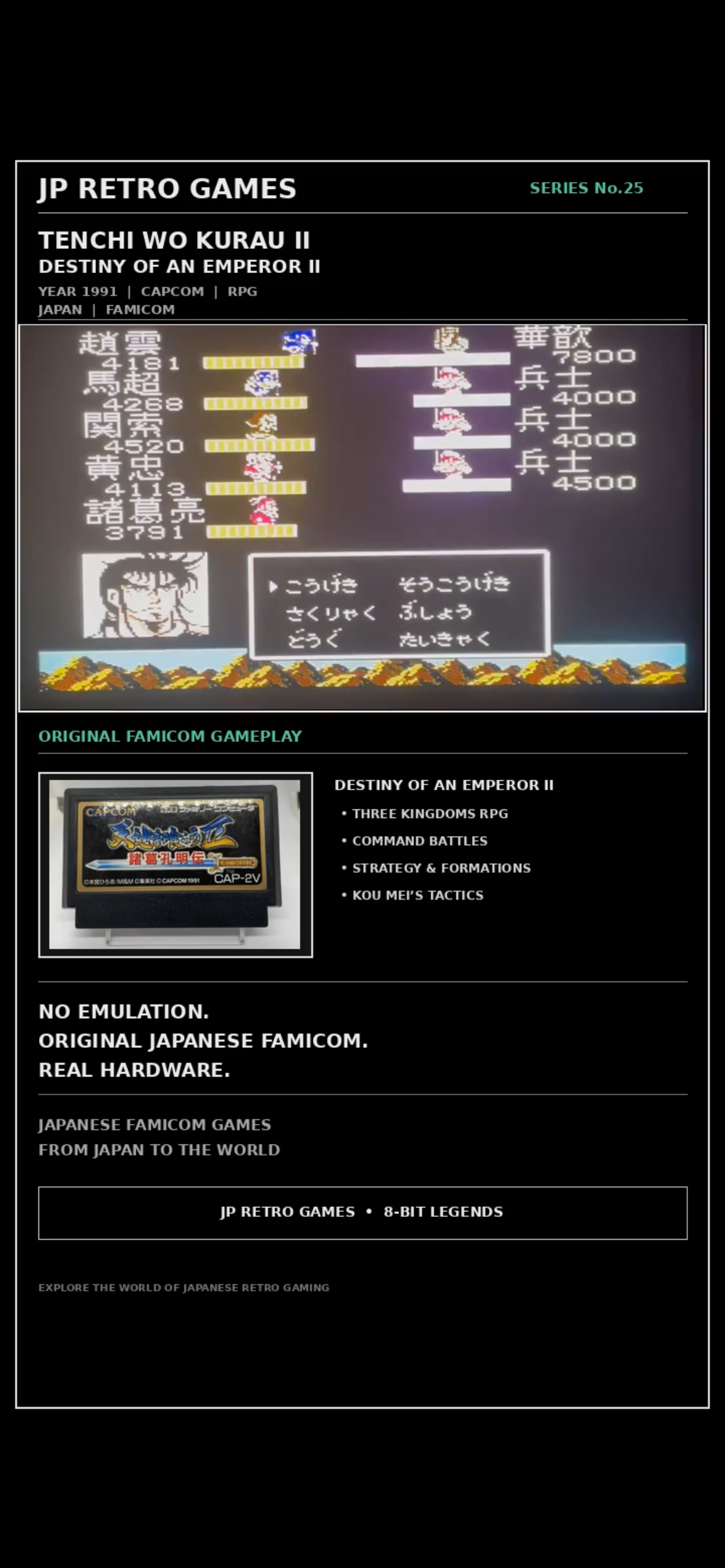
Tactics Can Change the Battle
Special tactics give battles an additional dimension. The right decision at the right moment can help turn a difficult encounter in your favor.
These systems give the game a distinctive identity: it is a historical RPG that asks players to think like commanders, not just adventurers.
Experience the Original Japanese Famicom Version
For this episode, JP RETRO GAMES returns to the original Japanese cartridge and real Famicom hardware.
The video showcases several aspects of the adventure:
● The original CAPCOM opening and title screen
● Exploration through the game’s world
● Character portraits and officer status screens
● Encounters that lead into command-based battles
● Tactical actions and battle sequences
The original presentation is part of the experience. The pixel art, character portraits, menus, and battle animations all reflect the style of Japanese console RPGs in the early 1990s.
No emulation. Original Japanese Famicom. Real hardware.
Our goal is to document these games as they were experienced on their original platform, while introducing them to players and collectors around the world.
Why This Game Deserves a Place in Retro Gaming History
Tenchi wo Kurau II: Shokatsu Komei Den is an interesting example of how Japanese developers adapted historical stories and manga into console RPGs.
Its appeal comes from several elements working together: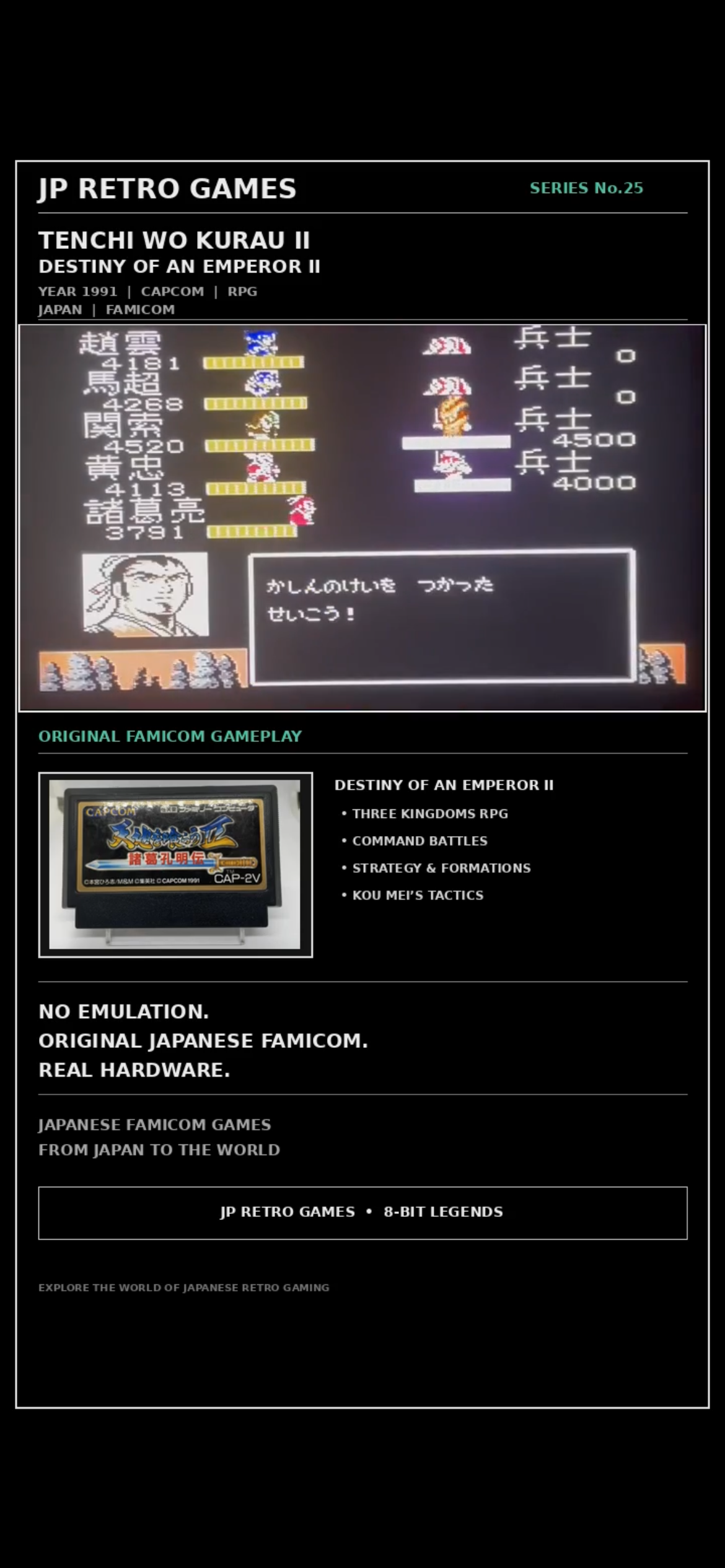
● A story inspired by the Three Kingdoms era
● Character designs connected to Hiroshi Motomiya’s manga
● Tactical battles and formation management
● CAPCOM’s distinctive approach to the Famicom RPG
● A Japanese-exclusive release that many international players may never have encountered on original hardware
For overseas collectors, the Japanese version is also a reminder that the Famicom library contains many experiences that were never officially localized.
This is one of the reasons we continue exploring Japanese cartridges, one title at a time.
Discover More Japanese Famicom Games
This episode is part of the JP RETRO GAMES series, dedicated to sharing the history, artwork, gameplay, and physical cartridges of classic Japanese Famicom titles.
Whether you are a longtime collector, a fan of the Three Kingdoms, or simply curious about the games that never reached your region, we hope this series helps you discover something new.
Explore the world of Japanese retro gaming with JP RETRO GAMES.
🎮 Original Japanese Famicom games
📺 Real hardware gameplay
🌏 Japanese retro games from Japan to the world
Follow JP RETRO GAMES for the next entry in our journey through the Famicom era, and check our Mercari listings for Japanese retro game cartridges.
Let’s keep Japanese retro games alive!
#JPRetroGames #TenchiWoKurauII #DestinyOfAnEmperor #Famicom #Capcom #RetroGaming #JapaneseRPG #ThreeKingdoms #HiroshiMotomiya #ClassicGaming

-
Saint Seiya: The Golden Legend — A 1987… 2026.10.15
-
JESUS: Kyofu no Bio Monster — A Mysteri… 2026.10.13
-
JP RETRO GAMES Series No\.23: Hokuto no… 2026.10.13


