


全20件 (20件中 1-20件目)
1
-
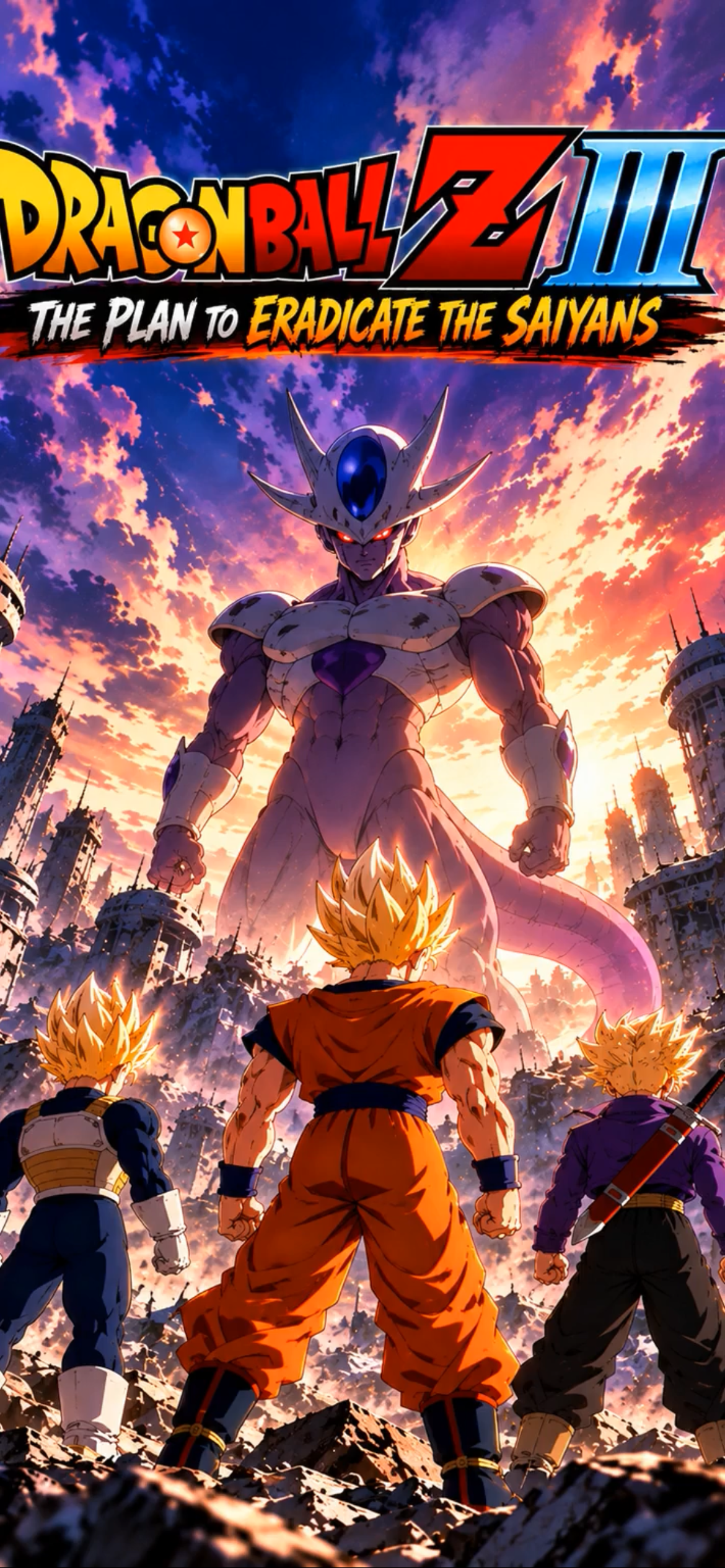
DRAGON BALL Z III: RESSEN JINZOUNINGEN|A Rare 1992 Japanese Famicom Dragon Ball Game
DRAGON BALL Z III: RESSEN JINZOUNINGENA Rare 1992 Japanese Famicom Dragon Ball GameDragon Ball has appeared in countless video games around the world.But some of the most interesting titles were released exclusively in Japan.One example is Dragon Ball Z III: Ressen Jinzouningen, a 1992 game for the Japanese Famicom.This time, JP RETRO GAMES takes a look at this unusual piece of Japanese 8-bit Dragon Ball history.🎮 Game InformationTitleDragon Ball Z III: Ressen JinzouningenJapanese TitleドラゴンボールZⅢ 烈戦人造人間Release Year1992PublisherBandaiDeveloperTOSEGenreRPG / CardRegionJapanPlatformFamily Computer (Famicom)The cartridge itself is a classic piece of early-1990s Japanese Famicom hardware.The label features Super Saiyan Goku, Trunks, and Vegeta, immediately giving the game a strong Dragon Ball Z identity.It was also manufactured in Japan, making the original cartridge an interesting collectible for Famicom and Dragon Ball fans.⚡ The OpeningThe game begins with a dramatic Dragon Ball Z-style opening.For this episode, I wanted to show the opening properly rather than immediately jumping into gameplay.The opening is followed by a memorable sequence featuring Goku powering up.Even with the technical limitations of the Famicom, the game does a surprisingly good job of creating a Dragon Ball atmosphere.🔥 Goku Powers UpOne of the scenes I wanted to include was Goku’s transformation.Seeing this kind of Dragon Ball Z moment reproduced on 8-bit hardware is one of the things that makes these Japanese-exclusive games so fascinating.The graphics are obviously very different from modern Dragon Ball games, but they have a unique charm that belongs to the Famicom era.🥋 Battle on the FamicomThe game also features RPG-style battles with Dragon Ball characters.Rather than simply showing static menus, the battle sequences give the game some surprisingly memorable visual moments.One of my favorite scenes is Tien’s special technique.Four Tien Shinhan?!Tien Shinhan uses his famous multi-body technique and appears as four characters on screen.It’s one of those moments that immediately makes you think:“They really put this on the Famicom?”That kind of unexpected detail is exactly what makes exploring Japanese retro games so much fun.🇯🇵 A Japanese Famicom OriginalFor this video, I played the game using an original Japanese Famicom cartridge on real hardware.No emulation.No modern remake.Just the original cartridge and Famicom hardware.There are many famous Dragon Ball games that were released internationally.But Japan also received games that never became part of the international NES library.These Japanese Famicom exclusives are a fascinating part of Nintendo and Dragon Ball history.🌎 From Japan to the WorldThis is what I’m trying to explore with JP RETRO GAMES.I live in Japan and collect Japanese Famicom games, including lesser-known titles that may be unfamiliar to players outside Japan.Some are famous.Some are strange.Some are forgotten.But every cartridge has a story.Japanese Famicom games from Japan to the world.🎮 JP RETRO GAMES|Series No.12DRAGON BALL Z III: RESSEN JINZOUNINGEN1992BandaiJapanese FamicomRPG / CardPlayed on original Japanese Famicom hardware.🔗 SNSTikTok:JP RETRO GAMESInstagram:@jpretrogames1X: @jpretrogames
2026.10.07
コメント(0)
-
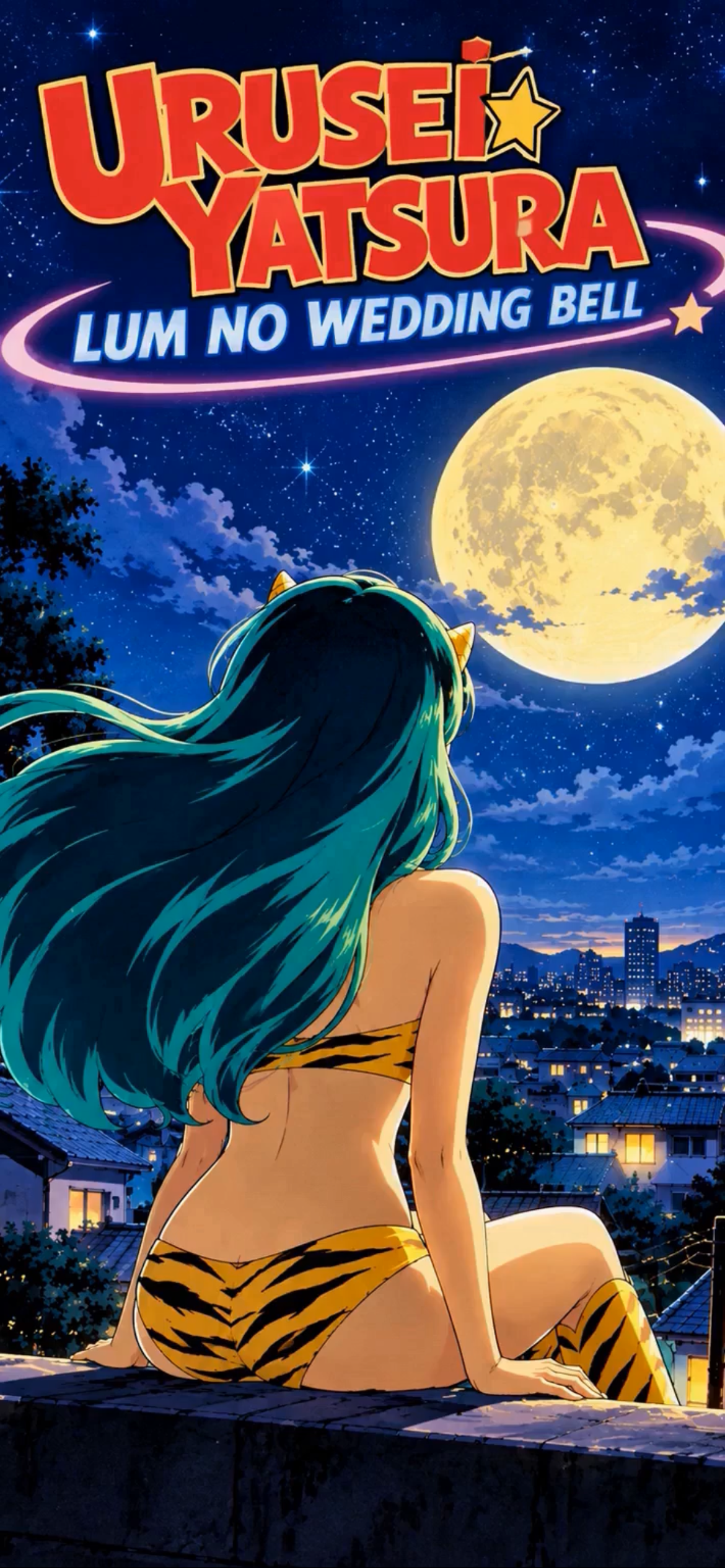
URUSEI YATSURA: LUM NO WEDDING BELL|A Strange 1986 Japanese Famicom Game JP RETRO GAMES|Series No.11
A Rare Japanese Famicom Adventure Featuring LumToday, JP RETRO GAMES takes a look at a very unusual Japanese Famicom game:URUSEI YATSURA: LUM NO WEDDING BELLReleased by Jaleco in Japan in 1986, this is an action game based on Rumiko Takahashi’s popular Urusei Yatsura series.The game was released on October 23, 1986, with the product number JF-10. It was priced at ¥4,900 at the time. This is the original Japanese Famicom version.🎮 Game InformationTitle: URUSEI YATSURA: LUM NO WEDDING BELLJapanese Title: うる星やつら ラムのウェディングベルYear: 1986Developer: TOSEPublisher: JalecoGenre: Action / 2D PlatformerRegion: JapanFormat: FamicomProduct No.: JF-10The game is a Japanese-only Famicom release, making it an interesting title for collectors and fans of Japanese retro games.Game databases list TOSE as the developer and Jaleco as the publisher. 🔥 Climb Before the Fire Reaches YouOne of the most interesting parts of the game is its basic gameplay concept.Lum has to make her way upward through buildings while fire gradually rises from below.The player must keep moving upward while avoiding enemies and obstacles.Reaching the top allows Lum to grab the UFO and escape to the next stage.That makes the gameplay surprisingly tense for a game released in 1986.The UFO is the key to clearing the stageThe UFO at the top of the stage isn’t just decoration.It provides the escape route to the next stage.In our Series No.11 video, you can see Lum reach the end of the stage and get carried away by the UFO.👽 From Stage Clear to the Next StageOne of the most fun things to watch is what happens after completing a stage.Lum is taken away by the UFO, and the game moves on to the next stage.The character also changes as the game progresses, giving the player a visual indication of the game’s progression.This is one of the details that makes Lum no Wedding Bell more interesting than its simple appearance might suggest.🕹️ An Interesting Connection to MOMOKO 120%There is another fascinating piece of history behind this game.Urusei Yatsura: Lum no Wedding Bell is closely related to Jaleco’s arcade game Momoko 120%.The basic game design was reused, while the characters were changed for the Urusei Yatsura version. The Famicom version retained the Urusei Yatsura license and featured Lum and other characters from the series. That makes this cartridge an interesting example of how Japanese games were sometimes adapted and repurposed during the 1980s.For retro game collectors, these kinds of connections are part of what makes researching Japanese Famicom games so much fun.📺 Playing the Original Japanese Famicom VersionFor this episode, I played the original Japanese Famicom cartridge on real hardware in Japan.No emulation.Just the original cartridge and Famicom hardware.The video includes:The openingAction gameplayFire rising from belowStage clearThe UFO escapeThe transition to the next stageGame Over🎮 JP RETRO GAMES|Series No.11🇯🇵 Japanese Famicom Games from Japan to the WorldThe Famicom library contains thousands of Japanese games, including many titles that were never officially released outside Japan.Some are famous.Some are obscure.And some, like Urusei Yatsura: Lum no Wedding Bell, become much more interesting when you discover the story behind them.That’s what JP RETRO GAMES is all about.Discovering Japanese Famicom games and sharing them with the world.🎮 Series No.11URUSEI YATSURA: LUM NO WEDDING BELL1986|Jaleco|Famicom|ActionJapanese Famicom games from Japan to the world.
2026.10.06
コメント(0)
-
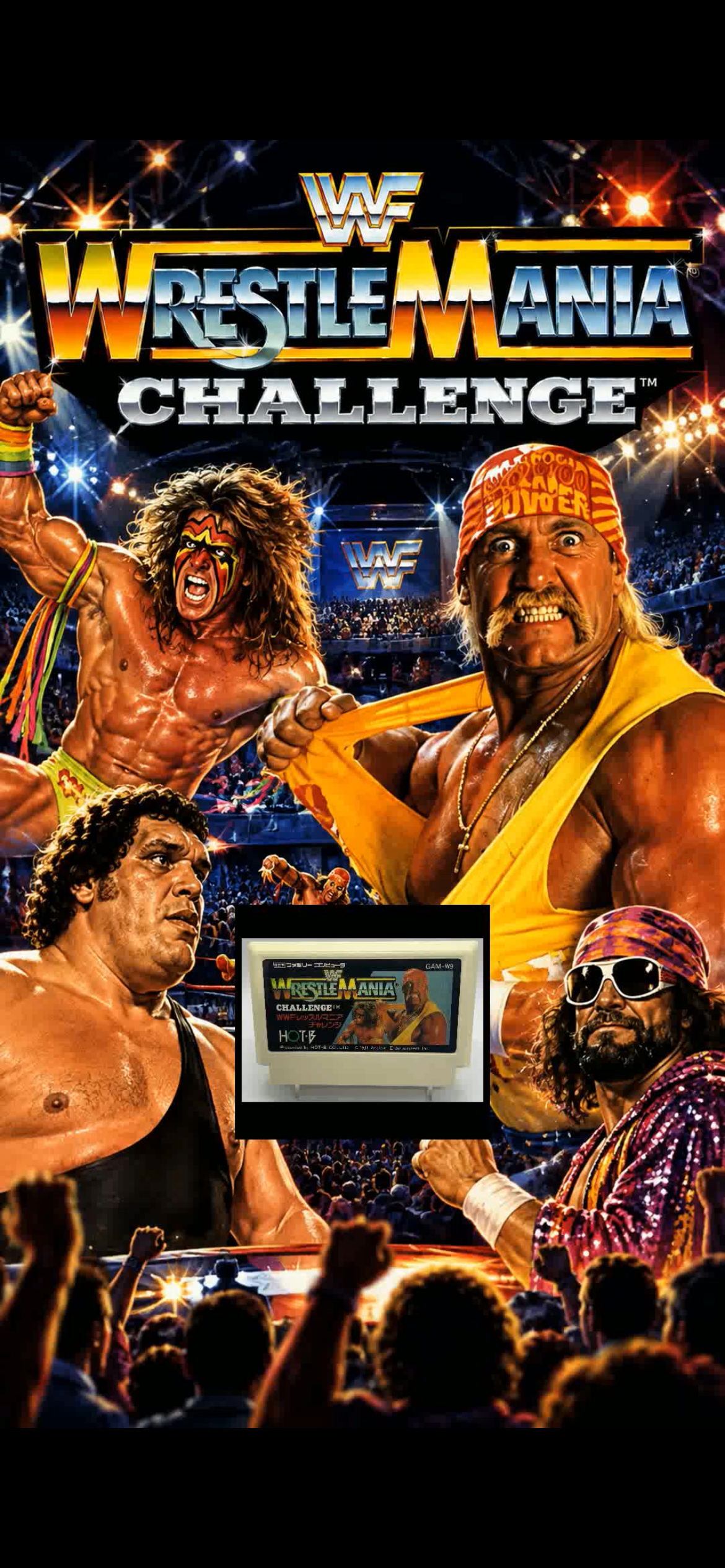
WWF WRESTLEMANIA CHALLENGE on the Japanese Famicom 🇯🇵 JP RETRO GAMES|Series No.10 WWF WRESTLEMANIA CHALLENGE
When I found this Japanese Famicom cartridge, I had to play it.WWF WRESTLEMANIA CHALLENGE is a wrestling game featuring some of the biggest WWF Superstars of the era.Hulk Hogan, The Ultimate Warrior, Macho King Randy Savage, André the Giant and more.But there is something especially interesting about this version.This is the Japanese Famicom release.The Japanese Famicom versionThe Japanese version of WWF WRESTLEMANIA CHALLENGE was released for the Nintendo Famicom on March 27, 1992.It was published in Japan by HOT-B and carries the product code:GAM-W9The original NES release came earlier, in 1990, with the game developed by Rare and published by LJN. So this cartridge is a Japanese Famicom release of a game that many players outside Japan know from the NES.And that is exactly the kind of game I like collecting.Choose your wrestlerOne of the best parts of this game is the roster.You can choose from several WWF Superstars, including:Hulk HoganThe Ultimate Warrior“Macho King” Randy SavageAndré the GiantThe Big Boss Man“Hacksaw” Jim Duggan“Ravishing” Rick RudeBrutus “The Barber” BeefcakeThere is also a character called “Yourself”, allowing the player to enter the tournament as a generic wrestler. For this video, I wanted to show as many of the characters as possible.Because let’s be honest…Who would you choose?Hulk HoganOf course, I had to include Hulk Hogan.For many people around the world, Hogan is probably one of the first names that comes to mind when they think about WWF in the late 1980s and early 1990s.The Japanese Famicom version even has his name displayed in Japanese:ハルク・ホーガンSeeing these famous wrestlers represented in an 8-bit Japanese Famicom game is part of the charm.Into the ringOnce the match begins, the game uses an unusual angled view of the wrestling ring.Instead of the traditional side view used by many wrestling games, the ring is presented almost like a diamond.This gives the game a distinctive look.The player can move around the ring, attack the opponent and use different wrestling moves.Each wrestler also has a signature move associated with them. Wrestling outside the ringAnd this is one of the scenes I definitely wanted to include in the video.The fight doesn’t always stay inside the ring.You can actually end up brawling outside the ring.For an NES/Famicom wrestling game from this era, that is a pretty fun detail.It makes the matches feel less restricted than simply exchanging moves inside the ropes.The game specifically supports fighting both in and outside the ring. More than one way to playWWF WRESTLEMANIA CHALLENGE isn’t limited to one-on-one matches.The game includes several modes, including:SinglesTag Team3-on-3 Survivor SeriesThere are also one- and two-player options. The Survivor Series mode is especially interesting because it allows three wrestlers to face three opponents.That gives the game a little more variety than a simple one-on-one wrestling match.Every wrestler has a different feelOne of the things I wanted to show in this video was the variety of characters.The roster isn’t huge by modern standards, but the characters are immediately recognizable.Hulk Hogan has his own signature move.The Ultimate Warrior has his own attack.Randy Savage has his own style.And the same goes for the other WWF Superstars.For an 8-bit game, it is impressive how much personality the developers managed to give the roster.The classic WWF atmosphereThis game comes from a very specific period of WWF history.The colorful characters, exaggerated moves and recognizable wrestlers give it a strong late-1980s / early-1990s wrestling atmosphere.Even with the limitations of the Famicom hardware, the game clearly tries to make each wrestler recognizable.The original NES version was developed by Rare, with music by David Wise, and was released in 1990. Sometimes you lose…And then…Not every match ends with a victory.For this video, I wanted to show the other side of wrestling games too.The moment when your wrestler goes down.The moment when the match is lost.And finally…Hulk Hogan loses.Hulk Hogan’s defeatYesEven Hulk Hogan can lose.I decided to finish the video with this scene because it felt like a fun way to end the match.After showing different wrestlers, attacks and even an outside-the-ring brawl…Hulk Hogan goes down.And that’s the end of this match.Who would you choose?Now I’m curious.If you could choose one wrestler from this game…Who would you pick?Hulk Hogan?The Ultimate Warrior?Macho King Randy Savage?André the Giant?Or someone else?I’d love to know which wrestler people remember playing as.The original Japanese Famicom cartridgeThis is the original Japanese Famicom cartridge I used for this video.The label says:WWF WRESTLEMANIACHALLENGEandWWFレッスルマニアチャレンジThe cartridge number is:GAM-W9The Japanese release was published by HOT-B on March 27, 1992. For collectors, this is one of the interesting things about Japanese Famicom games.The same game that many players remember as an NES title can look completely different when you see the original Japanese cartridge.WWF WrestleMania Challenge: NES vs FamicomOutside Japan, this game is generally associated with the Nintendo Entertainment System.In Japan, it appeared on the Nintendo Famicom.Original NES releaseWWF WrestleMania Challenge1990LJNRareJapanese Famicom releaseWWF WRESTLEMANIA CHALLENGE1992HOT-BGAM-W9The gameplay is part of the same game, but the Japanese cartridge is a fascinating piece of Famicom history. Why I wanted to show this gameWWF WRESTLEMANIA CHALLENGE is very different from the RPGs and action games I’ve featured in previous JP RETRO GAMES episodes.But that’s exactly why I wanted to include it.The Japanese Famicom library isn’t just about Mario, Zelda and Final Fantasy.There are sports games.Wrestling games.Licensed games.Games based on movies, television and real-world celebrities.And sometimes you find a cartridge that connects Japanese Famicom history with something that was already famous overseas.WWF WRESTLEMANIA CHALLENGE is one of those games.JP RETRO GAMES|No.10This is Series No.10 of JP RETRO GAMES.I’m collecting and playing Japanese Famicom games in Japan and sharing them with retro-gaming fans around the world.This time, we stepped into the ring with some of the biggest WWF Superstars of the era.And yes…Hulk Hogan lost. 😄So, one last question:Who would you choose?JP RETRO GAMES 🇯🇵Japanese Famicom games from Japan to the world.Game InformationTitle: WWF WRESTLEMANIA CHALLENGEJapanese Title: WWFレッスルマニアチャレンジPlatform: Nintendo FamicomJapanese Release: March 27, 1992Original NES Release: 1990Developer: RareJapanese Publisher: HOT-BOriginal NES Publisher: LJNGenre: Professional Wrestling / SportsPlayers: 1–2Region: Japan (NTSC)Format: Famicom CartridgeJapanese Product Code: GAM-W9The Japanese release date, HOT-B publisher information and GAM-W9 product code are listed by Famicom catalog sources; the original NES release and Rare/LJN credits are documented separately. About JP RETRO GAMESJP RETRO GAMES introduces Japanese Famicom games, original cartridges and retro-gaming culture to people around the world.Every series focuses on a different game from my collection.I play the games, record the footage and show the original Japanese cartridges.From Japan to the world. 🇯🇵🌎
2026.10.06
コメント(0)
-
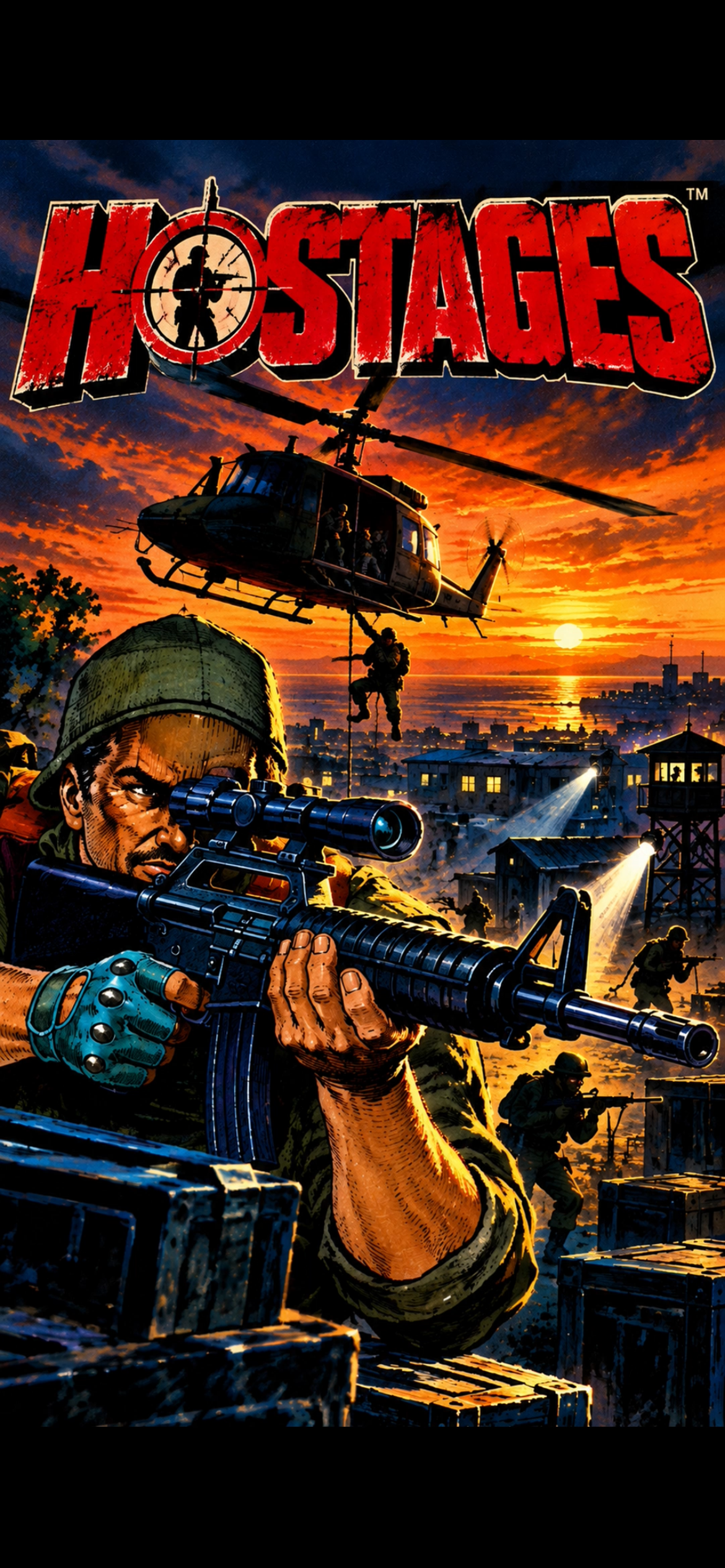
HOSTAGES on the Japanese Famicom 🇯🇵 JP RETRO GAMES|Series No.09 HOSTAGES — THE EMBASSY MISSION A very different kind of Famicom game.
When I first played HOSTAGES on the Japanese Famicom, the opening immediately caught my attention.It doesn’t feel like a typical run-and-gun action game.You have to move carefully, avoid danger, watch the windows, use your weapon, and even rappel down the side of a building.And the opening sequence is surprisingly dramatic for a Famicom game from 1989.This is the original Japanese Famicom version of HOSTAGES, released by Kemco.A Japanese Famicom game from 1989HOSTAGES was released in Japan for the Nintendo Famicom on December 1, 1989.The Japanese version was published by Kemco (Kotobuki System) and carries the cartridge code KSC-HZ. The game was originally created by Infogrames, and the Famicom version was adapted for the Japanese market by Kemco. In Japan, the game was simply called:ホステージThe cartridge itself has a very distinctive blue Famicom design and a military-style illustration.The opening really sets the moodThe first thing that surprised me was the opening.Before the actual gameplay begins, the game creates a serious atmosphere with its military operation setting.There is a helicopter, soldiers and an embassy under threat.For a Famicom game, it feels unusually cinematic.That’s why I decided to keep a large part of the opening in my video.I especially like the moment when the HOSTAGES logo drops down onto the title screen.It has a very late-1980s action movie feeling.HOSTAGES is not just a shooting gameAt first glance, HOSTAGES might look like a shooting game.But the gameplay is more complicated than that.The mission involves several different types of gameplay.You need to move through dangerous areas, avoid enemy fire, use sniping positions and eventually enter the building to rescue the hostages.The game rewards careful movement rather than simply shooting everything in sight.The NES/Famicom version is also known for combining several different gameplay sections, including stealth movement, sniping and rappelling. Moving carefully through the streetsOne of the first things you notice when playing HOSTAGES is how vulnerable your character feels.You can’t simply run forward.You have to watch the surroundings and move carefully.Enemy attacks can come quickly, so timing your movement is important.This makes the game feel quite different from more familiar Famicom action games.There is a sense that you are actually trying to infiltrate an enemy-controlled area.Watching the windowsOne of the most memorable parts of the game is the sniping section.You watch the windows of the building and wait for movement.When an enemy appears, you have to react quickly.This section gives HOSTAGES a completely different feeling from the movement section.Instead of running around, you are watching and waiting.The game uses this change of pace to make the mission feel like an actual operation.Rappelling down from the roofAnd then there is the rappelling section.Your team reaches the roof and must descend along the side of the building.This is probably one of the most unusual things about HOSTAGES.The game doesn’t just ask you to walk into the building.You actually have to descend from above.Timing is important here because a mistake can send the character falling.The rappelling section is also one of the gameplay elements specifically associated with the Famicom/NES version. One mistake can end the missionHOSTAGES can be unforgiving.If you move at the wrong time, you can quickly get shot.That was one of the things I wanted to show in this video.Rather than only showing successful gameplay, I wanted to include the moments where things go wrong too.It makes the game feel much more authentic.And honestly, that’s part of the fun of playing old games.Game OverEventually, my mission didn’t go exactly as planned.GAME OVER.But I actually think the game-over screen makes a good ending for this video.After all the careful movement, shooting and rappelling, everything can come down to one mistake.That’s very much the feeling of HOSTAGES.HOSTAGES or RESCUE: THE EMBASSY MISSION?If you know the NES version, you may recognize this game under a different name.In Japan, it was released as:HOSTAGESThe North American NES release was known as:Rescue: The Embassy MissionThe original game also appeared under other names in different regions, including Operation Jupiter. So if you remember playing Rescue: The Embassy Mission on the NES, this Japanese Famicom cartridge is the same game family.The original Japanese Famicom cartridgeThis is the original Japanese Famicom cartridge I used for this video.The label says:HOSTAGESandホステージThe cartridge number is:KSC-HZThe Japanese release was priced at 5,900 yen at the time. For me, this is one of the interesting things about collecting Famicom games.A game that may be remembered under a completely different name overseas can have a completely different-looking Japanese cartridge.Why I wanted to show this gameHOSTAGES isn’t one of the first Famicom games people usually mention when talking about the system.And that’s exactly why I wanted to show it.There are so many unusual games in the Japanese Famicom library.Some became famous around the world.Others stayed relatively unknown outside Japan.HOSTAGES is one of those games that makes me want to dig deeper into the Famicom library.The opening, the sniping, the rappelling and the tense movement all make it stand out.JP RETRO GAMES|No.09This is Series No.09 of JP RETRO GAMES.I’m collecting and playing Japanese Famicom games in Japan and sharing them with retro-gaming fans around the world.Sometimes the most interesting games aren’t the famous ones.Sometimes they’re the games you discover by picking up an old cartridge and wondering:“What is this?”That’s exactly what I love about the Japanese Famicom.JP RETRO GAMES 🇯🇵Japanese Famicom games from Japan to the world.Game InformationTitle: HOSTAGESJapanese Title: ホステージPlatform: Nintendo FamicomYear: 1989Japanese Release: December 1, 1989Publisher: Kemco / Kotobuki SystemOriginal Developer: InfogramesGenre: Action / Tactical ShooterPlayers: 1Region: Japan (NTSC)Format: Famicom CartridgeProduct Code: KSC-HZThe Japanese Famicom release date, publisher, developer/port information and cartridge code are documented by Famicom databases and catalog sources. About JP RETRO GAMESJP RETRO GAMES introduces Japanese Famicom games, original cartridges and retro-gaming culture to people around the world.Every series focuses on a different game from my collection.I play the games, record the footage and show the original Japanese cartridges.From Japan to the world. 🇯🇵🌎
2026.10.04
コメント(0)
-
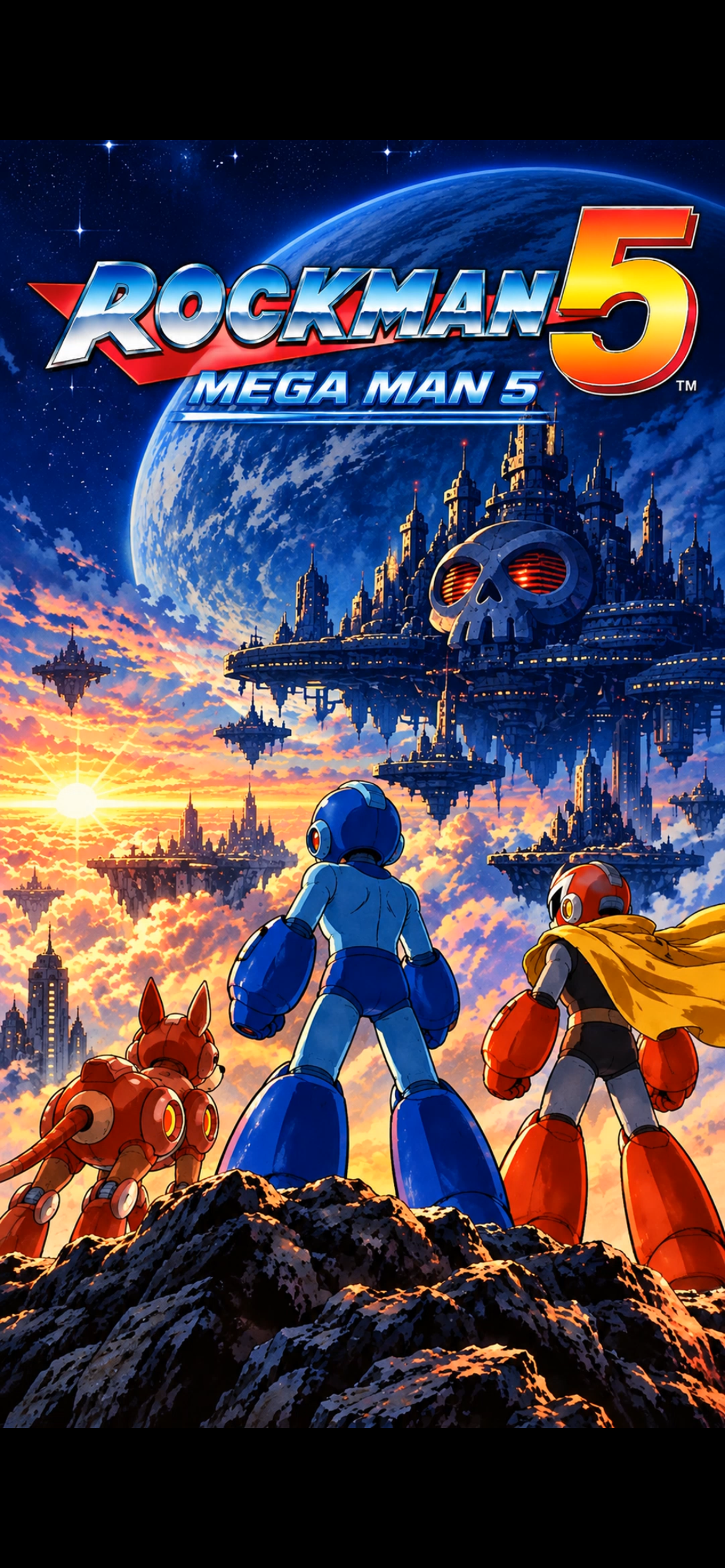
ROCKMAN 5 on the Japanese Famicom 🇯🇵 JP RETRO GAMES|Series No.08 ROCKMAN 5 — MEGA MAN 5 A Japanese Famicom classic from Capcom
Released in Japan in 1992, ROCKMAN 5 is one of Capcom’s classic action games for the Nintendo Famicom.Outside Japan, the game is known as MEGA MAN 5.This is the original Japanese Famicom version, featuring the original Japanese cartridge and Japanese title.A Japanese Famicom classicROCKMAN 5: Blues no Wana!? was released in Japan on December 4, 1992.The game was developed and published by Capcom and is an action platform game.For international players, this game became MEGA MAN 5.The Japanese Famicom version is especially interesting for collectors because of its original Japanese title, cartridge design, and packaging history.The story starts with a mysteryAt the beginning of the game, something is wrong.Proto Man, known as Blues in Japan, appears to have turned against Dr. Light.Mega Man is forced to confront his former ally while trying to uncover what is really happening.The opening sequence immediately gives the game a strong story-driven introduction before the action begins.For a short video, this opening is one of the most interesting parts of ROCKMAN 5 because it shows how much personality the Famicom games could create with very limited hardware.Choosing a Robot MasterAfter the opening sequence, Mega Man can choose which Robot Master stage to challenge.This stage-selection system became one of the defining features of the Mega Man series.Players can choose their own order and discover different weapons by defeating the Robot Masters.That means the game isn’t simply about memorizing a fixed stage order.Finding the right weapon for each situation is part of the fun.Crystal Man appearsOne of the Robot Masters featured in ROCKMAN 5 is Crystal Man.Each Robot Master has a distinctive visual design, stage theme and attack pattern.The Crystal Man stage is a good example of the colorful visual style that made late-generation Famicom action games so memorable.Even today, the game has a very recognizable 8-bit Capcom style.The real Famicom gameplayROCKMAN 5 is a traditional side-scrolling action game.Mega Man runs, jumps, shoots enemies and avoids obstacles while progressing through each stage.The controls are simple, but the level design requires timing and careful movement.The game also has a satisfying sense of progression.Defeating a Robot Master gives Mega Man a new weapon, allowing the player to approach later stages in different ways.Weapons and actionThe different weapons are one of the most enjoyable parts of the game.Each weapon has its own characteristics, and some are particularly effective against specific enemies or bosses.ROCKMAN 5 also introduced Beat, Mega Man’s robotic bird companion.Beat became an important part of the Mega Man series and is one of the memorable additions associated with ROCKMAN 5.For this video, I wanted to show several different moments of the game rather than focusing on only one stage.The goal is to give overseas viewers a quick look at what the original Japanese Famicom version actually feels like to play.The original Japanese Famicom cartridgeThis is the original Japanese Famicom cartridge of ROCKMAN 5.The cartridge carries the Japanese title:ROCKMAN 5ブルースの罠!?The cartridge number is CAP-5V, and the copyright information identifies Capcom.For collectors, the physical cartridge is an important part of the experience.This isn’t simply an emulated version of Mega Man 5.It is the original Japanese Famicom release that Japanese players could actually buy and play in 1992.ROCKMAN 5 or MEGA MAN 5?One interesting detail for international fans is the difference in naming.JapanROCKMAN 5ブルースの罠!?North America / InternationalMEGA MAN 5The character known internationally as Proto Man is called Blues in Japan.This is one of the many differences that make the Japanese versions of classic Famicom games interesting to collectors and retro-gaming fans.If you grew up playing Mega Man 5 outside Japan, seeing the original Japanese cartridge can feel like looking at a different version of a familiar game.JP RETRO GAMES|No.08ROCKMAN 5 is a great example of why I enjoy collecting Japanese Famicom games.The game itself is already a classic.But the original Japanese cartridge, Japanese title, artwork and history add another layer of interest for collectors.I collect and introduce Japanese Famicom games from Japan for retro-gaming fans around the world.From Japan to the world. 🇯🇵🌎Game InformationTitle: ROCKMAN 5: Blues no Wana!?International Title: MEGA MAN 5Platform: Nintendo FamicomYear: 1992Japanese Release: December 4, 1992Developer: CapcomPublisher: CapcomGenre: Action / PlatformerRegion: Japan (NTSC)Players: 1Format: Famicom CartridgeAbout JP RETRO GAMESJP RETRO GAMES introduces Japanese Famicom games, cartridges and retro-gaming culture to people around the world.Each series video focuses on one game and shows real gameplay from the original hardware and cartridges whenever possible.Follow the series to discover more Japanese Famicom games.JP RETRO GAMES 🇯🇵Japanese Famicom games from Japan to the world.
2026.10.04
コメント(0)
-
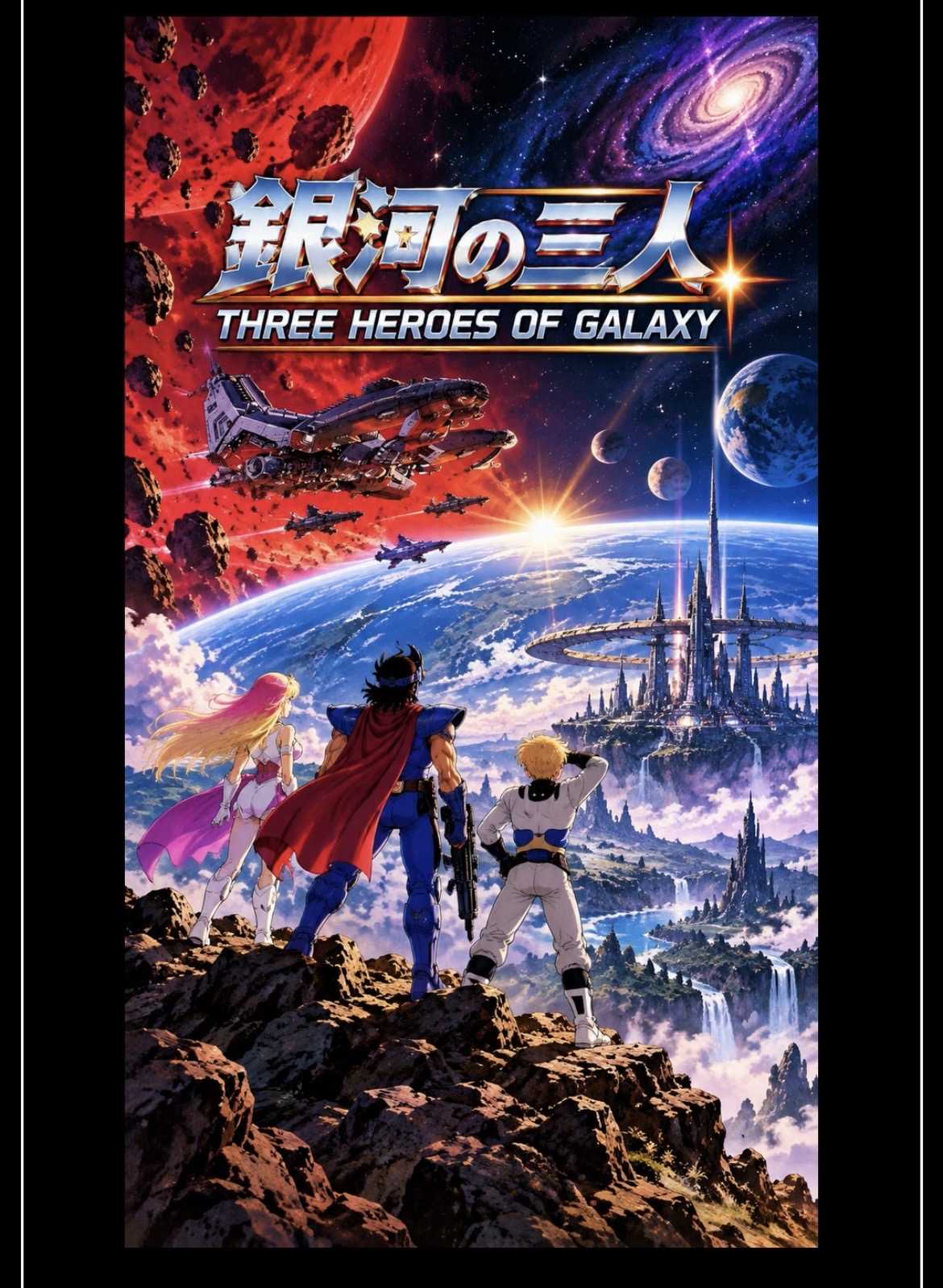
GINGA NO SANNIN on the Japanese Famicom 🇯🇵 JP RETRO GAMES|Series No\.07 A viewer asked me to show this game — so here it is
Ginga no Sannin (銀河の三人) is a 1987 Japanese Famicom RPG with a distinctive science-fiction setting. The Famicom version was released in Japan on December 15, 1987, and was published by Nintendo, with Pax Softnica involved in its development. citeturn0search12This is Series No.07 of JP RETRO GAMES, a project documenting original Japanese Famicom games from Japan to the world.A very different kind of Famicom RPGUnlike the medieval fantasy worlds that were common in many RPGs of the era, Ginga no Sannin uses a science-fiction setting. The Famicom version is associated with the earlier PC title The Earth Fighter Rayieza, while adding changes for the console version, including additional gameplay elements.The result is a fascinating snapshot of late-1980s Japanese game design: space battles, character portraits, Japanese text, and a world built around an alien threat.Battles in spaceThe battle scenes are one of the most memorable parts of this game. Instead of a conventional fantasy battlefield, the player faces enemies against a star-filled space background.The presentation is simple by modern standards, but the combination of pixel art, character portraits and Japanese interface design gives the game a very specific 1987 Famicom identity.Rimi and the Bit attackOne of the scenes I wanted to include in this video is Rimi’s attack using the Bit.The Famicom version introduced changes that included Rimi being able to use psychic powers, adding another distinctive element to the console version. Exploring the galaxyBetween battles, the game moves into exploration and navigation. The contrast between the dark space battles and the blue-and-white map screens is one of the visual details that makes this game immediately recognizable.The original Famicom cartridgeFor this episode, I used my original Japanese Famicom cartridge.The cartridge artwork itself is worth a closer look. It captures the colorful late-1980s Japanese sci-fi aesthetic and features the three main characters against a futuristic background.JP RETRO GAMES|No.07I chose Ginga no Sannin for this episode because a viewer requested it in the comments.That is exactly what I want JP RETRO GAMES to become: a way to discover Japanese Famicom games that may be unfamiliar outside Japan, one cartridge at a time.Have you played Ginga no Sannin before?And which Japanese Famicom game should I play next?Game: Ginga no Sannin (銀河の三人)Year: 1987Developer: Pax SoftnicaPublisher: NintendoGenre: RPGRegion: Japan (NTSC)Format: Famicom#Famicom #JapaneseFamicom #Nintendo #RetroGaming #JapaneseGames #FamicomGames #RetroGames #GingaNoSannin #JP_RETRO_GAMES
2026.10.03
コメント(0)
-
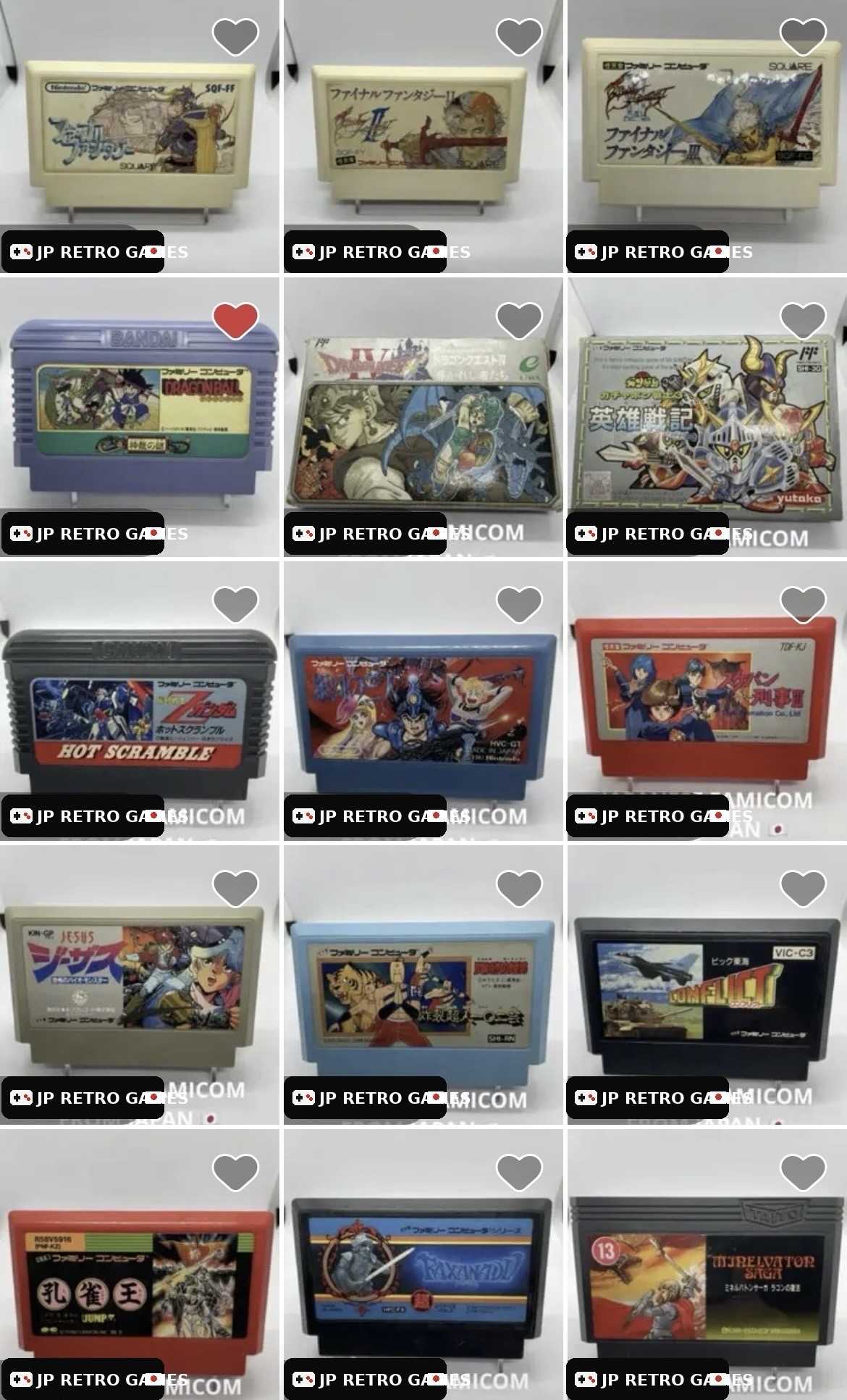
Which Japanese Famicom Game Is Your Favorite? 🇯🇵🎮 -A look at my Japanese Famicom collection — and I want to know which game you love.
There are so many amazing games on the Japanese Famicom.Some became famous around the world.Others were released only in Japan and are much less familiar to international players.I’ve been collecting Japanese Famicom games, and I wanted to share some of my collection with you.But this time, I don’t want to choose the game.I want YOU to choose. 🎮Which one is your favorite?Take a look through the collection.Do you see a game you played when you were younger?Maybe you recognize a famous character.Maybe there is a game you’ve never seen before.Or maybe your favorite Japanese Famicom game isn’t even in these pictures.Tell me about it!👇What’s your favorite Japanese Famicom game?🇯🇵 Japanese Famicom, Japanese gamesOne of the things I enjoy about collecting Famicom games is discovering games that are different from the versions released outside Japan.The cartridge designs, Japanese titles, artwork and even the games themselves can be interesting to compare.For international retro gamers, Japanese Famicom games can be a completely different way to explore classic Nintendo history.And that’s what I want to share here at JP RETRO GAMES.Not just the games.The feeling of discovering Japanese retro gaming.🎮 You Choose. I Play.I’m starting a new idea with this collection.YOU CHOOSE. I PLAY. 🇯🇵🎮If you see a game in my collection that you’d like to see played, tell me the title.I’ll use your suggestions when deciding which Japanese Famicom game to feature next.Your favorite could become the next JP RETRO GAMES video.You choose the game.I play it on Japanese Famicom.What should I play next?Maybe you want to see an action game.Maybe an RPG.Maybe a classic character you already know.Maybe something completely unknown outside Japan.There are plenty of possibilities.So tell me:🎮 What’s your favorite Famicom game?🇯🇵 Which Japanese Famicom game should I play next?👇 And if your favorite isn’t in my collection, tell me the title anyway!About JP RETRO GAMESJP RETRO GAMES is my personal project exploring Japanese Famicom and retro gaming culture.I’m based in Japan and collect, play and introduce Japanese retro games to gamers around the world.If you love Famicom, NES, Japanese games, retro gaming or classic Nintendo, follow along.There are many more Japanese Famicom games to discover. 🇯🇵🎮YOU CHOOSE. I PLAY. 🇯🇵🎮What should I play next?
2026.10.03
コメント(0)
-
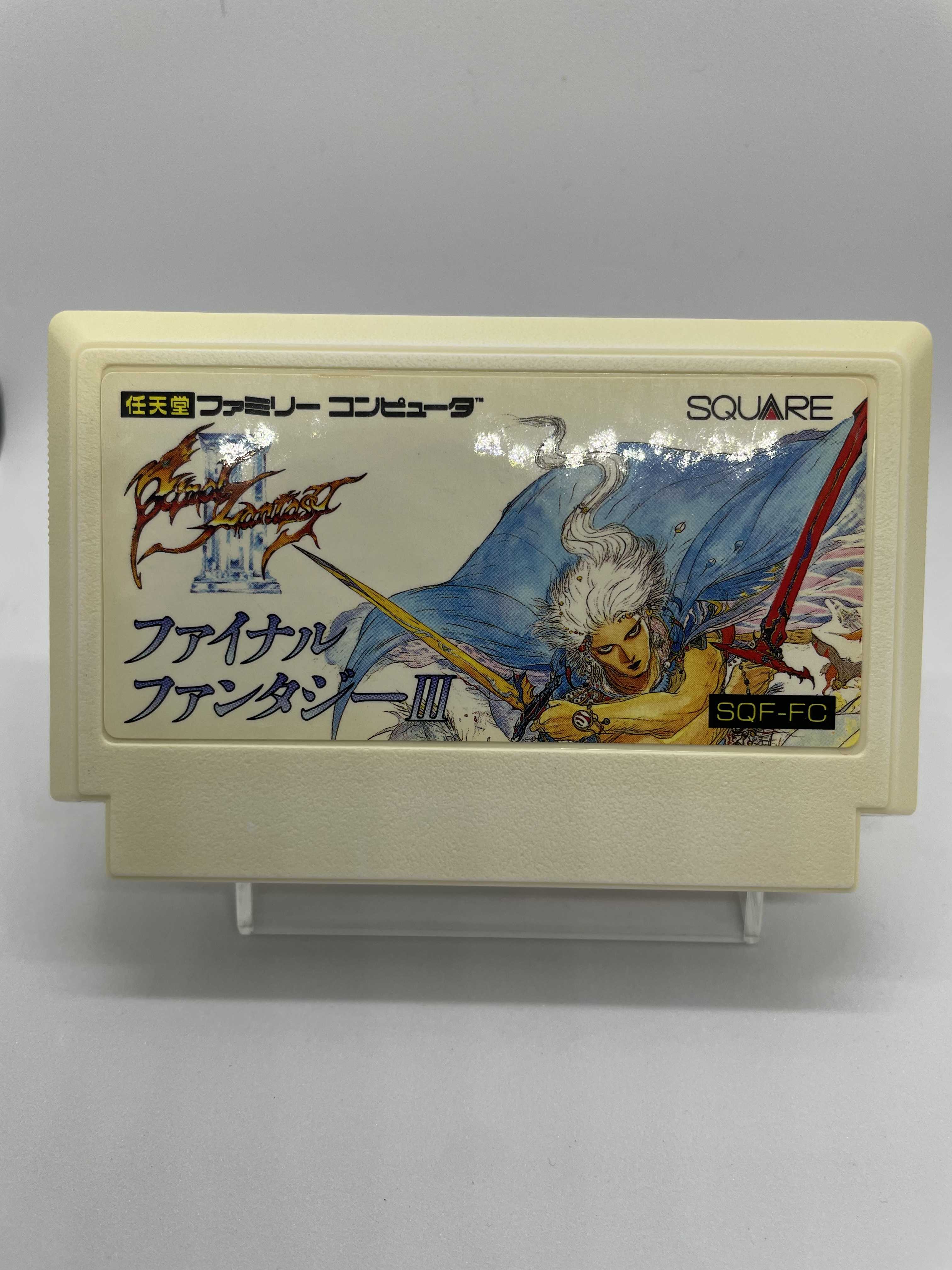
FINAL FANTASY III on the Japanese Famicom 🇯🇵 JP RETRO GAMES|Series No.06
Some games are remembered for their graphics.Others are remembered for the adventure.And then there are games that become part of gaming history.Today, we’re looking back at FINAL FANTASY III on the original Japanese Famicom.Released by Square in Japan in 1990, FINAL FANTASY III introduced a flexible Job System, allowing characters to change their roles and abilities throughout the adventure. 🎮 A Japanese Famicom ClassicFINAL FANTASY IIIYear: 1990Developer: SquarePublisher: SquareGenre: RPGRegion: JapanPlatform: Nintendo Family Computer / FamicomThe original Famicom version has a very distinctive visual style.Compared with later remakes and modern versions, the original 8-bit presentation gives the game a completely different atmosphere.For retro game collectors, this is also a piece of Japanese gaming history that can be experienced through the original hardware and cartridge.⚔️ The Job SystemOne of the most important features of FINAL FANTASY III is its Job System.Characters can change jobs and take on different roles in battle. Jobs include classes such as White Mage, Black Mage, Warrior, Monk, Dragoon and more. This means that party building isn’t simply about increasing levels.You can experiment with different combinations and change how your party approaches battles.That idea became an important part of the FINAL FANTASY series.🔄 Changing JobsOne of the moments I wanted to capture in this video was the transition from managing equipment to changing jobs.This is one of the things that makes the original Famicom version interesting to experience today.You’re not just watching the characters become stronger.You’re deciding what kind of characters they will become.✈️ Taking to the SkiesAnd then there is one of the classic RPG experiences:the airship.Moving from walking across the world to travelling by airship gives the adventure a completely different sense of scale.For a 1990 Famicom RPG, these moments are part of what makes FINAL FANTASY III feel like a large-scale adventure.✨ Magic and BattleMagic is another important part of the party system.In this footage, you can see the party preparing magic and a White Mage using a spell.The combination of jobs, equipment and magic gives the player plenty of ways to experiment with the party.💾 The Original Japanese Famicom CartridgeAnd this is the actual cartridge used for this video.The cartridge itself is part of what makes collecting Japanese retro games so interesting.It’s not just the game data.It’s the physical object from the original era — the label, cartridge design and the history attached to it.For JP RETRO GAMES, this is what I want to share:Japanese Famicom games from Japan to the world.🇯🇵 Why the Japanese Version Is InterestingThere is an important point for international fans.The original Famicom FINAL FANTASY III was released in Japan in 1990 and was not originally released overseas in that form. Later versions and remakes brought the game to international audiences. So when you see this cartridge, you’re looking at the original Japanese Famicom release, not simply another version of the game.And that’s exactly what makes Japanese retro gaming fascinating.🎮 FINAL FANTASY III — JP RETRO GAMES No.06From the cartridge…To the hardware…To the original gameplay…This is how FINAL FANTASY III looked and felt on the Japanese Famicom.Have you ever played the original Famicom version?And if you could choose one Job for your party, which would you choose?White Mage? Black Mage? Warrior? Monk?Let me know. 👇🇯🇵 JP RETRO GAMESJapanese Famicom games from Japan to the world.Discover Japanese retro games, original cartridges and forgotten games from the Famicom era.Series No.06 — FINAL FANTASY IIIJP RETRO GAMES on TikTokJP RETRO GAMES on InstagramJP RETRO GAMES on X
2026.10.03
コメント(0)
-
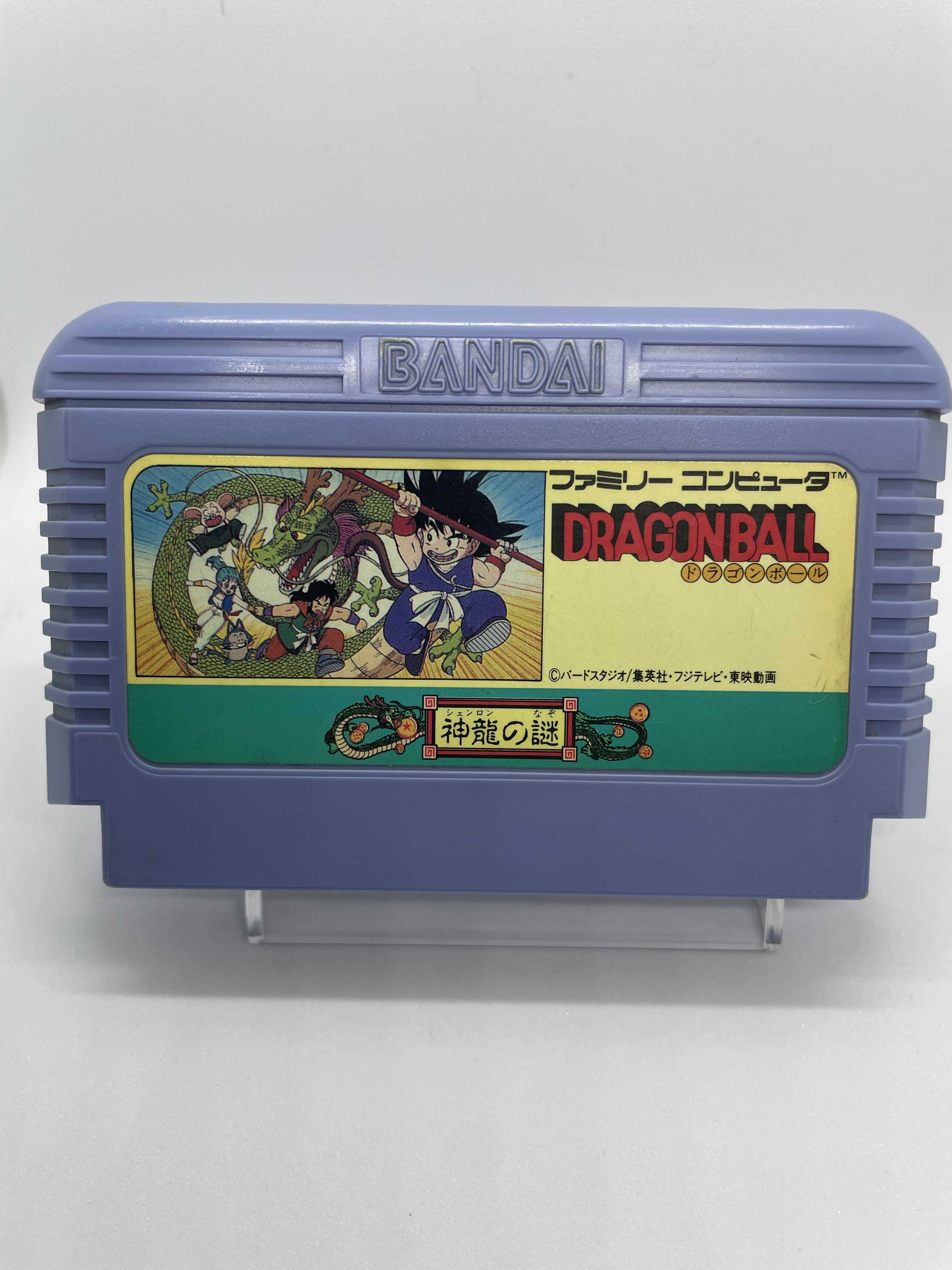
Dragon Ball: Shenron no Nazo — The Mystery Behind a Japanese Famicom Cartridge
Have you ever looked closely at an old Japanese Famicom cartridge?This one caught my attention immediately.It is Dragon Ball: Shenron no Nazo, released for the Japanese Famicom by Bandai.But there is something unusual about this cartridge.It says “1985” on the back.Why 1985?The game itself is associated with 1986, so this small detail made me want to look back at the history surrounding the game.The Dragon Ball EraTo understand this game, I wanted to go back to the world of Dragon Ball in the 1980s.I have an original Weekly Shonen Jump from this era in my collection, and it gives a fascinating glimpse into how Dragon Ball was presented to Japanese readers at the time.The magazine also contains material related to the Famicom gameSeeing the original magazine next to the actual cartridge makes the game feel very different from simply playing an old ROM or looking at an image online.These are physical pieces of the same era.Actually Playing ItOf course, the best way to understand an old game is still to play it.I connected the cartridge to a real Famicom and played it.The game is very different from modern Dragon Ball games.The conversations are short, the action is simple, and the game has that unmistakable feeling of an early Famicom title.https://www.instagram.com/reel/Dd6x52xSSbx/?stkn=MWJ2cTVxcmM3ejFoaw==I kept the gameplay footage focused on the action rather than the dialogue.And yes… eventually, I got a GAME OVER. 😅So, What Does “1985” Mean?The most interesting detail for me is the “1985” marking on the cartridge.Does it mean the game was released in 1985?Not necessarily.A date printed or molded into a cartridge can refer to things such as manufacturing, copyright, production, or other internal information. It should not automatically be interpreted as the game’s release date.That’s why I don’t want to simply call it a “1985 version.”Instead, I think the small marking is part of the mystery that makes this particular cartridge interesting.🇯🇵 Japanese Famicom × Dragon Ball × Weekly Shonen JumpWhat I like about collecting Japanese retro games is that the cartridge is only one part of the story.A Famicom cartridge.An old Weekly Shonen Jump.The Dragon Ball manga from the same era.And an actual gameplay session.When these pieces are put together, you can get a small glimpse of Japanese gaming and manga culture in the 1980s.This is why I collect Japanese Famicom games.Not just the games themselves, but the memories, magazines, advertisements and history surrounding them.Have you ever played Dragon Ball: Shenron no Nazo?And what do you think the “1985” marking on this cartridge means?Let me know what you think.I will continue sharing Japanese Famicom games, vintage manga and Japanese retro gaming culture from my collection.🎮TikTok📸Instagram𝕏X🛒MercariJP RETRO GAMES — Discover Japanese Retro Games from Japan.
2026.10.01
コメント(0)
-
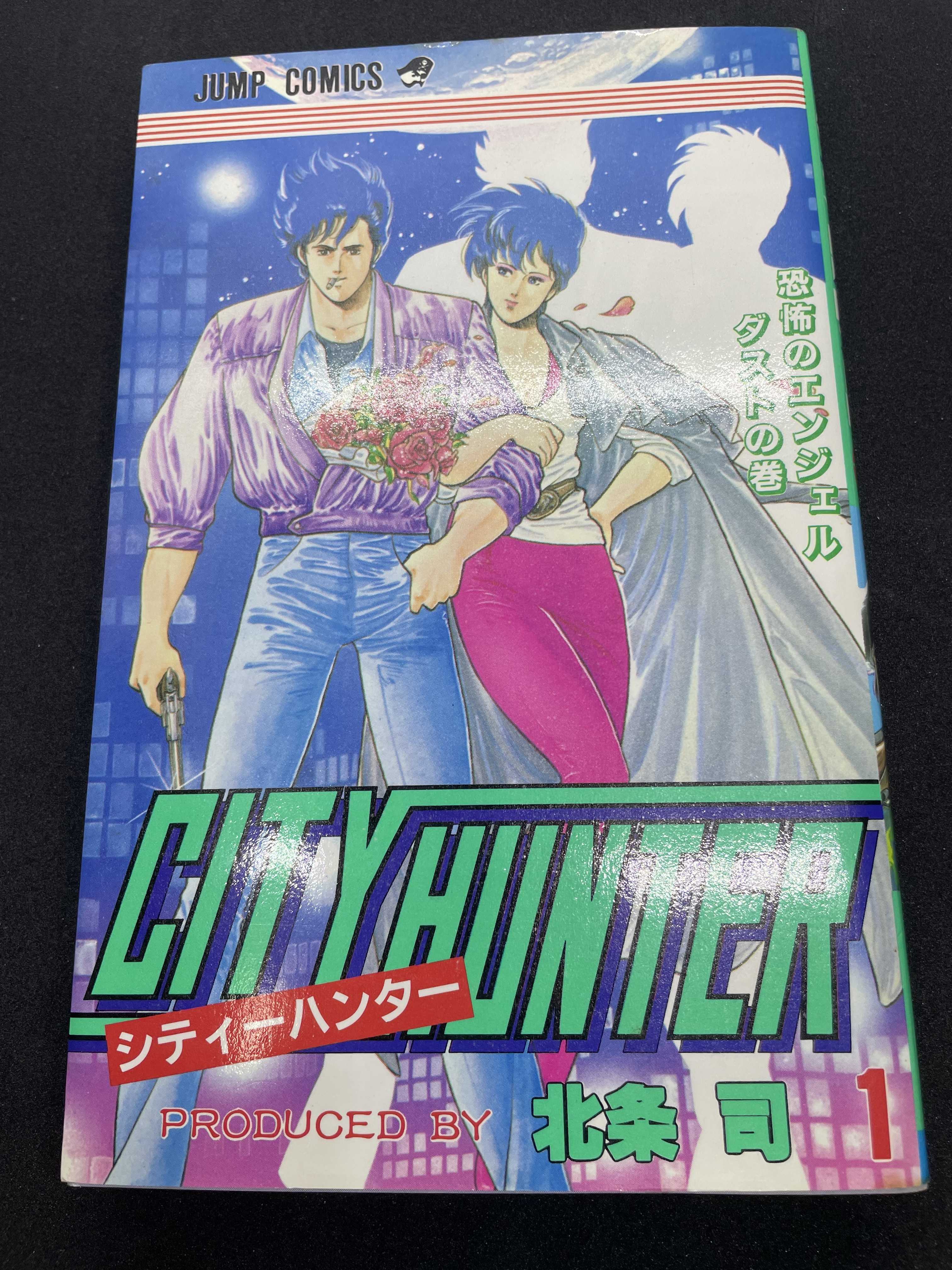
🇯🇵 CITY HUNTER: A Complete 35-Volume First Printing Collection from Japan
A piece of 1980s–1990s Japanese manga historyIf you are a fan of Japanese manga, CITY HUNTER is probably a title you have seen before.Created by Tsukasa Hojo, CITY HUNTER is one of the most iconic manga series from the golden age of Weekly Shonen Jump.Recently, I found something special in Japan:All 35 original Japanese volumes of CITY HUNTER — and every volume is a first printing.📚 All 35 VolumesThe collection contains the complete original Jump Comics series:Volume 1 → Volume 35The publication dates shown in the books range from 1986 through 1992, covering the entire original run of the manga.What makes this collection particularly interesting is the colophon inside each book.The books show:「第1刷発行」which means First Printing / First Edition printing.I checked the volumes individually rather than simply assuming that the entire set was a first-printing collection.That makes this much more interesting to me as a collector.🔥 CITY HUNTER and Weekly Shonen JumpCITY HUNTER was originally serialized in Weekly Shonen Jump, one of the most influential manga magazines in Japan.The series appeared alongside many legendary manga titles from the 1980s and early 1990s.The collection also reminds me of how different manga publishing was before the digital era.These are physical books that were printed in Japan more than 30 years ago.The paper has naturally aged, and each volume has its own signs of its history.That is part of the charm.🎨 The Artwork of Tsukasa HojoOne of the things that immediately stands out when looking at the collection is the artwork.The covers change dramatically from volume to volume, featuring characters such as:Ryo SaebaKaori MakimuraSaeko NogamiMikiUmibozuThe colorful cover designs are also a great representation of the visual style of Japanese manga from this period.For me, these books are not simply reading material.They are also pieces of Japanese pop-culture history.📰 An Original Weekly Shonen Jump ConnectionI also have original Weekly Shonen Jump material featuring CITY HUNTER from the same era.Some pages contain large CITY HUNTER illustrations and promotional material from the original Japanese publication.Seeing the manga together with the magazines from its original era gives a different perspective.You can see how CITY HUNTER was presented to Japanese readers at the time.🇯🇵 From Japan to Collectors Around the WorldOne reason I started JP RETRO GAMES was to introduce Japanese retro games, manga and other nostalgic items to collectors outside Japan.Japan has an enormous amount of vintage pop culture that can still be found in second-hand shops, flea markets and private collections.Sometimes, an item that looks ordinary in Japan can have a completely different story when seen by a collector overseas.This CITY HUNTER collection is a perfect example.35 volumes.One complete series.All first printings.More than 30 years old.That’s the kind of Japanese retro treasure I enjoy finding.❤️ Which CITY HUNTER Volume Is Your Favorite?If you are a CITY HUNTER fan, I’d love to know:Which volume has your favorite cover?Volume 1?Volume 10?Volume 18?Or one of the final volumes?Let me know!🇯🇵 JP RETRO GAMESI share Japanese retro games, manga and nostalgic collectibles from Japan.Follow JP RETRO GAMES:🎮 TikTokJP RETRO GAMES on TikTok📸 InstagramJP RETRO GAMES on Instagram🐦 XJP RETRO GAMES on X🛒 MercariJP RETRO GAMES Mercari ProfileJapanese retro games & manga — found in Japan, shared with the world. 🇯🇵🌎
2026.09.30
コメント(0)
-
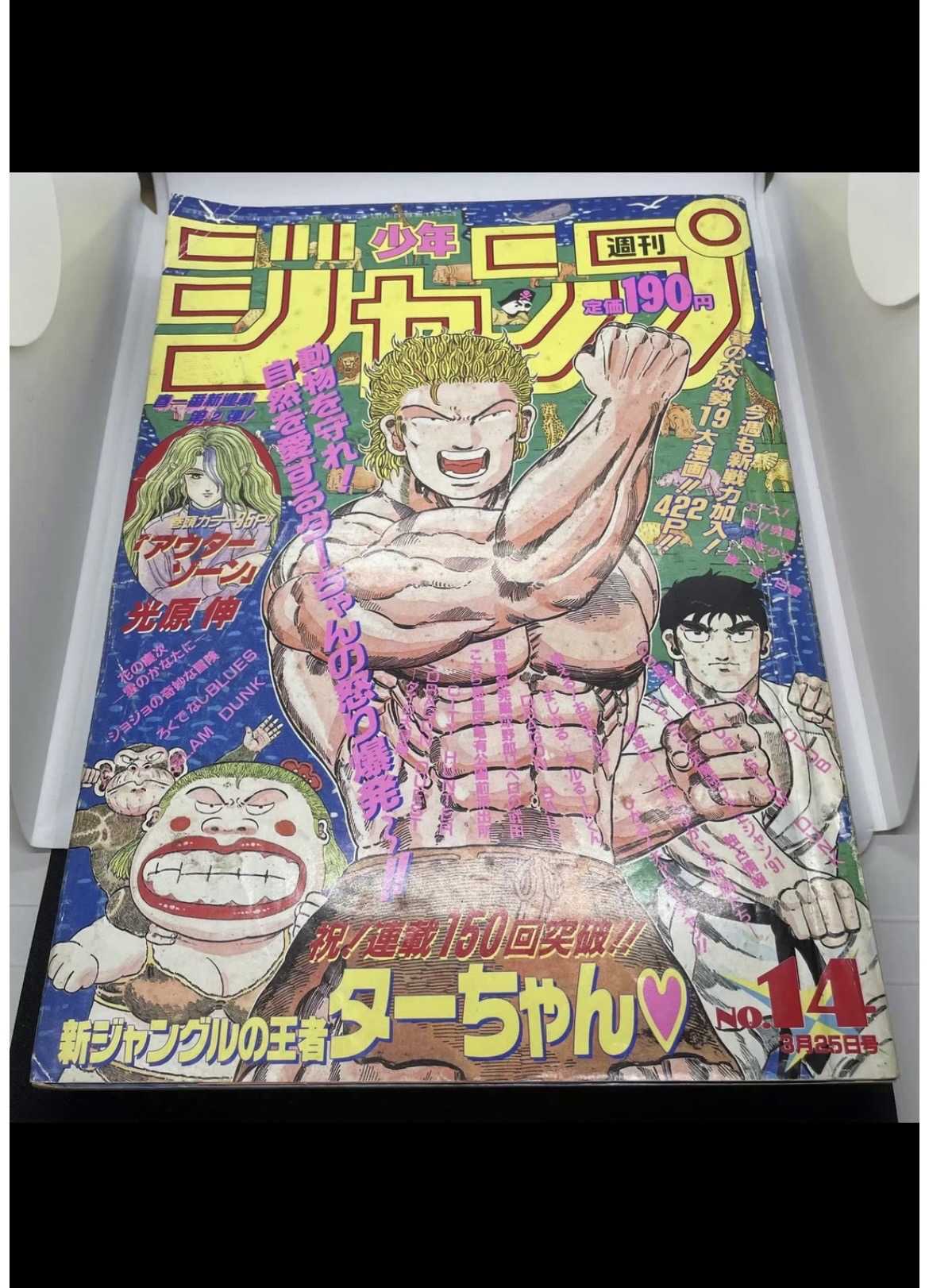
What Was Weekly Shonen Jump Like in 1991? Inside a Real Japanese Manga Magazine from the Golden Age of Jump JP RETRO GAMES No.04
What Was Weekly Shonen Jump Like in 1991?Imagine opening a Japanese manga magazine from 1991.Inside a single issue, you could find Dragon Ball, Slam Dunk, JoJo’s Bizarre Adventure, City Hunter, Yu Yu Hakusho, Fist of the North Star-related Jump culture, and many other major series.This is not a modern reprint.This is an actual copy of Weekly Shonen Jump No.14, dated March 25, 1991.And this particular issue is an incredible snapshot of Japanese pop culture at the beginning of the 1990s. A Magazine Packed With Famous Manga本文:Just look at the table of contents.The issue contains:Dragon BallSlam DunkJoJo’s Bizarre AdventureCity HunterYu Yu HakushoRokudenashi BluesDragon Quest: The Adventure of DaiNew Jungle King Tar-chanKochikameMagical Taruruto-kunSakigake!! Otokojukuand more. For anyone interested in Japanese manga history, this is like opening a time capsule.Dragon Ball in 1991本文:One of the biggest names in this issue is, of course, Dragon Ball.The chapter in this issue is Chapter 316, titled 「宇宙の恨み、フリーザを貫く!!」. What is fascinating is seeing Dragon Ball exactly as Japanese readers would have encountered it in 1991 — printed on the slightly yellowed paper of a weekly manga magazine.The Artwork Looks Completely Different on PaperLooking at these pages today, the printing itself becomes part of the experience.The paper.The ink.The contrast.The huge sound effects.The page layouts.Digital images can reproduce the artwork, but they don’t reproduce the experience of holding the original magazine.That physical feeling is one of the reasons I enjoy collecting old Japanese manga.Slam Dunk Was Already HereAnd then there is Slam Dunk.The series was already running in Weekly Shonen Jump at this time.This issue contains Slam Dunk #24, 「明日の前の日」. Today, Slam Dunk is known around the world.But this is what the series looked like when readers in Japan were following it week by week.City HunterCity Hunter was also part of the same issue.The chapter was titled 「悩めるシュガーボーイの巻」. Seeing City Hunter printed in the same magazine as Dragon Ball and Slam Dunk gives you a sense of just how much major manga was being published together.JoJo’s Bizarre AdventureAnd then there is JoJo’s Bizarre Adventure.This issue features the chapter 「ジョセフの賭けの巻」. The artwork immediately stands out.Even without understanding Japanese, the dramatic character designs and unusual visual style are unmistakable.Yu Yu HakushoYu Yu Hakusho was also running in Jump.This is another reminder that many of the manga that became internationally recognizable later were being published together in the same Japanese magazine.Tar-chan: The Star of the CoverBut there is one character who makes this particular issue especially important for JP RETRO GAMES.Tar-chan.The cover celebrates the series passing 150 chapters, and the issue itself contains No.151, 「エテ吉の昔話の巻」. The character is literally front and center on the cover.And this is where the story connects to the Famicom.From Weekly Shonen Jump to the FamicomLater in 1991, Tar-chan would appear as one of the playable heroes in:Famicom Jump II: Saikyo no 7-ninThe game brought together seven Weekly Shonen Jump characters in a Japanese Famicom RPG.The seven heroes included Son Goku, Ryotsu Kankichi, Momotaro Tsurugi, Jotaro Kujo, Tar-chan, Taruruto and Maeda Taison.So the connection is fascinating:Weekly Shonen Jump → Jump characters → FamicomTar-chan on the FamicomAnd Tar-chan isn’t just a character in the background.He is playable.He explores the world, enters battles and has his own attacks and abilities.Tar-chan’s AttackThis is one of the moments I wanted to capture in JP RETRO GAMES No.04.Tar-chan attacks an enemy with his characteristic weapon.It’s a small moment, but it creates a direct connection between the manga character on the magazine page and the character on the Famicom screen.One Issue. One Moment in Japanese Pop Culture.What makes this collection interesting to me is not simply owning an old magazine or an old Famicom cartridge.It’s the connection between them.The magazine shows the characters in their original manga environment.The Famicom game shows how those characters were transformed into an interactive adventure.Both are pieces of Japanese pop culture from the same era.Why Old Japanese Jump Magazines Are So InterestingAn old Weekly Shonen Jump isn’t just a manga book.It is a snapshot of what Japanese readers were seeing, reading and talking about at the time.The advertisements, table of contents, page layouts, manga artwork and even the physical condition of the paper all tell part of the story.That’s what makes an original magazine so different from a modern digital archive.1991 — A Snapshot of JumpLooking at this one issue today, it is easy to understand why Weekly Shonen Jump became such an important part of Japanese pop culture.Dragon Ball.Slam Dunk.JoJo.City Hunter.Yu Yu Hakusho.Tar-chan.All inside one magazine.And one of those characters would soon appear in a Famicom RPG.From Japan to the WorldThis is what I want to explore with JP RETRO GAMES.Not just old games.Not just old manga.But the connections between Japanese games, manga and the pop culture that surrounded them.Sometimes, a Famicom cartridge tells only part of the story.Sometimes, you have to open an old Weekly Shonen Jump to see the rest.What Japanese manga or Famicom game from the 1980s or 1990s should I explore next?Looking for Japanese Famicom Games?Follow JP RETRO GAMES as I explore Japanese Famicom games, manga and retro culture from Japan to the world.JP RETRO GAMES — Japanese Retro Games from Japan to the World.
2026.09.29
コメント(0)
-
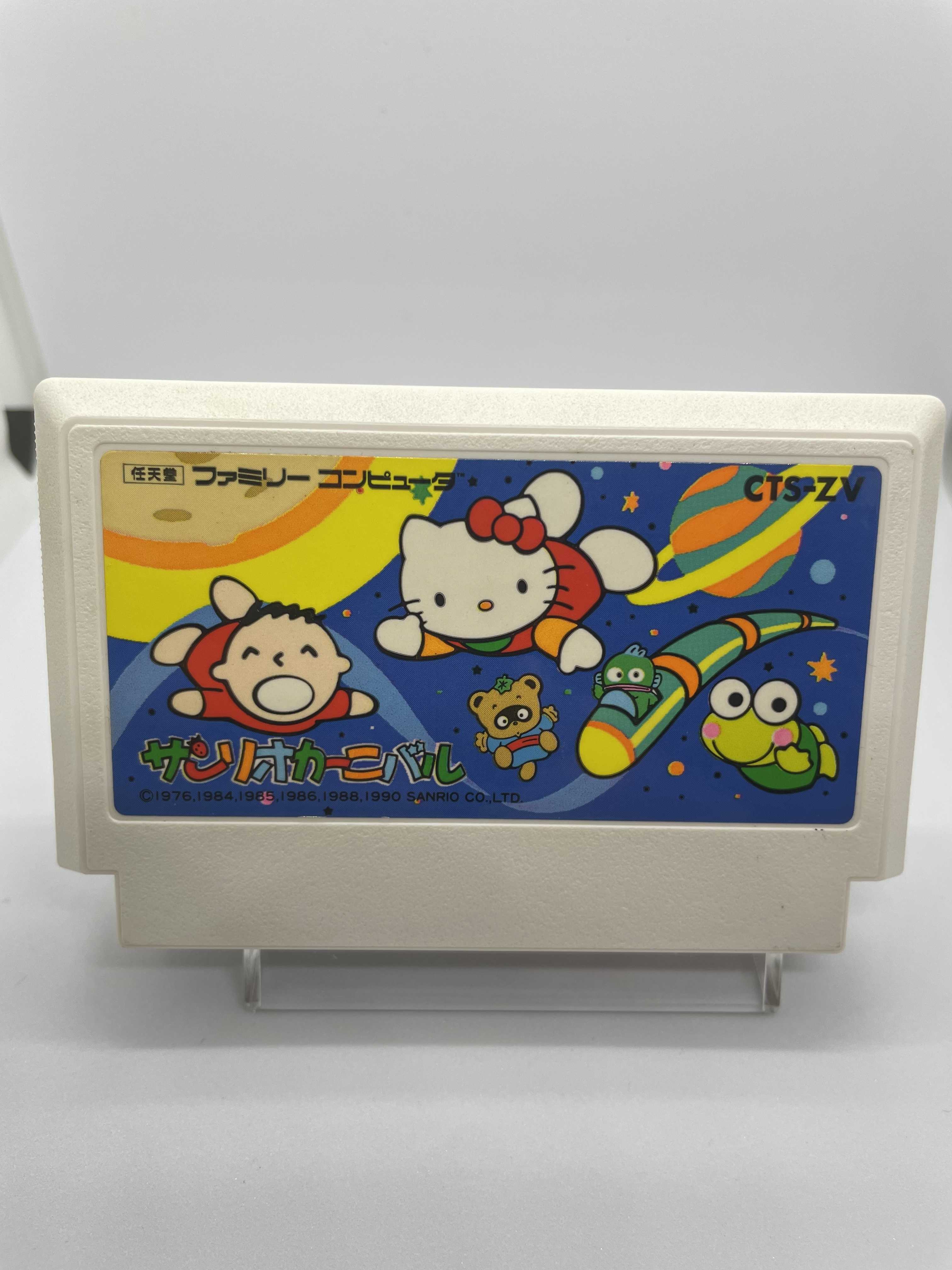
From Hello Kitty to a Puyo Puyo Gold Medal: Japanese Puzzle Games Have Come a Long Way JP RETRO GAMES No.03 Sanrio Carnival — Japanese Famicom, 1990
Do you remember Sanrio Carnival on the Japanese Famicom?When you think about Japanese puzzle games, you might immediately think of Puyo Puyo.But did you know that a colorful Sanrio puzzle game was already on the Japanese Famicom in 1990?This is Sanrio Carnival, released for the Family Computer by Character Soft on November 22, 1990. And with Puyo Puyo becoming a gold-medal esports title at the 2026 Aichi-Nagoya Asian Games, it is interesting to look back at an earlier generation of Japanese character-based puzzle games.A Sanrio game on the Famicom?Yes.And the cartridge itself tells part of the story.Your copy of Sanrio Carnival has a very distinctive late-1980s/early-1990s Japanese character-game design, featuring Hello Kitty and several other Sanrio characters.Sanrio CarnivalCharacter Soft1990Japanese FamicomThis is exactly the kind of physical Japanese game that JP RETRO GAMES wants to introduce to players outside Japan.Not just the game itself, but the culture surrounding Japanese games of the era.What kind of game is Sanrio Carnival?At first glance, it looks like a cute children’s game.But underneath the Sanrio characters is a traditional falling-block puzzle system.Characters fall from the top of the screen, and the objective is to line up matching characters.The interesting part is that matching can be done vertically, horizontally, or diagonally. The original game also included several modes, including stage clear, high-score play, a beginner mode and two-player play. This is where the game becomes interesting for overseas viewers.Instead of seeing only Hello Kitty, you get a whole collection of Sanrio characters from the period.It looks cute… but the puzzle gets seriousThis is the part I wanted to show in the JP RETRO GAMES No.03 video.The gameplay starts simply.Characters fall.You line them up.They disappear.But as the level increases, the screen becomes much more crowded.And suddenly, planning your next move becomes much more important.Then comes the satisfying part.CHAIN CLEAR!A large group disappears and the score jumps.This is why I didn’t want to make this video simply a “cute Hello Kitty game” introduction.There is an actual puzzle game underneath the characters.From Sanrio Carnival to Puyo PuyoAnd this is where the story gets even more interesting.Sanrio Carnival was released in 1990.The original Puyo Puyo appeared in 1991, first on MSX2 and the Famicom Disk System, before becoming a major arcade and console series. The two games are not the same.Sanrio Carnival uses Sanrio character blocks, and three matching characters can be lined up vertically, horizontally or diagonally.Puyo Puyo uses colored “puyo” pieces, with four or more of the same color connected to clear them. But both belong to the same fascinating Japanese puzzle-game tradition:falling pieces → matching → clearing → chain reactions → higher scoresAnd then, 36 years later…This is the part that makes this article especially timely.In September 2026, Puyo Puyo became an esports medal event at the Aichi-Nagoya Asian Games.Japanese player Yuki Kurihara, aged 11, won the gold medal on September 26.He defeated South Korea’s Kang Dong-shin 10–2 in the final. During the final, he also produced a 15-chain, one of the key moments reported from the match. That victory made him the youngest medalist in Asian Games history, according to reports. And suddenly, looking at this 1990 Famicom game feels a little different.The games are very different.The technology is very different.The competitive scene is completely different.But the basic satisfaction is familiar:Connect. Clear. Chain. Score.From character game to esportsSanrio Carnival shows one side of Japanese puzzle-game culture:characters + simple rules + colorful presentation.Puyo Puyo shows another:characters + simple rules + deep competitive strategy.The original Puyo Puyo series has now been around for more than 30 years, and Sega describes it as a long-running action-puzzle series with players around the world. And in 2026, that puzzle-game tradition reached the Asian Games medal stage.That’s quite a journey from the Japanese Famicom era.What I found interesting about Sanrio CarnivalFor me, the most interesting thing isn’t whether Sanrio Carnival is as deep as modern competitive puzzle games.It isn’t trying to be the same thing.Instead, it gives us a snapshot of what Japanese character games looked like in 1990.Hello Kitty and other Sanrio characters weren’t just merchandise.They were becoming part of Japanese video-game culture too.And when the level gets higher and the screen fills up with characters, the cute presentation starts to hide a surprisingly stressful puzzle game.Watch JP RETRO GAMES No.03I recorded the actual Japanese Famicom version and edited the most interesting moments into a 60-second video.JP RETRO GAMES No.03 — Sanrio Carnival🎮 Real Japanese Famicom gameplay🇯🇵 Original Japanese version🐱 Sanrio characters💥 Chain clears🏆 High-score gameplayWould you have played this in 1990?https://vt.tiktok.com/ZSbjoMu6a/https://www.instagram.com/reel/Ddy6ec3P7Ya/?stkn=OTBmbzJqYmt4dA=InstagramWhy Japanese Famicom?This is what JP RETRO GAMES is trying to explore.Not just famous games.Not just expensive games.But the games that show what Japanese gaming culture actually looked like at the time.Sometimes that means Fire Emblem.Sometimes it means a strange pirate adventure.And sometimes…it’s Hello Kitty falling from the top of a Famicom puzzle screen.From Japan to the world.JP RETRO GAMESJapanese Retro Games from Japan to the World.Looking for Japanese Famicom Games?🛒 Mercari📸Instagram🎬TikTok𝕏XJP RETRO GAMES — Discover Japanese Retro Games from Japan to the World.
2026.09.28
コメント(0)
-
Do you remember Fire Emblem on the Japanese Famicom? JP RETRO GAMES No.02 Fire Emblem: Shadow Dragon and the Blade of Light
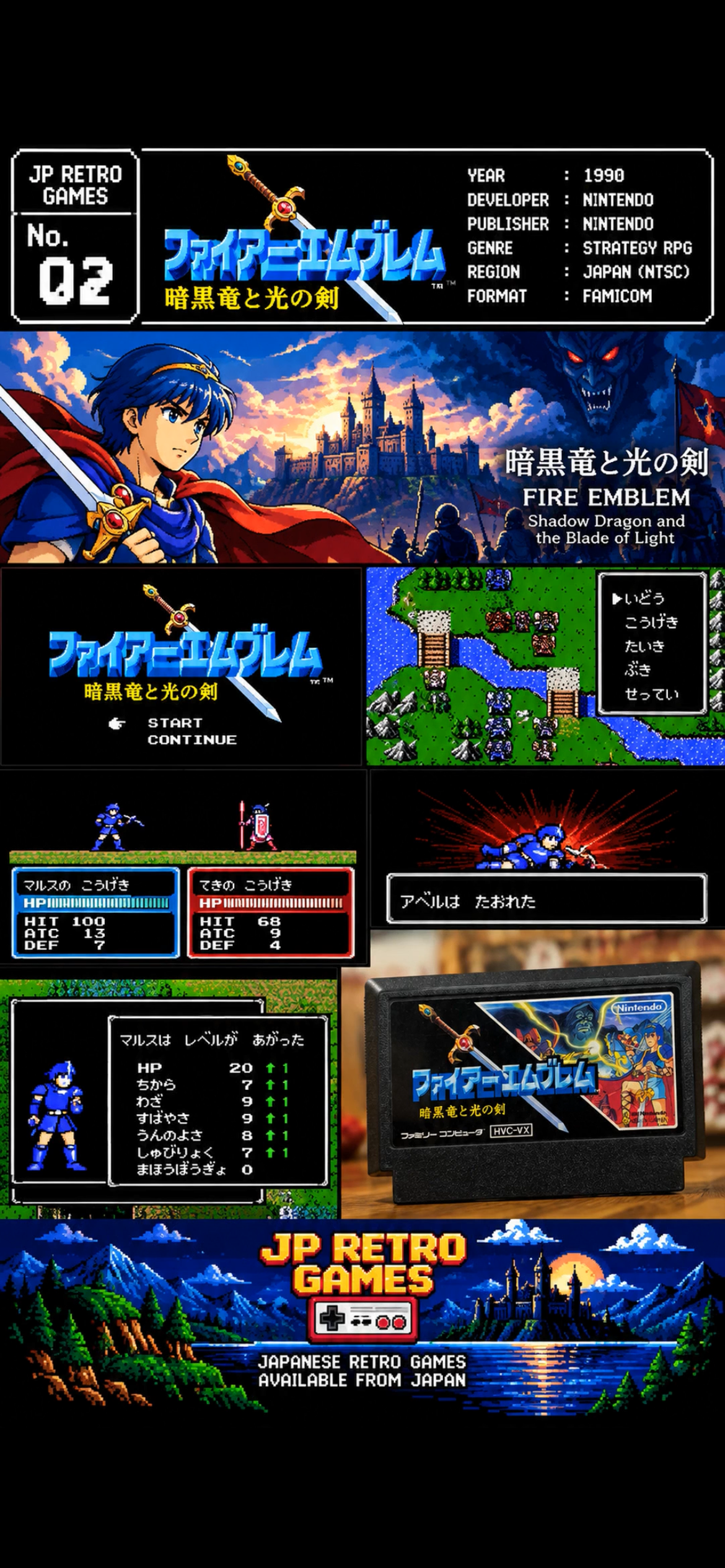
A legendary strategy RPG on the Japanese FamicomDo you remember Fire Emblem on the Japanese Famicom?Released in Japan on April 20, 1990, Fire Emblem: Shadow Dragon and the Blade of Light was the first game in the Fire Emblem series. Unlike a traditional RPG, you don’t simply control one hero.You command an entire army.Every unit has different abilities, weapons and movement characteristics, so the decisions you make on the battlefield can completely change the outcome of a battle. And there’s something else that makes Fire Emblem special…Your characters can fall in battle.⚔️ One battle can change everythingIn my gameplay recording, I wanted to capture one of the most memorable parts of Fire Emblem:A unit falls in battle.The battle begins.The attack connects.And then…A unit is defeated.This isn’t simply a game over screen.The loss of a unit can change the way you approach the rest of the map.That’s one of the things that makes the original Fire Emblem feel different from many other RPGs of its era.The battle is over… but the consequences remain.The final message after the unit falls is one of the moments I wanted to preserve in this video.📈 But your army can growFire Emblem isn’t only about losing characters.Your surviving units can also grow stronger through battle.In my gameplay recording, you can see a character level up after the battle.The numbers begin to change…HP +1Strength +1Skill +1Speed +1and more.This is one of the most satisfying moments in the game.You risk your characters in battle…They survive…And they become stronger.🗺️ Strategy comes firstThe battlefield is presented from a top-down perspective.You move your units across the map, choose commands and decide when and where to attack.Nintendo describes the game as a role-playing simulation game, with unit characteristics, classes and weapon matchups playing an important role in battle. That means simply attacking everything you see isn’t always the answer.You have to think about:Where should I move?Which enemy should I attack?Which character should I protect?Is this unit strong enough?Can I afford to lose this character?And sometimes…one wrong decision is enough.🎮 Watch the Japanese Famicom gameplayI recorded the original Japanese Famicom version and edited the most interesting moments into JP RETRO GAMES No.02.In this short video you’ll see:⚔️ Battle↓💀 A unit falls↓💬 The final message↓📈 Level Up↓⬆️ New stats🎬 Watch the gameplay on TikTokJP RETRO GAMES on TikTok🇯🇵 Why Japanese Famicom?For JP RETRO GAMES, I want to introduce games not simply as products, but as pieces of Japanese gaming history.The original Fire Emblem is particularly interesting because it shows how much could be achieved on the Famicom with:characters + strategy + sound + storytelling + character growth.More than 35 years later, the basic idea is still easy to understand:Protect your army.Make your decisions.Grow stronger.And try not to lose the characters you care about.🎮 JP RETRO GAMES No.02 — FIRE EMBLEMGame: Fire Emblem: Shadow Dragon and the Blade of LightJapanese: ファイアーエムブレム 暗黒竜と光の剣Release: 1990Platform: Japanese FamicomGenre: Strategy RPGRegion: JapanThe first Fire Emblem adventure began on the Famicom in 1990. And this is JP RETRO GAMES No.02.Would you play the original Japanese Famicom version?Would you take the risk…even if one mistake could cost you a character?Let me know what you think.Looking for Japanese Famicom Games?I share Japanese Famicom games and retro gaming discoveries from Japan.🛒 Find Japanese Famicom GamesCheck my Mercari listings📱 Follow JP RETRO GAMESInstagramTikTokX / TwitterJP RETRO GAMES — Japanese Retro Games from Japan to the World.
2026.09.27
コメント(0)
-
🎮 Do you remember HOOK on the Japanese Famicom? JP RETRO GAMES No.01
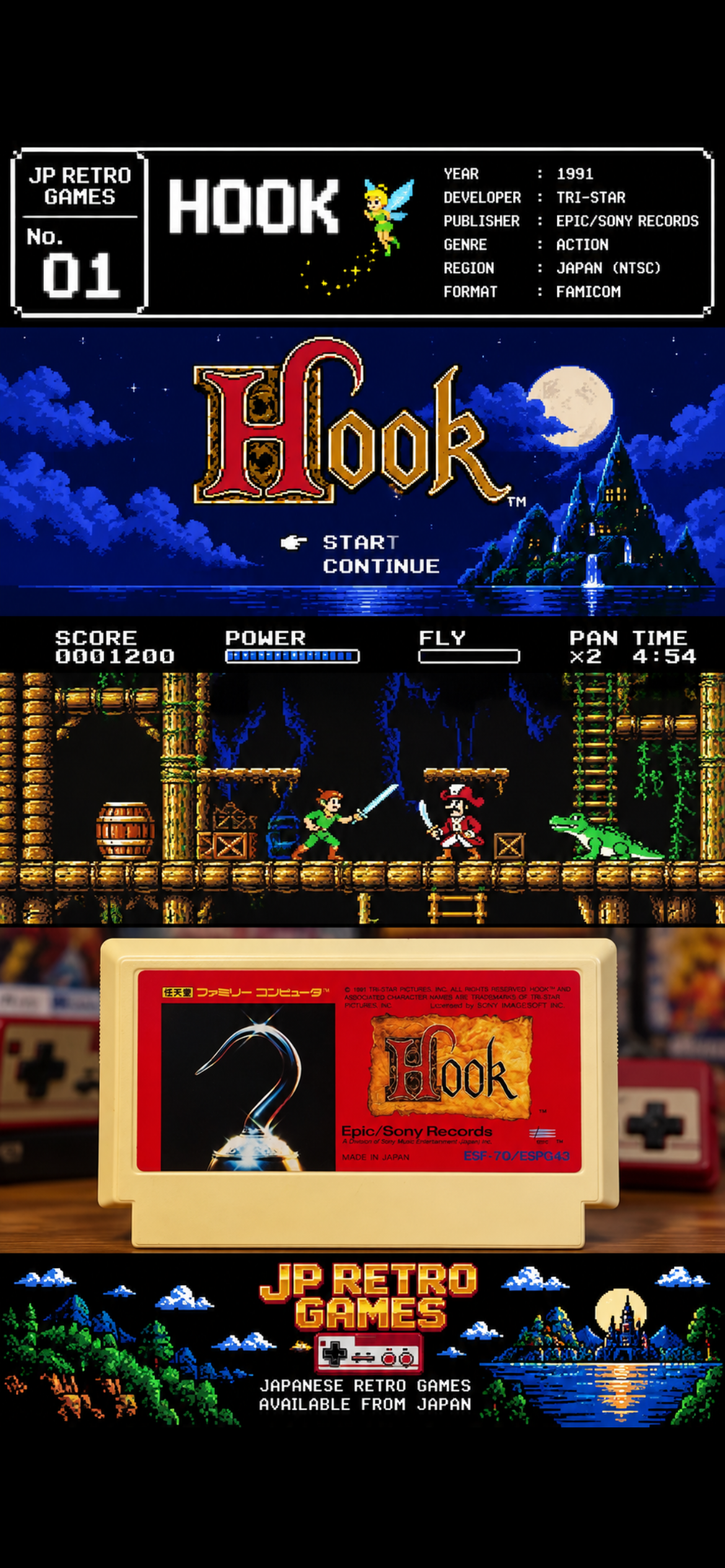
Do you remember HOOK on the Japanese Famicom? 🏴☠️Released in Japan in 1991, HOOK is a Famicom action game based on the world of the movie HOOK.Peter Pan, Tinker Bell, Neverland and Captain Hook…Those familiar characters become an 8-bit Japanese Famicom adventure.And this time, I actually played it.Unfortunately…Captain Hook got me. GAME OVER! 😅🏴☠️ From the movieHOOKto the Japanese FamicomThe game is based on the 1991 movie HOOK, directed by Steven Spielberg.The movie tells the story of Peter Banning, a grown-up Peter Pan who returns to Neverland after Captain Hook kidnaps his children.For fans of the movie, seeing this world transformed into an 8-bit Famicom game is pretty interesting.Instead of watching Peter Pan’s adventure on the screen, you can actually control him yourself.🎮 What is the Japanese Famicom version like?The Japanese Famicom version is a side-scrolling action game.The cartridge itself has a distinctive design, and the game captures the fantasy adventure atmosphere of HOOK using the limited hardware of the Famicom.What I wanted to show with JP RETRO GAMES isn’t just the cartridge.I wanted to show what it actually feels like to play the game today.That’s why my video uses real Japanese Famicom gameplay and game audio.🕹️ The actual gameplayThe adventure begins in classic Famicom style.JP RETRO GAMES No.01 — HOOKThe opening immediately gives you that early-1990s Famicom feeling.Then the game moves into its adventure stageThe gameplay is a classic action-game experience, with Peter Pan moving through the stages and fighting enemies.🧚 And then… Captain Hook appearsThis is my favorite part of the recording.Near the end of my play session, Tinker Bell appears…And then Captain Hook starts closing in.This is where things get serious.I wasn’t able to escape.And eventually…GAME OVER.Sometimes the game wins. 😅That’s one of the things I like about playing these old games.You’re not just looking at retro graphics.You’re actually playing them.🎬 Watch HOOK in actionI turned this play session into the first video of the JP RETRO GAMES series.🎮 JP RETRO GAMES No.01 — HOOKThe video includes:8-bit-style original openingReal Japanese Famicom gameplayGame informationPhysical cartridgeOriginal game audioCaptain Hook sequenceThe actual GAME OVERJP RETRO GAMES brand endingWatch the video on TikTok and Instagram:JP RETRO GAMES on TikTokJP RETRO GAMES on Instagram🇯🇵 Why Japanese Famicom?There are many Japanese Famicom games that people outside Japan may never have encountered.Some are based on famous movies, manga or anime.Others are completely original games.Through JP RETRO GAMES, I want to introduce these physical Japanese games to retro gaming fans around the world.Not just the box or cartridge.The game itself.How does it look?How does it sound?And most importantly—Is it fun to play?That’s what I want to explore with this series.🎮 JP RETRO GAMES No.01 — HOOKThis is just the beginning.What Japanese Famicom game should I play next?Let me know what you would like to see.🛒 Looking for Japanese Famicom Games?Looking for Japanese Famicom games and retro games from Japan?Check out the current JP RETRO GAMES listings on Mercari.JP RETRO GAMES on Mercari🌎 Follow JP RETRO GAMESDiscover Japanese Famicom games, retro gaming culture and games from Japan.InstagramTikTokXMercariJP RETRO GAMESJapanese Retro Games from Japan to the World.
2026.09.26
コメント(0)
-
🇯🇵🎮 2026 Asian Games Esports in Japan — From Famicom to Fighting Games JP RETRO GAMES Special Report
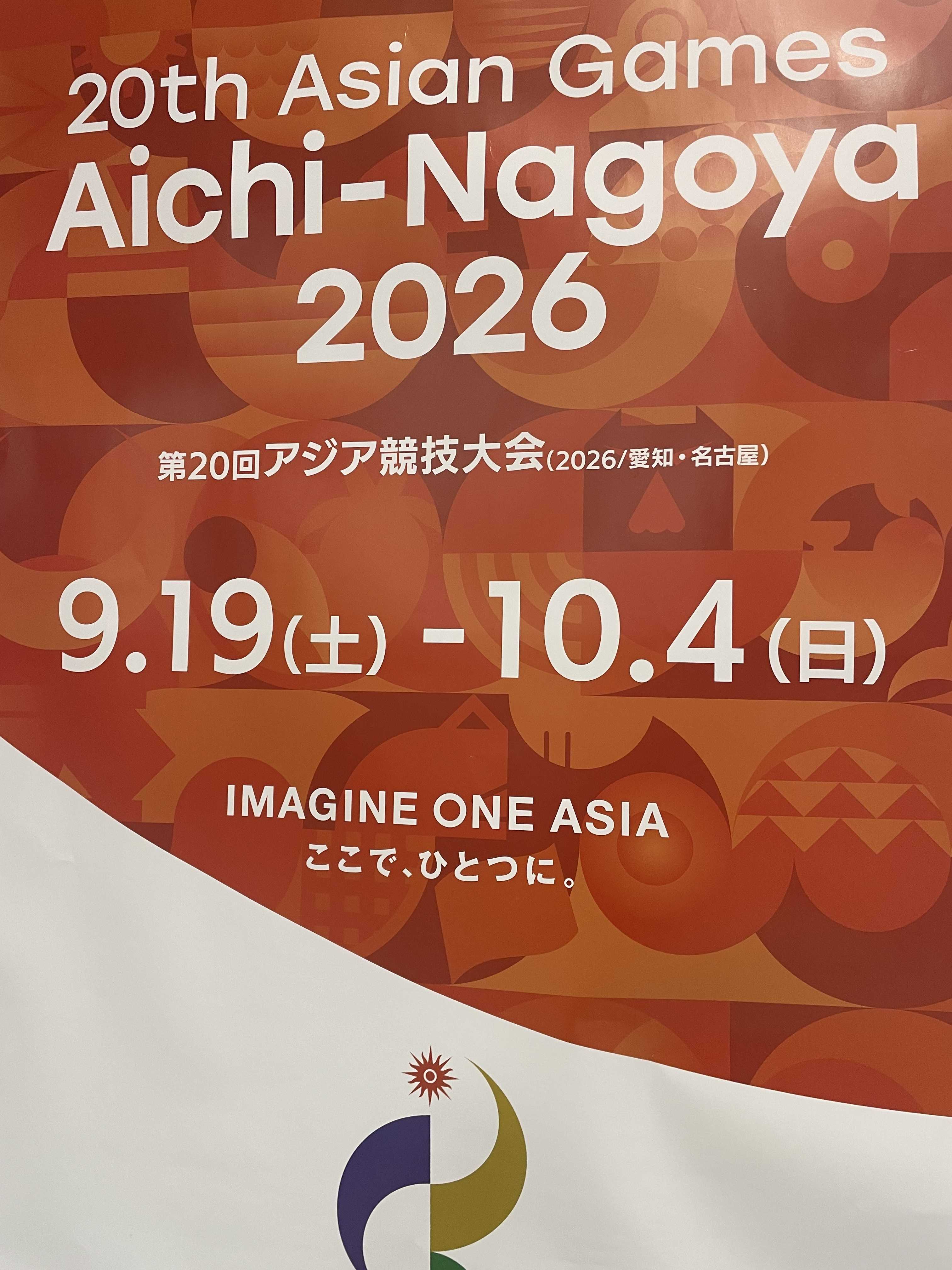
🎮 Japanese Games Have Come This FarI went to the 20th Asian Games Aichi-Nagoya 2026 in Japan.But this time, I wasn’t there to watch traditional sports.I went to experience esports.As someone who loves Japanese retro games and runs JP RETRO GAMES, I wanted to see what modern Japanese gaming culture looks like on the international stage.And honestly…It was incredible to experience it in person.Caption:20th Asian Games Aichi-Nagoya 2026. Photo taken at the venue.🔥 Esports at the Asian GamesEsports is once again part of the Asian Games as an official medal event.At Aichi-Nagoya 2026, esports includes 11 events and 13 titles.The lineup includes several games that are especially familiar to Japanese gamers:Street Fighter 6TEKKEN 8THE KING OF FIGHTERS XVPuyo Puyo eSportsGran Turismo 7eFootballPokémon UNITELeague of LegendsFor someone who grew up playing Japanese video games, seeing these titles at an international sporting event was something special.🥊 Fighting Games — Live at the Asian GamesThe event I watched was the Fighting Games competition.Three major fighting game titles were featured:Street Fighter 6TEKKEN 8THE KING OF FIGHTERS XVThe competition was held as a team event.But what surprised me most wasn’t just the games themselves.It was the atmosphere.The giant screen.The commentators.The game sounds.The crowd.And then…K.O.!The entire venue reacted.At that moment, I realized:This isn’t just playing video games anymore.Caption:TEKKEN 8 — a K.O. moment captured from my own video at the venue.Important:This image was captured from footage I personally recorded at the event.🎧 I Kept the Real SoundsFor my video from the event, I decided to keep the original venue audio instead of making it feel like a polished commercial.You can hear:🎤 Commentary🎮 Game sounds📣 Crowd reactions💥 K.O. momentsI think those sounds tell the story better than background music.If you watch the video, turn up the volume.I want you to hear what it actually felt like to https://vt.tiktok.com/ZSbFERQ4n/JP RETRO GAMES — Asian Games Esports SpecialFrom Japanese retro games to esports on the Asian stage.🎮 THE KING OF FIGHTERS XVI also watched THE KING OF FIGHTERS XV.Seeing a fighting game on such a huge screen was very different from playing at home.Every attack, counter and K.O. became part of a live sporting event.Caption:THE KING OF FIGHTERS XV — captured live at the Asian Games venue.🇯🇵 Japan vs KoreaThe atmosphere became even more interesting when I saw the results displayed on the giant screen.The Fighting Games competition featured:Street Fighter 6THE KING OF FIGHTERS XVTEKKEN 8And the scoreboard showed:Japan 2 — Republic of Korea 5Caption:Japan vs Republic of Korea — Fighting Games result displayed at the venue.🧩 An Amazing Story: An 11-Year-Old Gold MedalistThere was another esports story from the Asian Games that really caught my attention.Puyo Puyo.On September 26, 2026, Japanese player Yuki Kurihara, age 11, won the gold medal in Puyo Puyo eSports.According to reports, Kurihara defeated Korea’s KANG Dongshin 10–2 in the final. He was also reported as the youngest gold medalist in Asian Games history.The official Japanese Olympic Committee had introduced Kurihara as the youngest member of Japan’s delegation.His story is especially interesting because he started playing Puyo Puyo after receiving Puyo Puyo Tetris 2 as a Christmas present at age six.Think about that.A child starts playing a Japanese video game at home.He becomes highly skilled.He represents Japan.And just a few years later…He wins an Asian Games gold medal.That is an amazing example of how far gaming culture has developed.🕹️ From Famicom to EsportsThis is where I started thinking about JP RETRO GAMES.Today’s esports scene looks very different from the video games I grew up with.Back then, it was simple.Turn on the TV.↓Insert a Famicom cartridge.↓Pick up the controller.↓Play.There were no huge esports arenas.No international team competitions.No giant screens showing professional players.But the most important part was already there:People enjoying games.🎮 From Japanese Retro Games to the World StageJapanese gaming culture has continued to evolve.Famicom↓Arcade Games↓Home Consoles↓Online Gaming↓Competitive Gaming↓EsportsAnd now, Japanese games are being played as part of a major international sporting event.For me, seeing this in person made the connection between retro games and modern esports feel much more real.🇯🇵 Why This Matters to JP RETRO GAMESJP RETRO GAMES started with a simple love of Japanese retro games.Famicom cartridges.Old games.Japanese gaming culture.Memories from another generation.But after watching esports at the Asian Games, I realized that the story doesn’t stop with retro games.The culture continues.The games change.The technology changes.The players change.But the passion for games remains.That’s what I want JP RETRO GAMES to share with people around the world.Japanese games — from the past to the present.❤️ From Japan to the WorldThe Famicom was created in Japan.Japanese arcade games influenced generations of players.Japanese fighting games became global competitions.And today, Japanese games are being played on the stage of the Asian Games.That’s quite a journey.For me, this isn’t just about old games.It’s about:Games.Culture.Memories.And how they continue into the next generation.🎮 JP RETRO GAMESGames. Culture. Memories. Forever.From Japan to the World. 🇯🇵🌎Let’s keep Japanese retro games alive!
2026.09.26
コメント(0)
-
How to Buy Used Japanese Famicom Games Safely | Why Testing Matters
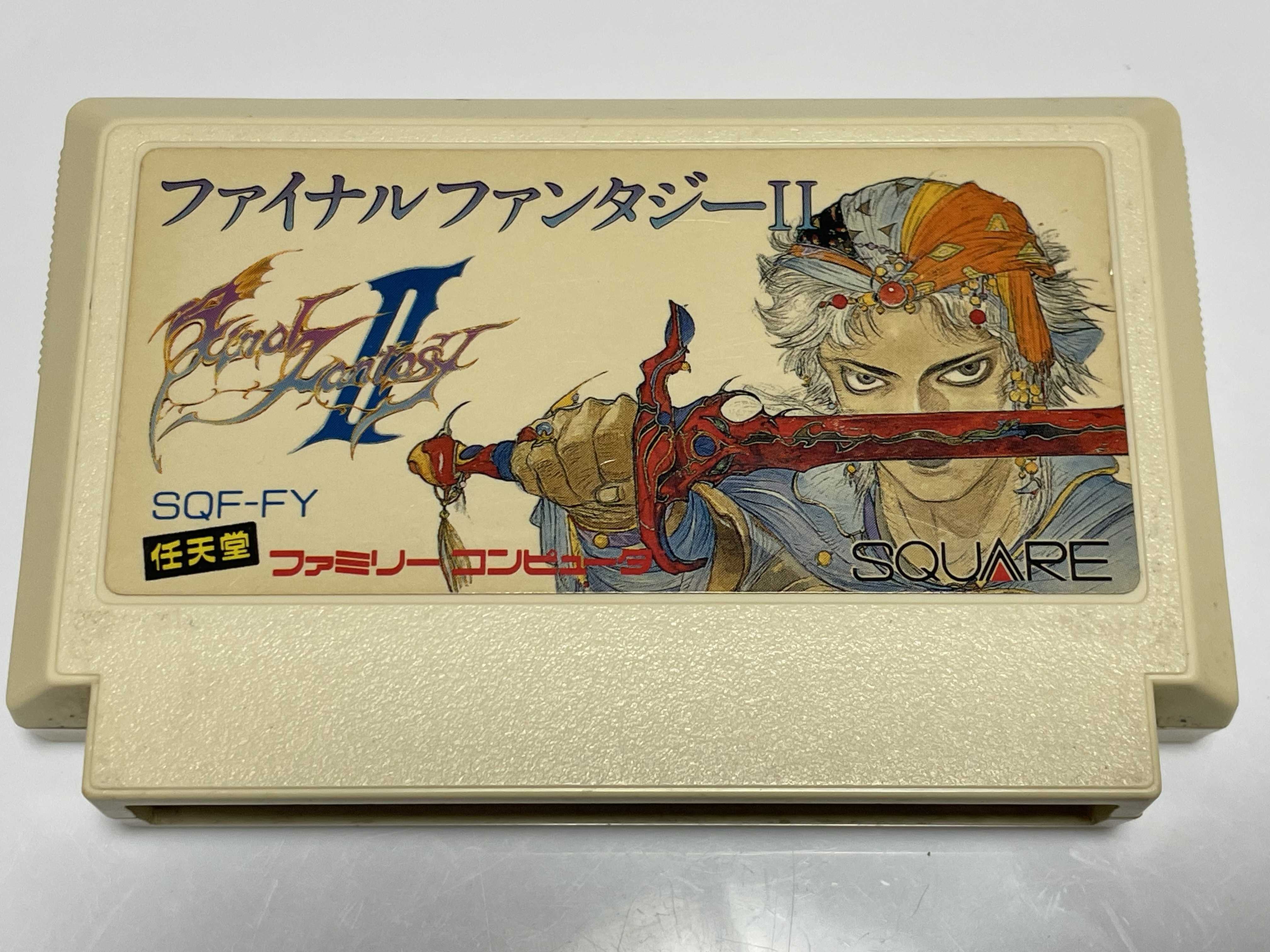
How to Buy Used Japanese Famicom Games Safely | Why Testing MattersBuying used Japanese Famicom games can be exciting.Japan has a huge selection of Famicom cartridges, including many games that were never released outside Japan.You can sometimes find them at surprisingly low prices on Japanese marketplaces.But there is one important question you should always ask:Does it actually work?A cartridge may look fine on the outside, but the contacts can be dirty, or the game may have another problem.Recently, I bought a used copy of Final Fantasy II in Japan.I decided to test it before listing it.Here is what happened.1. A Used Famicom Game from JapanThis is the Final Fantasy II cartridge I recently bought.The cartridge showed some signs of use and dirt.At first glance, it looked like a normal used Famicom cartridge.But I wanted to check the connector contacts before assuming that everything was fine.2. The Contacts Were DirtyWhen I looked at the connector contacts, I found visible dirt.The condition of the contacts is something worth checking when buying used Famicom games.The outside of a cartridge does not always tell you what is happening at the connector.3. The First Test FailedBefore cleaning the cartridge, I put it into my Japanese Famicom and tested it.The result?It didn’t boot properly.This was an important result.I couldn’t simply assume that the cartridge was working because I had bought it as a normal used game.So I decided to inspect and clean it as part of my own maintenance process.4. Cleaning the CartridgeI used my usual cleaning tools for this cartridge.For this article, I’m showing my own maintenance process.Cleaning methods can vary depending on the cartridge and hardware, so this should not be understood as a universal repair method.5. Look What Came Off the ContactsAfter cleaning the contacts, I looked at the cotton swab.There was visible dirt on The dirt was actually coming off.This is one reason why I think inspecting used cartridges is important.Even when a cartridge doesn’t look particularly bad from a distance, the contacts can have visible contamination.6. Contact RevitalizerAfter cleaning the contacts, I also used the contact revitalizer that I normally use in my maintenance process.『my maintenance process』Again, this is simply the method I used for this particular cartridge.The important thing is not to assume that one cleaning method will solve every cartridge problem.7. Before and AfterAfter cleaning, the cartridge and its contacts looked much cleaner.But the most important question was still:Would it actually work?So I tested it again.8. The Second TestThis time, the result was different.The game screen appeared normally.『BEFORE CLEANING』⬇️『AFTER CLEANING』BEFORENo proper game screen.AFTERThe game booted normally. 🎮For this particular Final Fantasy II cartridge, the cleaning process was followed by a successful boot test.This was a great example of why I don’t want to judge a used Famicom game only by its appearance or price.9. But Cleaning Doesn’t Fix EverythingThere is another important side to this story.I also have Famicom cartridges that still do not work even after cleaning and testing.So I don’t want to give the impression that:“Just clean the contacts and every Famicom game will work again.”That’s not true.Some cartridges may have other problems that cleaning alone cannot solve.Cleaning doesn’t guarantee a working game.That’s why testing is so important.10. What Should You Check Before Buying a Used Japanese Famicom Game?If you are buying Japanese Famicom games from Japan, here are some things worth checking.① Is the game tested?Look for information about whether the actual game has been tested.② Is there a boot/test photo?A photo showing the actual game running can give you more information than a simple cartridge photo.③ Check the cartridge conditionLook at:Cartridge shellLabelConnector contactsDirtCorrosionCracks or physical damage④ Don’t judge only by priceA very cheap cartridge can be attractive.But if it doesn’t work, the low price may not be such a good deal.⑤ Understand “junk”Japanese marketplaces often use the term ジャンク (junk).If a listing is described as junk, make sure you understand that normal operation may not be guaranteed.For overseas buyers, checking the seller’s condition description is especially important.11. How I Handle Famicom Games at JP RETRO GAMESThis experience also explains how I want to sell Japanese Famicom games.I don’t want JP RETRO GAMES to be simply about finding the cheapest cartridges.I want overseas collectors to have useful information before they buy.For the games I list, when I have performed the relevant checks, I try to provide information such as:✓ Condition checked✓ Cleaning performed when appropriate✓ Operation tested✓ Boot/test photo when availableThe exact condition and checks are described for each individual listing.12. Real Hardware. Real Games. Real Results.The Final Fantasy II cartridge was a simple but useful example.It started with:Used cartridge↓Dirty contacts↓First test failed↓Cleaning↓Second test succeededBut I also have cartridges that did not recover after cleaning.So the lesson isn’t:“Cleaning fixes Famicom games.”The lesson is:“Testing matters.”When buying used Japanese Famicom games, price is not the only thing to consider.A clean cartridge is nice.But a tested cartridge is even more important.🎮 JP RETRO GAMESReal Hardware. Real Games. Real Results.Discover Japanese Retro Games from Japan to the World. 🌏
2026.09.24
コメント(0)
-
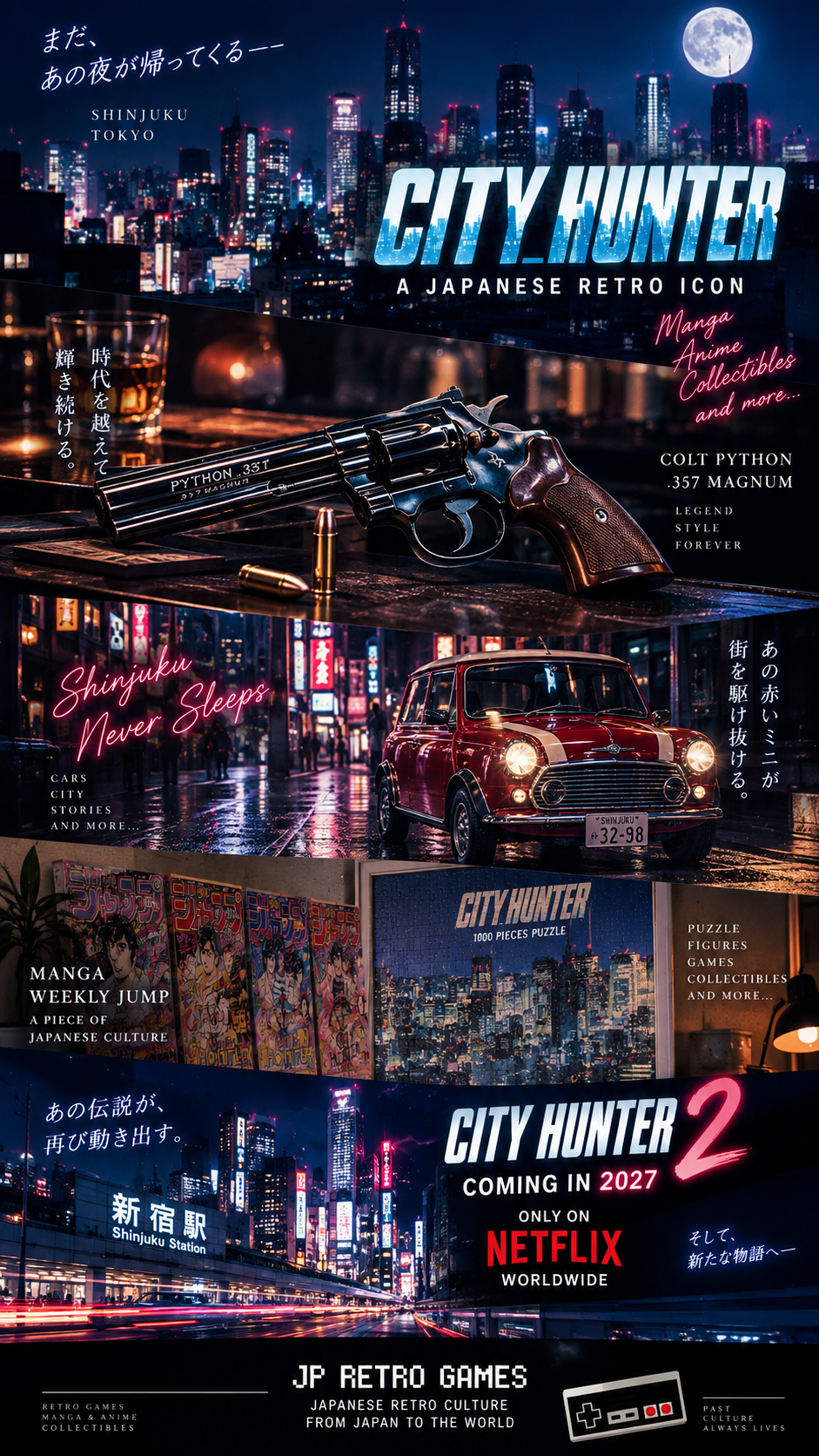
🇯🇵 Why City Hunter Still Feels Cool 40 Years Later
Why City Hunter Still Feels Cool 40 Years LaterRyo Saeba, Shinjuku Nights, and the Timeless Appeal of Japanese Retro CultureWhen you think of Japanese retro culture, you might think of Famicom games, arcade machines, manga, anime, cassette tapes, or the neon streets of 1980s and 1990s Tokyo.But there is one series that brings many of these things together.CITY HUNTER.A story of action, comedy, romance, music, guns, cars, nightlife and the streets of Shinjuku.And at the center of it all is one unforgettable character:Ryo Saeba.Even more than 40 years after the manga began, City Hunter continues to attract fans in Japan and around the world.And now, the story is entering another new chapter.City Hunter 2 is scheduled for a worldwide Netflix release in 2027. So why has City Hunter remained so popular for so long?🌃 A Story Born in ShinjukuCity Hunter was created by manga artist Tsukasa Hojo and began serialization in Weekly Shonen Jump in 1985.The original manga ran until 1991, and the series celebrated its 40th anniversary in 2025. According to the official City Hunter website, the story has sold more than 50 million copies. The basic premise is simple.At the Shinjuku Station East Exit, someone writes three letters on a message board:XYZIt is a desperate request from someone who has nowhere else to turn.The person who answers that message is Ryo Saeba, a legendary “sweeper” based in Shinjuku.Together with his partner Kaori Makimura, Ryo takes on dangerous jobs involving criminals, bodyguards, investigations and people who need protection.But City Hunter is much more than an action story.It is also a story about relationships, trust, humor and the people who cross paths with Ryo and Kaori.That combination is one of the reasons the series has remained so memorable.🔫 Why Is Ryo Saeba So Fascinating?Ryo Saeba is probably one of the most recognizable characters in Japanese manga.At first glance, he seems like the ultimate cool professional.He is an incredibly skilled shooter.He has exceptional physical ability.He is observant, calm and highly capable when a dangerous situation begins.But there is another side to him.Ryo loves beautiful women.A lot.And when an attractive woman appears, the cool professional can suddenly become a ridiculous flirt.That contrast is essential to his character.The official City Hunter website describes Ryo as a top-class sweeper with extraordinary shooting ability and sharp insight, while also emphasizing his womanizing and comical side. It also describes the deep bond and mutual trust between Ryo and Kaori. That’s what makes Ryo so entertaining.He can be:Cool.Funny.Dangerous.Ridiculous.And sometimes surprisingly emotional.The moment the situation becomes serious, however, the joking disappears.Ryo becomes the professional everyone knows he can be.That contrast has helped make him a character that still feels unique decades later.❤️ Ryo and Kaori — More Than PartnersAnother major part of City Hunter is the relationship between Ryo and Kaori.They work together, argue together and constantly get on each other’s nerves.But underneath all of that is a deep sense of trust.Kaori is not simply Ryo’s assistant.She is his partner.The official character descriptions emphasize the strong bond between the two and the trust they have built through their experiences together. Their relationship develops naturally through the stories they experience together.There is action.There is comedy.There is romance.But there is also something quieter:the feeling that these two people genuinely need each other.That emotional connection gives City Hunter something more than action alone.🌆 The Tokyo of the 1980s and 1990sFor me, this is one of the most interesting things about City Hunter.The series doesn’t simply tell a story.It also preserves a particular image of Japan.Shinjuku at night.Neon signs.Tall buildings.Cars.Bars.Fashion.Telephones.Message boards.City streets after dark.The atmosphere of Tokyo in the 1980s and early 1990s is deeply connected to the identity of the series.When you look at City Hunter today, you are not only looking at a manga or anime.You are also looking at a snapshot of an earlier era of Japanese popular culture.The manga began in 1985, the TV anime followed in 1987, and the franchise continued with multiple anime series, movies and television specials. This is one reason City Hunter fits so naturally into the world of Japanese retro culture.🎵 Manga, Anime, Music and the CityCity Hunter also represents something bigger than manga.It connects several parts of Japanese pop culture:Manga.Anime.Music.Cars.Fashion.Toys.Magazines.Movies.Tokyo nightlife.That’s why collecting City Hunter items can feel like collecting pieces of an era.A Weekly Shonen Jump issue isn’t just a manga magazine.A figure isn’t just a figure.A puzzle isn’t just a puzzle.Each item can be a small piece of the visual history of Japanese popular culture.📚 My City Hunter CollectionThis is also why my own City Hunter collection has been growing. I have been collecting items such as:Japanese Weekly Shonen Jump issuesCity Hunter figuresPuzzlesJapanese collectible itemsOther pieces connected to the world of City HunterWhen these items are displayed together, something interesting happens.They stop feeling like individual products.Together, they create a small window into Japan’s pop culture history.And that’s exactly what I love about retro collecting.🔥 City Hunter Never Really DisappearedOne of the most interesting things about City Hunter is that it never completely disappeared.The original manga ended in 1991.But the franchise continued to return in different forms.There were anime specials, movies, spin-offs and new adaptations.The official City Hunter history lists major releases including the original TV anime in 1987, City Hunter 2 in 1988, theatrical films, City Hunter ’91, later movies, City Hunter: Shinjuku Private Eyes in 2019, City Hunter: Angel Dust in 2023, and the Netflix live-action film in 2024. That long history is remarkable.A series created in the 1980s is still finding new audiences decades later.🎬 2027: City Hunter Returns to the WorldAnd now there is another reason to talk about City Hunter.City Hunter 2.Netflix officially announced in March 2026 that the sequel will premiere worldwide in 2027, exclusively on Netflix. The announcement came after the success of the 2024 Netflix live-action film.According to Netflix, the first live-action film debuted at No. 1 on Netflix’s Global Top 10 for Non-English Films for the week of April 22–28, and entered the Top 10 in 32 countries and regions, including Japan, France, South Korea, Hong Kong and Brazil. The sequel will once again feature Ryo Saeba and Kaori Makimura, with Ryohei Suzuki and Misato Morita returning to their roles. Filming is already underway, and Netflix says the sequel will explore an even more quintessential City Hunter world. So City Hunter isn’t simply a memory from the 1980s.It is still being created, adapted and introduced to new audiences today.🇯🇵 Why City Hunter Belongs to Japanese Retro CultureThis is where City Hunter connects directly with what I do at JP RETRO GAMES.I love Japanese Famicom games.But I also love the culture surrounding them.The manga.The anime.The magazines.The music.The toys.The artwork.The streets.The atmosphere.The memories.Famicom and City Hunter may look like completely different things at first.But they come from a similar cultural period.They represent a Japan where home video games, manga, anime and music were rapidly becoming a major part of everyday life.And many of those creations are still loved today.That’s what makes Japanese retro culture so fascinating.It isn’t simply about the past.It’s about the things from the past that continue to live in the present.🌏 From Japan to the WorldCity Hunter began as a Japanese manga in 1985.Today, its characters, stories and atmosphere continue to reach audiences outside Japan.The upcoming City Hunter 2 will be released worldwide on Netflix in 2027. That makes City Hunter a great example of something I believe about Japanese retro culture:Good culture doesn’t necessarily disappear with time.Sometimes it becomes more interesting.Sometimes a new generation discovers it.And sometimes, after 40 years, it comes back to the world again.🎮 Discover Japanese Retro CultureMy collection started with Japanese retro games, especially Famicom.But the more I collect, the more I realize that the games are only one part of a much bigger story.Manga.Anime.Music.Movies.Magazines.Figures.Puzzles.Japanese streets and city culture.They are all connected.That’s what JP RETRO GAMES is about.Not just games.Japanese retro culture.From Japan to the world.🇯🇵 DISCOVER JAPANESE RETRO CULTURE.🛒 Japanese City Hunter CollectiblesSome of my City Hunter collectibles are also available through my Mercari profile.JP RETRO GAMES on MercariAbout City HunterTitle: City HunterCreator: Tsukasa HojoOriginal serialization: Weekly Shonen Jump, 1985–199140th Anniversary: 2025Worldwide manga circulation: 50+ million copiesNetflix City Hunter 2: Worldwide in 2027The 40th anniversary and circulation figures are documented by the official City Hunter site and Netflix. 🔎 Suggested English SEO titleWhy City Hunter Is Still Popular After 40 Years | Ryo Saeba & Japanese Retro CultureMeta descriptionDiscover why City Hunter remains popular 40 years after its debut. Explore Ryo Saeba, Kaori, Shinjuku, 1980s Japanese culture, collectibles and the upcoming City Hunter 2 on Netflix in 2027.Suggested English URL slugwhy-city-hunter-still-popular-japanese-retro-culture
2026.09.23
コメント(0)
-
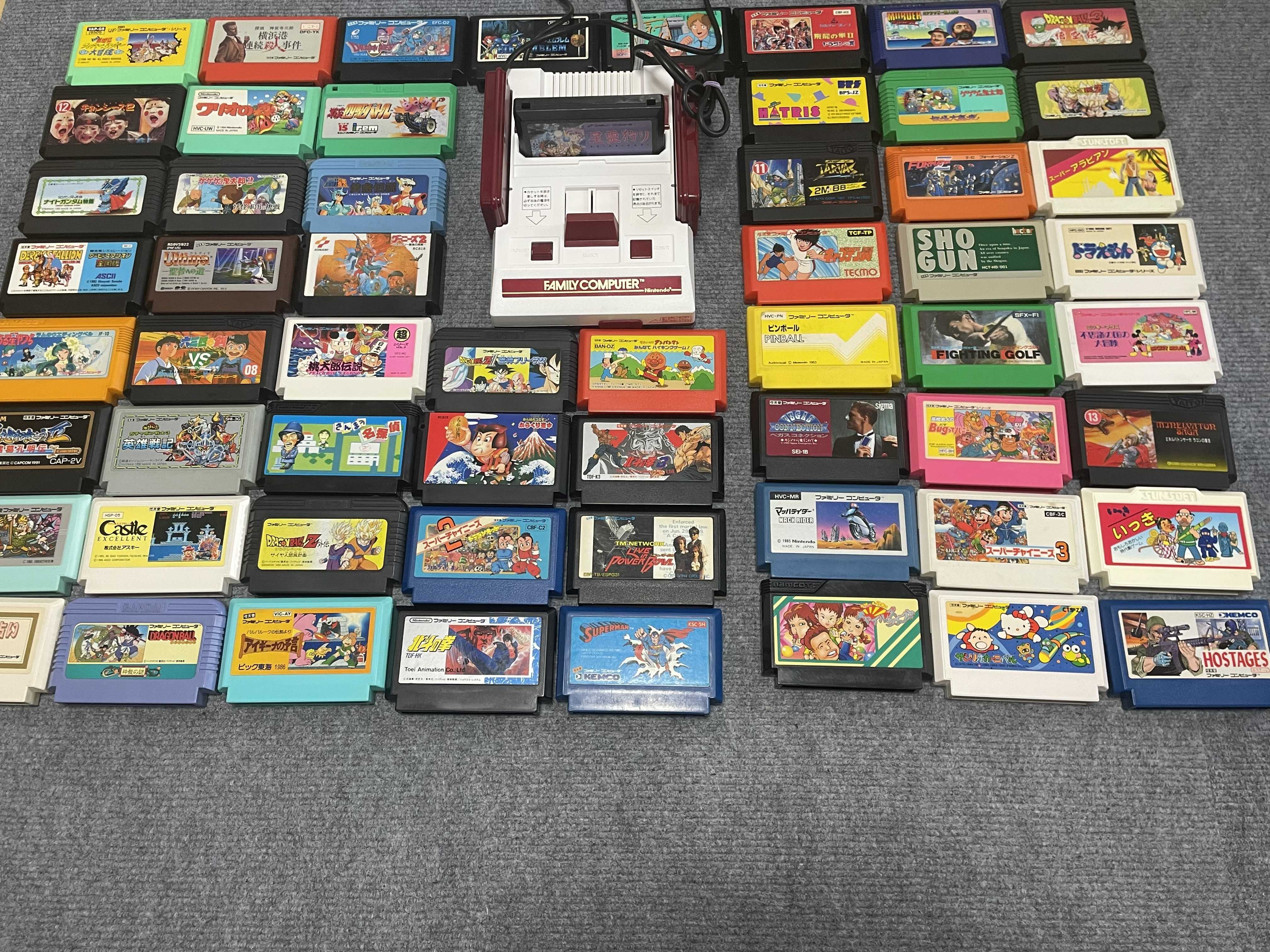
How to Start Playing Japanese Famicom Games | Console, HDMI & Accessories Guide
🇯🇵 JP RETRO GAMESJapanese Famicom & Retro Games from JapanWelcome to JP RETRO GAMES — sharing Japanese Famicom games, real hardware tests, gameplay, guides and Japanese retro gaming culture with retro gamers around the world.🎮 Watch our videos & follow JP RETRO GAMES📖 WebJP RETRO GAMES Web🎬 TikTokJP RETRO GAMES on TikTok📸 InstagramJP RETRO GAMES on Instagram🛒 MercariJP RETRO GAMES on Mercari🇯🇵 Real Hardware. Real Games. Real Results.🇯🇵 How to Start Playing Japanese Famicom GamesHave you ever seen Japanese Famicom games and wondered:“How can I actually play them?”The Japanese Famicom is one of the most iconic retro game systems from Japan.And you don’t need a huge collection to get started.In this guide, I’ll show you the basic equipment you may need to enjoy Japanese Famicom games on a modern TV.I will also show you my own Famicom collection, so you can see the real hardware and games I use for JP RETRO GAMES.🎮 My Japanese Famicom CollectionThis is part of my personal Japanese Famicom collection.I collect Japanese Famicom games because I love the games, the cartridges, the artwork and the unique gaming culture of Japan.Some games are famous internationally.Others are much more obscure.That’s one of the things I love about Japanese retro gaming.Every cartridge has a story. 🇯🇵🕹️ What Do You Need to Play Japanese Famicom Games?There are several ways to build a setup.The equipment you need depends on your TV and the type of console you choose.The basic setup can be:Famicom → TVorFamicom → AV to HDMI Converter → TVYou may also choose a compatible FC console with modern video outputs.① 🇯🇵 Original Japanese FamicomThe original Japanese Family Computer is the authentic way to experience Japanese Famicom games.You get the original hardware, original controller design and the classic Japanese Famicom experience.However, there is one important point:Many original Famicom consoles were designed for older Japanese TV connections.Modern TVs may not have the same inputs.So you may need additional equipment depending on your TV.② 🔌 AV-Modified FamicomAnother option is an AV-modified Famicom.My own Famicom has been modified for AV output.This allows me to connect the Famicom to a TV using AV cables.My setup:Famicom → AV → TVI actually tested this setup with a Japanese Famicom game.And it worked.🎮 Real Hardware. Real Game. Real Result.③ 📺 AV → HDMI ConverterIf your modern TV doesn’t have the appropriate AV input, an AV-to-HDMI converter can be useful.My setup looks like this:Famicom → AV → HDMI Converter → HDMI → TVThis is the setup I tested in my previous article.It allows an AV-output Famicom to connect to a modern TV through HDMI.👉 Recommended equipment:HDMI変換器販売店④ 🎮 Compatible FC ConsoleAnother option is a modern compatible FC console.These systems can be convenient because some models offer HDMI or AV output.However, there is an important warning.⚠️ Compatibility is not always guaranteed.I tested the same Japanese Famicom game on:🇯🇵 AV-modified Famicom→ Japanese text displayed correctly⚠️ Compatible Console→ Japanese text became garbledThe same game.The same scene.Different hardware.Different result.That’s why I recommend checking compatibility before buying a compatible console.🔌 What Other Accessories Might You Need?Depending on your setup, you may also need:HDMI CableFor connecting an AV-to-HDMI converter or HDMI-compatible console to a modern TV.👉[楽天アフィリエイト:HDMIケーブル]🎮 Extra ControllerUseful if you want to play multiplayer games or keep a spare controller.👉[楽天アフィリエイト:FC互換コントローラー]🧼 Cartridge Cleaning SuppliesOld cartridges may have dirty or oxidized contacts.Keeping your cartridges clean is an important part of maintaining a retro game collection.👉[楽天アフィリエイト:ゲームカートリッジクリーナー]📦 Cartridge StorageIf you’re starting to collect Japanese Famicom games, storage quickly becomes important.👉[楽天アフィリエイト:ゲームカセット収納]🛒 My Recommended Starting SetupYou don’t necessarily need everything at once.A simple starting setup could be:OPTION A — Original Hardware🇯🇵 Japanese Famicom↓📺 TVOPTION B — Modern TV🇯🇵 AV-output Famicom↓🔌 AV cable↓📺 TVOPTION C — HDMI TV🇯🇵 AV-output Famicom↓🔌 AV↓📺 AV → HDMI Converter↓🔌 HDMI↓📺 Modern TVOPTION D — Compatible Console🎮 Compatible FC Console↓🔌 HDMI / AV↓📺 Modern TVWhich setup is right for you depends on your TV, console and the games you want to play.⚠️ One Important Thing Before BuyingDon’t assume that every Japanese Famicom game will behave exactly the same on every compatible console.My real hardware test showed that the same game can display differently depending on the hardware.For example:Original/AV-modified Famicom🇯🇵 Japanese text✅ ClearCompatible console⚠️ Japanese text❌ GarbledThis doesn’t mean every compatible console has the same problem.It means compatibility should be checked before buying, especially if you want to play Japanese text-heavy games.🎮 So What Should You Buy?If you want the authentic Japanese Famicom experience, look for original Japanese Famicom hardware.If you already have an AV-output Famicom, an AV-to-HDMI converter may be a practical way to connect it to a modern TV.If you want a simpler modern setup, you can also consider an FC-compatible console with HDMI output.The important thing is to check:Video outputTV compatibilityJapanese Famicom compatibilityController compatibilityCompatibility with the specific games you want to play🇯🇵 And Then… Start Your CollectionOnce your setup is ready, the fun really begins.You can start with one game.Then another.And before you know it…you have a shelf full of Japanese Famicom cartridges. 🎮🇯🇵That’s exactly how JP RETRO GAMES started.I collect Japanese Famicom games and share real hardware tests, gameplay and Japanese retro gaming culture with the world.🛒 Looking for Japanese Famicom Games?I also sell Japanese Famicom games from Japan on Mercari.If you’re looking for Japanese Famicom cartridges, check out my current collection:🛒Japanese Famicom Games from JapanメルカリNew games may be added as I find interesting Japanese retro games.🌏 From Japan to the WorldJP RETRO GAMES is about more than just selling games.It’s about sharing the experience of Japanese retro gaming.🎮 Real Hardware🕹️ Real Games📺 Real Results🇯🇵 From Japan to the WorldIf you’re interested in Japanese Famicom games, follow JP RETRO GAMES.📖 More from JP RETRO GAMESHow to Play a Japanese Famicom on a Modern TV→ [第1記事へのリンク]Japanese Famicom vs Compatible Console | Real Compatibility Test→ [第2記事へのリンク]More Japanese Famicom & Retro Games→ [Mercariへのリンク]🇯🇵 JP RETRO GAMESDiscover Japanese Retro Games.
2026.09.23
コメント(0)
-
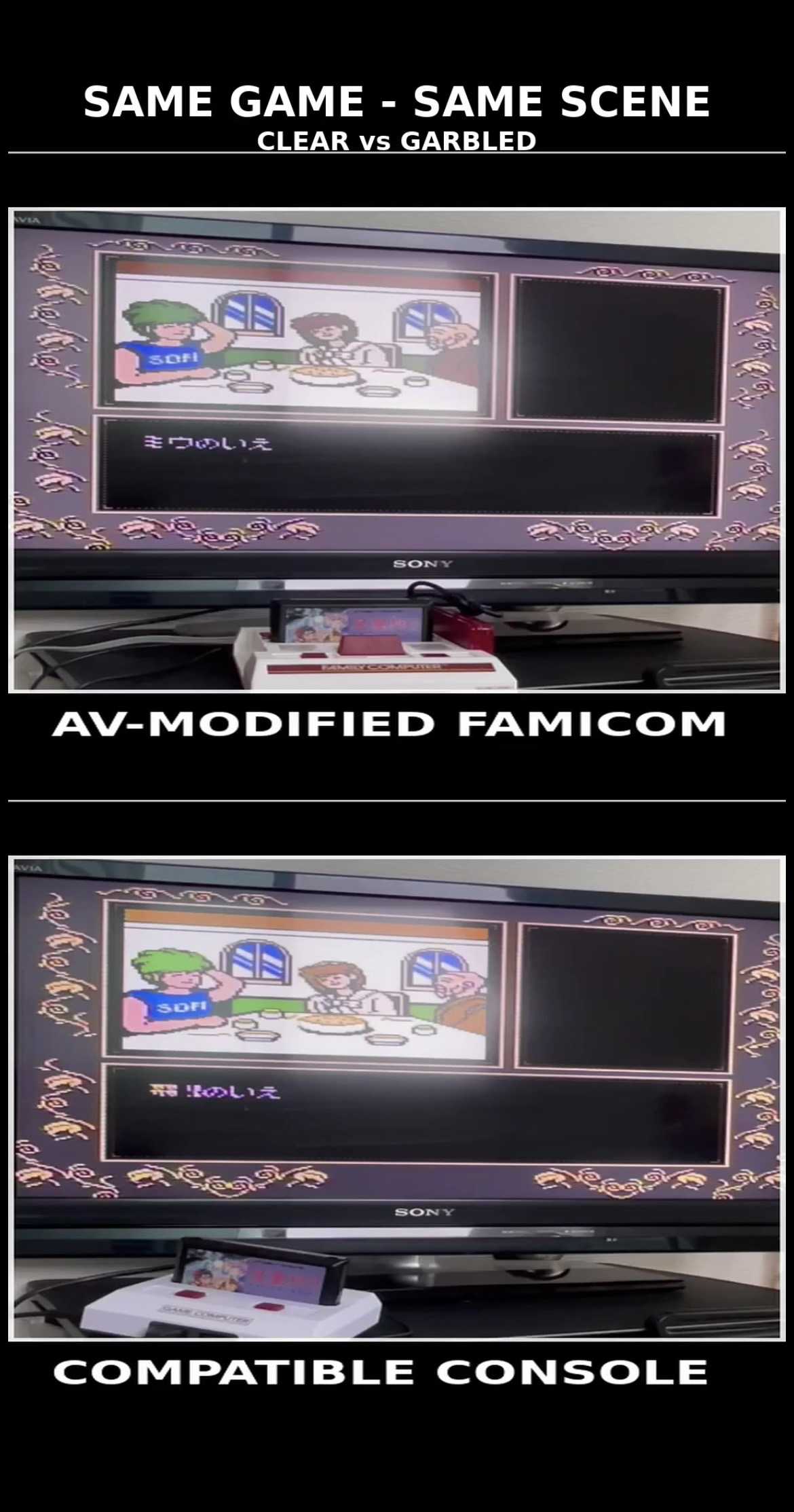
Japanese Famicom vs Compatible Console | Real Compatibility Test
🇯🇵 JP RETRO GAMESJapanese Famicom & Retro Games from JapanWelcome to JP RETRO GAMES — sharing Japanese Famicom games, real hardware tests, gameplay, guides and Japanese retro gaming culture with retro gamers around the world.🎮 Watch our videos & follow JP RETRO GAMES📖 Web JP RETRO GAMES Web🎬 TikTok JP RETRO GAMES on TikTok📸 Instagram JP RETRO GAMES on Instagram🛒 Mercari — Japanese Famicom Games JP RETRO GAMES on Mercari🇯🇵 Real Hardware. Real Games. Real Results.Can Japanese Famicom Games Always Run Correctly on Compatible Consoles?Japanese Famicom games are still loved by retro gamers around the world.But there is one important question:Do Japanese Famicom games always work correctly on compatible consoles?I decided to test this with real hardware.For this test, I used the same Famicom game and compared the results on:AV-modified Famicomvs.Compatible ConsoleAnd the result was interesting.🎮 The Game: 星霊狩り (Seireigari)For this test, I used 星霊狩り (Seireigari).It is a Japanese Famicom adventure game released by Hudson in 1989. The game uses a lot of Japanese text, making it a good title for checking whether Japanese characters are displayed correctly.The instruction manual describes it as a novel-style adventure game, with commands and text messages playing an important role in the game. 🔌 Test 1 — AV-Modified FamicomFirst, I played the game using my AV-modified Famicom.The game started normally.More importantly, the Japanese text was displayed clearly.The characters and messages were readable, and the game could be played normally.Result: Japanese text displayed correctly.Image: AV-modified Famicom / same game scene⚠️ Test 2 — Compatible ConsoleNext, I used a compatible console.I loaded the same game and checked the same scene.The game started.But there was a noticeable difference.The Japanese text became garbled.Some characters were no longer displayed correctly.Image: Compatible console / garbled Japanese text🔎 Same Game. Same Scene. Different Result.This is the most interesting part of the test.I used:The same gameThe same sceneAlmost the same camera angleBut the results were different.AV-Modified Famicom🇯🇵 Japanese text✅ ClearCompatible Console⚠️ Japanese text❌ GarbledThis does not mean that every compatible console has the same problem.Compatibility can depend on the particular hardware and software combination.In fact, sellers of some Japanese Famicom software explicitly warn that operation on non-original hardware is not guaranteed. So this is best understood as a real hardware compatibility example, rather than a statement that all compatible consoles are bad.🕹️ Why Can This Happen?Original Famicom hardware and compatible consoles are not necessarily identical internally.Compatible consoles are designed to reproduce the behavior of the original hardware, but their hardware implementation can differ.Because of this, some games may behave differently depending on the console being used.Possible differences can include:Game startupGraphicsJapanese text displaySoundControllersTimingSpecial hardware featuresThe important point is:Compatible with Famicom does not always mean identical to an original Famicom.For collectors and people buying Japanese Famicom games overseas, this is something worth knowing.🌎 What Should You Check Before Buying?If you are planning to play Japanese Famicom games on a compatible console, I recommend checking the following.① Is the console compatible with Japanese Famicom software?Some consoles are designed specifically for Famicom software, while others have broader compatibility.② Has the specific game been tested?A console can work perfectly with one game but have problems with another.③ Is the seller providing compatibility information?If a seller specifically mentions compatibility limitations, take that information seriously.④ If possible, test important games on original hardwareFor collectors, an original Famicom can be useful as a reference point when compatibility problems occur.🇯🇵 Real Hardware Test by JP RETRO GAMESThis is what I want to do with JP RETRO GAMES.Rather than simply talking about Japanese retro games, I want to actually test them.Real hardware.Real games.Real results.Sometimes a small difference in hardware can completely change the experience.That is part of what makes Japanese retro gaming so interesting.🎮 Watch the Full ComparisonI also made a short video showing the comparison.The video shows the two systems side-by-side so you can see the difference for yourself.AV-MODIFIED FAMICOMvs.COMPATIBLE CONSOLEConclusionThe important lesson from this test is simple:A Japanese Famicom game that works perfectly on one system may not necessarily behave exactly the same way on every compatible console.My test with 星霊狩り (Seireigari) showed a clear example:Same game.Same scene.Different hardware.Different result.This is one of the reasons I enjoy testing real Japanese retro hardware.🇯🇵 About JP RETRO GAMESJP RETRO GAMES shares Japanese Famicom games, retro hardware, gameplay, guides and Japanese gaming culture with retro gamers around the world.From Japan to the world.Let’s keep Japanese retro games alive! 🎮🇯🇵🔗 関連記事How to Play a Japanese Famicom on a Modern TV | AV & HDMI Guide
2026.09.23
コメント(0)
-
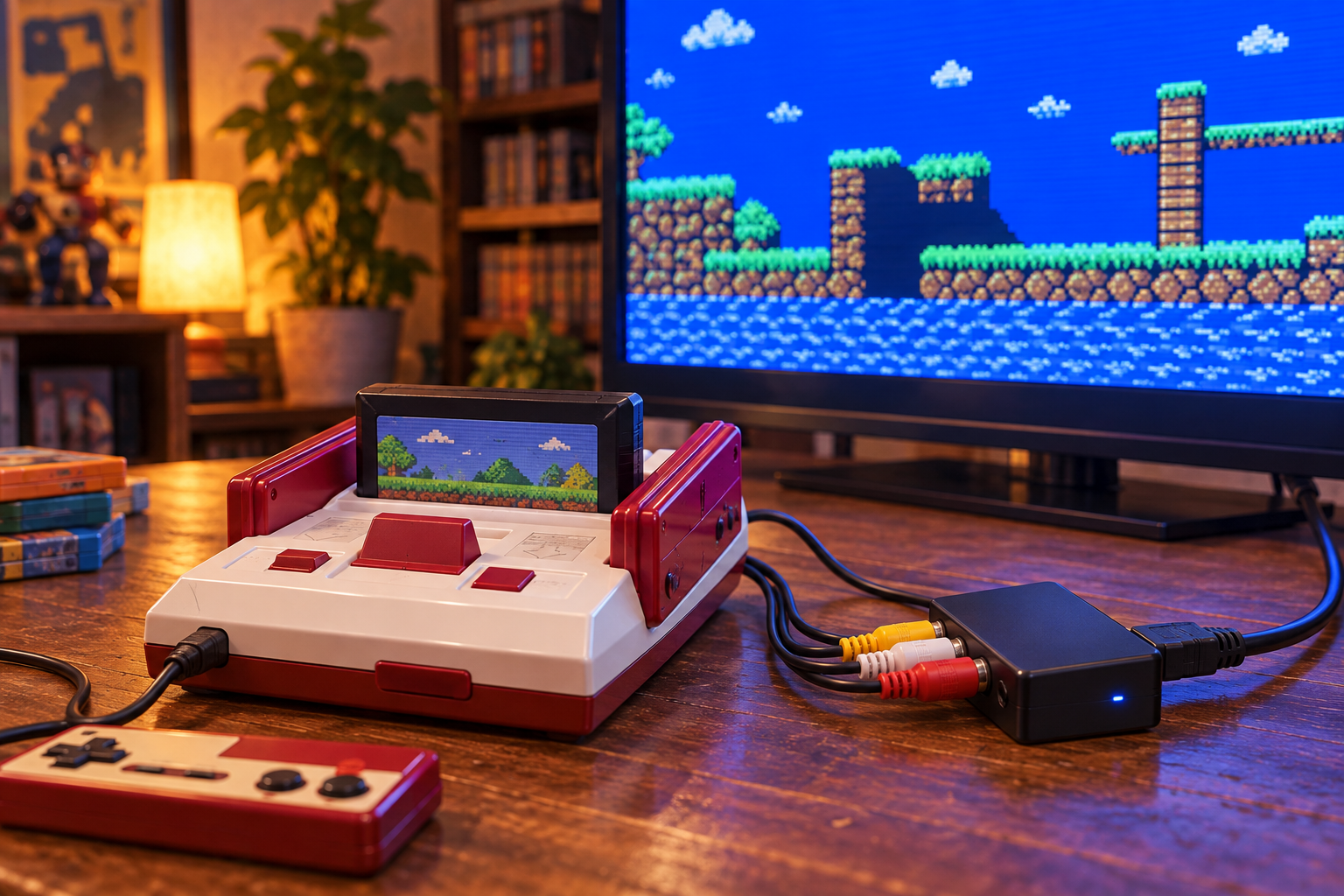
How to Play a Japanese Famicom on a Modern TV | AV & HDMI Guide
🇯🇵 JP RETRO GAMESJapanese Famicom & Retro Games from JapanWelcome to JP RETRO GAMES — sharing Japanese Famicom games, real hardware tests, gameplay, guides and Japanese retro gaming culture with retro gamers around the world.🎮 Watch our videos & follow JP RETRO GAMES📖 WebJP RETRO GAMES Web🎬 TikTokJP RETRO GAMES on TikTok📸 InstagramJP RETRO GAMES on Instagram🛒 Mercari — Japanese Famicom GamesJP RETRO GAMES on Mercari🇯🇵 Real Hardware. Real Games. Real Results.How to Play a Japanese Famicom on a Modern TVTwo Connection Methods: Direct AV & AV-to-HDMICan you play a Japanese Famicom on a modern TV?Yes! But there are a few important things to know.In this guide, I’ll show you how I connected a Japanese Famicom to a modern television using two different methods:🎮 Method 1 — Direct AV Connection🎮 Method 2 — AV → HDMIAll of the actual hardware and gameplay photos in this article were taken by JP RETRO GAMES.⚠️ Important: The Famicom Used in This Guide Has Been Modified for AV OutputBefore we start, there is one very important point.The Famicom shown in this article has been modified for AV output.It is an original-style Japanese Famicom, but the AV connection used in this test is not the original factory connection of the 1983 HVC-001 Famicom.The original Japanese Famicom was designed around an RF connection.Later, Nintendo released the improved AV Famicom in 1993, which was equipped with an AV port capable of composite-video output. So, if you own or are planning to buy a Japanese Famicom, don’t assume that every Famicom can simply be connected to a modern TV using a yellow/red/white AV cable.The video output depends on the exact console and any modifications that have been made.🎮 Japanese Famicom + modern TVReal hardware test by JP RETRO GAMES.🎮 The Game I Used for This TestFor this guide, I used the Japanese Famicom game:星霊狩り — SeireigariThis is a real Japanese Famicom cartridge from my collection.The game was connected to my AV-modified Famicom and displayed on a modern Sony TV.Seireigari running on a modern TV.Real gameplay screen photographed by JP RETRO GAMES.This is what I want to focus on with JP RETRO GAMES:Real hardware. Real games. Real tests.🔌 Method 1 — Direct AV ConnectionIf your Famicom has a compatible AV output and your TV has composite AV input, you may be able to connect the console directly to the TV.The basic connection is:Famicom↓AV Cable↓TVThe familiar composite connections are:🟡 Yellow = Video⚪ White = Audio🔴 Red = Audio📺 Composite AV input on the TVYellow = Video / White & Red = AudioMy TV has both HDMI and composite AV inputs, so I was able to test a direct AV connection.🎮 Direct AV Connection — Real TestWith the AV-modified Famicom connected directly to the TV’s composite AV input, Seireigari was displayed successfully.No HDMI converter was needed for this connection.This is the simplest setup if your television still has a compatible composite AV input.Famicom → AV → TVThe game is running successfully.🔄 Method 2 — AV → HDMIBut what if your modern TV doesn’t have a suitable AV input?This is where an AV-to-HDMI converter can be useful.The basic connection is:Famicom↓AV Cable↓AV-to-HDMI Converter↓HDMI Cable↓Modern TV🔄 AV-to-HDMI ConverterThis small converter changes the AV signal into an HDMI output.The converter I used is a small MINI AV2HDMI UP Scaler 1080P.🔌 Connecting the AV-to-HDMI ConverterThe yellow, white and red AV cables are connected to the converter’s input.The HDMI cable then connects the converter to the TV.The converter also requires USB power.AV input → AV-to-HDMI converter → HDMI outputThis is a useful setup for a modern TV that doesn’t have a convenient composite AV input.🎮 The Complete SetupHere is the complete setup with the Famicom, game cartridge and AV-to-HDMI converter.🎮 Japanese Famicom + Seireigari + AV-to-HDMI converterThe signal path is:Famicom → AV → AV-to-HDMI → HDMI → TVAnd yes — the game works!🆚 Which Connection Should You Use?It depends on your television.If your TV has composite AV input:Famicom → AV → TVSimple and direct.If your TV mainly uses HDMI:Famicom → AV → AV-to-HDMI → HDMI → TVA converter can be used to connect the AV signal to an HDMI input.However, compatibility can vary depending on the console modification, converter and TV.⚠️ Check Your Famicom Before Buying CablesThis is one of the most important things to remember.Japanese Famicom consoles can have different video-output configurations.Before buying cables or converters, check:What Famicom model is it?Is it an original HVC-001?Is it an AV Famicom?Has it been modified for AV output?What type of output does the console actually have?What inputs does your TV have?Has the console’s video output been tested?📺 Original Famicom, AV Famicom & AV-Modified FamicomThese terms can be confusing, especially for international buyers.Original FamicomHVC-001The original Japanese Famicom was designed around an RF connection.AV FamicomHVC-101Nintendo released the AV Famicom in 1993 with an AV port supporting composite-video output. AV-Modified FamicomAn original-style Famicom can also be modified to provide AV output.That is the type of Famicom I used for this particular test.So when buying a Japanese Famicom, don’t judge the connection method by appearance alone.🇯🇵 Why I Use Real HardwareAt JP RETRO GAMES, I want to show Japanese retro gaming as it actually is.That means:🎮 Real Famicom hardware🕹️ Real Japanese games📺 Real televisions🔌 Real cables and converters📸 Real photographsRather than using random images from the internet, I want to document my own setup and tests whenever possible.For me, that’s part of the fun of Japanese retro gaming.🎬 Watch the VideoI also created a short video showing this setup.It demonstrates:Direct AVandAV → HDMIusing the actual Famicom and equipment shown in this article.Follow JP RETRO GAMES on X, Instagram and TikTok for more Japanese Famicom content.🔜 What’s Next?This is just the beginning.In the next guide, I’ll test another interesting question:Original Famicom vs Compatible ConsoleDo Japanese Famicom games always work correctly on compatible consoles?Not necessarily.I’ll compare:🎮 AV-modified Famicomvs.🎮 Compatible Famicom consoleusing a real Japanese Famicom game.I’ll show the actual results with real hardware.🎮 About JP RETRO GAMESJP RETRO GAMES is a personal project dedicated to Japanese Famicom, retro games and Japanese gaming culture.I share:🎮 Japanese Famicom🕹️ Japanese Retro Games🔧 Hardware Tests📺 Setup & Connection Guides🇯🇵 Japanese Gaming Culture🌎 Content for Retro Gamers Around the WorldDiscover Japanese Retro Games from Japan.LET’S KEEP JAPANESE RETRO GAMES ALIVE! 🇯🇵🎮
2026.09.23
コメント(0)
全20件 (20件中 1-20件目)
1


-
-
- ポケモンGO
- ポケモンGO イベルタル2人討伐
- (2026-10-08 07:12:58)
-
-
-
- アニメ・特撮・ゲーム
- 🈡「正反対な君と僕」第25話「正反対…
- (2026-10-08 09:24:36)
-
-
-

- 気になる売れ筋おもちゃ・ホビー・ゲ…
- 最初の知育玩具は何を選ぶ?ことばず…
- (2026-10-05 11:33:57)
-


